
Cradle Cap in Babies: Gentle Treatment and Care
Those yellowish, scaly patches on your baby’s scalp can look worrying — but cradle cap is one of the most common and harmless newborn skin conditions. It is not painful, not contagious, and not caused by anything you did wrong.
Cradle cap usually clears up on its own within a few months. When you want to help it along, gentle care is all it takes. The key is being soft with the scalp and resisting the urge to scrub the scales away.
What Is Cradle Cap?
Cradle cap (the medical name is seborrheic dermatitis) shows up as scaly, sometimes yellowish or crusty patches on a baby’s scalp. It can also appear on the eyebrows, behind the ears, in the neck folds, or in the diaper area. It typically appears in the first weeks or months of life.
The scales are made of dead skin cells mixed with oil. Like baby acne, cradle cap is linked to maternal hormones that temporarily boost the baby’s oil glands. It is not an allergy, not eczema (though the two can overlap), and not a sign of poor hygiene.
Important reassurance: cradle cap does not bother your baby. It is not itchy or painful for infants the way similar-looking conditions can be for adults. Your baby is not suffering — the scales are purely cosmetic.
Gentle Treatment Steps
If the scales bother you, or you want to help them clear faster, follow these gentle steps. Do this no more than once a day.
1. Soften the scales with oil
About 15 minutes before a bath, massage a small amount of plain mineral oil or petroleum jelly onto the scaly areas. This loosens the scales so they lift off easily. Avoid olive oil, coconut oil, or essential oils — some can irritate newborn skin or feed the yeast that contributes to cradle cap.
2. Wash with a gentle baby shampoo
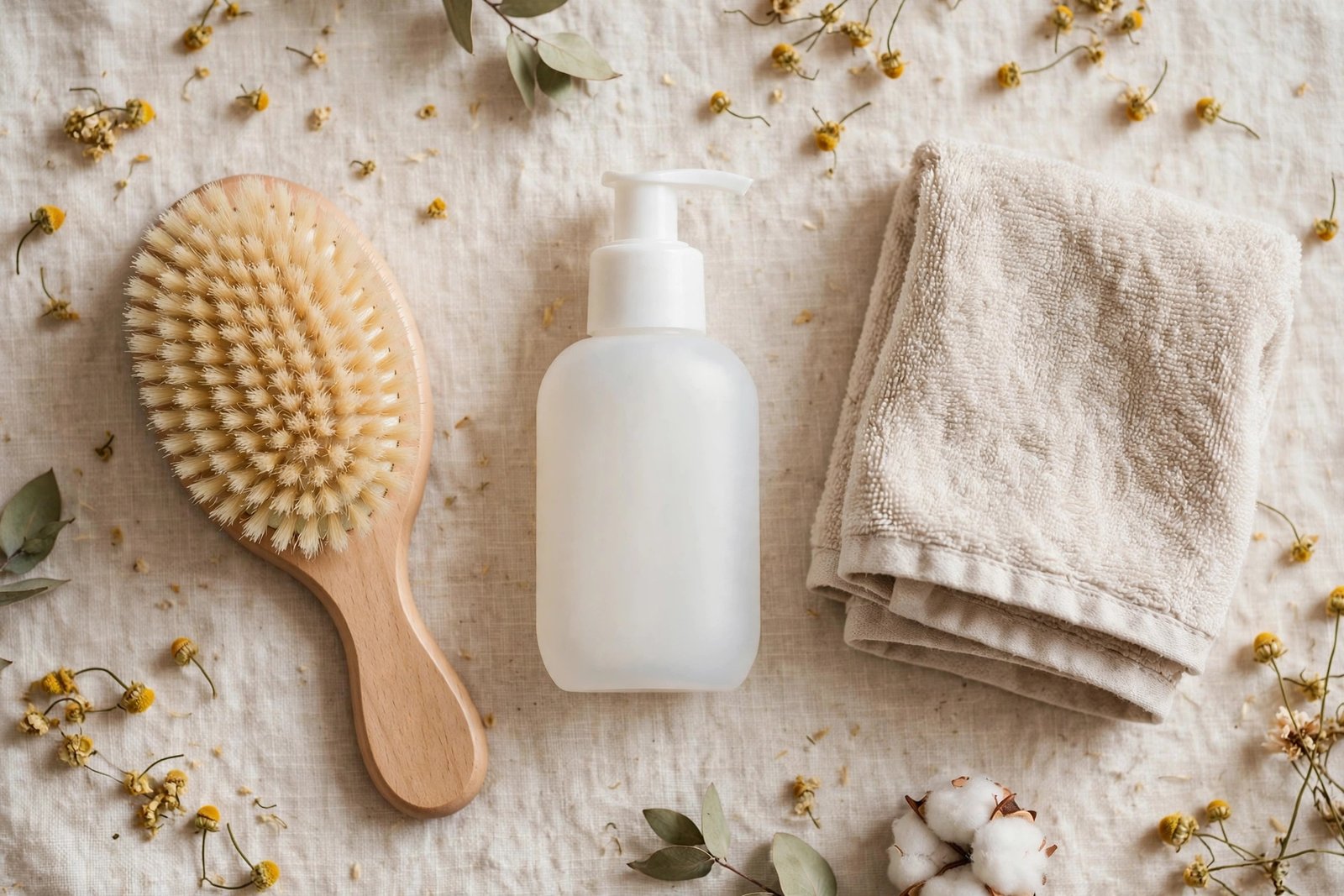
During the bath, wash the scalp with a mild, fragrance-free baby shampoo. Massage very softly with your fingertips or a soft baby brush in small circles. This lifts the loosened scales without scrubbing.
3. Rinse well and brush softly
Rinse all shampoo and oil out completely — residue left on the scalp can irritate the skin. After the bath, while the scalp is still slightly damp, brush very gently with a soft-bristle baby brush to lift any remaining loose flakes.
4. Repeat only as needed
Once a day is plenty. The scales will loosen gradually over days or weeks. If the scalp looks irritated or red after treatment, take a break for a few days.
5. Moisturize if the skin looks dry
If the scalp looks dry between treatments, a thin layer of plain petroleum jelly can help. Avoid heavy creams or lotions with fragrance on the scalp.

What NOT to Do
- Do not pick or peel the scales. Pulling off scales that are not ready can break the skin underneath, causing soreness, bleeding, or infection.
- Do not scrub hard. Vigorous scrubbing irritates the scalp and can make cradle cap worse, not better.
- Do not use adult dandruff shampoos. Anti-dandruff products contain ingredients that are too harsh for baby skin and can be absorbed through it.
- Do not use steroid or antifungal creams unless your pediatrician specifically prescribes them.
- Do not use essential oils. Tea tree oil and similar products can cause serious skin reactions in babies.
- Do not over-wash. Washing the scalp more than once a day dries out the skin and can worsen flaking.
Can Cradle Cap Be Prevented?
Not really — and that is okay. Cradle cap is driven by hormones and oil production, not by anything in your care routine. But these habits keep the scalp healthy:
- Wash the scalp regularly with a gentle baby shampoo as part of normal bathing.
- Rinse shampoo out thoroughly every time.
- Avoid heavy oils and fragranced products on the scalp.
- Keep the scalp from getting too hot and sweaty — light hats in warm weather.
Even with perfect care, many babies still get cradle cap. It is simply part of how newborn skin adjusts in the first months.
When to See a Doctor
Cradle cap is almost always harmless, but see your pediatrician if:
- The rash spreads beyond the scalp to the face or body in large, red, scaly patches.
- The skin under the scales looks raw, weepy, or infected.
- There is significant redness, swelling, or yellow crusting that could signal infection.
- Your baby seems itchy or uncomfortable (unusual for simple cradle cap).
- The cradle cap is severe, covers most of the scalp thickly, or has not improved by 6 to 12 months.
- Your baby is not gaining weight well or has diarrhea along with the rash (rare, but worth checking).
Sometimes what looks like stubborn cradle cap turns out to be infant eczema, which needs different treatment — another reason a doctor’s eye is useful if it is not following the usual pattern.
Frequently Asked Questions
How long does cradle cap last?
Most cases clear within a few weeks to a few months. Almost all cradle cap is gone by the first birthday, often much sooner.
Is cradle cap contagious?
No. It cannot spread to other children or to adults. It is not caused by an infection you can catch.
Can I use coconut oil for cradle cap?
It is best to avoid it. Some research suggests certain plant oils can feed the yeast involved in cradle cap and make it worse. Plain mineral oil or petroleum jelly is the safer choice for loosening scales.
Should I shave my baby’s head to treat cradle cap?
No. Shaving is unnecessary and risks nicking the delicate scalp. Cradle cap clears with gentle care regardless of how much hair the baby has.
Does cradle cap mean my baby will have dandruff later?
Not necessarily. Cradle cap in infancy does not reliably predict dandruff or skin problems later in childhood.
Can adults get cradle cap?
Adults get a related condition (seborrheic dermatitis), but it is treated differently. Do not use your own dandruff products on your baby.
The Bottom Line for Parents
Cradle cap looks worse than it is. It is painless, harmless, and temporary — and gentle daily care with oil, mild shampoo, and a soft brush is all it takes to help it along. The scales will lift in their own time.
Be soft, be consistent, and trust the process. With a little patience, your baby’s scalp will be clear and smooth again.
Related reading: How Often Should I Bathe My Baby?, Best Bath Temperature for Babies, and How to Choose Safe Skincare Products for Kids.
*This article is for informational purposes only and is not medical advice. If you are concerned about your baby’s skin, consult your pediatrician.*
—
Publish spec (for main agent): Title as above. Focus keyword: cradle cap in babies. Internal links: 3 as in Related reading. 1 Merriam-Webster dictionary link in conclusion’s last 3 lines (patience). Realistic featured image 1200×800, Title=slug, Alt=focus keyword, 2 content images, meta description as in frontmatter.
