
Barrier creams prevent; diaper rash creams soothe and protect — but in practice, the best products do both. The real difference is in the job: a barrier cream (usually zinc oxide or petrolatum) shields healthy skin from moisture and irritants, while a diaper rash cream is what you reach for once redness appears. Many tubes on the shelf are effectively both. Here’s how to choose and use them.
Walk down any baby aisle and you’ll see a wall of tubes promising to protect, soothe, heal, and prevent. The naming is confusing — so let’s simplify it.
What Each One Actually Does
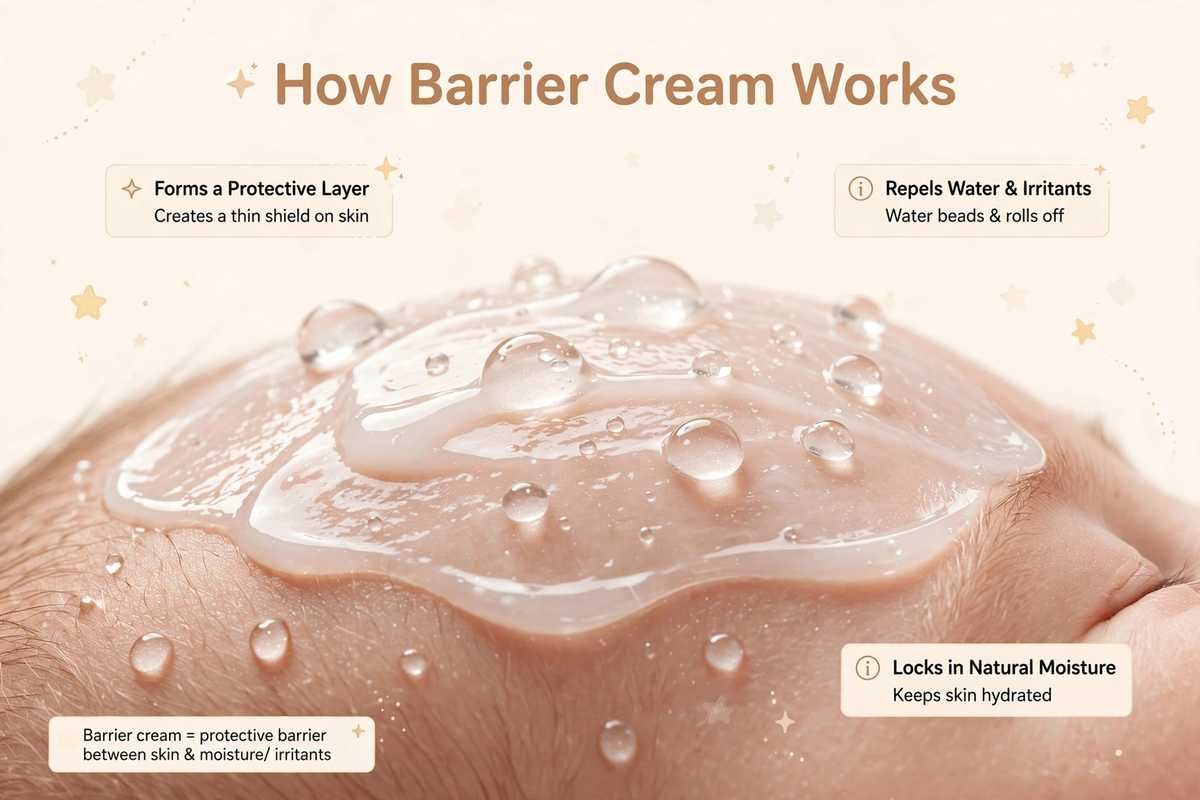
Barrier cream is prevention. It’s a thick shield — typically zinc oxide, petrolatum, or both — that sits between your baby’s skin and everything in the diaper (urine, stool, moisture). You use it at every change, rash or no rash, to stop irritation before it starts.
Diaper rash cream is response. It’s what you apply when the skin is already pink or irritated. Here’s the thing most parents don’t realize: the ingredients are usually *the same* (zinc oxide and petrolatum again), sometimes with added soothing ingredients. The AAP’s diaper rash guidance describes coating the skin with a thick layer of barrier paste — zinc oxide or petrolatum — as the core move whether you’re preventing or managing a rash.
So the honest answer: don’t stress about the label name. Stress about the ingredients and the technique.
Barrier Cream vs. Diaper Rash Cream: Side by Side
| Barrier cream | Diaper rash cream | |
|---|---|---|
| Main job | Prevent irritation | Calm existing redness + protect while it heals |
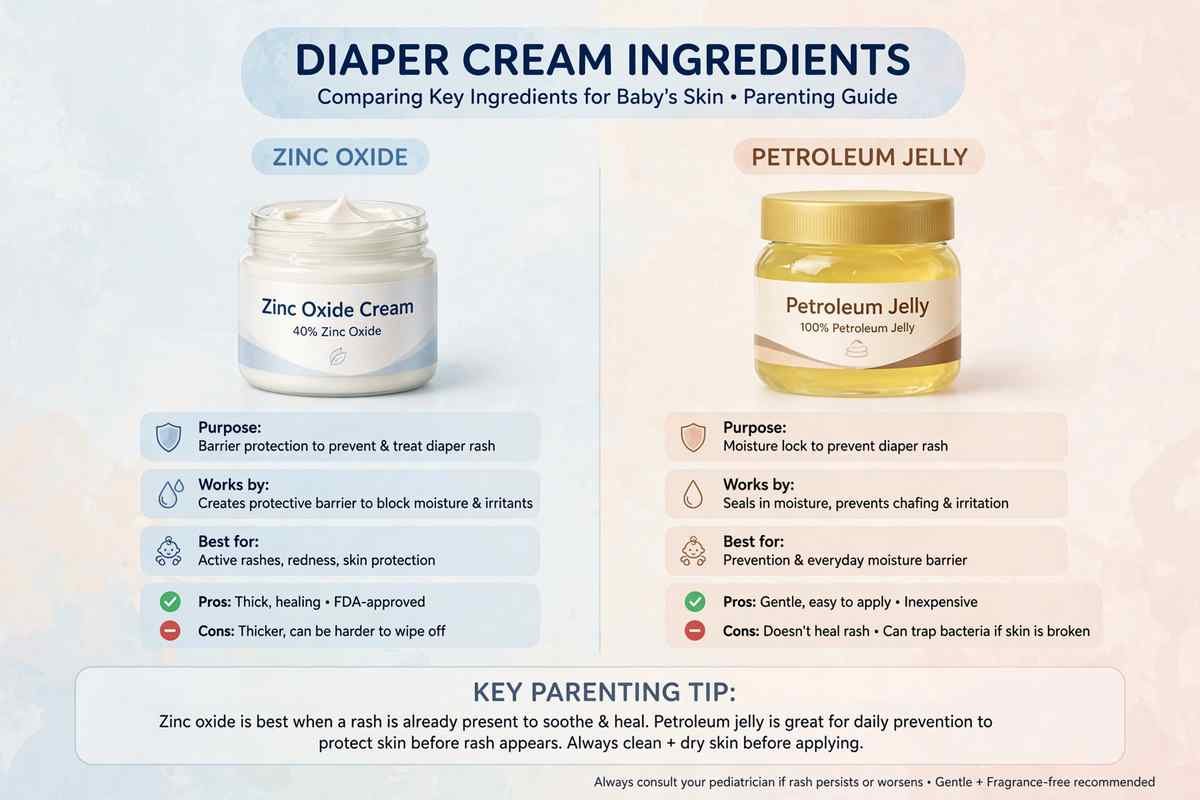
| Key ingredients | Zinc oxide, petrolatum (often both) | Zinc oxide, petrolatum; sometimes added soothers |
| When to use | Every diaper change, as routine | At the first sign of pinkness, and with every change until clear |
| How thick | Thick layer — “like icing on a cupcake” (AAP) | Same thick layer |
| Remove between changes? | No — if it’s not soiled, just add more on top | Same — don’t scrub off; reapply over it |
The Ingredients That Matter (and the Ones to Skip)
The AAP is refreshingly blunt here: the brand matters less than the ingredients. Look for:
- Zinc oxide — the workhorse. It creates a physical moisture barrier and is very well tolerated.
- Petrolatum (petroleum jelly) — an excellent, minimal-ingredient shield.
- Fragrance-free — always. Fragrance is one of the most common irritants in baby products.
Skip products with added fragrance, alcohol, or long lists of botanical extras when the skin is irritated — simple is safer. The AAP’s tips for choosing safer products make the same point: fewer, simpler ingredients for children’s skin.
How to Apply It Right: The AAP Technique
Technique matters more than which tube you bought:
1. Start with clean, dry-ish skin. Clean gently — for irritated skin, water and a soft cloth can be kinder than wiping. Our baby wipes guide explains when to switch to water-only cleaning.
2. Apply thickly. The AAP’s memorable image: like icing on a cupcake. There is no such thing as too much paste
.
3. Don’t rub it all off. If the layer isn’t soiled at the next change, leave it and add more on top. Scrubbing paste off irritates the skin you’re trying to protect.
4. It’s fine on pink skin. You don’t need to wait for a full rash — a barrier layer on slightly pink skin is exactly right.
The Prevention Routine That Makes Creams Work Better
Cream is one layer of defense. The full prevention routine, per pediatric guidance:
- Change frequently — as soon as you can after wetting or soiling. Prolonged contact with urine and stool is the #1 driver of rash.
- Clean gently with water or fragrance-free wipes; pat dry rather than rubbing.
- Give air time. Some diaper-free time on a towel each day lets the skin breathe and dry fully — small habit, big payoff.
- Don’t fasten too tight. A snug-but-not-tight fit reduces chafing, especially overnight.
- Bathe regularly. A daily bath helps if the area is irritated, washing away debris and bacteria — see how often to bathe your baby for the right frequency.
Note the difference from regular moisturizers: a body lotion absorbs into skin (see when to start using baby lotion), while a barrier cream is *supposed* to sit on top as a shield. Different jobs, different products.
Nighttime and Travel: Barrier Cream Tips
Two situations where barrier cream earns its keep even more:
- Overnight. Babies often go 8–12 hours in one diaper at night. A generous layer before bed is the best defense against morning redness — this is the single highest-value application of the day.
- Travel and outings. Changes happen less often on the go, and unfamiliar wipes can irritate. Apply barrier cream before you leave, pack the tube in the diaper bag, and reapply at every change.
A travel-size tube plus a pack of fragrance-free wipes covers nearly every diaper emergency away from home.
When to See Your Pediatrician
Most diaper rash improves within a few days of the routine above. Call your pediatrician if:
- The rash doesn’t improve after 2–3 days of barrier care
- You see blisters, open sores, oozing, or pimples
- The rash spreads beyond the diaper area
- Your baby has a fever along with the rash
- The rash looks very raw or your baby seems in pain during changes
The NHS nappy rash guidance gives the same escalation advice — persistent or worsening rash deserves a professional look.
FAQ
Do I need both a barrier cream and a diaper rash cream?
Usually not. One good zinc oxide or petrolatum product used thickly at every change covers both jobs. “Barrier” vs “rash cream” is mostly marketing — check the ingredients, not the front of the tube.
Is a higher zinc oxide percentage better?
Higher percentages (up to 40%) give a thicker, more opaque shield and are popular for active rashes. For everyday prevention, a moderate percentage is fine. Thickness of application matters more than the number on the tube.
Can I use coconut oil instead of barrier cream in the diaper area?
Coconut oil moisturizes but isn’t a true barrier — it doesn’t shield against moisture and irritants the way zinc oxide or petrolatum does. It’s fine for general moisture elsewhere, but the diaper area deserves a real barrier product.
Should I use barrier cream at every single change?
For newborns and rash-prone babies, yes — it’s the single most effective prevention habit. For older babies with resilient skin, you can ease off to naps, nights, and anytime the skin looks pink.
What if the rash keeps coming back in the same spot?
Recurring rash in one area can signal something beyond simple irritation — persistent moisture, a yeast component, or a product sensitivity. That’s worth a pediatrician visit rather than a different cream.
Keep Reading
You may also like: Fragrance-Free vs Unscented Baby Products Is Bubble Bath Safe for Kids? Diaper-Free Time: Benefits for Baby Skin How Often Should Toddlers Bathe? Kids’ Skincare After Swimming: A Parent’s Guide How Often Should Kids Moisturize? Dry Patches on Toddler Skin: What Causes Them Is Mineral Oil Safe in Baby Products? Parabens in Kids’ Skincare: Should Parents Worry? How to Prevent Diaper Rash in Newborns Best Lotions for Kids’ Sensitive Skin
This article is for general information only and is not medical advice. Every child’s skin is different — if you’re unsure or notice anything concerning, talk to your pediatrician or a dermatologist.

Emily writes practical guides for parents on children’s skincare — from a newborn’s first bath to a teen’s first routine. She carefully researches pediatric guidance and turns it into simple steps busy families can actually follow.