Growing up brings many exciting changes, and your skin is one of them. At 14, hormones begin to affect your skin more than ever before, which can lead to oiliness, occasional pimples, blackheads, or dry patches. It may seem like everyone on social media has a complicated 10-step routine, but here’s the truth: healthy skin doesn’t require dozens of products.
The best approach for teenage skin is simple, gentle, and consistent. Instead of confusing beauty trends, focus on products that protect your skin barrier and support healthy skin every single day.
Whether you’re looking for a straightforward routine you can do at home, safe tips for both boys and girls, or guidance on navigating skin changes during puberty, this guide explains everything you need to know in an easy-to-follow way.
What’s the Minimum Routine?
A simple daily routine includes:
- Cleansing your face twice a day
- Applying a lightweight moisturizer
- Using broad-spectrum SPF 30 sunscreen every morning
Teens with mild acne may benefit from gentle acne-fighting ingredients, but most 14-year-olds don’t need complicated routines or strong products.
Why Does Skin Change at 14?
Around the age of 14, puberty causes your body to produce more hormones. These hormones increase oil (sebum) production, which can make your skin feel shinier than before.
Common Skin Changes You Might Notice:
| Change | What It Looks Like |
|---|---|
| Oily skin | Shiny appearance, especially on the forehead, nose, and chin |
| Occasional pimples | Small red bumps that may have a white center |
| Blackheads | Tiny dark spots, usually on the nose or chin |
| Whiteheads | Small flesh-colored bumps under the skin |
| Dry patches | Flaky or tight-feeling areas |
| Larger-looking pores | More visible pores on the nose and cheeks |
| Occasional redness | Flushed or irritated areas |
Good news: These changes are completely normal. Having a few breakouts doesn’t mean your skin is unhealthy or that you’re doing something wrong.
A gentle routine helps keep your skin clean, balanced, and protected while reducing the risk of irritation from harsh products.
Know Your Skin Type First
Before buying products, it’s helpful to know your skin type. Choosing items that match your skin’s needs can make your routine more effective.
Skin Type Guide
| Skin Type | Signs | Recommended Products |
|---|---|---|
| Oily | Shiny skin, frequent pimples, feels greasy by midday | Gel cleanser, oil-free moisturizer, lightweight sunscreen |
| Dry | Tight or flaky skin, feels rough, may have red patches | Hydrating cleanser, cream moisturizer, gentle sunscreen |
| Combination | Oily T-zone (forehead, nose, chin) with dry or normal cheeks | Gentle cleanser, lightweight moisturizer, balanced sunscreen |
| Sensitive | Easily irritated, stings with some products, frequently red | Fragrance-free, hypoallergenic products, mineral sunscreen |
| Normal | Balanced, comfortable skin, not too oily or dry | Gentle everyday products suitable for most skin types |
💡 Remember: Your skin type may change during puberty, so it’s perfectly okay if your routine evolves over time too.
The 3-Step Skincare Routine for 14-Year-Olds
Many teenagers think they need a shelf full of products to have clear skin. That’s not true.
The best approach focuses on just three essential steps that support healthy skin every day.
Step 1: Cleanse Your Face
Start your morning by washing your face with a gentle cleanser. Cleansing removes:
- Sweat
- Oil
- Dirt
- Bacteria
How to Choose a Cleanser:
| Skin Type | Best Cleanser Type |
|---|---|
| Oily | Gel or foaming cleanser |
| Dry | Cream or milk cleanser |
| Combination | Gentle gel cleanser |
| Sensitive | Soap-free, fragrance-free cleanser |
Tips for Proper Cleansing:
✅ Wash your face twice a day (morning and night)
✅ Use lukewarm water (hot water strips natural oils)
✅ Massage gently for about 30–60 seconds
✅ Pat your face dry with a clean towel (don’t rub)
❌ Avoid scrubbing your skin aggressively
❌ If your skin feels tight after washing, your cleanser may be too harsh
Step 2: Moisturize Daily
Many teens worry that moisturizer causes acne. Actually, skipping it can make things worse.
When you skip moisturizer, your skin can become dehydrated. This may trigger your skin to produce more oil to compensate, which could lead to more breakouts.
How to Choose a Moisturizer:
Look for these keywords on the label:
- “Non-comedogenic” (won’t clog pores)
- “Oil-free” (for oily skin)
- “Fragrance-free” (for sensitive skin)
- “For sensitive skin” (gentle formula)
Beneficial Ingredients to Look For:
| Ingredient | What It May Help With |
|---|---|
| Ceramides | Strengthening the skin barrier and locking in moisture |
| Glycerin | Attracting water to the skin and keeping it hydrated |
| Hyaluronic Acid | Helping skin retain moisture for a plump, hydrated feel |
| Aloe Vera | Soothing and refreshing the skin |
| Niacinamide | Balancing oil production and improving skin texture |
A good moisturizer can help strengthen your skin barrier and keep your skin feeling soft throughout the day.
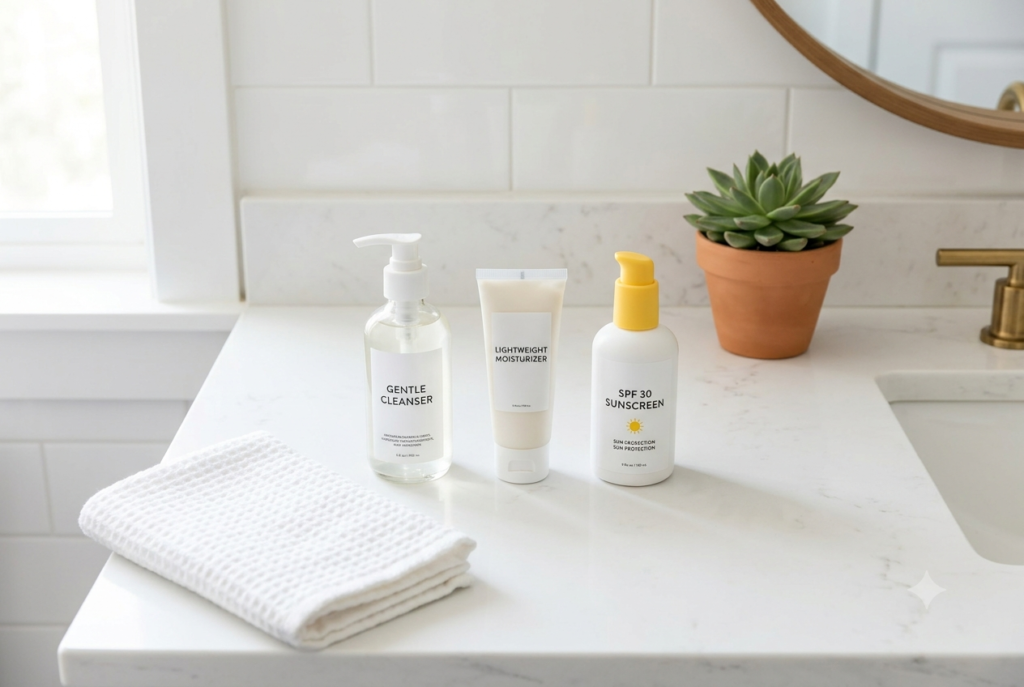
Step 3: Wear Sunscreen Every Morning
Sunscreen isn’t only for summer vacations or beach days.
Daily sun protection may help prevent:
- ☀️ Sunburn
- ☀️ Dark spots
- ☀️ Uneven skin tone
- ☀️ Premature skin damage
What to Look For in a Sunscreen:
✅ SPF 30 or higher (SPF 50 is even better for outdoor days)
✅ Broad-spectrum protection (protects against UVA and UVB rays)
✅ Lightweight formula (won’t feel heavy or greasy)
✅ Non-comedogenic (won’t clog pores)
✅ Water-resistant (if you swim or sweat)
How to Apply Sunscreen:
- Apply every morning as the last step of your routine
- Use about a nickel-sized amount for your face
- Don’t forget your neck and ears
- If you’re spending several hours outdoors, reapply every 2 hours (or after swimming/sweating)
Morning Routine (5 Minutes)
| Step | Product | Why |
|---|---|---|
| 1️⃣ | Gentle cleanser | Removes oil and sweat from overnight |
| 2️⃣ | Lightweight moisturizer | Hydrates and prepares skin |
| 3️⃣ | Sunscreen (SPF 30+) | Protects against sun damage |
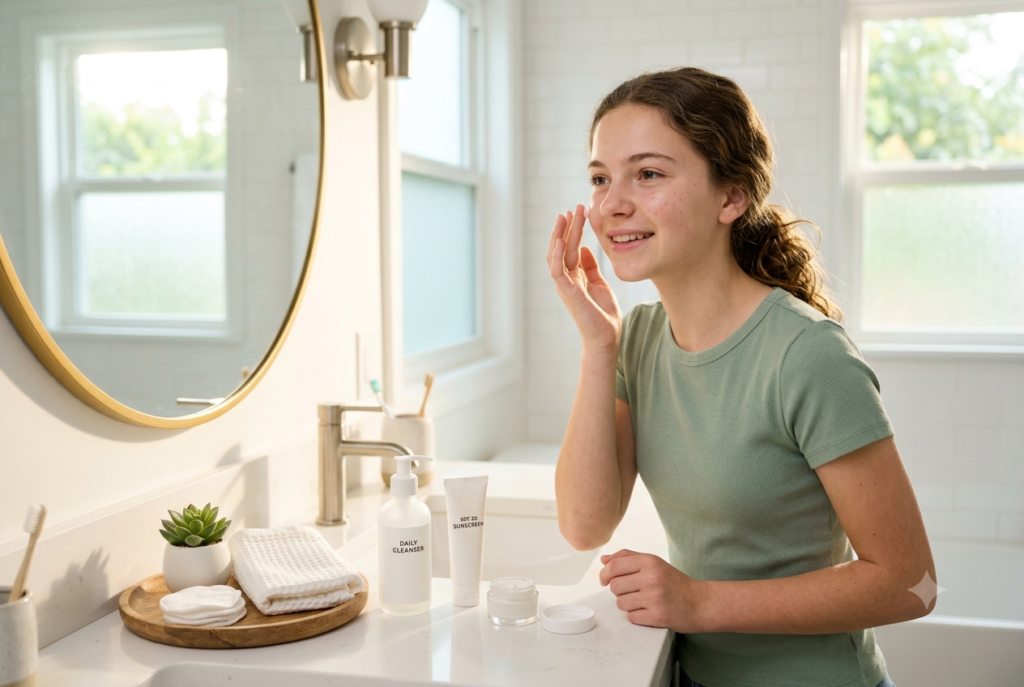
That’s all most teenagers need before school.
If you play outdoor sports or walk to school, sunscreen becomes even more important. Consider a water-resistant formula if you’ll be sweating.
Night Routine (5 Minutes)
Night is when your skin naturally repairs itself. Keeping your evening routine simple allows your skin to recover while you sleep.
| Step | Product | Why |
|---|---|---|
| 1️⃣ | Remove makeup (if worn) | Prevents clogged pores overnight |
| 2️⃣ | Gentle cleanser | Removes dirt, oil, and pollution from the day |
| 3️⃣ | Moisturizer | Supports overnight skin repair |
💡 Acne Treatment Tips:
If you have acne, only add treatments when they’re suitable for your skin or recommended by a healthcare professional.
Important: Avoid layering several acne products together (like salicylic acid + benzoyl peroxide) because this may severely dry out and irritate your skin. Start with one product and see how your skin responds.
Everyday Habits for Healthy Skin at Home
You don’t need expensive products to build healthy habits. A routine at home can be simple, affordable, and effective.
| Habit | Why It Helps |
|---|---|
| 💧 Wash your face every morning and evening | Removes oil, dirt, and bacteria |
| 💧 Drink enough water throughout the day | Supports hydration from the inside out |
| 🥗 Eat fruits and vegetables regularly | Provides vitamins that support skin health |
| 😴 Sleep for 8–10 hours each night | Allows skin to repair and regenerate |
| 🛏️ Change your pillowcase every week | Reduces oil and bacteria buildup |
| 📱 Clean your phone screen often | Limits bacteria transferred to your face |
| 🙌 Avoid touching your face with dirty hands | Reduces spread of bacteria to your skin |
| 🧴 Wash your face after heavy sweating | Prevents sweat from clogging pores |
These small habits work together to support healthy skin without costing a penny.
Simple Korean-Inspired Routine (4 Steps)
Korean skincare is popular because it focuses on hydration and protecting the skin barrier. However, teenagers don’t need the famous 10-step routine.
| Step | Product | Purpose |
|---|---|---|
| 1️⃣ | Gentle cleanser | Cleans away oil and dirt without stripping skin |
| 2️⃣ | Hydrating toner (optional) | Helps skin feel refreshed and prepped |
| 3️⃣ | Lightweight moisturizer | Keeps skin hydrated without feeling greasy |
| 4️⃣ | Sunscreen (SPF 30 or higher) | Protects skin during the day |
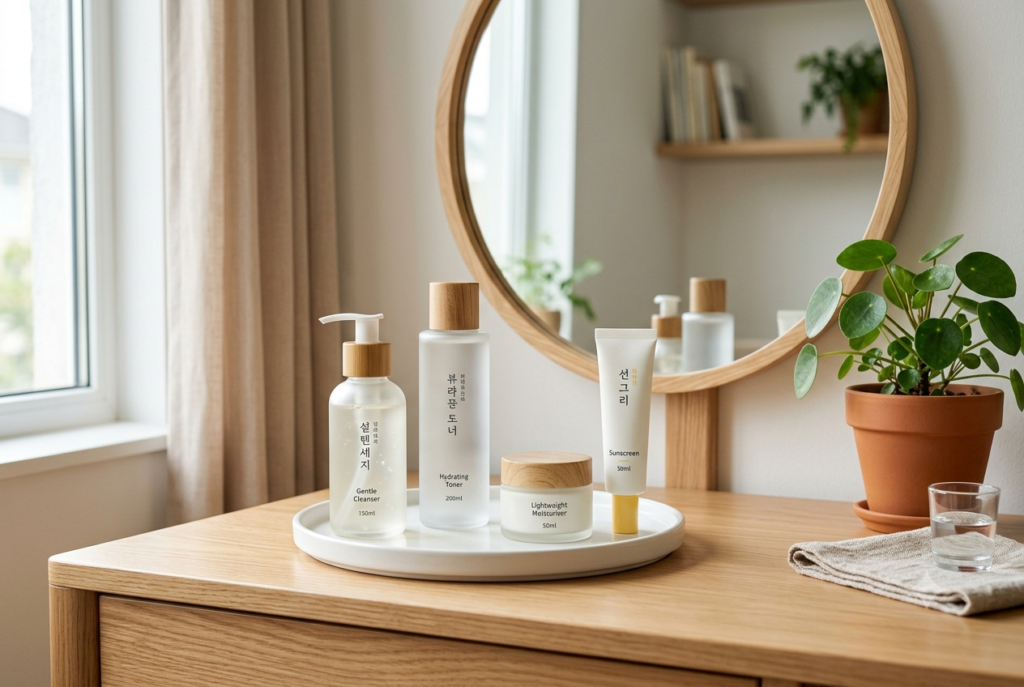
Note: The Korean approach focuses on healthy, hydrated skin—not using as many products as possible. A 10-step routine is completely unnecessary for teenagers.
Safe Ingredients for Teenage Skin
Teenage skin doesn’t need strong anti-aging ingredients. Instead, look for gentle options that support your skin.
Helpful Ingredients:
| Ingredient | Potential Benefits | Found In |
|---|---|---|
| Ceramides | May help strengthen the skin barrier | Moisturizers, creams |
| Hyaluronic Acid | Can help skin retain moisture | Serums, moisturizers |
| Glycerin | Helps lock in moisture | Cleansers, moisturizers |
| Niacinamide | May help balance oil and improve texture | Serums, moisturizers |
| Aloe Vera | Can soothe and refresh the skin | Gels, moisturizers |
| Salicylic Acid (low concentration) | May help unclog pores and treat blackheads | Acne cleansers, spot treatments |
| Benzoyl Peroxide (low concentration) | May help reduce acne-causing bacteria | Spot treatments, washes |
How to Introduce New Products:
⚠️ Introduce only ONE new product at a time. Wait 1-2 weeks before adding another. This way, if your skin reacts badly, you’ll know exactly which product is causing the problem.
Ingredients to Approach with Caution
Not every trending skincare ingredient is suitable for teenagers.
🚫 What Most 14-Year-Olds Should Avoid or Use with Care:
| Ingredient | Why to Be Cautious |
|---|---|
| High-strength retinol | May be too strong for young skin; can cause significant irritation |
| Strong exfoliating acids (high % AHA/BHA) | May damage the skin barrier if overused |
| Harsh physical scrubs (walnut shells, beads) | Can cause micro-tears in the skin |
| Alcohol-based toners | May strip natural oils and cause dryness |
| Anti-aging creams | Formulated for mature skin; unnecessary and potentially irritating |
| High-concentration Vitamin C serums | May be irritating for sensitive young skin; gentler options are available if desired |
| Essential oils | Common allergens and potential irritants |
Remember: Simple routines are usually the safest and most effective. If a product is marketed for “mature skin” or “wrinkle reduction,” it’s probably not appropriate for you.
Skincare for 14-Year-Old Girls
Girls often notice more skin changes around age 14 due to puberty and hormonal fluctuations. These changes may include oiliness, occasional breakouts, or increased sensitivity.
Morning Routine:
| Step | Product | Why |
|---|---|---|
| 1️⃣ | Gentle cleanser | Removes overnight oil and sweat |
| 2️⃣ | Lightweight moisturizer | Keeps skin hydrated |
| 3️⃣ | Broad-spectrum sunscreen (SPF 30+) | Protects from daily sun exposure |
Night Routine:
| Step | Product | Why |
|---|---|---|
| 1️⃣ | Remove makeup (if worn) | Prevents clogged pores |
| 2️⃣ | Gentle cleanser | Removes dirt and oil from the day |
| 3️⃣ | Moisturizer | Supports overnight repair |
💡 Important: If you wear makeup, always remove it before bed. Sleeping in makeup is one of the fastest ways to clog pores and cause breakouts.
At-Home Habits:
| Habit | How to Do It |
|---|---|
| 🧼 Wash your face twice a day | Morning and night, no exceptions |
| 💧 Drink enough water | Aim for 6-8 glasses daily |
| 🥗 Eat fresh fruits and vegetables | Include berries, oranges, carrots, spinach |
| 😴 Sleep for 8–10 hours | Helps skin repair overnight |
| 🛏️ Change your pillowcase weekly | Reduces oil and bacteria buildup |
| 🧽 Keep makeup brushes clean | Wash brushes every 1-2 weeks |
| 🙌 Avoid touching your face | Limits bacteria transfer |
| 🚿 Shower after exercise | Wash away sweat and bacteria |
Skincare for 14-Year-Old Boys
Puberty affects boys’ skin too. Increased oil production, outdoor activities, sports, and sweating can make the skin feel greasy or lead to occasional breakouts.
Morning Routine:
| Step | Product | Why |
|---|---|---|
| 1️⃣ | Gentle cleanser | Removes overnight oil and sweat |
| 2️⃣ | Oil-free moisturizer | Hydrates without clogging pores |
| 3️⃣ | Sunscreen | Protects before heading outside |
Evening Routine:
| Step | Product | Why |
|---|---|---|
| 1️⃣ | Cleanser | Removes dirt, oil, and sweat from the day |
| 2️⃣ | Moisturizer | Supports overnight skin repair |
💡 Sports Tip: If you play sports, wash your face after heavy sweating to help keep pores clean. A quick rinse with water and a gentle cleanser can make a difference.
Natural Approaches to Teenage Skincare
Many teenagers prefer a natural approach. This focuses on gentle care and healthy daily habits.
Natural Ways to Support Healthy Skin:
| Practice | Why It Helps |
|---|---|
| 🥗 Eat balanced meals with fruits and vegetables | Provides skin-supporting vitamins |
| 💧 Drink plenty of water | Supports hydration from within |
| 😴 Sleep for 8–10 hours | Allows skin to repair |
| 🏃 Exercise regularly | Improves blood circulation |
| 🧘 Manage stress through hobbies | Stress may worsen breakouts |
| 🧴 Use gentle, fragrance-free products | Reduces risk of irritation |
⚠️ Important Warning:
“Natural” doesn’t always mean safe for your face.
Never put these on your face:
- ❌ Lemon juice (can cause chemical burns)
- ❌ Toothpaste (too harsh, can burn skin)
- ❌ Baking soda (disrupts skin’s natural pH)
- ❌ Cinnamon (can cause severe irritation)
- ❌ Essential oils (common allergens)
Stick to products specifically formulated for facial skin.
Weekly Care Tips
Your daily routine forms the foundation of healthy skin, but a few weekly habits can provide additional care.
Weekly Skincare Checklist:
| Habit | How Often | Details |
|---|---|---|
| Exfoliate gently | Once a week if needed | Use a gentle chemical exfoliant (like salicylic acid). Avoid if your skin is irritated, dry, or broken out. Harsh physical scrubs with beads or shells should be avoided. |
| Use a hydrating face mask | Once a week | Look for aloe vera, hyaluronic acid, or oat extract. |
| Clean makeup brushes | Every 1-2 weeks | Removes oil, bacteria, and product buildup. |
| Change pillowcase | Weekly | Reduces oil and bacteria on your face. |
| Clean phone screen | Weekly | Removes bacteria that transfers to your face. |
Healthy Lifestyle Habits
Healthy skin depends on more than products. Simple lifestyle habits can make a noticeable difference.
1. Drink Enough Water
Staying hydrated supports your overall health and may help your skin feel more comfortable. Aim for 6-8 glasses of water daily.
2. Eat Nutritious Foods
| Food | Potential Benefit for Skin |
|---|---|
| Berries | Rich in antioxidants |
| Oranges | Vitamin C for collagen production |
| Carrots | Beta-carotene for skin health |
| Spinach | Iron and vitamins |
| Eggs | Protein and biotin |
| Fish | Omega-3 fatty acids |
| Nuts | Healthy fats and vitamin E |
| Whole grains | B vitamins for skin |

3. Sleep Well
Getting enough sleep gives your body time to repair itself, including your skin. Aim for 8-10 hours per night.
4. Stay Active
Exercise improves blood circulation and supports overall health. Just remember to wash your face after sweating.
5. Manage Stress
Stress may sometimes make existing breakouts feel worse. Take time to relax by:
- 📖 Reading
- 🎨 Drawing or creating art
- 🏃 Exercising
- 👥 Spending time with friends and family
- 🧘 Deep breathing or meditation
When Should a 14-Year-Old See a Dermatologist?
While most teenage skin concerns are normal and can be managed with a simple routine, there are times when professional help is advisable.
Signs You Should Consider Seeing a Dermatologist:
| Concern | Why to Seek Help |
|---|---|
| Severe or persistent acne | Acne that doesn’t improve after 2-3 months of consistent home care |
| Painful, cystic breakouts | Large, deep, tender bumps that may scar |
| Acne scarring | Dark marks or indentations left after pimples heal |
| Excessive oiliness or dryness | Skin that feels uncomfortable despite using appropriate products |
| Skin irritation from products | Persistent redness, stinging, or peeling |
| Unusual moles or spots | Any new, changing, or unusual growths |
| Eczema or other skin conditions | Flaky, itchy, or inflamed patches that don’t improve |
What to Expect at a Dermatologist Visit:
A dermatologist can:
- Assess your skin type and concerns
- Recommend appropriate products or treatments
- Prescribe medications if needed (such as topical or oral treatments)
- Provide guidance on managing acne and preventing scarring
- Offer advice tailored to your specific skin needs
💡 Remember: There’s no shame in seeing a dermatologist. Many teenagers benefit from professional guidance, and early treatment can help prevent long-term scarring.
Common Skincare Mistakes to Avoid
Even the best products won’t help if you develop habits that irritate your skin.
Top 5 Mistakes:
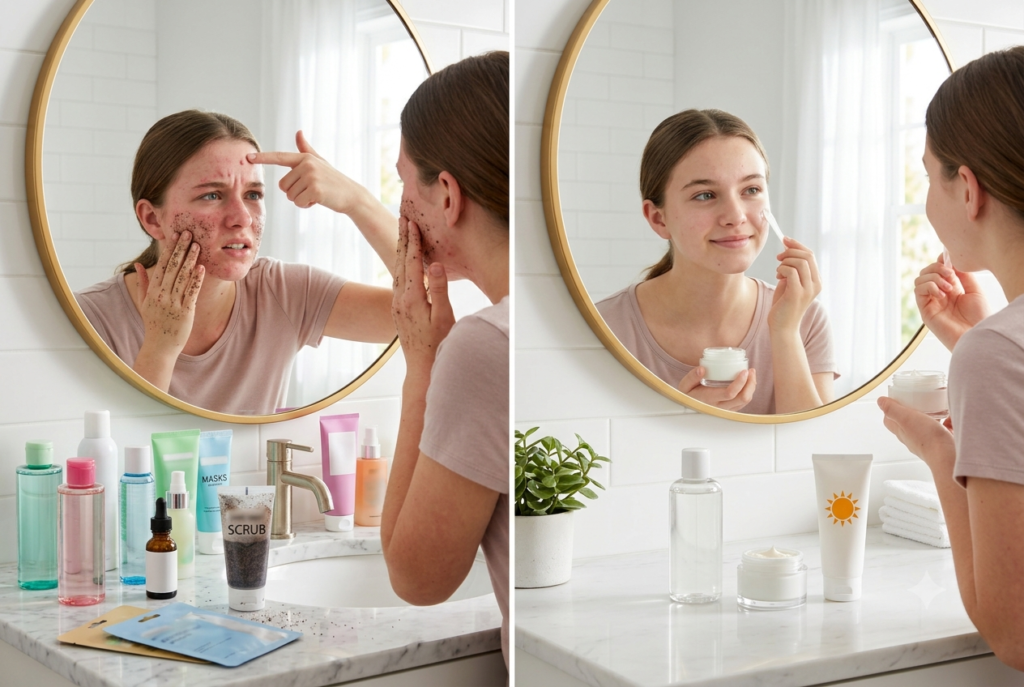
| Mistake | Why It’s Harmful | Better Approach |
|---|---|---|
| ❌ Washing your face too often | Strips natural oils, causes dryness and irritation | Wash twice a day (morning and night) |
| ❌ Using too many products | Overwhelms skin, increases risk of irritation | Stick to 3-4 essential products |
| ❌ Picking pimples | Increases risk of scarring and dark marks | Allow skin to heal naturally or use spot treatments |
| ❌ Following every social media trend | Many routines are for adults, not teens | Choose products based on your skin’s needs |
| ❌ Skipping sunscreen | May lead to sun damage, dark spots, and premature aging | Apply SPF 30+ every single morning |
Frequently Asked Questions
1. What’s the best routine for a 14-year-old?
The best approach includes cleansing twice a day, moisturizing daily, and wearing SPF 30 sunscreen every morning. Most teenagers don’t need complicated routines.
2. Can a 14-year-old follow a Korean skincare routine?
Yes, as long as it stays simple. A gentle cleanser, lightweight moisturizer, and sunscreen are usually enough. The full 10-step routine is unnecessary for most teens.
3. Is a home routine effective for a 14-year-old?
Yes. A consistent routine at home—including cleansing, moisturizing, sunscreen, healthy eating, hydration, and good sleep—can be very effective.
4. What’s a good routine for a 14-year-old girl?
A simple routine with a gentle cleanser, lightweight moisturizer, and sunscreen during the day, plus a nighttime cleanser and moisturizer.
If acne becomes severe or painful, consult a dermatologist.
5. Should a 14-year-old boy use moisturizer?
Yes. Even with oily skin, moisturizer helps maintain a healthy skin barrier. Choose an oil-free, non-comedogenic formula.
6. Which ingredients are safe for teenage skin?
Safe options include ceramides, hyaluronic acid, glycerin, niacinamide (lower concentrations), and aloe vera.
Always introduce new products gradually and stop using them if irritation develops.
7. Can I use acne products if I have breakouts?
Yes, but start with one product at a time. For occasional pimples:
- Try a spot treatment with salicylic acid or benzoyl peroxide (in low concentrations)
- Use it only on the pimple, not all over your face
- Don’t combine multiple active ingredients at once
If acne is persistent or painful, see a dermatologist.
8. How long does it take to see results?
Be patient. It typically takes about 4-6 weeks of consistent use to see noticeable improvements. Don’t switch products every few days—give your skin time to adjust.
9. Should I exfoliate my skin?
If you choose to exfoliate, do it gently and only once a week. Use a chemical exfoliant (like salicylic acid) rather than a physical scrub. Avoid exfoliating if your skin is irritated, dry, or has active breakouts.
10. What should I do if I have a bad reaction?
Stop using the product immediately. Wash your face with a gentle cleanser and apply a soothing moisturizer. If the irritation is severe, consult a doctor or dermatologist.
Final Thoughts
Building a routine as a teenager doesn’t have to be difficult. The healthiest approaches are usually the simplest:
Cleanse your face → Moisturize regularly → Wear sunscreen every morning → Take care of your body with good nutrition, hydration, and enough sleep.
Whether you’re looking for a routine you can do at home, a Korean-inspired approach, or natural skincare guidance, remember: consistency matters far more than owning lots of products.
Healthy habits and gentle care can help your skin stay balanced, comfortable, and naturally radiant as you grow.
Remember: Your skin is unique to you. What works for your friends might not work for you—and that’s completely okay. Be patient, be consistent, and be kind to your skin. 🌸

Emma Brooks is a skincare writer who creates simple, research-based skincare guides, ingredient insights, and practical routines for healthy skin.