
Diaper Rash Remedies: Safe Treatments and Prevention
Almost every baby gets diaper rash at some point — surveys suggest more than half of infants between 4 and 15 months experience it. That red, irritated skin in the diaper area can make your baby fussy and make you feel guilty, but it is one of the most normal and most treatable baby skin problems.
The good news: most diaper rash clears within a few days with simple home care. You do not need fancy products or complicated routines — just a consistent, gentle approach and a little understanding of what causes it.
What Causes Diaper Rash?
Diaper rash happens when the delicate skin in the diaper area stays wet, gets irritated, or both. The main triggers:
- Prolonged wetness. Urine and stool sitting against the skin break down its protective barrier. This is the number one cause.
- Friction. Diapers rubbing against damp skin irritate it further.
- New foods. Starting solids or trying new foods changes stool composition and can trigger rash.
- Antibiotics. These can cause diarrhea or encourage yeast growth, both of which irritate the diaper area.
- Yeast infection. A bright red rash with small red spots at the edges, especially in skin folds, may be a yeast (Candida) infection rather than simple irritation.
- Sensitive skin. Fragranced wipes, harsh detergents, or scented diapers can irritate some babies.
Understanding the cause helps you pick the right remedy — simple irritation responds to barrier care, while a yeast rash may need antifungal treatment from your doctor.
Safe Treatments That Work
1. Change diapers frequently
This is the single most effective remedy. Check every 2 to 3 hours during the day and change immediately after a bowel movement. At night, use an overnight diaper and change if your baby wakes.
2. Let the skin air out
Give the diaper area regular breaks from diapers. Lay your baby on a waterproof mat or towel for 10 to 15 minutes of diaper-free time a few times a day. Air exposure speeds healing noticeably.
3. Clean gently
Rinse with lukewarm water at each change — a peri bottle or gentle rinse in the tub works well. If you use wipes, choose fragrance-free, alcohol-free ones, and pat rather than rub. For bad rashes, water-only cleaning is gentlest.
4. Pat dry, don’t rub
After cleaning, pat the skin dry with a soft cloth or let it air-dry for a moment before putting on a new diaper. Trapped moisture under cream or a diaper slows healing.
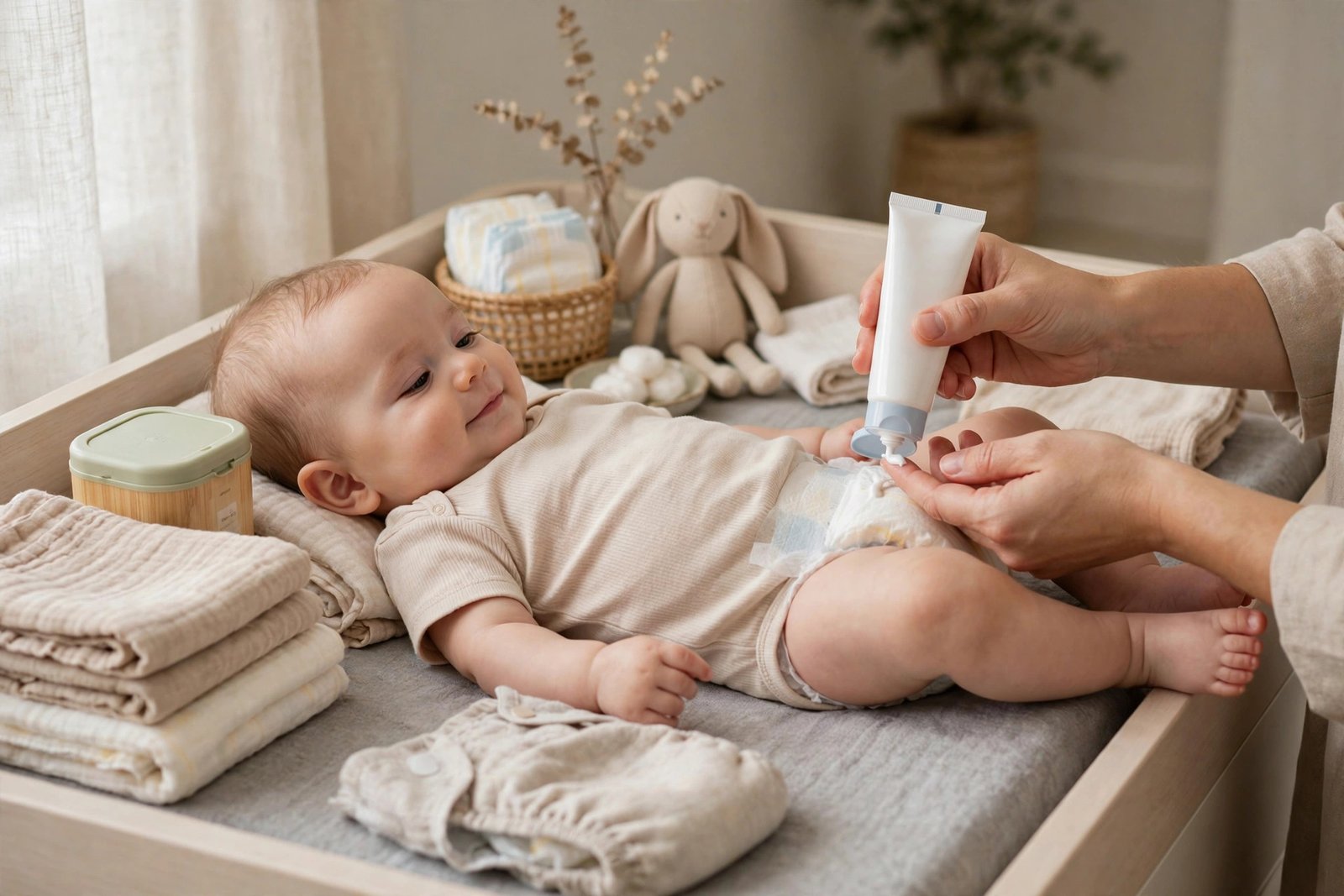
5. Apply a thick barrier cream
With every change during a rash, apply a generous layer of barrier cream or ointment. Look for:
- Zinc oxide creams (the most common and effective — the white paste type)
- Petroleum jelly (a simple, safe barrier)
Apply thickly, like frosting — you do not need to rub it in fully. The cream protects healing skin from the next wet diaper. Do not use creams with fragrances, and skip powders of any kind.
6. Choose the right diaper fit
Make sure diapers are not too tight — air circulation helps. During a bad rash, going up one size temporarily can reduce friction. Both disposable and cloth diapers are fine; what matters is frequent changing.
What NOT to Do
- Do not use talcum or cornstarch powder. Powders can be inhaled into your baby’s lungs, and cornstarch can actually feed yeast.
- Do not use steroid creams unless your pediatrician specifically prescribes them. Over-the-counter hydrocortisone is too strong for routine diaper rash and can thin the skin.
- Do not use scented wipes, soaps, or lotions on the irritated area.
- Do not scrub the rash clean. Gentle rinsing is enough — scrubbing damages healing skin.
- Do not use home remedies like baking soda baths, vinegar, or essential oils without medical advice. They can irritate raw skin badly.
Preventing the Next Rash
Once the rash clears, these habits keep it from coming back:
- Keep up frequent changes, even when there is no rash.
- Use barrier cream preventively at bedtime or during teething, travel, or illness — times when rash is more likely.
- Let the skin breathe daily with some diaper-free time.
- Wash cloth diapers thoroughly — detergent residue is a common irritant. An extra rinse cycle helps.
- Introduce new foods one at a time so you can spot which ones upset your baby’s digestion.
- During antibiotics, be extra vigilant with changes and barrier cream, since diarrhea is common.

When to See a Doctor
Most diaper rash improves within 2 to 3 days of consistent home care. Call your pediatrician if:
- The rash has not improved after 3 days of home treatment.
- The rash looks like a yeast infection: bright red, with small red bumps or spots spreading beyond the main area, especially in the folds.
- There are blisters, open sores, pimples, or yellow crusts.
- Your baby has a fever along with the rash.
- The rash is severe, spreading, or your baby seems in significant pain.
- Your baby is under 6 weeks old with any rash in the diaper area — newborns should be checked promptly.
Your doctor can confirm whether it is simple irritation, a yeast infection (which needs antifungal cream), or a bacterial infection (which needs different treatment).
Frequently Asked Questions
How long does diaper rash take to heal?
With consistent care — frequent changes, gentle cleaning, and barrier cream — most simple diaper rashes improve within 2 to 3 days and clear within a week.
Is diaper rash a sign I’m doing something wrong?
No. Almost all babies get diaper rash. It is caused by the reality of wearing a diaper, not by neglect. Even the most attentive parents deal with it.
Should I use cloth or disposable diapers for rash?
Either is fine. Frequent changing matters far more than diaper type. Some parents find that switching types during a bad rash helps, but there is no strong evidence one is better.
Can teething cause diaper rash?
Teething itself does not cause diaper rash, but the extra drool-swallowing and looser stools that sometimes come with teething can irritate the diaper area. Extra barrier cream during teething is a reasonable precaution.
Is coconut oil safe for diaper rash?
Plain coconut oil is sometimes used as a mild moisturizer, but it is not as effective a barrier as zinc oxide or petroleum jelly, and it can go rancid on the skin. Stick with proven barrier products for active rashes.
When is diaper rash an emergency?
Rarely. But seek prompt care if your baby has a fever with the rash, the skin is blistered or bleeding significantly, or your newborn (under 6 weeks) develops any diaper rash.
The Bottom Line for Parents
Diaper rash is normal, common, and very treatable. Frequent changes, gentle water-based cleaning, plenty of air time, and a thick layer of zinc oxide or petroleum jelly will clear most rashes within days. Prevention is the same routine, kept up between rashes.
Stay consistent, keep it gentle, and remember — this too shall pass, usually faster than you expect, with a little patience and the right barrier cream.
Related reading: Can I Use Baby Wipes on a Newborn?, How Often Should I Bathe My Baby?, and When Can I Start Using Baby Lotion on My Newborn?.
*This article is for informational purposes only and is not medical advice. If you are concerned about your baby’s skin, consult your pediatrician.*
—
Publish spec (for main agent): Title as above. Focus keyword: diaper rash remedies. Internal links: 3 as in Related reading. 1 Merriam-Webster dictionary link in conclusion’s last 3 lines (patience). Realistic featured image 1200×800, Title=slug, Alt=focus keyword, 2 content images, meta description as in frontmatter.
