
It’s best to wait. For the first few weeks, plain water and soft cotton wool are the gentlest way to clean your newborn — pediatric guidance generally recommends holding off on wipes until around 2–4 weeks, when skin is less fragile. When you do switch, choose fragrance-free, alcohol-free wipes.
This surprises a lot of new parents, especially since wipes are sold right next to the newborn diapers. Below, we’ll explain why newborn skin needs this extra caution, the simple water-and-cotton-wool method to use instead, how to choose truly gentle wipes when the time comes, and where wipes do and don’t belong in your routine.
The Short Answer: Water First, Wipes Later
For the first 2 to 4 weeks, skip the wipes and use plain water. After that window, most babies handle gentle, fragrance-free, alcohol-free wipes just fine — including in the diaper area.
This isn’t because wipes are dangerous. It’s because newborn skin in the first weeks is exceptionally thin and absorbent, and its protective barrier is still developing. Even mild cleansing ingredients and the friction of wiping can irritate it. The NHS newborn skincare guidance advises bathing with plain water only for at least the first month and specifically says to avoid medicated wipes during that time.
Think of it as a brief waiting period, not a permanent ban. A few weeks of water-only cleaning is a small investment in your baby’s comfort.
Why Newborn Skin Needs Extra Caution With Wipes
Three things make wipes trickier for newborns than for older babies:
- The skin barrier is immature. The top layer of newborn skin is very thin, and it takes weeks to build its natural protective barrier. Anything applied to it — even gentle ingredients — absorbs more easily.
- Ingredients can irritate. Many wipes contain fragrance, preservatives, or cleansing agents that are perfectly fine for older babies but too much for fresh newborn skin. The NHS notes that irritation from fragranced wipes or wipes containing alcohol is a known contributor to nappy rash.
- Friction adds up. Newborns go through 8 to 12 diaper changes a day. That’s a lot of wiping. Repeated friction on delicate skin can cause redness even when the wipe itself is mild.
This is also why pediatric guidance leans “less is more” in the early weeks across the board — fewer products, gentler methods, and plenty of patience.
The Cotton Wool and Warm Water Method
Here’s the newborn-friendly alternative. It’s simple, cheap, and genuinely gentler than any wipe:
1. Prepare a bowl of warm water and a stack of soft cotton wool pads or balls before you start. Test the water on the inside of your wrist — it should feel warm, not hot.
2. Wipe front to back. For girls, always wipe from front to back to keep things clean. Use one pad per stroke and a fresh pad for each pass.
3. Clean the folds. Gently clean around the skin folds where moisture collects, but don’t scrub.
4. Pat dry. Press gently with a soft, dry cloth — including between the skin folds. Moisture left behind can lead to soreness.
5. Put on the fresh diaper. If you’re using a barrier cream for extra protection, apply a thin layer now.
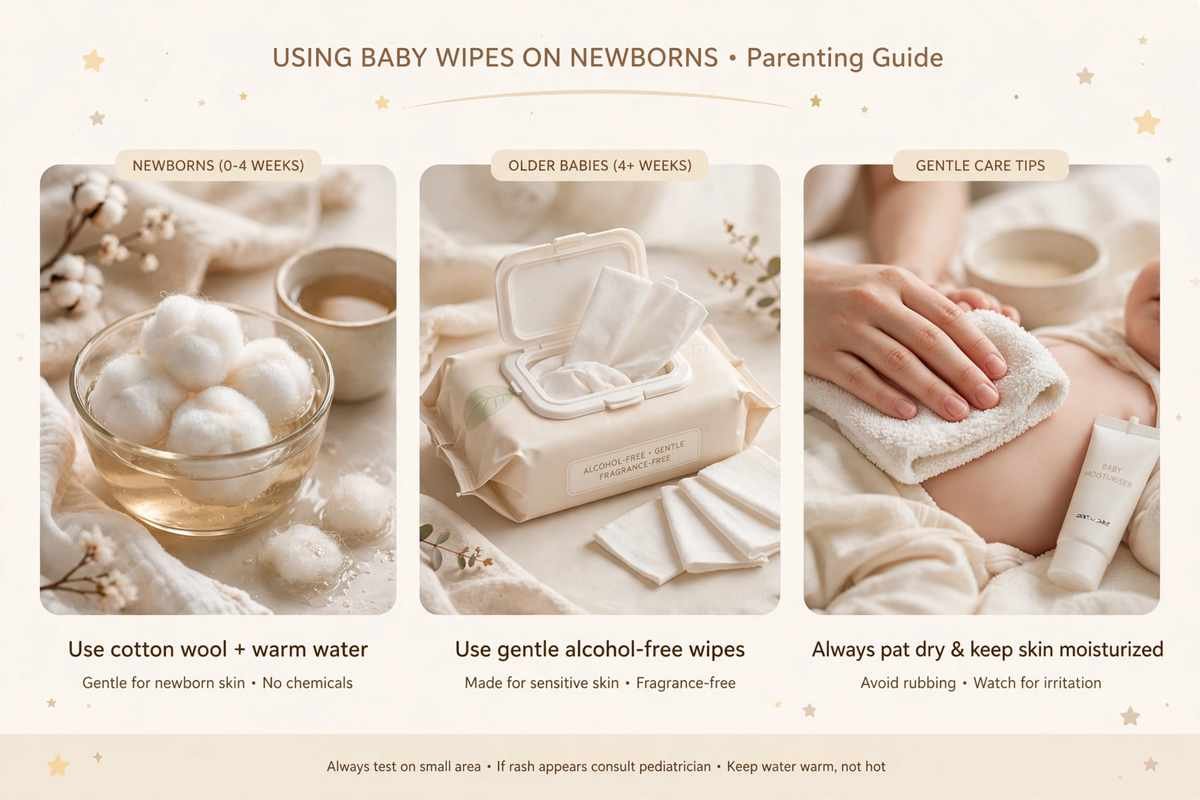
For a quick daytime wipe-down without a full change, the same method works — see our guide on how often to bathe your baby for how these gentle cleanings fit around bath days.
Water vs. Wipes: A Quick Comparison
| Warm water + cotton wool | Baby wipes | |
|---|---|---|
| Gentleness | Gentlest option; no ingredients, minimal friction | Gentle enough after the first weeks, if fragrance-free and alcohol-free |
| Best for | First 2–4 weeks; sore or rashy skin at any age | Everyday changes after the newborn weeks; outings and travel |
| Convenience | Needs prep; best at home | Grab-and-go; ideal for the diaper bag |
| Cost | Very low | Ongoing expense |
Many parents end up using both long-term: water at home for everyday changes, wipes for outings. That’s a perfectly good system.
When Wipes Become Fine (Around 2–4 Weeks)
Once your baby’s skin has had a few weeks to mature, you can introduce wipes. There’s no exact day — think of it as a gradual transition:
- Start with the gentlest wipes you can find — fragrance-free and alcohol-free, with the shortest ingredient list.
- Use them for the diaper area first. That’s where they’re most useful.
- Watch for reactions. A little pinkness that fades quickly is usually just friction. Persistent redness, dryness, or little bumps after switching to wipes mean it’s worth pausing and going back to water for a bit.
- Keep water in the mix. On days when your baby’s bottom looks sore or red, switch back to warm water and cotton wool until the skin settles.
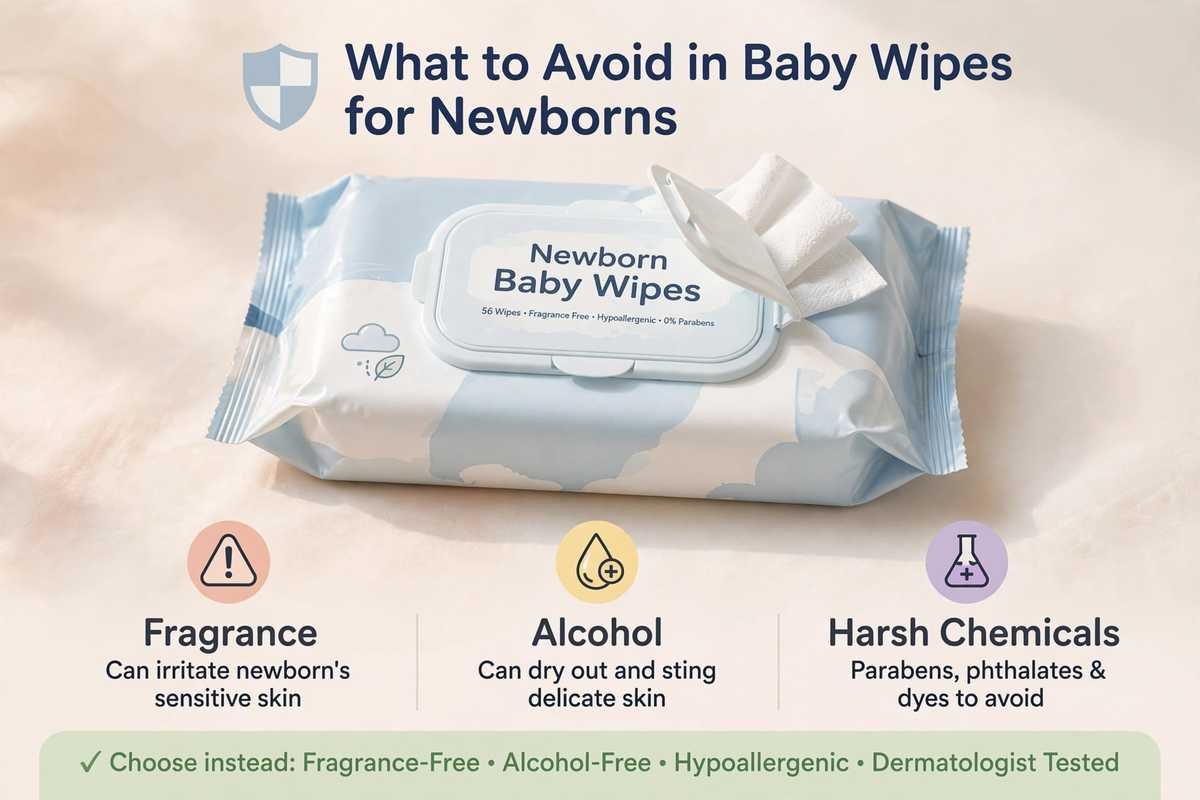
The AAP’s safer product tips for families recommend fragrance-free baby wipes or plain water for diaper care — the two sit side by side as good options, which tells you water never really goes out of style.
How to Choose Gentle Baby Wipes
Not all wipes are equal. When you’re ready to buy, use this checklist:
| Look for | Avoid |
|---|---|
| Fragrance-free on the label | Added fragrance or parfum |
| Alcohol-free | Alcohol (drying and irritating) |
| Short, simple ingredient list | Methylisothiazolinone (MI) and other harsh preservatives |
| Thick, soft texture | Rough or thin wipes that need extra scrubbing |
| Resealable packaging (keeps them moist) | Dried-out wipes — they cause more friction |
“Water wipes” (wipes made mostly of water with very few added ingredients) are a popular choice for young babies, but they’re still wipes — during the first couple of weeks, plain water and cotton wool remain the gentlest option.
Can I Use Wipes on My Baby’s Face and Hands?
Keep wipes away from the face in the newborn weeks. For faces, plain water and cotton wool are the gold standard at any age — our step-by-step on cleaning your baby’s face shows the technique.
For hands, the occasional wipe is fine once your baby is past the newborn weeks — sticky fingers happen, especially when you’re out. Just use a gentle, fragrance-free wipe, and remember that babies put their hands in their mouths constantly, so plain water is still the safest default at home.
One more spot to be careful with: don’t use wipes on the umbilical cord stump. Keep that area clean and dry with water only if needed, and let it fall off naturally.
Wipes, Moisturizer, and the Bigger Picture
Once wipes are in the routine, remember they pair with the rest of your baby’s skincare. If the diaper area ever gets dry or chapped, a thin layer of barrier cream helps — and when your baby is old enough for lotion, our guide on when to start using baby lotion walks through the timing.
Also worth knowing: if a diaper rash appears, going back to water-only cleaning while the skin recovers is often the fastest route to comfort.
When to See Your Pediatrician
Mention it to your pediatrician if you notice:
- A rash in the diaper area that doesn’t improve after a few days of gentle water-only care
- Broken skin, blisters, or oozing in the diaper area
- Redness that spreads beyond the diaper area
- Your baby seems in pain during changes or is unusually fussy
- Any reaction to a new wipe product — redness, bumps, or increased dryness
Skin concerns in newborns deserve a professional eye sooner rather than later. A quick call is always reasonable.
FAQ
Are water wipes okay for newborns?
Water wipes are gentler than standard wipes, but they’re still wipes — they contain some ingredients and involve friction. For the first couple of weeks, plain water and cotton wool are gentler still. After 2–4 weeks, water wipes are a fine choice.
Can plain water really handle meconium?
Yes, with a little patience. That sticky first poo comes off with warm water and extra cotton wool pads — use plenty of them and take your time rather than scrubbing. If it’s stubborn, hold a warm damp pad against the area for a few seconds to soften it first.
Can I make my own reusable cloth wipes?
Absolutely. Soft cotton cloths or flannels dampened with plain warm water work just as well as disposable cotton wool for home use. Wash them in hot water with a gentle, fragrance-free detergent and skip the fabric softener, which can leave residue.
My baby got red after I started using wipes — what should I do?
Pause the wipes and go back to warm water and cotton wool for a few days. If the redness fades, the wipes were likely the cause — try a different, simpler brand later, or wait another week or two before reintroducing them. If the redness persists or worsens, check with your pediatrician.
Do I even need wipes, or can I just use water forever?
You can absolutely stick with water at home for as long as you like — many families do. Wipes earn their keep mainly for outings, travel, and the diaper bag, where a bowl of warm water isn’t practical. It’s convenience, not necessity.
Keep Reading
You may also like: Barrier Cream vs Diaper Rash Cream Does My Child Need a Skincare Routine? Fragrance-Free vs Unscented Baby Products Is Bubble Bath Safe for Kids? Diaper-Free Time: Benefits for Baby Skin How to Prevent Heat Rash in Babies How Often Should Toddlers Bathe? What Age Can Kids Start Using Face Wash? How Often Should Kids Moisturize? Dry Patches on Toddler Skin: What Causes Them Baby Skincare Basics for New Parents Skincare Ingredients to Avoid for Children How to Prevent Diaper Rash in Newborns Toddler Skincare Routine: A Simple Guide
This article is for general information only and is not medical advice. Every child’s skin is different — if you’re unsure or notice anything concerning, talk to your pediatrician or a dermatologist.

Jessica covers kids’ health and skincare topics for parents. Her articles break down expert recommendations into clear, everyday advice — always with a reminder that your pediatrician knows your child best.