
Cleaning your baby’s face daily is simple: use a soft washcloth dampened with lukewarm water, wipe gently from the inner eyes outward, clean around the mouth and neck folds, then pat dry. No soap needed for everyday cleaning — plain water handles milk residue, drool, and spit-up perfectly well.
It takes about two minutes, and doing it once or twice a day prevents the buildup that leads to irritation. Here’s the full routine, plus guidance on products, problem areas, and what to avoid.
Why Daily Face Cleaning Matters
A baby’s face collects a surprising amount through the day:
- Milk residue — breast milk or formula around the mouth and cheeks
- Drool — especially once teething begins, and drool left sitting can irritate skin
- Spit-up — which can dry in neck folds and behind ears
- Everyday dust and lint — from blankets, clothes, and cuddles
Left uncleaned, moisture trapped in skin folds (neck, behind ears, under the chin) can lead to redness and irritation. A quick daily wipe keeps everything comfortable. The AAP gives the same face-first advice in its bathing guidance: start by washing the baby’s face with a dampened cloth, taking care not to get water into the eyes or mouth.
What You’ll Need
Keep it minimal:
- Soft washcloths — dedicated baby washcloths or soft cotton cloths; muslin works well too
- Lukewarm water — comfortably warm, tested on your inner wrist
- Optional: a small bowl of water if you’re not at the sink
- A dry soft towel for patting dry
That’s genuinely it for daily cleaning. You don’t need baby face wash, wipes, or cleansers for a routine wipe-down.
Step-by-Step: The Daily Face Clean
1. Wash your hands with soap and water first.
2. Dampen the washcloth with lukewarm water and wring it out so it’s moist, not dripping.
3. Wipe the eyes — using a clean corner of the cloth for each eye, wipe gently from the inner corner outward. Use plain water only around the eyes. This follows the NHS “topping and tailing” technique: wipe gently around the eyes from the nose outward, using a fresh piece of cotton wool for each eye so you don’t transfer anything from one eye to the other.
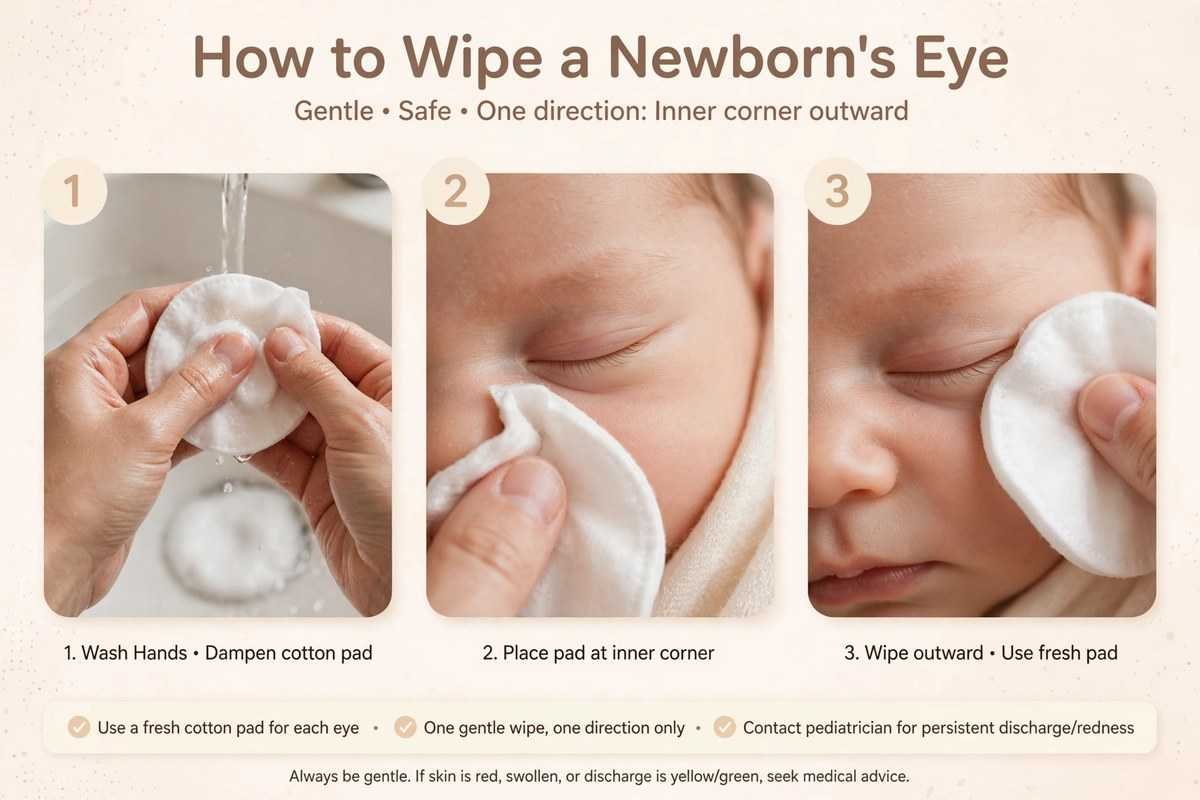
4. Clean the rest of the face — wipe the forehead, cheeks, nose, and chin with gentle strokes. No scrubbing.
5. Pay attention to creases — gently clean inside the neck folds, behind the ears, and under the chin, where moisture and milk hide.
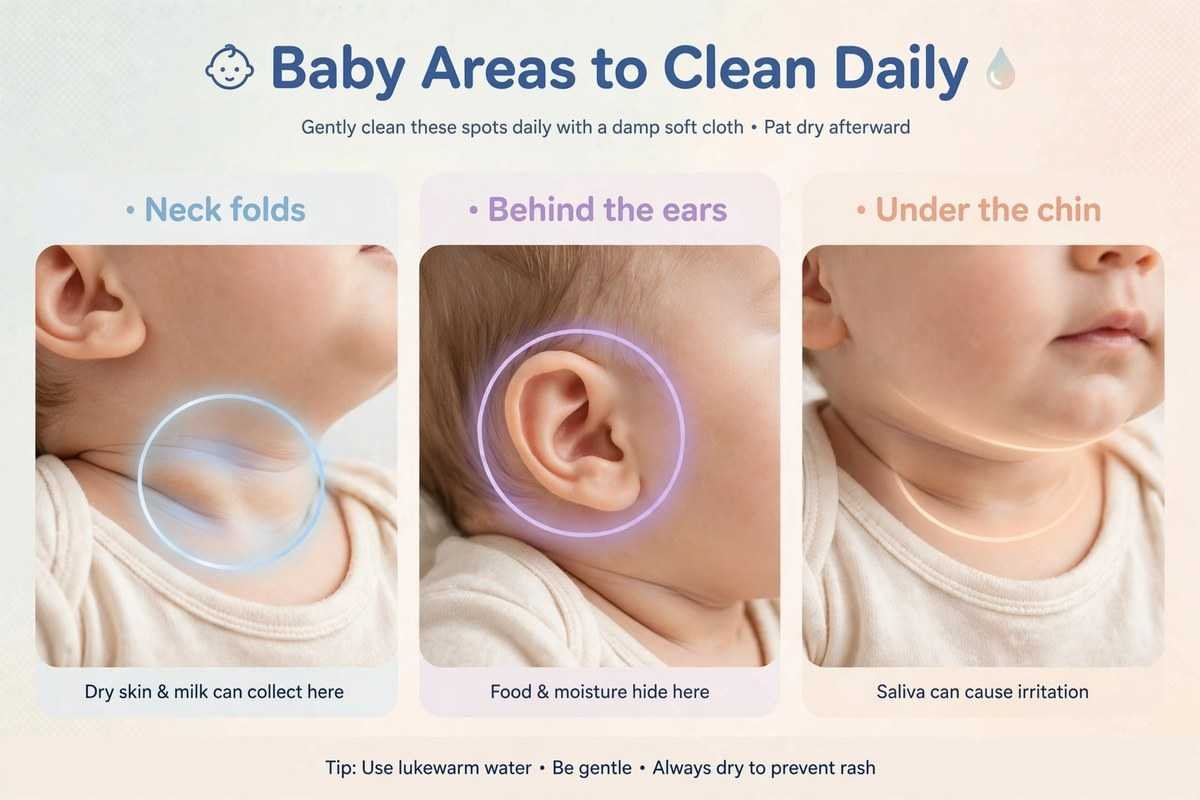
6. Wipe around the mouth — after feeds, clear away milk or food residue.
7. Pat dry — use a soft dry towel to pat (not rub) the face and folds dry. Moisture left sitting in folds causes irritation.
8. Moisturize if needed — if your baby’s cheeks tend toward dryness, a thin layer of fragrance-free baby moisturizer is fine (generally from a few weeks of age onward).
When to do it: Once a day is the baseline — many parents do it in the morning and again after the last feed or before bed. After messy feeds, a quick mouth wipe anytime is good practice.
Soap, Wipes, or Just Water?
| Method | Best for | Notes |
|---|---|---|
| Lukewarm water + soft cloth | Everyday daily cleaning | The default; gentlest option |
| Gentle baby cleanser | Occasional deeper clean (e.g., after very messy meals) | Use a pea-sized amount, rinse well |
| Fragrance-free baby wipes | On the go, travel, quick cleanups | Fine occasionally; not ideal as the daily default for the face |
| Plain cotton pads + water | Newborns, very sensitive skin | Ultra-gentle; good for the first weeks |
For everyday face cleaning, water wins. Save cleansers for bath time, and even then use them sparingly.
Handling Common Issues
Milk residue and “milk spots”: Wipe gently after feeds. The tiny white bumps some babies get on the nose and cheeks (milia) are normal, harmless, and fade on their own — don’t try to squeeze or scrub them.
Drool rash: Once drooling ramps up, the constant moisture can redden the chin and neck. Wipe drool when you notice it, keep the area dry, and a thin barrier of plain petroleum jelly on the chin can protect the skin. If redness persists or looks raw, mention it to your pediatrician.
Cradle cap on the eyebrows or forehead: Those yellowish, scaly patches are common and harmless. Don’t pick at them. Gentle daily wiping is enough; persistent or spreading patches are worth mentioning at your next checkup.
Dry, flaky cheeks: Common in winter or dry climates. After cleaning, apply a thin layer of fragrance-free baby cream while the skin is still slightly damp.
What to Avoid
- Adult face washes, soaps, or scrubs — too harsh for baby skin
- Fragranced wipes or products on the face
- Scrubbing — gentle strokes only; baby skin is thin
- Alcohol-based products — drying and irritating
- Getting water or soap in the eyes — use a separate clean, damp corner for the eye area
- Over-cleaning — more than 2–3 thorough face washes a day can dry the skin out
Building It Into Your Daily Rhythm
The easiest routines are the ones attached to things you already do:
- Morning: Quick face wipe when your baby wakes up — pairs naturally with the diaper change.
- After feeds: A speedy mouth-and-chin wipe before burping ends.
- Evening: A slightly more thorough clean (including neck folds and behind ears) as part of the bedtime routine.
Keep a small stack of washcloths wherever you feed or change your baby, so the right tool is always within reach. When the cloth is right there, the two-minute routine actually happens.
When to Introduce a Gentle Cleanser
Plain water is enough for daily face cleaning well into the toddler years. Consider adding a tiny amount of gentle baby cleanser only when:
- Your baby is eating messy solids and water alone isn’t cutting it
- There’s visible buildup a cloth can’t lift
- Your pediatrician suggests it for a specific reason
Even then, use a pea-sized amount, keep it away from the eyes, and rinse thoroughly. For most families, the “cleanser upgrade” doesn’t happen until the toddler or preschool years — and that’s perfectly fine.
Products Marketed “for Baby Faces”: Do You Need Them?
Walk down the baby aisle and you’ll see cleansers, lotions, and balms specifically labeled for faces. Here’s an honest take:
- You don’t need a separate face product. A good fragrance-free baby moisturizer works for face and body alike.
- “Tear-free” matters only for cleansers used near the eyes — and since daily face cleaning doesn’t need cleanser at all, it’s mostly a bath-time consideration.
- Skip anything with fragrance, dyes, or “natural” essential oils marketed as gentle — the label doesn’t make them gentler.
- Fewer products beat more products. One gentle cleanser (for bath time) and one simple moisturizer (if needed) cover virtually every baby-face situation.
Save your money and your shelf space. The washcloth is doing the real work.
FAQ
Can I use baby wipes on my baby’s face every day?
Occasional use is fine, but for daily face cleaning, a damp washcloth with water is gentler and cheaper. If you do use wipes, choose fragrance-free, alcohol-free ones, and avoid the eye area.
How do I clean my newborn’s face in the first weeks?
The same way — soft cloth, lukewarm water, gentle wipes. For very young newborns, plain cotton pads with cooled boiled water are an extra-gentle option many parents like for the first couple of weeks.
My baby’s neck fold is red — what should I do?
Redness in neck folds is usually from trapped moisture. Clean the fold gently, pat it completely dry (this step matters most), and let it air out when you can. If the redness doesn’t improve in a day or two, looks raw, or has an odor, check with your pediatrician.
Should I moisturize my baby’s face after cleaning?
Only if the skin needs it. If cheeks look dry or flaky, a thin layer of fragrance-free baby moisturizer after cleaning helps. If the skin looks healthy, you can skip it — less is more.
Keep Reading
You may also like: Can I Use Baby Wipes on a Newborn? How Often Should I Bathe My Baby? When Can Babies Wear Sunscreen? Barrier Cream vs Diaper Rash Cream Mineral vs Chemical Sunscreen for Kids Why Does Toddler Skin Get So Dry in Winter? How to Read a Skincare Label for Kids’ Products How to Get Kids to Wash Their Face What Age Can Kids Start Using Face Wash? Skincare Routine for a 10-Year-Old: Simple Steps Sunscreen Stick vs Lotion for Kids’ Faces Kids’ Daily Skincare Routine by Age Do Tweens Need Serums? A Parent’s Guide Teen Skincare Starter Routine: A Parent’s Guide Toddler Skincare Routine: A Simple Guide
This article is for general information only and is not medical advice. Every child’s skin is different — if you’re unsure or notice anything concerning, talk to your pediatrician or a dermatologist.

Jessica covers kids’ health and skincare topics for parents. Her articles break down expert recommendations into clear, everyday advice — always with a reminder that your pediatrician knows your child best.