
Most babies outgrow the dry, flaky newborn phase within 2 to 4 weeks, as their skin adjusts to life outside the womb. Lingering dryness — rough patches or winter dryness — usually eases over the first year as the skin’s moisture barrier matures. In the meantime, gentle bathing, short lukewarm baths, and a simple fragrance-free moisturizer are all most babies need.
Watching your baby’s skin flake and peel can be unsettling, especially for first-time parents. The reassuring truth: dry, flaky skin is one of the most common — and most temporary — newborn experiences. Here’s the typical timeline, why it happens, and how to keep your baby comfortable while their skin finds its balance.
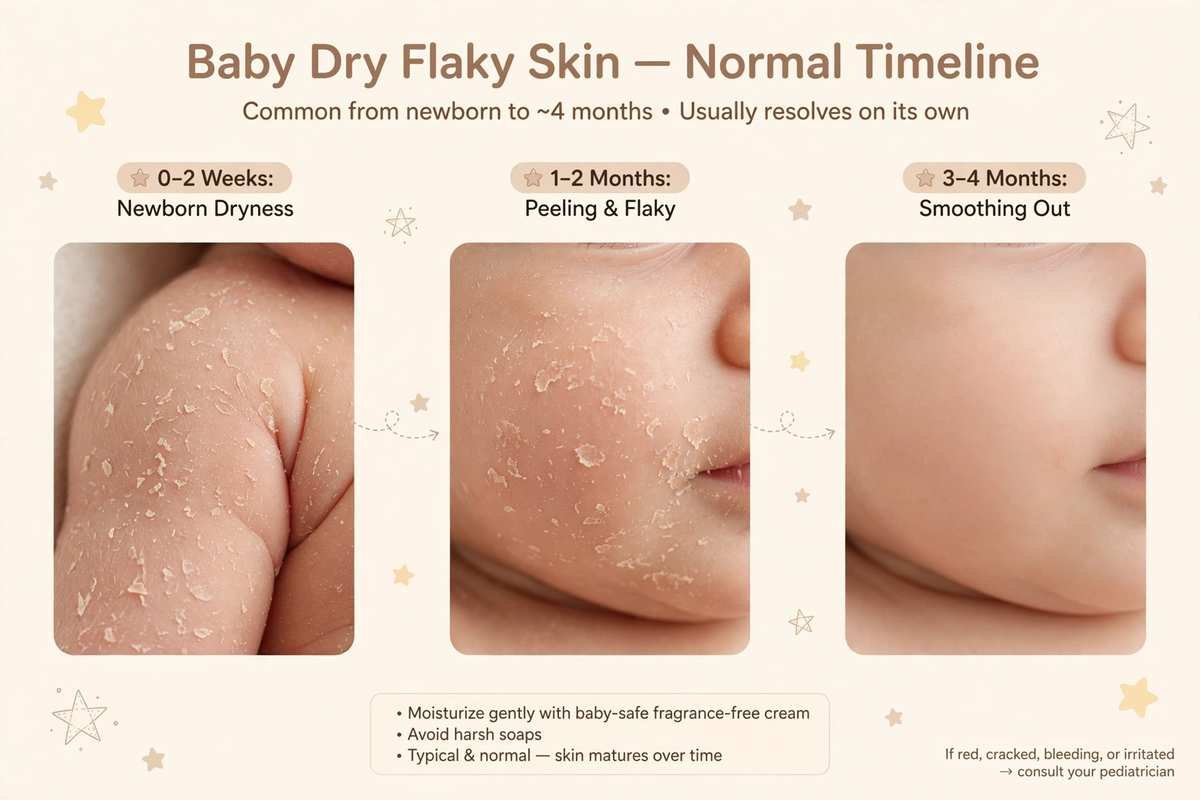
The Short Answer: A Typical Timeline
| Age | What to expect |
|---|---|
| Days 1–3 | Skin may look fine, or dryness begins on hands and feet |
| Weeks 1–2 | Flaking is usually at its most noticeable |
| Weeks 2–4 | Flakes gradually decrease; most newborn peeling resolves |
| Months 1–3 | Skin generally looks smoother; occasional dry patches possible |
| Months 3–6 | Skin barrier strengthening; dryness less frequent |
| Months 6–12 | Most babies have settled into normal, comfortable skin |
Every baby follows their own version of this timeline. Some barely flake at all; others shed papery skin for a full month. Both are within the normal range, as long as the skin underneath looks healthy and your baby seems comfortable.
Why Baby Skin Starts Out So Dry
Your baby spent months floating in warm fluid, wrapped in vernix — a creamy coating that kept their skin moisturized. Birth changes everything at once:
- Fluid to air. The womb was 100% humidity; your home and the hospital are dramatically drier. The outer skin layer responds by shedding.
- The vernix wears off. That built-in moisturizer absorbs within a day or two, leaving skin to fend for itself for the first time.
- A thinner outer layer. Newborn skin is thinner than adult skin and loses moisture faster, which is why even small things — a long bath, dry heated air — show up as flakes.
- The environment. Winter heating, air conditioning, and frequent baths all pull moisture from delicate skin.
None of this means anything is wrong. It’s a transition, not a condition — the skin is learning to do a job it has never done before.
What “Outgrowing It” Actually Looks Like
Outgrowing dry, flaky skin doesn’t happen in a single dramatic moment. It looks like this:
1. Fewer visible flakes. The papery shedding on hands, feet, and ankles tapers off and stops.
2. Smoother texture. Skin feels soft rather than rough or scaly to the touch.
3. Less reactivity. Skin bounces back faster after baths instead of looking tight or ashy.
4. Seasonal dryness only. After the newborn phase, most dryness shows up the way it does for everyone — in cold, dry weather — rather than as a constant state.
It’s worth knowing that some children are simply more prone to dry skin than others, just like some adults are. A toddler who gets dry cheeks every winter isn’t “behind” — they may just have skin that appreciates a little extra moisture in dry months. That’s normal too.
What Helps While You Wait
You can’t rush the timeline, but you can absolutely keep your baby comfortable. Pediatric guidance generally recommends a simple, gentle routine:
- Keep baths short and lukewarm. Five to ten minutes in warm (not hot) water is plenty. Hot water strips moisture fast.
- Bathe less often. Two to three baths a week is enough for most babies — daily baths aren’t necessary and can worsen dryness. Our guide to how often to bathe your baby breaks down the reasoning.
- Use minimal cleanser. Plain water handles most of the job. When you do use soap, choose a mild, fragrance-free baby cleanser and rinse it off quickly.
- Moisturize after baths. Applying a simple fragrance-free baby cream or lotion within a few minutes of toweling off helps lock in moisture. The AAP’s bathing guide recommends a small amount of fragrance-free, hypoallergenic moisturizing lotion right after a bath to help prevent dry skin. If you’re unsure when to start, read our notes on moisturizing your newborn.
- Pat dry, don’t rub. Gentle patting with a soft towel is kinder to flaky skin.
- Add humidity. A cool-mist humidifier in the nursery can help in dry climates and heated homes — just keep it clean per the manufacturer’s instructions.
- Dress in soft cotton. Breathable fabrics are gentler than synthetics, and washing new clothes before first wear removes irritating residues.
Mayo Clinic’s baby bath basics guide adds a useful rule of thumb: most newborns don’t need lotion after every bath, but if your baby’s skin is very dry, a small amount of unscented baby moisturizer on the dry areas is fine — and if dryness continues, you may be bathing too often.
Normal Flakes vs. Something Worth Flagging
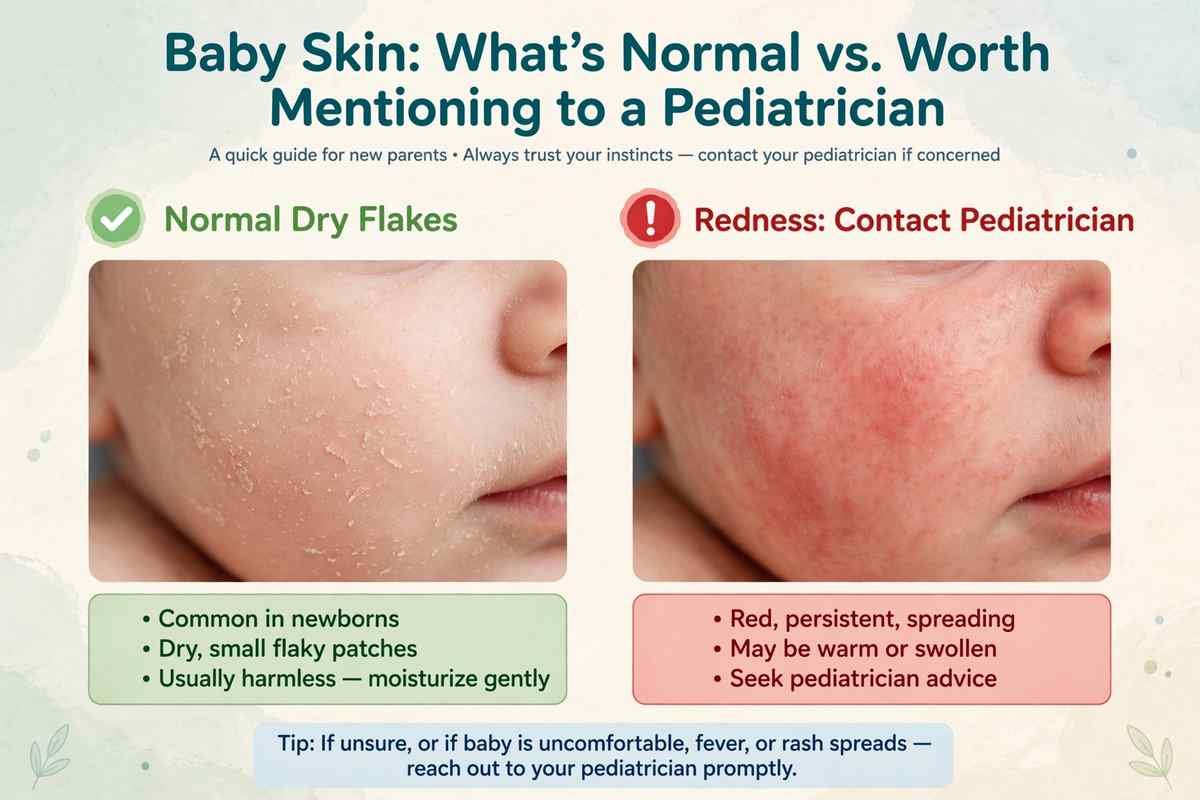
Most dry, flaky skin is harmless. Here’s how to tell the difference:
| Feature | Normal newborn dryness | Worth mentioning to your pediatrician |
|---|---|---|
| Appearance | Dry, papery flakes; healthy-looking skin underneath | Red, raw, cracked, oozing, or blistered areas |
| Location | Hands, feet, ankles, wrists; sometimes torso | Widespread redness, or rash concentrated in folds |
| Baby’s comfort | Baby seems unbothered | Scratching, fussiness, or trouble sleeping from itching |
| Timeline | Steadily improving over weeks | Getting worse after several weeks, or not improving |
| Other symptoms | None | Fever, poor feeding, or unusual fussiness |
For a closer look at the peeling phase specifically, see our article on whether newborn skin peeling is normal — it covers the week-by-week pattern in detail.
When to See Your Pediatrician
Dry skin alone in a young baby rarely needs a doctor’s visit. Do check in if you notice:
- Cracks in the skin that bleed or look painful
- Redness, swelling, oozing, or crusting anywhere
- Dry patches that spread or get worse instead of better over a few weeks
- Itching that seems to bother your baby or disrupt sleep
- Dryness paired with other symptoms like poor feeding or fever
Your pediatrician sees newborn skin every day and can quickly reassure you — or suggest next steps if something needs attention. When in doubt, a call is always reasonable.
FAQ
My two-month-old still has dry patches — is that normal?
Quite possibly, yes. While the all-over newborn flaking usually resolves within a month, isolated dry patches can linger for several months as the skin barrier keeps maturing. Keep up the gentle routine — short baths, moisturizer afterward — and mention it at your next well-baby visit if it isn’t gradually improving.
Should I exfoliate or peel off the flakes?
No. Picking, peeling, or scrubbing flakes can irritate the fresh skin underneath and even cause tiny breaks in the skin. Let flakes fall off on their own — moisturizer and time do the job safely.
Can dry indoor air make my baby’s skin worse?
Yes. Heated homes in winter and air-conditioned rooms in summer both lower humidity, which pulls moisture from skin. A cool-mist humidifier in the room where your baby sleeps can help, along with keeping baths short and moisturizing afterward.
Will my baby’s dry skin turn into eczema?
Not necessarily. Newborn dryness is a universal transition and doesn’t predict eczema or lifelong sensitive skin — many babies who flake dramatically go on to have perfectly resilient skin. Eczema looks different: red, inflamed, itchy patches rather than simple dry flakes. If you’re seeing redness and itching rather than just dryness, your pediatrician can advise.
Keep Reading
You may also like: Is Coconut Oil Safe for Baby Skin? Does My Child Need a Skincare Routine? Soak and Seal Method for Kids Skincare Routine for 8-Year-Olds Why Does Toddler Skin Get So Dry in Winter? How to Prevent Heat Rash in Babies How Often Should Toddlers Bathe? How to Protect Kids’ Skin in Winter: A Parent’s Guide How Often Should Kids Moisturize? Dry Patches on Toddler Skin: What Causes Them How Often to Moisturize a Child’s Dry Skin Do Tweens Need Serums? A Parent’s Guide How to Prevent Diaper Rash in Newborns Toddler Skincare Routine: A Simple Guide
This article is for general information only and is not medical advice. Every child’s skin is different — if you’re unsure or notice anything concerning, talk to your pediatrician or a dermatologist.

Emily writes practical guides for parents on children’s skincare — from a newborn’s first bath to a teen’s first routine. She carefully researches pediatric guidance and turns it into simple steps busy families can actually follow.