
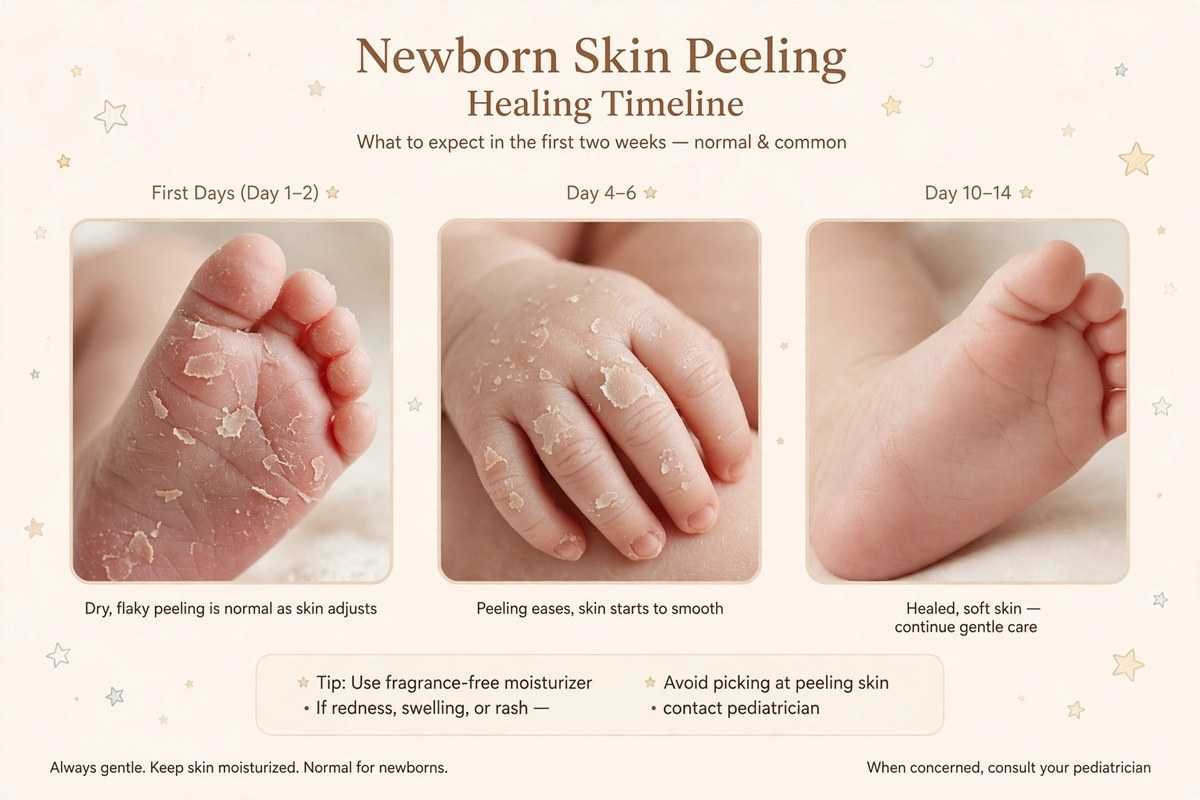
Yes — newborn skin peeling is almost always completely normal. The AAP’s newborn guide confirms it directly: “peeling skin is normal and usually requires no treatment.” Most newborns develop dry, flaky, peeling skin in the first week or two of life, especially on their hands, feet, ankles, and around the wrists. It’s simply the outermost layer of skin adjusting to dry air after months in fluid, and it resolves on its own without any treatment.
Here’s what’s happening, how long it lasts, what (little) you need to do, and the rare signs worth mentioning to your pediatrician.
Why Newborn Skin Peels
In the womb, your baby was surrounded by amniotic fluid and coated in vernix — a creamy, protective layer that kept the skin moisturized. After birth:
- The vernix wears off, removing that built-in moisture barrier.
- Dry air replaces fluid. Hospital rooms and homes are far drier than the womb.
- The outer skin layer sheds. The top layer of skin (which did its job in the womb) naturally flakes away as fresh skin underneath takes over.
Babies born past their due date tend to peel more noticeably, because more of their vernix has already worn off before birth. First-time parents are often alarmed by how dramatic it can look — sheets of flaky skin on the feet are common — but the baby is almost never bothered by it.
Typical Timeline
| When | What to expect |
|---|---|
| Days 1–3 | Skin may look fine, or peeling begins on hands and feet |
| Days 3–10 | Peeling is usually at its most noticeable |
| Weeks 2–3 | Flaking gradually decreases |
| By week 3–4 | Most peeling has resolved on its own |
Every baby is different — some barely peel, others flake for a full month. Both are within the normal range as long as the skin underneath looks healthy. NHS guidance similarly notes that dry or peeling skin in the first 1–2 weeks of life is normal.
Gentle Care: What to Do (and Not Do)
The good news: peeling newborn skin needs very little intervention.
Do:
- Keep baths short (5–10 minutes) and lukewarm — hot water worsens dryness
- Use only a tiny amount of gentle, fragrance-free baby cleanser, or plain water
- Pat skin dry gently instead of rubbing
- Let flakes fall off naturally
- After about 2–4 weeks, you can apply a simple fragrance-free baby moisturizer if dryness persists
Don’t:
- Pick, peel, or scrub the flakes off — this can irritate the fresh skin underneath
- Apply lotions, oils, or creams in the first days unless your pediatrician advises it
- Use exfoliating products, adult moisturizers, or anything with fragrance
- Over-bathe — 2–3 times per week is plenty for newborns
Peeling vs. Something Else: How to Tell
Normal peeling has a recognizable pattern. Here’s how it compares with things worth a second look:
| Feature | Normal peeling | Worth mentioning to your pediatrician |
|---|---|---|
| Appearance | Dry, papery flakes; skin underneath looks normal | Red, raw, oozing, or blistered areas |
| Location | Hands, feet, ankles, wrists, sometimes torso | Widespread redness or rash in skin folds |
| Baby’s comfort | Baby seems unbothered | Baby seems itchy, uncomfortable, or in pain |
| Duration | Improves within 2–4 weeks | Getting worse after several weeks, or not improving |
| Other symptoms | None | Fever, poor feeding, or unusual fussiness alongside skin changes |
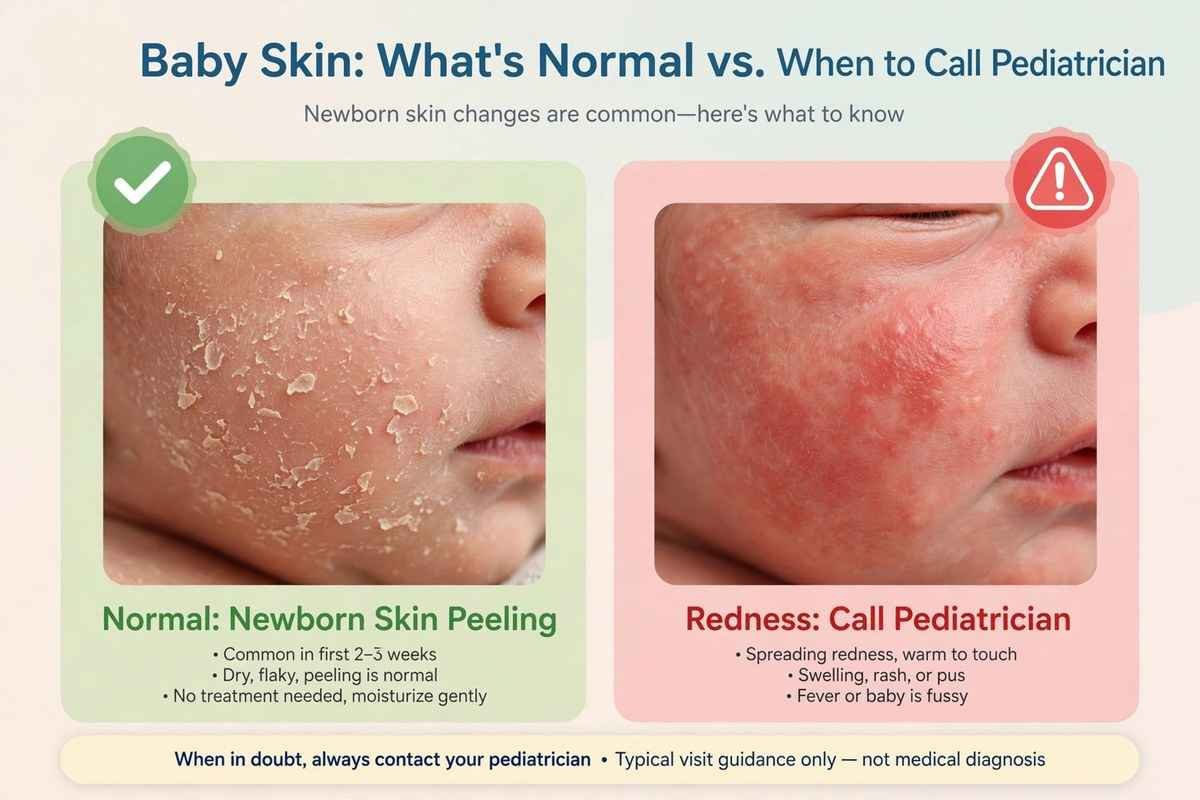
Conditions like eczema or infection look and behave differently from simple newborn peeling — they involve redness, inflammation, or discomfort rather than just dry flakes. When in doubt, a quick call to your pediatrician settles it.
Why Hands and Feet Peel the Most
Parents often notice peeling concentrated on the hands, feet, and ankles. There’s a simple reason: these areas had the most direct exposure once the vernix wore thin, and the skin there is subject to the most friction from blankets, socks, and movement. It’s also why post-term babies — who’ve shed more vernix before birth — peel most dramatically in exactly these spots.
Socks and mittens don’t prevent it, and there’s no need to try. The fresh skin underneath is healthy; it just needs time.
Should You Moisturize Peeling Skin?
This is the question behind the question, so let’s answer it directly:
- Weeks 1–2: Generally no. The peeling is a natural transition, not dryness that needs fixing. Adding product doesn’t speed it up.
- Weeks 3–4: If flaking lingers and the skin looks dry rather than just flaky, a simple fragrance-free baby cream is fine.
- Beyond a month: Moisturize as you would normally — especially after baths.
What doesn’t help: exfoliating the flakes, applying multiple products, or switching products every few days hoping one “works.” Patience is the actual remedy here.
Does Peeling Mean Your Baby Has Sensitive Skin?
Not necessarily. Newborn peeling is a universal transition — it happens to babies who go on to have perfectly resilient skin. It doesn’t predict eczema, allergies, or lifelong sensitivity.
That said, the newborn weeks are a good time to build gentle habits that benefit every skin type:
- Fragrance-free everything — cleansers, laundry detergent, wipes
- Soft fabrics — cotton against the skin; wash new clothes before first wear
- Minimal products — the fewer ingredients touching newborn skin, the better
- Sun awareness from day one — newborns shouldn’t be in direct sun; shade, hats, and protective clothing come before any product
If dryness or sensitivity does persist well beyond the newborn stage, your pediatrician can advise — but peeling alone in the first month is not a sign of a problem.
What About Siblings and Second Babies?
Experienced parents often laugh at how much they worried about peeling with their first. A few reassuring notes if this isn’t your first rodeo — or if grandparents are concerned:
- Every baby peels differently. Your first may have flaked for three weeks while your second barely peels. Both are normal.
- Well-meaning advice to “oil the baby up” is common in many families and cultures. A light, plain oil won’t harm healthy skin, but it isn’t necessary either — and heavily fragranced traditional oils are best avoided on newborns.
- Photos will look dramatic. Those wrinkly, flaky newborn-feet photos are a rite of passage. The peeling is temporary; the pictures are forever.
Trust the timeline: if the skin underneath looks healthy and your baby is comfortable, nature is handling it.
FAQ
Should I put lotion on my newborn’s peeling skin?
In the first week or two, usually not — the peeling resolves on its own. After 2–4 weeks, if dryness lingers, a simple fragrance-free baby lotion or cream is fine. Avoid the temptation to “fix” normal peeling with heavy products in the early days.
My baby was born overdue and is peeling a lot — is that normal?
Yes. Post-term babies (born after 42 weeks, or even just past 40) typically peel more because their vernix wore off before birth. It looks dramatic but follows the same harmless pattern and timeline.
Can I use baby oil on peeling skin?
Plain mineral-oil-based baby oils are generally considered gentle, but they’re not necessary for normal peeling — and fragranced versions can irritate. If you use one, choose fragrance-free and apply sparingly. Most pediatric guidance favors simple creams over oils for everyday moisture.
When should I call the doctor about peeling skin?
Call your pediatrician if the skin underneath the flakes looks red, raw, or blistered; if there’s oozing or crusting; if your baby seems itchy or uncomfortable; or if peeling is getting worse rather than better after a few weeks.
Keep Reading
You may also like: When Do Babies Outgrow Dry, Flaky Skin? Vernix on Newborn Skin: Should You Wash It Off? Is Coconut Oil Safe for Baby Skin? Does My Child Need a Skincare Routine? Soak and Seal Method for Kids Fragrance-Free vs Unscented Baby Products Why Does Toddler Skin Get So Dry in Winter? Diaper-Free Time: Benefits for Baby Skin How Often Should Toddlers Bathe? How to Protect Kids’ Skin in Winter: A Parent’s Guide Baby Acne vs Rash: How to Tell the Difference Dry Patches on Toddler Skin: What Causes Them How Often to Moisturize a Child’s Dry Skin Skincare Ingredients to Avoid for Children Newborn Skincare Routine: A Week-by-Week Guide Toddler Skincare Routine: A Simple Guide
This article is for general information only and is not medical advice. Every child’s skin is different — if you’re unsure or notice anything concerning, talk to your pediatrician or a dermatologist.

Emily writes practical guides for parents on children’s skincare — from a newborn’s first bath to a teen’s first routine. She carefully researches pediatric guidance and turns it into simple steps busy families can actually follow.