The best skincare routine for teenagers is simple, gentle, and consistent. Most teens only need four basic steps: cleanse twice daily, apply a lightweight moisturizer, wear SPF 30+ sunscreen every morning, and use an acne treatment only if you have breakouts. Choosing products that match your skin type matters more than following a complicated routine with many products.
You wake up on the morning of a school event and notice another pimple staring back at you in the mirror. You try a new face wash because someone on social media said it works overnight, but instead of clearer skin, your face feels dry and irritated. A few days later, another influencer recommends a completely different routine, leaving you confused about what your skin actually needs. If this sounds familiar, you’re not alone.
During the teenage years, your skin changes quickly. Hormones become more active, oil production increases, and small skincare mistakes can lead to clogged pores and breakouts. That’s why many teenagers suddenly develop acne, oily skin, or sensitivity, even if they had smooth skin as children. The good news is that you don’t need an expensive collection of skincare products to achieve healthier skin.
In fact, most dermatologists recommend keeping your routine simple and using products that support your skin instead of overwhelming it with too many active ingredients. Whether you’re searching for the best skincare routine for teenagers 2026, wondering what’s the best skincare routine for teenagers, or looking for the best skincare routine for teenagers at home, this guide will help you build healthy skincare habits that actually work.
Daily Routine at a Glance
| Morning Routine | Night Routine |
|---|---|
| Gentle Cleanser | Gentle Cleanser |
| Lightweight Moisturizer | Acne Treatment (if needed) |
| Sunscreen (SPF 30+) | Moisturizer |
Good to Know: Healthy skin doesn’t happen overnight. Most people notice visible improvements after 6 to 8 weeks of following a consistent skincare routine.
Why Teenagers Need a Different Skincare Routine
Your skin during your teenage years is very different from your skin as a child. As puberty begins, your body produces higher levels of hormones called androgens. These hormones stimulate the sebaceous glands, which are tiny glands responsible for producing your skin’s natural oil, known as sebum.
Sebum plays an important role in protecting your skin and preventing excessive dryness. However, when your body starts producing too much oil, it can mix with dead skin cells inside your pores. Over time, these clogged pores create the perfect environment for acne-causing bacteria to grow, leading to different types of breakouts. This is one of the main reasons acne is so common among teenagers. According to dermatology research, acne affects the majority of adolescents at some point during puberty.
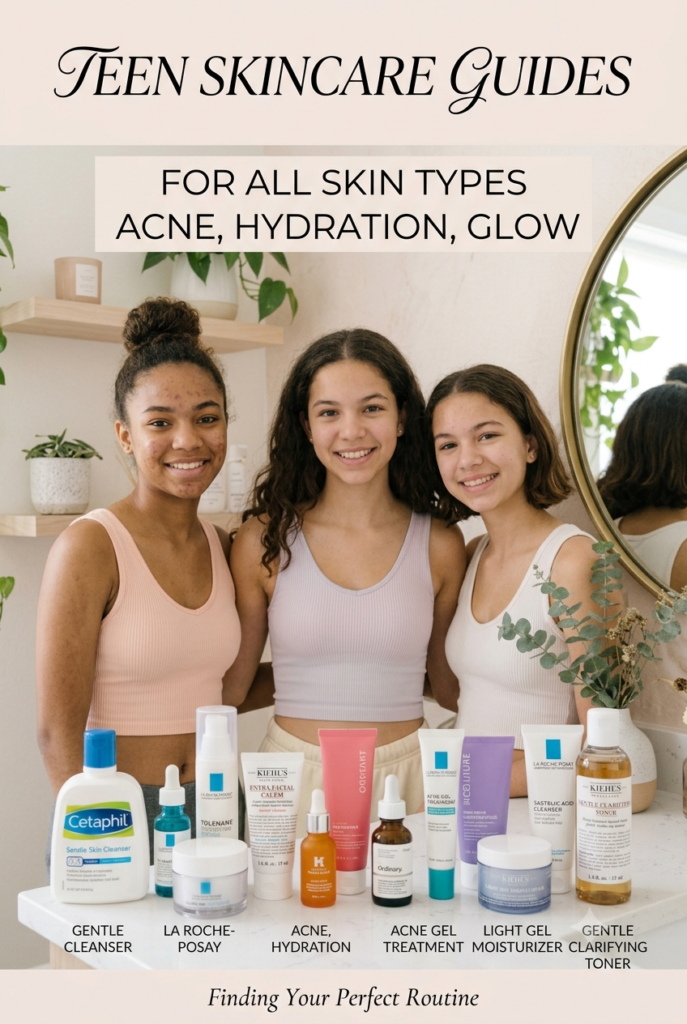
However, hormones aren’t the only reason teenagers experience skin problems. Several everyday habits and environmental factors can also affect your skin, including:
- Hormonal changes during puberty
- Family history of acne
- Stress and anxiety
- Lack of quality sleep
- Hot and humid weather
- Wearing heavy or pore-clogging makeup
- Frequently touching your face
- Using harsh skincare products
- Not removing sunscreen or makeup before bed
The important thing to remember is that acne isn’t caused by being “dirty.” Many teens believe washing their face repeatedly will remove pimples, but overwashing often damages the skin barrier and can actually make irritation worse.
Why a Simple Routine Often Works Better
Social media is full of skincare trends that recommend using ten or more products every day. While these routines may look impressive, they aren’t necessary for most teenagers. Your skin is still developing during adolescence, and using too many strong ingredients at once may cause redness, dryness, peeling, or increased sensitivity.
Instead, dermatologists generally recommend focusing on four essential steps:
- Cleanse gently
- Moisturize daily
- Protect your skin with sunscreen
- Treat acne only when needed
A simple routine is easier to follow consistently, and consistency is one of the biggest factors in achieving healthy skin.
Understanding Teenage Acne
Acne is one of the most common skin conditions in teenagers, but it’s also one of the most misunderstood. Many people think acne happens because your face is dirty or because you eat chocolate. While certain lifestyle factors may influence breakouts in some individuals, acne is primarily caused by changes happening inside your skin.
Each pore on your face contains a tiny hair follicle and an oil gland. As oil production increases during puberty, dead skin cells can become trapped inside these pores. When excess oil, dead skin cells, and naturally occurring bacteria build up together, the pore becomes blocked.
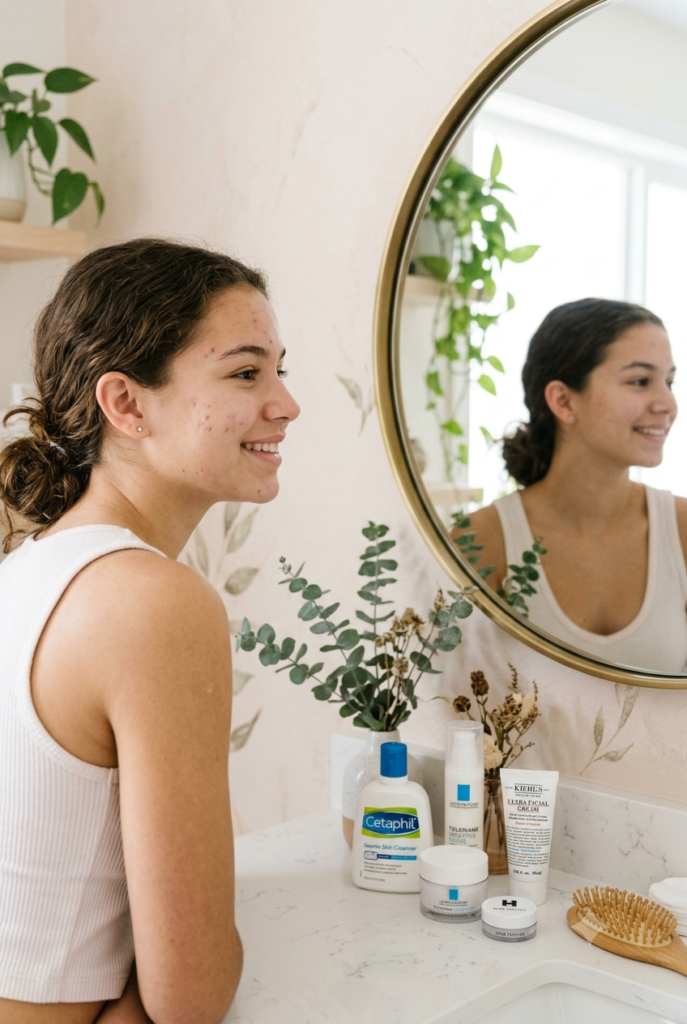
Depending on how the blockage develops, different types of acne can appear, including whiteheads, blackheads, papules, pustules, nodules, and cysts. Acne commonly appears in areas with the highest concentration of oil glands, such as the face, forehead, nose, chin, chest, shoulders, and upper back.
Some teenagers only experience occasional pimples before exams or special events, while others deal with persistent acne throughout their teenage years. Both situations are normal, and both can often improve with the right skincare routine.
Can Acne Be Prevented Completely?
Unfortunately, no skincare routine can guarantee that you’ll never get another pimple. Because hormones play such a significant role during adolescence, occasional breakouts are completely normal. However, following the best skincare routine for teenagers can help:
- Reduce excess oil
- Keep pores cleaner
- Prevent new breakouts
- Calm redness and irritation
- Support a healthy skin barrier
- Reduce the chance of acne marks and scars
Think of skincare as a long-term habit rather than a quick fix. Healthy skin develops gradually through consistent care, not overnight miracles.
Signs That Your Current Routine Isn’t Working
Sometimes the products you’re using may actually be causing more harm than good. Watch for these signs:
- Your skin feels tight or uncomfortable after washing
- New breakouts appear every time you try a different product
- Your face becomes red, itchy, or burns after application
- Your skin is extremely oily by midday despite frequent washing
- Dry patches appear while acne continues to worsen
If you notice these issues, it may be time to simplify your routine or switch to gentler products designed for your skin type.
Expert Tip: Introduce only one new skincare product at a time and use it consistently for several weeks before deciding whether it works. Testing multiple products at once makes it difficult to identify what’s helping—or causing irritation.
How Long Does a Teen Skincare Routine Take to Work?
One of the biggest mistakes teenagers make is expecting instant results. It’s natural to feel disappointed if a new cleanser or moisturizer doesn’t improve your skin after just a few days. The truth is that your skin needs time to adjust. In most cases, consistent use of suitable products for 6–8 weeks is needed before noticeable improvements appear. Avoid changing your routine too often. Give your skin the chance to respond before trying something new.
Common Types of Teenage Acne
Not every breakout looks the same. Some pimples stay small and disappear quickly, while others become swollen, painful, and may even leave scars. Understanding the different types of acne can help you choose the right skincare products and know when it’s time to see a dermatologist.
Whiteheads
Whiteheads are one of the mildest forms of acne. They develop when oil, dead skin cells, and debris become trapped inside a pore that remains closed. They usually appear as tiny white or skin-colored bumps. Although whiteheads are common during the teenage years, squeezing or picking them can damage your skin and increase the risk of scarring.
Best care for whiteheads:
- Use a gentle cleanser twice a day
- Look for products containing salicylic acid
- Avoid heavy creams that may clog pores
Blackheads
Blackheads are often mistaken for dirt, but that’s a common myth. They form when a clogged pore stays open. When the trapped oil comes into contact with air, it oxidizes and turns dark. Because blackheads sit closer to the skin’s surface, they can often be managed with a consistent skincare routine and gentle exfoliation.
Helpful ingredients:
- Salicylic acid
- Niacinamide
- Clay masks (once a week)
Papules
Papules are small, red, inflamed bumps that don’t contain visible pus. They can feel tender when touched and often develop when clogged pores become irritated. Avoid touching papules, as squeezing them may make inflammation worse.
Pustules
Pustules are what most people think of as “pimples.” They contain a white or yellow center filled with pus and are surrounded by redness. While it may be tempting to pop them, doing so can push bacteria deeper into the skin and increase the chance of dark spots or scars.
Nodules
Nodules are larger, firm bumps that form deep beneath the skin. They are usually painful and don’t come to a head like regular pimples. Because nodules develop deeper in the skin, over-the-counter products may not be enough. If you experience frequent nodules, it’s best to consult a dermatologist.
Cystic Acne
Cystic acne is the most severe type of acne. It appears as large, painful, swollen lumps beneath the skin and often takes longer to heal. Without proper treatment, cystic acne can leave permanent scars. If you have cystic acne, professional medical advice is highly recommended instead of trying multiple home remedies.
Quick Tip: Mild acne can often improve with a consistent skincare routine, but severe acne usually requires treatment from a qualified dermatologist.
How to Identify Your Skin Type
Before buying skincare products, it’s important to understand your skin type. A product that works well for oily skin may not be suitable for dry or sensitive skin. Here’s a simple way to identify your skin type.
Oily Skin
If your face becomes shiny within a few hours of washing, especially around the forehead, nose, and chin, you likely have oily skin.
Common signs:
- Visible shine
- Enlarged pores
- Frequent blackheads
- Regular acne breakouts
Look for:
- Gel cleanser
- Oil-free moisturizer
- Non-comedogenic sunscreen
Dry Skin
Dry skin often feels rough, tight, or flaky, especially after cleansing.
Common signs:
- Tight feeling after washing
- Flaking
- Rough texture
- Dull appearance
Look for:
- Cream cleanser
- Hydrating moisturizer
- Ceramides
- Hyaluronic acid
Combination Skin
Combination skin is one of the most common skin types among teenagers. The forehead, nose, and chin are oily, while the cheeks remain normal or dry. A balanced routine usually works best.
Sensitive Skin
Sensitive skin reacts easily to new products. You may notice redness, burning, itching, stinging, or irritation. Choose fragrance-free, alcohol-free products and avoid using too many active ingredients at the same time.
Normal Skin
Normal skin feels comfortable throughout the day. It isn’t excessively oily or dry and usually experiences only occasional breakouts. Even if your skin is normal, cleansing, moisturizing, and sunscreen are still essential for keeping it healthy.
Quick Skin Type Comparison
| Skin Type | Main Concern | Best Products |
|---|---|---|
| Oily | Excess oil & acne | Gel cleanser, oil-free moisturizer, SPF |
| Dry | Flakiness & tightness | Cream cleanser, hydrating moisturizer |
| Combination | Oily T-zone | Gentle foaming cleanser, lightweight moisturizer |
| Sensitive | Irritation | Fragrance-free products |
| Normal | Maintenance | Gentle cleanser, moisturizer & sunscreen |
Essential Skincare Products Every Teenager Needs
If you’ve ever watched skincare videos online, you’ve probably seen routines with ten or even fifteen products. While these routines can look impressive, they’re not necessary for most teenagers. A healthy skincare routine is built around a few basic products that support your skin without overwhelming it.
1. Gentle Cleanser
Cleansing is the foundation of every skincare routine. A good cleanser removes sweat, excess oil, dirt, sunscreen, and pollution without stripping away your skin’s natural moisture.
Wash your face:
- Every morning
- Before going to bed
- After heavy sweating or sports
Avoid using regular body soap on your face, as it may be too harsh for delicate facial skin.
2. Lightweight Moisturizer
Many teenagers skip moisturizer because they’re afraid it will make their skin oilier. In reality, dehydrated skin often produces even more oil to compensate. A lightweight, non-comedogenic moisturizer helps:
- Keep skin hydrated
- Support the skin barrier
- Reduce dryness caused by acne treatments
- Improve overall skin comfort
3. Sunscreen
If you only add one product to your skincare routine besides a cleanser, make it sunscreen. Daily sun protection helps prevent:
- Sunburn
- Premature aging
- Uneven skin tone
- Dark acne marks
- UV damage
Choose a broad-spectrum sunscreen with SPF 30 or higher and apply it every morning, even on cloudy days.
4. Acne Treatment (If Needed)
Not every teenager needs an acne treatment. However, if you regularly experience pimples or clogged pores, ingredients like salicylic acid or benzoyl peroxide may help. Use acne treatments carefully and avoid applying several active ingredients together unless advised by a healthcare professional. Overusing acne products can lead to dryness, irritation, and a damaged skin barrier.
Is a Korean Teenage Skin Care Routine Worth Trying?
The Korean teenage skin care routine has become popular because it focuses on gentle cleansing, hydration, and protecting the skin barrier instead of using harsh products. However, many people think Korean skincare means following a 10-step routine every day. That’s a misconception.
For most teenagers, a simple routine with the right products is often more effective than using too many products at once. If you enjoy Korean skincare, choose products that are lightweight, fragrance-free (if possible), suitable for your skin type, non-comedogenic, and gentle enough for daily use. Remember, healthy skin isn’t about the number of products you use—it’s about choosing products that work well for your skin.
Best Skincare Routine for Teenagers at Home
You don’t need expensive treatments or luxury products to take care of your skin. In fact, the best skincare routine for teenagers at home focuses on consistency rather than cost.
Morning Routine
- Cleanse your face with a gentle cleanser
- Apply a lightweight moisturizer
- Wear sunscreen (SPF 30+)
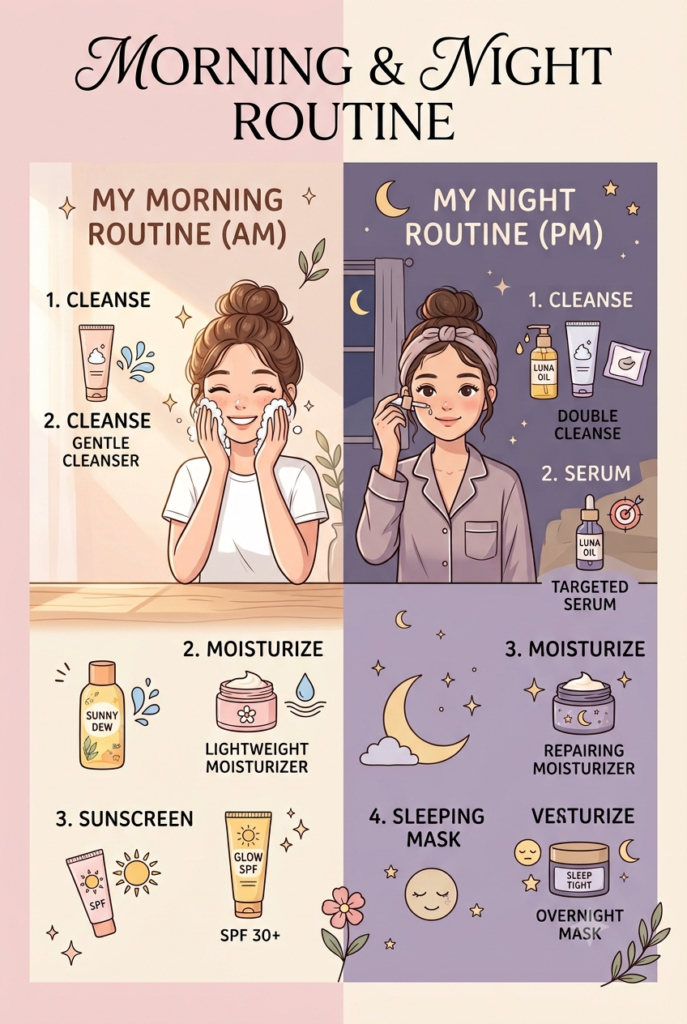
Night Routine
- Cleanse your face with a gentle cleanser
- Apply an acne treatment if needed
- Finish with a moisturizer
Following this routine every day is usually far more effective than trying new products every week.
Best Face Wash for Teenage Pimples
If you are searching for the best face wash for teenage pimples, choose one that cleans without irritating your skin.
Helpful ingredients include:
Salicylic Acid: This is a popular acne-fighting ingredient that can penetrate inside pores and help remove excess oil and dead skin cells. It is especially useful for teenagers dealing with blackheads and whiteheads.
Benzoyl Peroxide: This can help reduce acne-causing bacteria and is commonly used for inflammatory pimples.
Tip: Start acne products slowly. Using too many strong ingredients at once can cause dryness, redness, and irritation.
Best Acne Products for Teenage Girls: Ingredients to Look For
Finding the best acne products for teenage girls is not about choosing the most expensive option. The most important thing is selecting ingredients that match your skin concerns.
Useful ingredients include:
| Ingredient | Best For |
|---|---|
| Salicylic Acid | Blackheads, whiteheads, clogged pores |
| Benzoyl Peroxide | Inflamed pimples, acne breakouts |
| Hyaluronic Acid | Hydration, dry or dehydrated skin |
| Ceramides | Supporting the skin barrier, reducing dryness |
| Niacinamide | Oily skin, uneven skin tone, calming |
Weekly Skincare Routine for Teenagers
A daily skincare routine is the foundation of healthy skin, but adding a few weekly habits can provide extra care. However, remember that more skincare does not always mean better results. Teen skin is often sensitive, so avoid doing too many treatments at once.
1. Gentle Exfoliation (1–2 Times a Week)
Exfoliation helps remove dead skin cells that can build up on the surface of your skin and contribute to clogged pores. For teenagers, gentle exfoliation is usually enough. Over-exfoliating can damage the skin barrier and cause redness, dryness, irritation, and increased sensitivity.
Look for gentle exfoliating ingredients such as:
- Salicylic acid (for clogged pores and oily skin)
- Lactic acid (for gentle exfoliation)
Tip: If you already use acne treatments, be careful about adding exfoliating products. Using too many active ingredients together can irritate your skin.
2. Face Masks for Extra Care
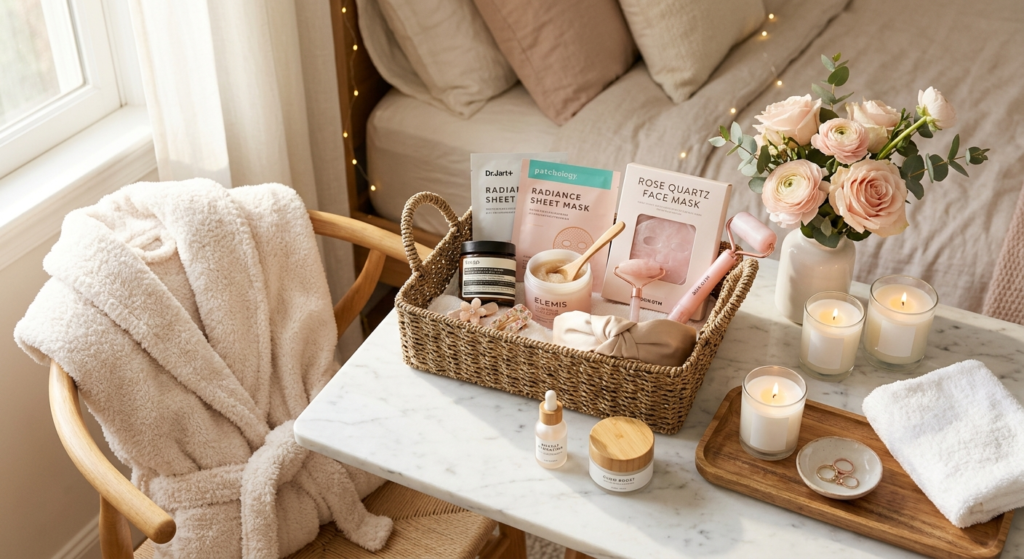
Face masks are not an essential step, but they can be a useful addition to your routine once in a while.
Clay Masks for Oily Skin: Clay masks may help absorb excess oil and reduce the appearance of oily skin.
Hydrating Masks for Dry Skin: Hydrating masks can provide extra moisture when your skin feels dry or uncomfortable.
Soothing Masks for Sensitive Skin: Choose gentle formulas with calming ingredients and avoid heavily fragranced products.
Remember, face masks should support your routine—not replace cleansing, moisturizing, or sunscreen.
3. Spot Treatment for Breakouts
If you have an occasional pimple, a spot treatment can be applied directly to the affected area. Common ingredients include benzoyl peroxide, salicylic acid, and sulfur. Use these products only where needed instead of applying strong treatments all over your face.
4. Keep Your Skincare Tools Clean
Small hygiene habits can make a difference in your skincare routine. Try to:
- Change pillowcases regularly
- Clean makeup brushes often
- Avoid sharing makeup products
- Keep your phone screen clean
- Wash your hands before applying skincare
These simple habits can reduce the amount of bacteria and oil that comes in contact with your skin.
Lifestyle Habits for Healthy Teenage Skin
Skincare products are only one part of maintaining healthy-looking skin. Your daily habits also play an important role.
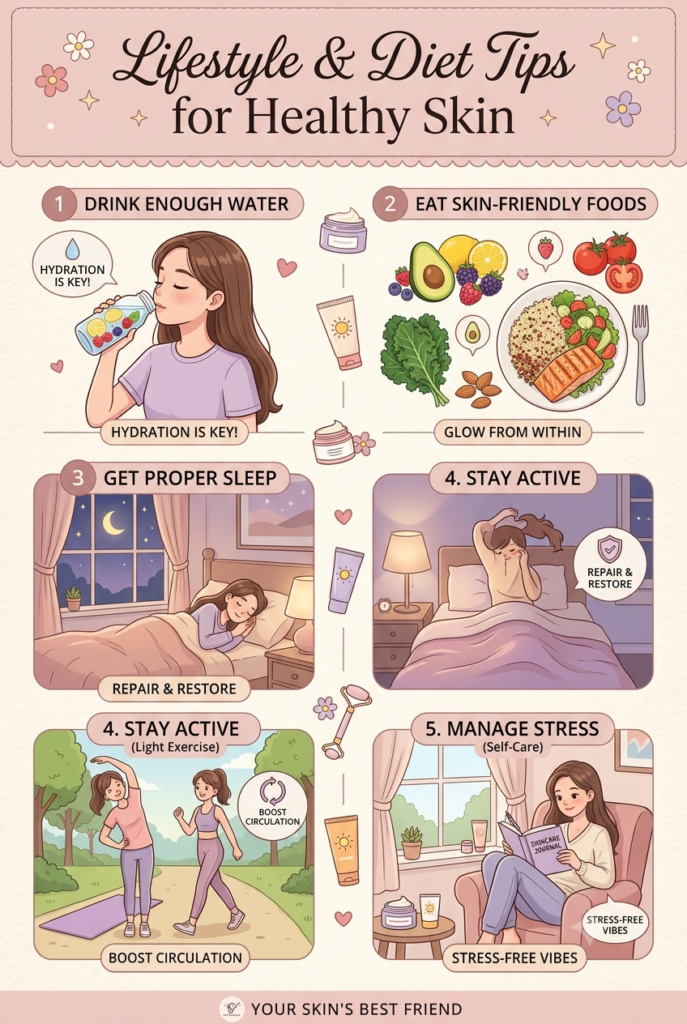
1. Get Enough Sleep
Teenagers need proper sleep for overall health, and your skin also benefits from good rest. Poor sleep may contribute to increased stress, a tired-looking complexion, and difficulty managing skin concerns. Try to maintain a regular sleep schedule and aim for enough rest every night.
2. Manage Stress
Stress is a normal part of teenage life, but high stress levels may affect your skin. Some teenagers notice more breakouts during exams, busy schedules, or emotional pressure.
Healthy ways to manage stress include:
- Exercise
- Deep breathing
- Spending time with friends and family
- Creative hobbies
- Taking breaks from screens
3. Exercise Regularly
Physical activity supports overall health and can help improve blood circulation. After sweating, wash your face gently, avoid letting sweat sit on your skin for long periods, and use clean towels.
4. Avoid Touching Your Face Frequently
Your hands touch many surfaces throughout the day. Constantly touching your face can transfer oil, dirt, and bacteria. Try to avoid resting your hands on your face, picking at pimples, or scratching acne spots.
Diet Tips for Healthy Skin
Many teenagers wonder if food affects acne. While diet is not the only cause of acne, eating a balanced diet can support overall skin health.
Foods That Support Skin Health:
- Fruits and Vegetables: Colorful fruits and vegetables provide vitamins and antioxidants that support your body’s natural processes. Examples include berries, oranges, leafy greens, and carrots.
- Protein-Rich Foods: Protein helps support healthy body functions and skin repair. Sources include eggs, fish, chicken, beans, lentils, and nuts.
- Healthy Fats: Foods containing healthy fats may support skin health. Examples include avocados, nuts, seeds, and fatty fish.
Foods to Limit: You do not need to completely avoid certain foods, but moderation is important. Some people notice their acne becomes worse with excess sugary foods, highly processed foods, or frequent fast food consumption.
A balanced diet, along with a good skincare routine, creates the best foundation for healthy skin.
Common Skincare Mistakes Teenagers Should Avoid
Many teenagers unknowingly make habits that can make skin problems worse.
1. Using Too Many Products
Trying every trending product at the same time can overwhelm your skin. A simple routine with a few suitable products is usually better.
2. Skipping Sunscreen
Many teenagers think sunscreen is only needed during summer or vacations. In reality, daily sun protection is important throughout the year.
3. Washing Your Face Too Often
Overwashing can remove natural oils and cause dryness, irritation, and increased oil production. Most teenagers only need to cleanse their face once in the morning and once at night.
4. Popping Pimples
It may feel satisfying, but popping pimples can spread bacteria, increase inflammation, cause dark marks, and increase scarring risk. Allow pimples to heal naturally or use suitable acne treatments.
5. Copying Someone Else’s Routine
A product that works for a friend or influencer may not work for your skin. Always consider your skin type, your concerns, and your sensitivity level.
When Should Teenagers See a Dermatologist?
Many mild acne cases improve with a consistent skincare routine, but professional advice may be helpful if:
- Acne is painful or deep under the skin
- You have frequent cysts or nodules
- Breakouts are leaving scars
- Acne is affecting your confidence
- Products are not helping after several weeks
A dermatologist can recommend treatments based on your specific skin needs.
Frequently Asked Questions (FAQs)
1. What is the best skincare routine for teenagers?
The best skincare routine for teenagers includes gentle cleansing, moisturizing, daily sunscreen, and acne treatment when needed. The key is choosing products suitable for your skin type and using them consistently.
2. How many times should teenagers wash their face?
Most teenagers should wash their face twice daily—once in the morning and once before bed. Washing too often can irritate the skin.
3. Can teenagers use skincare products?
Yes, teenagers can use skincare products. However, it is best to start with simple products like cleanser, moisturizer, and sunscreen before adding treatments.
4. What is the best face wash for teenage pimples?
The best face wash for teenage pimples depends on your skin type. Products containing ingredients like salicylic acid or benzoyl peroxide may help with acne, but gentle formulas are usually best for daily use.
5. Should teenagers with oily skin use moisturizer?
Yes. Even oily skin needs hydration. A lightweight, oil-free, non-comedogenic moisturizer can help maintain a healthy skin barrier.
6. Is Korean skincare good for teenagers?
A Korean teenage skincare routine can be helpful because it focuses on gentle products and hydration. However, teenagers do not need a long 10-step routine to achieve healthy skin.
7. How can teenage girls get clear skin naturally?
Teenage girls can support clearer skin by following a consistent routine, eating a balanced diet, getting enough sleep, managing stress, and avoiding harsh products.
8. How long does it take for skincare products to work?
Most skincare products require patience. Some improvements may appear within weeks, while acne treatments may take longer. Consistency is important.
9. Can sunscreen cause acne?
A suitable sunscreen should not cause acne for most people. If a sunscreen feels heavy or clogs your pores, try a lightweight, non-comedogenic formula.
10. Do teenagers need expensive skincare products?
No. Effective skincare does not have to be expensive. The right ingredients and consistent use matter more than the price of a product.
Final Thoughts
Building the best skincare routine for teenagers is not about having the most products or following every trend online. Healthy skin comes from understanding your skin type, choosing suitable products, and following simple habits consistently.
Start with the basics:
- Cleanse gently
- Moisturize daily
- Wear sunscreen
- Treat acne carefully
- Take care of your lifestyle and diet
Remember that teenage skin goes through many changes, and occasional breakouts are normal. Be patient with your skin and avoid comparing your journey with others. A simple routine followed consistently can help you build healthier skin habits that last for years. 🌿
Hannah Collins is a skincare writer focused on simple routines, trusted ingredient research, and practical advice for healthy, glowing skin.