
Cradle cap usually clears up on its own within weeks or months, and you don’t have to treat it at all. But if the yellowish, scaly patches bother you, you can help them along safely: massage a little oil or emollient into the scalp, wait a bit, gently brush with a soft brush, then wash with mild baby shampoo. Here’s the exact routine — and the mistakes to avoid.
First, the reassurance: cradle cap is extremely common, harmless, and not painful or itchy for your baby. It isn’t caused by anything you did, it can’t spread to other babies, and it has nothing to do with hygiene.
What Cradle Cap Looks Like (So You Know It’s That)
Cradle cap shows up as greasy, yellowish or whitish scaly patches, usually on the scalp — sometimes on the eyebrows, behind the ears, or in the nappy area too. The scales can look crusty and flake off. It typically appears in the first couple of months.
If you’re ever unsure whether it’s cradle cap or something else (like dry skin or a rash), our guide on newborn skin peeling can help you tell common newborn skin quirks apart — and your pediatrician can confirm in seconds.
Cradle Cap or Something Else? How to Tell
Several newborn skin quirks look vaguely similar. Here’s how to tell them apart:
- Cradle cap: greasy, yellowish scales, mostly on the scalp. Not itchy, not painful, baby seems unbothered.
- Dry skin / peeling: dry, papery flakes (not greasy), often on hands, feet, or body folds in the first weeks. Also harmless and very common.
- Baby acne: tiny red or white bumps on the cheeks, nose, or forehead — not scaly patches. Usually appears at 2–4 weeks and fades on its own.
- Eczema: red, dry, sometimes itchy patches, often in creases (elbows, knees) in older babies. Unlike cradle cap, it can bother the baby.
The key differences: cradle cap is greasy and scaly and doesn’t seem to bother the baby at all. If there’s itching, spreading redness, oozing, or your baby seems uncomfortable, that’s a “call your pediatrician” situation rather than a cradle cap routine.
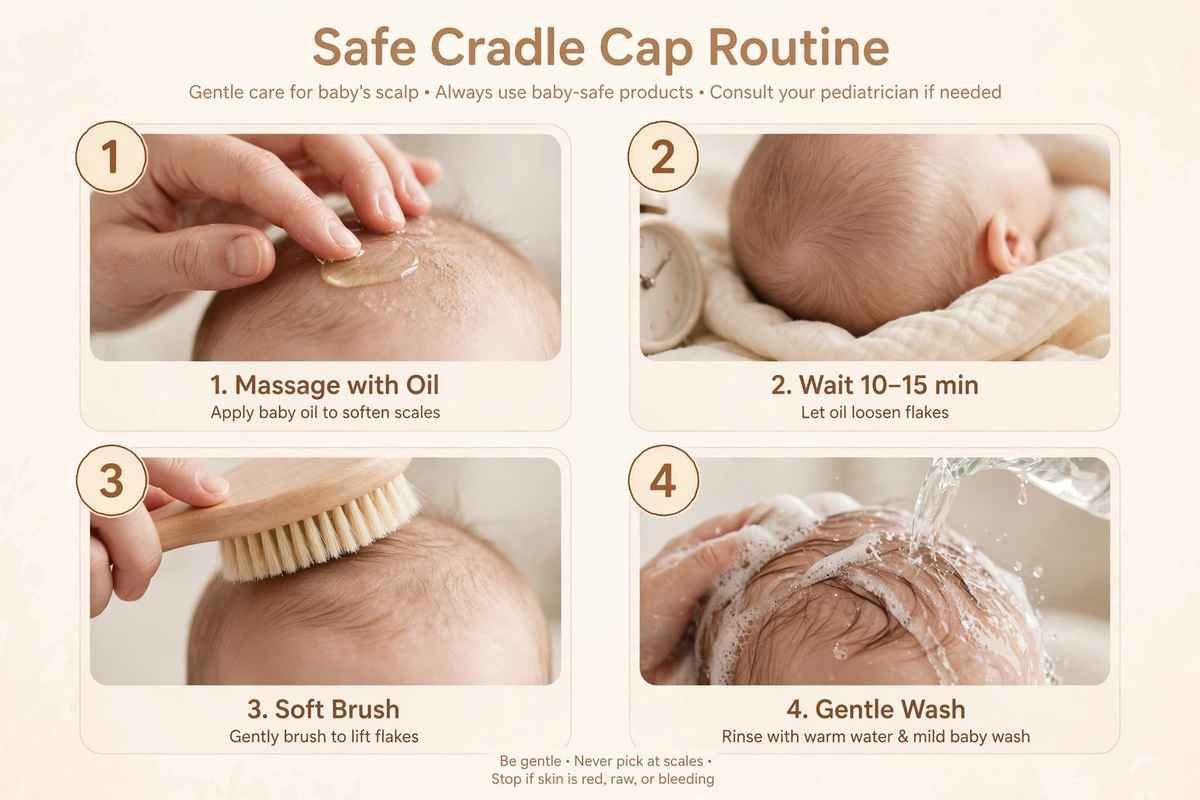
The Safe Removal Routine: Step by Step
Do this once daily or every couple of days until the scales lift. Gentleness is the whole point.
1. Soften first. Lightly massage a small amount of baby-safe emollient (moisturizer), coconut oil, or mineral oil onto the scaly areas. The NHS cradle cap guidance specifically suggests an emollient or coconut oil to loosen scales. Let it sit for 15–30 minutes (or a little longer for stubborn patches).
2. Brush softly. Using a soft baby brush or a fine-tooth baby comb, gently brush in the direction of hair growth. You’re lifting loosened flakes, not scrubbing — if a scale resists, leave it for next time.
3. Wash it out. Wash the scalp with a mild, fragrance-free baby shampoo and lukewarm water, then rinse well. This removes the oil along with the lifted flakes.
4. Repeat as needed. Most cradle cap improves over days to a couple of weeks of this routine. Once it’s gone, regular gentle washing helps stop it coming back.
The AAP’s cradle cap advice follows the same pattern: wash more often, use mild shampoo, loosen scales gently — and for tough patches, a little oil left on briefly before washing.
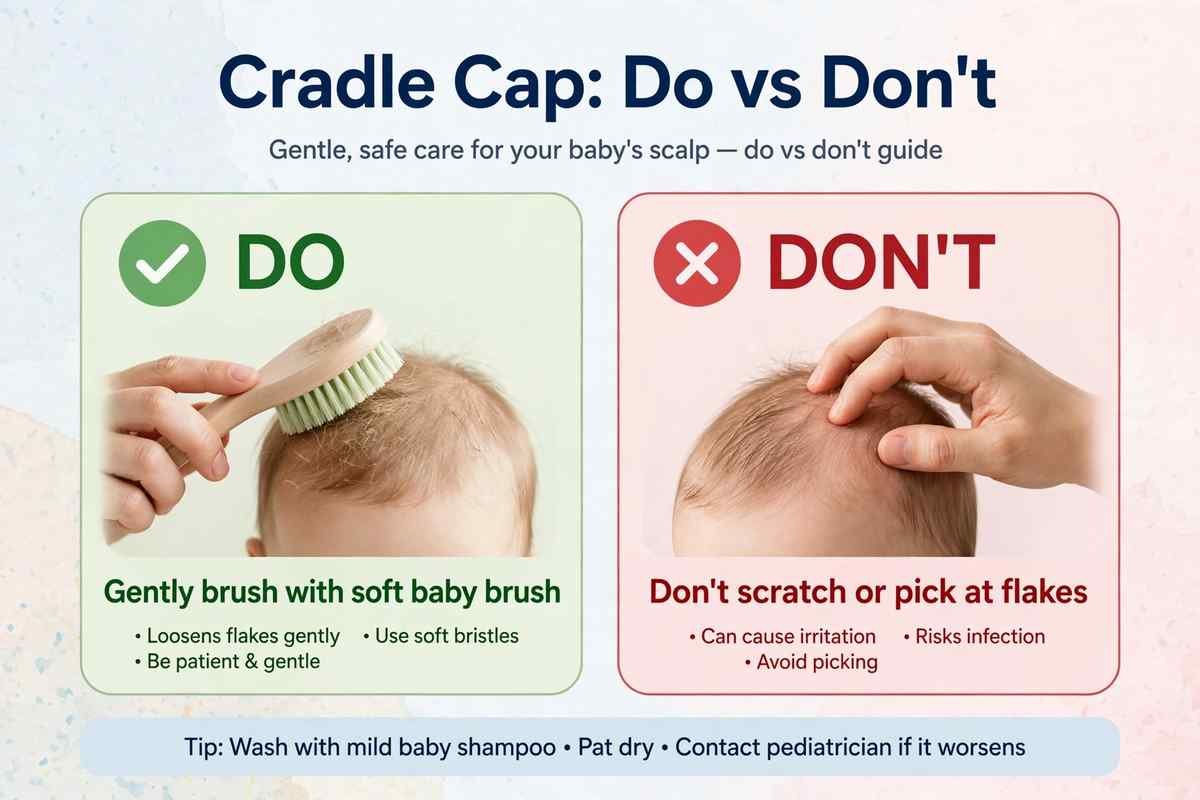
Do vs. Don’t: The NHS Checklist
| Do ✅ | Don’t ❌ |
|---|---|
| Massage emollient or coconut oil to loosen scales | Pick or scratch at the scales (infection risk) |
| Gently brush with a soft brush, then baby shampoo | Use olive oil — research suggests it may not suit skin |
| Bathe regularly; use water + emollient instead of soap on affected body areas | Use peanut oil (allergy risk) |
| Change wet nappies promptly; use barrier cream if the nappy area is affected | Use soap, adult shampoo, or fragranced products |
| Ask a pharmacist about suitable emollients or shampoos | Try to force off stubborn crusts |
Don’t worry if some hair comes away with the flakes — the NHS notes it grows back quickly. Most parents find the routine becomes second nature after a few days, and many babies seem to enjoy the gentle scalp massage as a calming part of the day.
How Washing Fits In
Cradle cap care is really just an extension of normal bath time. If you’re still finding your rhythm with how often to bathe your baby, know that slightly more frequent scalp washing (every other day is fine for most babies) helps prevent the scales building back up. And the same gentle touch you use for cleaning your baby’s face daily — soft, patient, no scrubbing — is exactly right for the scalp too.
The AAP’s newborn bathing guide is a good refresher on keeping bath time gentle overall.
When to See Your Pediatrician
Cradle cap is harmless, but check in with your pediatrician if:
- It doesn’t improve after a few weeks of gentle care
- It spreads across the body or to large areas beyond the scalp
- The crusts bleed, leak fluid, or look swollen — possible signs of infection
- The patches look very red, angry, or seem to bother your baby (true cradle cap isn’t itchy or painful)
- You’re simply not sure it’s cradle cap — a quick professional look settles it
FAQ
Does cradle cap mean I’m not washing my baby enough?
No — not at all. Cradle cap isn’t caused by poor hygiene, and it happens to babies who are bathed regularly. It’s related to oil glands and hormones, not cleanliness, so please don’t feel guilty.
Can I just leave cradle cap alone?
Absolutely. It clears on its own in most cases, usually within weeks to months. Removal is purely cosmetic — for your comfort, not your baby’s health.
Is coconut oil or baby oil better for cradle cap?
Both are mentioned in pediatric guidance for loosening scales. Coconut oil is the more commonly recommended of the two today; mineral (baby) oil also works. Avoid olive oil and peanut oil for the reasons in the checklist above.
Will brushing hurt my baby or damage the soft spot?
Gentle brushing with a soft baby brush won’t hurt your baby, and light pressure over the fontanelle (soft spot) is safe — it’s tougher than it looks. Just keep strokes soft and never press hard or scratch.
Can adults get cradle cap?
The adult equivalent is seborrheic dermatitis, which causes similar flaky, greasy patches. It’s a different conversation from baby cradle cap — but interestingly, babies who had cradle cap aren’t necessarily more likely to have skin issues later.
Keep Reading
You may also like: Soak and Seal Method for Kids Why Does Toddler Skin Get So Dry in Winter? How to Prevent Heat Rash in Babies Kids Face Wash vs Regular Soap: Which Is Better? What Age Can Kids Start Using Face Wash? Baby Acne vs Rash: How to Tell the Difference Dry Patches on Toddler Skin: What Causes Them Baby Skincare Basics for New Parents Skincare Ingredients to Avoid for Children Newborn Skincare Routine: A Week-by-Week Guide Eczema-Prone Skin Care for Toddlers
This article is for general information only and is not medical advice. Every child’s skin is different — if you’re unsure or notice anything concerning, talk to your pediatrician or a dermatologist.

Rachel writes about gentle, safe skincare for children of all ages. She focuses on answering the real questions parents search for, in plain language backed by trusted sources.