
Here’s the reassuring answer most new parents need to hear: newborns only need a bath 2 to 3 times per week. Daily baths aren’t necessary — and for very young babies, bathing too often can dry out their delicate skin. Between baths, a quick wipe-down of the face, neck, hands, and diaper area keeps your baby fresh and clean.
Let’s break it down by age, look at what pediatric guidance actually says, and cover the practical details that make bath time safe and stress-free.
What Pediatric Guidance Says
Pediatric guidance generally recommends — for example, the AAP’s guide to bathing your baby notes that three baths per week during the first year may be enough, since bathing more frequently can dry out the skin:
- Newborns (0–1 month): Sponge baths only, 2–3 times per week, until the umbilical cord stump falls off and heals.
- 1–6 months: Tub baths 2–3 times per week is plenty for most babies.
- 6–12 months: 2–3 times per week still works, though many parents move toward more frequent baths once babies start crawling, eating solids, and getting gloriously messy.
- Toddlers: Every 2–3 days is fine; daily baths are okay too if your toddler enjoys them and their skin tolerates it.
The key insight: babies don’t get “dirty” the way older kids do. They don’t sweat much, they aren’t playing in mud (yet), and overwashing strips the natural oils that protect their skin.
Age-by-Age Bathing Schedule
| Age | How often | Bath type | Notes |
|---|---|---|---|
| 0–2 weeks | 2–3x/week | Sponge bath | Until cord stump falls off; keep stump dry |
| 2 weeks – 6 months | 2–3x/week | Shallow tub bath | A few inches of lukewarm water is enough |
| 6–12 months | 2–3x/week (or as needed) | Tub bath | Increase frequency once solids and crawling begin |
| 12+ months | Every 2–3 days | Tub bath | Daily is fine if skin stays comfortable |
Between full baths, do a daily “top and tail” clean: wipe the face, neck folds, hands, and diaper area with a soft damp cloth or lukewarm water.

Signs You Might Be Bathing Too Often
Watch for these clues that it’s time to cut back:
- Dry, flaky, or tight-looking skin after baths
- Red, rough patches, especially on the cheeks, arms, or legs
- Your baby seems uncomfortable in the water or fussy afterward
- You’re using soap all over the body every time (a little cleanser on the diaper area and skin folds is usually enough; plain water handles the rest)
If you spot these signs, try fewer baths, shorter baths (5–10 minutes), and lukewarm rather than warm water.
When More Frequent Baths Make Sense
There are perfectly good reasons to bathe more often:
- Hot, sweaty weather — a quick rinse can be soothing
- Blowouts and big messes — obviously non-negotiable
- Eczema-prone skin routines — some pediatric dermatologists recommend short daily “soak and seal” baths followed immediately by moisturizer; follow your own pediatrician’s advice here
- Your baby loves it — if bath time is joyful and skin stays healthy, a daily splash is fine
Bath-Time Safety Essentials
Frequency matters less than safety. These rules are non-negotiable:
1. Never leave your baby alone in water — not for a second, not even to grab a towel. Have everything within arm’s reach before you start.
2. Test the water temperature — aim for comfortably warm (around 37–38°C / 98–100°F); it should feel warm, not hot, on the inside of your wrist or elbow.
3. Keep baths short — 5 to 10 minutes is plenty for babies.
4. Use minimal product — a small amount of gentle, fragrance-free baby cleanser is enough; plain water is fine for most of the body.
5. Support newborns fully — keep one hand supporting the head and neck at all times.
6. Dry gently and moisturize — pat (don’t rub) dry, and apply a gentle moisturizer within a few minutes if your baby’s skin tends toward dryness.
Sponge Bath vs. Tub Bath: What’s the Difference?
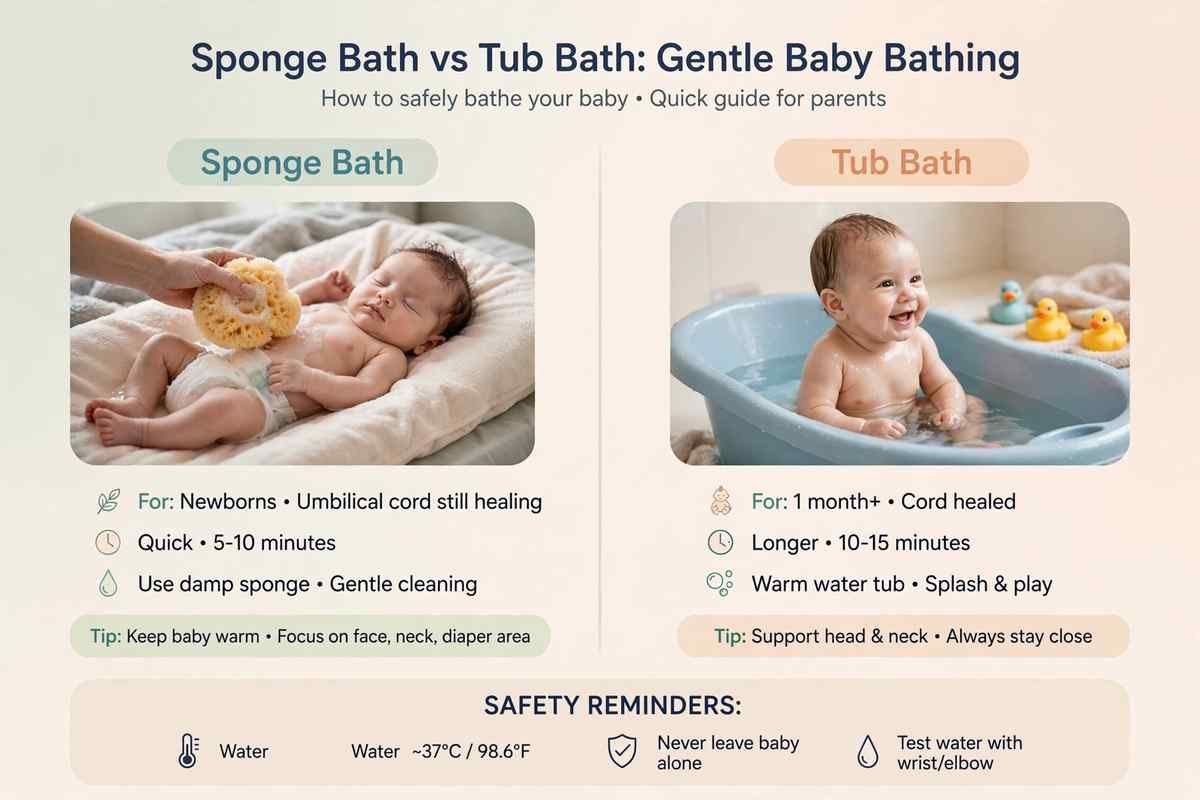
Sponge baths (newborn stage): Lay your baby on a flat, safe surface with a towel underneath. Use a soft washcloth dampened with lukewarm water to gently clean the face, neck, hands, feet, and diaper area. Keep the umbilical cord stump dry — it typically falls off within 1–3 weeks.
Tub baths (after the cord falls off): Fill a baby tub or clean sink with just a few inches of lukewarm water. Undress your baby, ease them in feet-first while supporting the head, and wash from top to bottom, saving the diaper area for last.
Making Bath Time Something You Both Enjoy
Bath time doesn’t have to be a chore to get through — with a few small touches it can become one of the calmest parts of the day:
- Pick a consistent time. Many families bathe before the last feed as part of the bedtime wind-down. The warm water genuinely helps babies relax.
- Talk and sing. Your voice is the best “bath toy” for a newborn. Narrate what you’re doing — babies find it soothing.
- Keep it warm and calm. A chilly bathroom ruins bath time faster than anything. Warm the room, and have the towel ready.
- Introduce simple toys later. Around 6 months, a few floating toys or cups turn the tub into playtime — just keep them simple and easy to clean.
- Follow baby’s lead. Some babies love long soaks; others tolerate exactly four minutes. Both are fine.
Seasonal Adjustments to the Routine
Bathing needs shift with the weather:
| Season | Adjustment |
|---|---|
| Winter | Indoor heating dries skin fast — keep baths shorter, water lukewarm, and moisturize right after |
| Summer | Heat and sweat may call for more frequent rinses; a quick lukewarm splash counts as a bath |
| Allergy season | If pollen is a concern, a rinse after outdoor time helps keep skin comfortable |
In dry winter months, running a humidifier in the baby’s room can do as much for skin comfort as any schedule change.
Bathing a Newborn: What Changes in the First Month
The first few weeks have their own rules, since the umbilical cord stump is still attached:
- Sponge baths only until the stump falls off (usually 1–3 weeks). Lay your baby on a towel on a flat surface — never in water.
- Top-and-tail between baths. The NHS washing and bathing guide similarly notes you don’t need to bathe your baby every day — washing the face, neck, hands and bottom (“topping and tailing”) is often enough between baths.
- Keep the stump dry. Fold the diaper below it, and if it gets dirty, clean gently with plain water and pat dry.
- Wash in sections so your baby doesn’t get cold: cover the parts you’re not washing with a dry towel.
- No lotions or oils needed yet — plain water and a soft cloth are enough.
Once the stump falls off and the area looks healed, you can move to shallow tub baths. If there’s redness, swelling, or discharge around the stump, call your pediatrician rather than bathing over it.
FAQ
Do I need to bathe my baby every day?
No. For newborns and young babies, 2–3 times per week is the standard guidance. Daily baths aren’t harmful if done gently (short, lukewarm, minimal soap), but they aren’t necessary either.
Should I use soap every time I bathe my baby?
Not necessarily. Plain lukewarm water is enough for most of the body most of the time. Use a small amount of gentle baby cleanser on the diaper area, skin folds, and any visibly dirty spots.
What if my baby hates bath time?
You’re not alone — many babies protest at first. Try making the water a touch warmer (still within the safe range), keeping the room warm, talking or singing softly, and keeping baths very short. Most babies come around within a few weeks.
When can I switch from sponge baths to a tub?
Once the umbilical cord stump has fallen off and the area has healed (usually 1–3 weeks), you can start giving tub baths. Until then, stick with sponge baths and keep the stump clean and dry.
Keep Reading
You may also like: Can I Use Baby Wipes on a Newborn? Should I Put Lotion on My Baby After Every Bath? Cradle Cap: How to Remove It Safely Barrier Cream vs Diaper Rash Cream Soak and Seal Method for Kids Is Bubble Bath Safe for Kids? Why Does Toddler Skin Get So Dry in Winter? How to Prevent Heat Rash in Babies How Often Should Toddlers Bathe? Kids’ Skincare After Swimming: A Parent’s Guide How Often Should Kids Moisturize? Dry Patches on Toddler Skin: What Causes Them Baby Skincare Basics for New Parents Do Tweens Need Serums? A Parent’s Guide Newborn Skincare Routine: A Week-by-Week Guide How to Bathe a Newborn Step by Step
This article is for general information only and is not medical advice. Every child’s skin is different — if you’re unsure or notice anything concerning, talk to your pediatrician or a dermatologist.

Jessica covers kids’ health and skincare topics for parents. Her articles break down expert recommendations into clear, everyday advice — always with a reminder that your pediatrician knows your child best.
Pingback: Best Bath Temperature for Babies: Safety Guide
Pingback: When Can I Use Baby Lotion on My Newborn?