Let’s be honest—waking up to a new pimple on the morning of a big event feels personal. It’s frustrating, it’s annoying, and sometimes it makes you want to hide. But here’s something you should know: acne is not your fault.
Teenage acne affects nearly 85% of adolescents at some point. Those sudden breakouts? They’re not a sign that you’re “dirty” or doing something wrong. They’re a completely normal part of growing up—triggered by hormonal shifts that increase oil production, clog pores, and invite bacteria to the party.
The good news? While you can’t always prevent acne entirely, you can manage it effectively with a simple, consistent routine.
This guide cuts through the noise—the endless TikTok trends, the expensive 10-step routines, the DIY remedies that promise miracles. Instead, you’ll find what actually works, backed by dermatologist-recommended principles, tailored for real teenage life.
First, Let’s Understand What’s Happening to Your Skin
During puberty, your body produces more androgens (hormones). These stimulate your sebaceous glands to pump out extra sebum—your skin’s natural oil.
When that excess oil mixes with dead skin cells, it creates a perfect clogging combination in your pores. Add bacteria, and suddenly you’ve got inflammation, redness, and those unwelcome visitors on your face.
The main types of acne you might encounter:
Type
What It Looks Like
How It Feels
Whiteheads
Small, closed, white-tipped bumps
Usually painless
Blackheads
Open pores with darkened oil (not dirt!)
Painless, can be stubborn
Papules
Small, red, raised bumps
Slightly tender
Pustules
Red bumps with white/yellow pus
Tender, inflamed
Nodules & Cysts
Large, deep, painful lumps
Can be very painful; may scar
Key point: Nodules and cysts are more severe and often need a dermatologist’s help. Don’t try to “wait them out” if they’re painful or leaving marks.
The 4-Step Foundation: Your Core Skincare Routine
You don’t need a cabinet full of products. You need four essentials:
Gentle Cleanser — Removes dirt, oil, and sunscreen
Acne Treatment — Targets breakouts where they start
Moisturizer — Prevents dryness and protects your skin barrier
Sunscreen — Shields against UV damage (especially important with acne treatments)
That’s it. Everything else is optional.
Your Step-by-Step Daily Routine
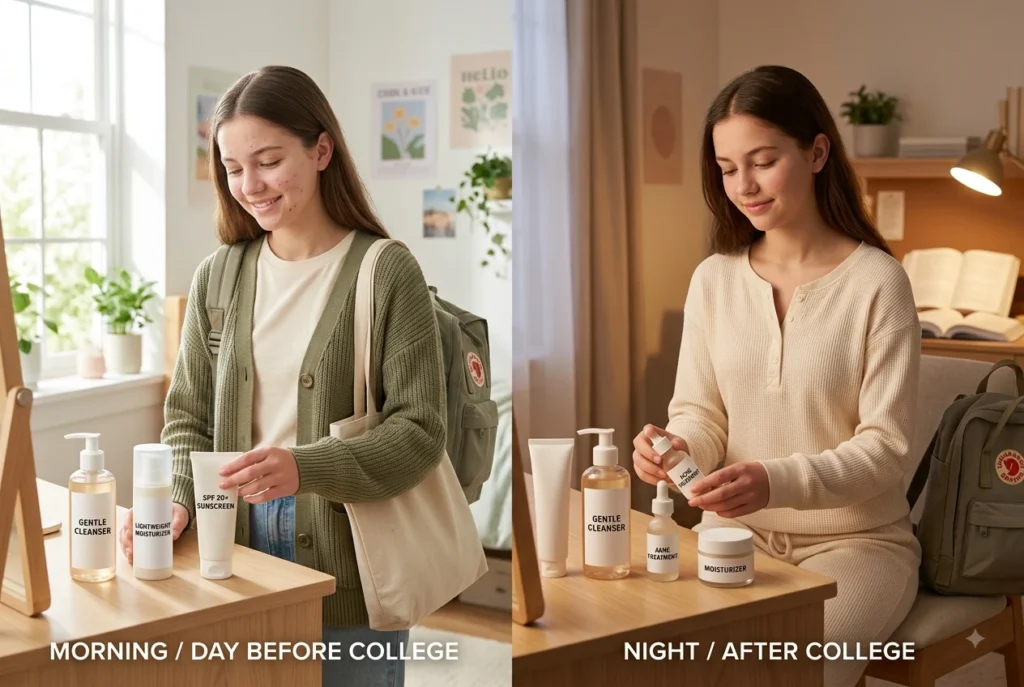
☀️ Morning Routine (5 Minutes)
Step
Product
Why
1. Cleanse
Gentle, fragrance-free cleanser
Use lukewarm water and your fingertips. Avoid harsh scrubs—they irritate more than they help. If you’re oily, try a salicylic acid cleanser (0.5-2%).
2. Moisturize
Lightweight, non-comedogenic moisturizer
“Non-comedogenic” means it won’t clog your pores. Even oily skin needs hydration to stay comfortable and maintain a healthy skin barrier.
3. Protect
Broad-spectrum SPF 30+ sunscreen
Some acne treatments can increase your skin’s sensitivity to the sun, making daily sun protection especially important.
Pro tip: Apply sunscreen as the last step of your morning routine, even on cloudy days.
🌙 Night Routine (5-7 Minutes)
Step
Product
Why
1. Cleanse
Same gentle cleanser
Wash off the day—sunscreen, sweat, oil, makeup. If you wear makeup, remove it thoroughly with a gentle makeup remover followed by your regular cleanser.
2. Treat
One active ingredient (see below)
Don’t pile on multiple treatments at once. Start slow, introduce one product, and give it time.
3. Moisturize
Your night moisturizer
Your skin repairs itself while you sleep. Help it along by keeping the barrier healthy.
Choosing Your Acne Treatment: Which One Is Right for You?
2.5% – 5% (higher % doesn’t work better, just more irritating!)
Bleaches towels/pillowcases; can be drying
Adapalene (Differin)
All types, especially stubborn acne
Regulates skin cell turnover to prevent clogs
0.1% (available OTC)
Can cause purging in the first few weeks; use only at night, always with moisturizer
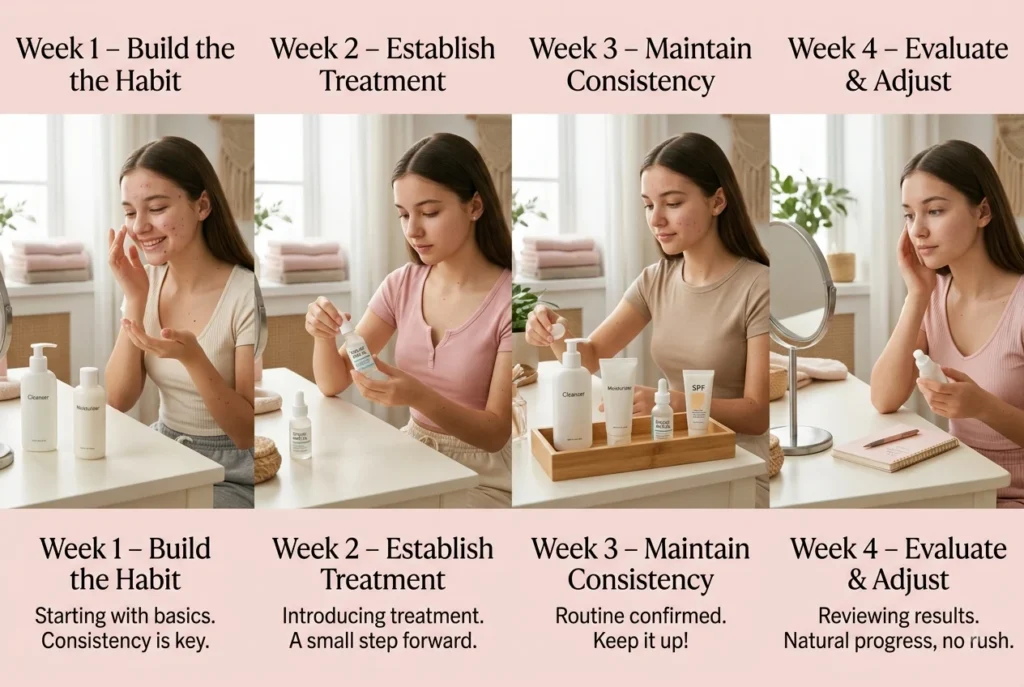
Important: Give any treatment 6-8 weeks of consistent use to see results. Switching products every week confuses your skin and delays progress.
🚨 Don’t use salicylic acid + benzoyl peroxide + adapalene all at once. Pick one. If you need help deciding, start with benzoyl peroxide for red pimples or salicylic acid for blackheads.
🌿 Natural Approaches: What Helps, What Hurts
You’ve seen the TikToks—lemon juice, toothpaste, baking soda, cinnamon masks. Here’s the truth:
“Natural” Remedy
Actually Safe?
Real Talk
Cleansing, moisturizing, sunscreen
✅ Yes
The tried-and-true foundation
Green tea extract
✅ Possibly
Has some anti-inflammatory properties
Aloe vera
✅ Possibly
Soothes irritated skin
Lemon juice
❌ No
Highly acidic; causes chemical burns and makes skin more sensitive to sun
Toothpaste
❌ No
Contains harsh detergents and fluorides that irritate and burn
Baking soda
❌ No
Disrupts your skin’s natural pH; damages the protective barrier
Cinnamon
❌ No
Can cause severe irritation and allergic reactions
Sugar scrubs
❌ No
Abrasive crystals create micro-tears in the skin
Healthy habits that actually support your skin:
😴 8-9 hours of sleep (your skin repairs overnight)
💧 Staying hydrated
🥗 Balanced diet with vegetables, lean proteins, and whole grains
🧘 Managing stress (breakouts and stress are connected)
The Most Common Mistakes Teens Make (And How to Avoid Them)
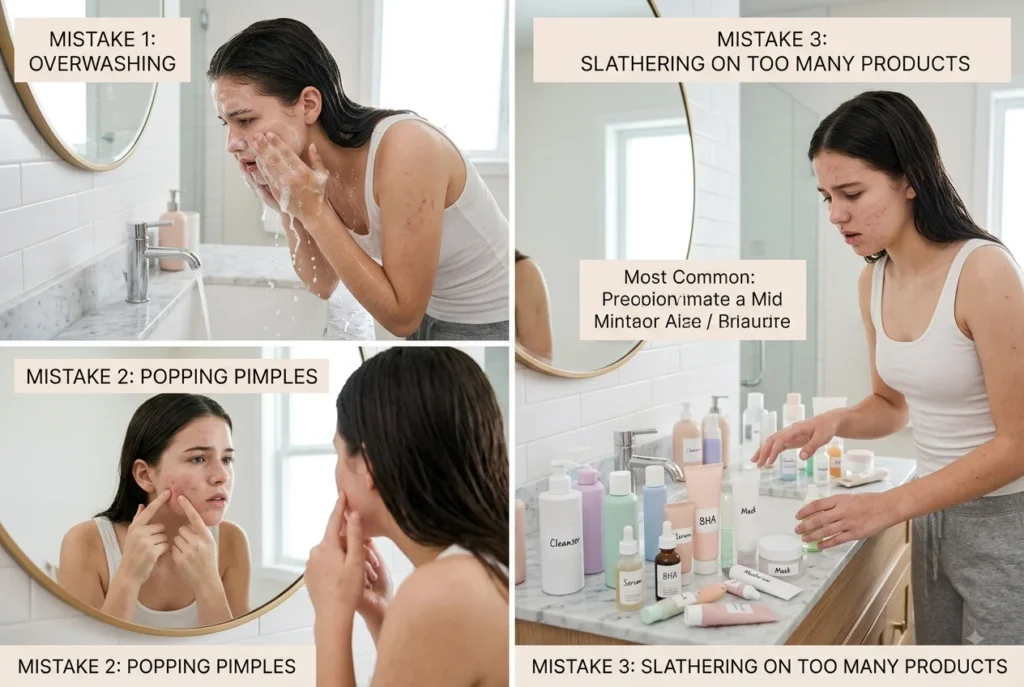
❌ Mistake #1: Overwashing
“My face is oily, so I wash it 4 times a day.”
Why it’s wrong: Stripping your skin of natural oils can lead to dryness and irritation.
✅ Fix: Wash twice daily—morning and night. After sweating heavily (sports, gym), rinse with water or use a gentle micellar water.
❌ Mistake #2: Scrubbing Like You’re Cleaning a Pan
“I scrub really hard to get the dirt out.”
Why it’s wrong: Acne isn’t surface dirt. Scrubbing inflames pores, worsens redness, and can spread bacteria to healthy skin.
✅ Fix: Use your fingertips. Apply gentle pressure in circular motions for 30-60 seconds. Let the cleanser do the work, not your muscles.
❌ Mistake #3: Picking, Squeezing, and Popping Pimples
“I just need to get it out.”
Why it’s wrong: Every time you pop, you risk:
Pushing bacteria deeper → bigger, angrier pimples
Increased inflammation → red marks that last for months
Permanent scarring → pitted or raised scars that are difficult to treat
✅ Fix: Resist the urge completely. Do not pop or puncture pimples. Use a pimple patch (hydrocolloid sticker) overnight—it draws out fluid safely and protects the area. If you need professional extraction, see a dermatologist.
❌ Mistake #4: Skipping Moisturizer
“My skin is already oily, I don’t need more moisture.”
Why it’s wrong: Acne treatments can be drying and irritating. Moisturizer helps keep your skin comfortable and supports its protective barrier.
✅ Fix: Choose a gel-based or water-based moisturizer for oily skin. Apply it while your skin is slightly damp for better absorption.
❌ Mistake #5: Slathering on Too Many Products
“More products mean better results, right?”
Why it’s wrong: You can’t tell what’s working (or what’s irritating). You risk a damaged skin barrier, redness, peeling, and increased breakouts.
✅ Fix: Use one active treatment at a time. Introduce new products gradually, one new active ingredient at a time.
❌ Mistake #6: Forgetting Sunscreen
“It’s winter/cloudy/I’m inside.”
Why it’s wrong: UV rays penetrate clouds and windows. Some acne treatments can increase your skin’s sensitivity to the sun. Sun exposure also darkens acne scars and causes long-term damage.
✅ Fix: SPF 30+ every single day, rain or shine. Reapply if you’re outside for extended periods.
❌ Mistake #7: Believing Acne Means You’re “Dirty”
“People must think I don’t wash my face.”
Why it’s wrong: This myth is harmful and false. Acne is hormonal, genetic, and biological—not a hygiene issue.
✅ Fix: Remind yourself that some of the cleanest people on earth have acne. It does not define your worth or your hygiene.
Q: What if I wear makeup? Choose non-comedogenic products. Remove makeup thoroughly every night with a gentle makeup remover followed by your regular cleanser. Apply your SPF as your last skincare step before makeup.
Q: Will I have acne forever? Most people outgrow teen acne by their early 20s, though some continue into adulthood. The goal is to manage it effectively now to minimize long-term effects.
Q: Can I pop a pimple if it’s “ready”? No. Do not pop or puncture pimples. Popping increases inflammation, spreads bacteria, and raises the risk of permanent scarring. Use a pimple patch instead.
Q: Does diet cause acne? Research is mixed. High-glycemic foods (white bread, sugary snacks) and dairy may trigger some people. Keeping a food diary can help you identify personal triggers, but there’s no one-size-fits-all acne diet.
Q: Can stress cause acne? Yes, stress triggers cortisol release, which stimulates oil production and inflammation. Managing stress helps, but it’s rarely the sole cause.
Q: How do I deal with acne on my back or chest? Same principles apply: gentle cleanser, treatment (benzoyl peroxide body wash), lightweight moisturizer. Wear loose, breathable clothing and shower after sweating.
Final Thoughts: You Are More Than Your Skin
It’s easy to let acne consume your thoughts. To avoid mirrors, to cancel plans, to feel like everyone is staring at your skin. But here’s the truth that matters most:
Acne does not define you.
It is temporary. It is common. It is manageable. And it absolutely does not diminish your worth, your beauty, or your potential.
The goal of this routine isn’t just clearer skin—it’s giving you control over something that feels uncontrollable. It’s building a habit of self-care that will serve you for life. It’s learning to treat your body with patience and kindness.
So start simple. Be consistent. Be patient. And remember: this is one chapter of your life, not the whole story.
You’ve got this. 🌟
Information in this guide is for educational purposes and should not replace medical advice. If you’re unsure about any aspect of your skincare, consult a board-certified dermatologist.