Acne is one of the most common skin concerns during the teenage years. Hormonal changes can increase oil production, clog pores, and trigger inflammation, leading to blackheads, whiteheads, pimples, and sometimes deeper painful breakouts.
Although acne can be frustrating, it does not mean your skin is dirty or unhealthy. Teen acne is a normal skin condition, and the right routine can help manage breakouts and reduce the risk of long-lasting marks and scars.
The best approach is usually simple: use gentle skincare, choose proven acne-fighting ingredients, avoid picking your skin, and give treatments enough time to work. If acne is severe, painful, or leaving scars, a dermatologist can recommend a treatment that is appropriate for your skin.
What Causes Acne in Teenagers?
During puberty, the body produces more hormones called androgens. These hormones can stimulate the sebaceous glands to produce more sebum, or natural oil.
When excess oil mixes with dead skin cells, pores can become clogged. Bacteria and inflammation can then contribute to the development of acne.
Several things can make breakouts more noticeable, including:
- Hormonal changes
- Excess oil production
- Clogged pores
- Stress
- Certain skincare or hair products
- Friction from helmets, tight clothing, or sports equipment
- Picking or squeezing pimples
Acne is not caused simply by having a dirty face. Scrubbing harder will not remove acne and can actually irritate the skin.
What Is the Best Teen Acne Treatment?
There is no single treatment that works perfectly for every teenager. The right option depends on whether you have occasional pimples, blackheads and whiteheads, inflammatory acne, or deeper painful breakouts.
A basic acne routine usually includes:
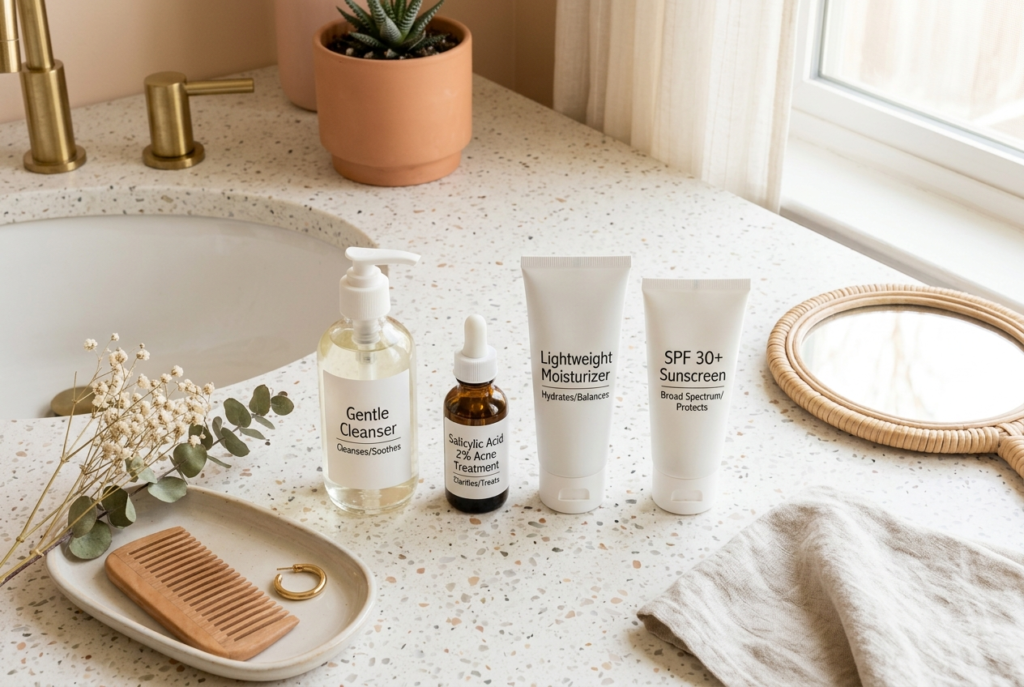
- A gentle cleanser
- An acne treatment appropriate for your skin
- A lightweight moisturizer
- Broad-spectrum sunscreen during the day
Start with one acne treatment rather than adding several strong products at once. Using too many active ingredients can cause dryness, burning, and irritation.
Teen Acne Treatment Products to Consider
When choosing teen acne treatment products, look for ingredients with evidence behind them rather than products that promise instant results.
Salicylic Acid
Salicylic acid helps remove dead skin cells and can keep pores from becoming clogged. It is commonly used for blackheads, whiteheads, and mild breakouts.
If you are new to acne treatment, start with a lower-strength product and follow the directions on the label.
Benzoyl Peroxide
Benzoyl peroxide can help reduce acne-causing bacteria and inflammation. It is often used for red or pus-filled pimples.
It can cause dryness or irritation when you first start using it and can bleach fabrics, so use it carefully.
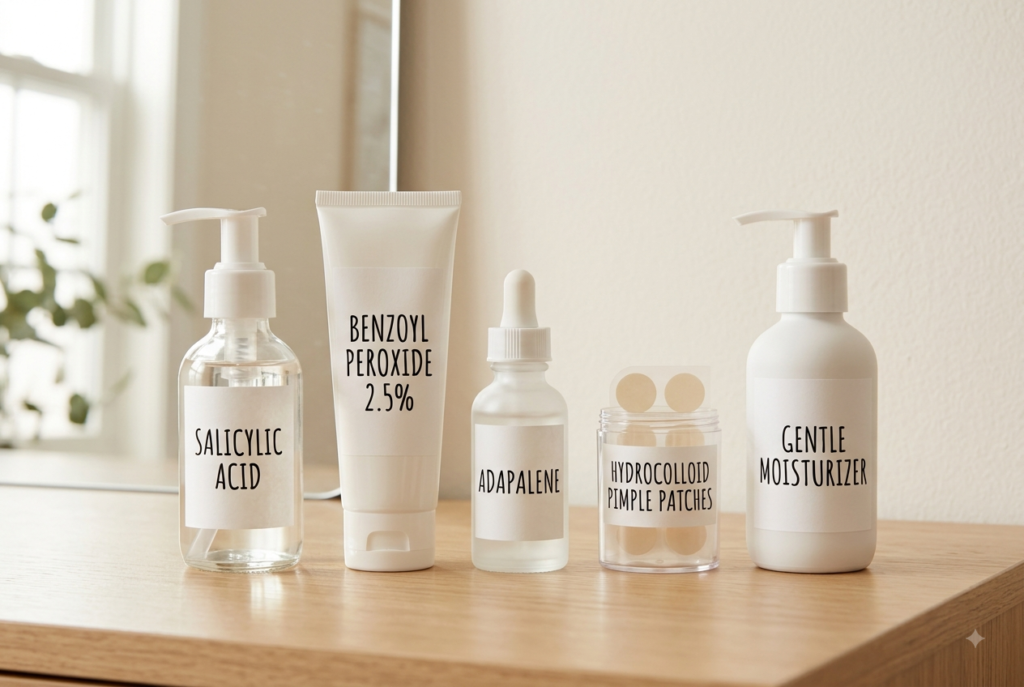
Adapalene
Adapalene is a topical retinoid that helps prevent clogged pores and new breakouts. It can be useful for ongoing acne, but it may cause dryness or irritation when first introduced.
Important for younger teens: Adapalene is available over-the-counter in some countries, but it is not necessarily suitable for every teenager—especially younger teens with sensitive skin. It is always a good idea to speak with a dermatologist or healthcare professional before starting adapalene, particularly if you are under 16 or have sensitive skin. A doctor can help determine whether it is appropriate for your age, skin type, and acne severity, and can guide you on how to use it safely.
Hydrocolloid Pimple Patches
Pimple patches can protect individual pimples from touching and picking. They may also absorb fluid from some surface-level breakouts.
They are useful for individual spots but should not be considered a complete acne treatment.
Best Acne Treatment for Teenage Girls
The best acne treatment for teenage girls depends on the type of acne and individual skin needs.
Hormonal fluctuations around puberty and menstrual periods can sometimes make breakouts worse. Many girls notice more pimples appearing around the jawline, chin, or lower face during certain times of the month. A gentle cleanser, non-comedogenic moisturizer, sunscreen, and an appropriate acne treatment can form a simple starting routine.
Avoid automatically choosing products marketed specifically to girls. Acne treatment should be based on the condition of the skin rather than gender.
If breakouts are persistent, painful, or concentrated around the jawline and lower face, consulting a dermatologist for teen acne treatment can help determine whether hormones may be contributing and whether prescription options might be appropriate.
Teenage Hormonal Acne Treatment
Hormonal acne can be challenging because hormonal changes can continue even when your skincare routine is consistent.
For mild hormonal breakouts, topical treatments such as salicylic acid, benzoyl peroxide, or adapalene may be considered depending on the person’s age and skin.
Some prescription hormonal treatments may also be used for certain patients, but these require medical guidance. The right hormonal treatment depends on several factors, including your age, the type and severity of your acne, and your overall medical history. A dermatologist will evaluate these factors before recommending any prescription option.
Do not start prescription hormonal medication without talking to a qualified healthcare professional.
Tracking your breakouts alongside your menstrual cycle can help you and your dermatologist identify patterns and find the most effective treatment approach.
Acne Treatment for Teen Boys
Acne treatment for teen boys follows many of the same basic principles as acne treatment for girls.
A simple routine can include:
Morning
- Gentle cleanser
- Lightweight moisturizer
- SPF 30+ sunscreen
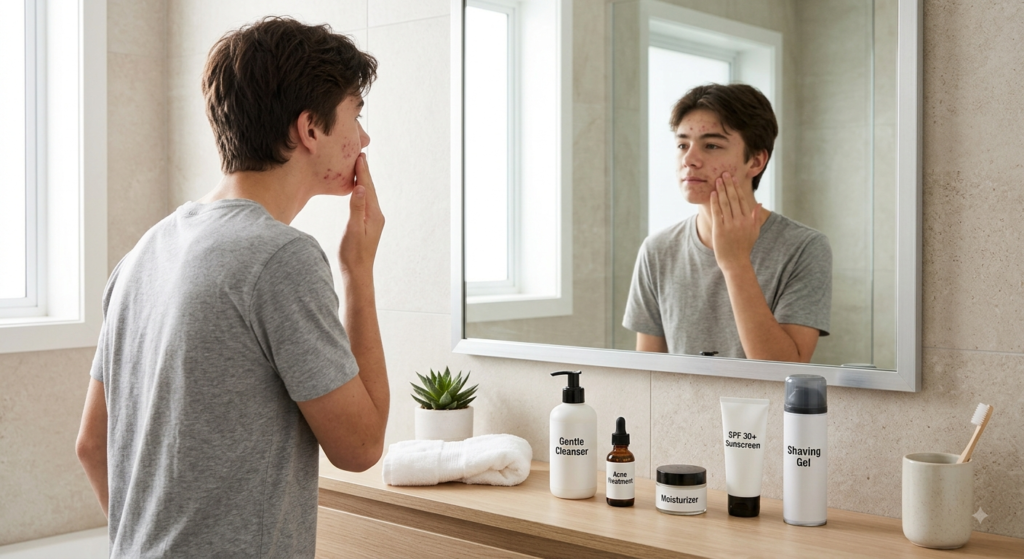
Night
- Gentle cleanser
- One suitable acne treatment
- Moisturizer
Teen boys who play sports should also cleanse after heavy sweating when possible. However, repeatedly washing the face throughout the day can dry and irritate the skin.
Shaving Tips for Teen Boys with Acne
If you shave and have acne, follow these tips to avoid irritation:
- Use a clean, sharp razor.
- Shave in the direction of hair growth.
- Avoid going over the same area repeatedly.
- Use a gentle shaving cream or gel.
- Rinse with lukewarm water, not hot.
- Apply a lightweight moisturizer after shaving.
The best acne treatment for teen boys is not necessarily the strongest product. A treatment that can be used consistently without causing excessive irritation is often a better choice.
Teen Girl Acne Treatment: A Simple Routine
If you’re looking for a practical teen girl acne treatment, keep the routine uncomplicated.
Morning
Start with a gentle cleanser or rinse with water if your skin is dry and sensitive.
Apply a lightweight, non-comedogenic moisturizer.
Finish with broad-spectrum sunscreen.
Evening
Cleanse gently to remove oil, sweat, makeup, and sunscreen.
Apply one acne treatment according to its instructions.
Finish with moisturizer.
Makeup Tips for Acne-Prone Skin
- Choose non-comedogenic or oil-free makeup products.
- Remove makeup thoroughly every night.
- Clean your makeup brushes regularly.
- Avoid sharing makeup with others.
Give the routine time to work before deciding that it has failed. Acne treatments often need several weeks before noticeable improvement occurs.
How Can a 14-Year-Old Get Rid of Pimples?
If you’re wondering how can a 14-year-old get rid of pimples, the safest approach is to avoid aggressive DIY treatments and focus on consistent skincare.
A 14-year-old can generally start with:
- Gentle cleansing
- Non-comedogenic moisturizer
- Daily sunscreen
- An age-appropriate acne treatment when needed
- No picking or squeezing
If the acne is mild, this simple approach may be enough to manage occasional breakouts.
If pimples are deep, painful, widespread, or leaving scars, talk with a parent or guardian and consider seeing a dermatologist.
How to Get Rid of Teenage Pimples Naturally at Home
Many teenagers search for how to get rid of teenage pimples naturally at home.
Some gentle habits can support healthier skin, but natural remedies are not guaranteed cures for acne.
Helpful habits include:
- Wash gently twice a day.
- Avoid touching your face unnecessarily.
- Change pillowcases regularly.
- Remove makeup before sleeping.
- Choose non-comedogenic skincare.
- Avoid squeezing pimples.
- Get enough sleep.
- Eat a balanced diet.
- Manage stress.
Avoid putting irritating household ingredients such as lemon juice, toothpaste, or baking soda on your skin. “Natural” does not automatically mean safe for facial skin.
What About Home Remedies for Pimples?
People often ask, “What are the top 10 home remedies for pimples?”
There are many popular suggestions online, including honey, aloe vera, green tea, tea tree oil, and homemade masks. However, evidence and safety vary widely between these remedies.
⚠️ Always Patch Test First
Before applying any new product or ingredient—even “natural” ones—to your face, test a small amount on the inside of your wrist or behind your ear. Wait 24 hours to check for redness, itching, or irritation. If your skin reacts negatively, do not use it on your face.
A Note on Tea Tree Oil
Tea tree oil has been studied for acne, but it is highly concentrated and can cause skin irritation, redness, or allergic reactions—especially when applied undiluted. Even diluted formulations can trigger sensitivity in some people.
For teenagers and those with sensitive skin, properly formulated over-the-counter acne products are usually a safer and more reliable starting point than DIY tea tree oil preparations. If you choose to use a product containing tea tree oil, opt for one that is specifically formulated for facial skin and follow the manufacturer’s instructions carefully. Stop using it immediately if you experience stinging, burning, or peeling.
Rather than trying ten remedies at once, focus on basic skincare and proven acne treatments.
What Is the Best Treatment for Teenage Body Acne?
Acne does not only appear on the face. Teenagers can also develop breakouts on the chest, shoulders, and back.
For teenage body acne, a gentle body cleanser containing an acne-fighting ingredient such as salicylic acid or benzoyl peroxide may be helpful for some people.
Other useful habits include:
- Shower after heavy exercise or sweating.
- Wear clean clothes after sports.
- Avoid tight clothing that repeatedly rubs against acne-prone areas.
- Rinse conditioner and hair products thoroughly from your back and shoulders.
- Avoid picking body acne.
If body acne is severe, painful, or leaving scars, professional treatment may be necessary.
When Should You See a Dermatologist?
A dermatologist can help when over-the-counter skincare is not enough.
Consider seeing a dermatologist for teen acne treatment if:
- Acne is deep or painful.
- Breakouts are spreading.
- Acne is leaving scars.
- Dark marks are becoming persistent.
- Acne is affecting your confidence.
- Your skin becomes very irritated from treatments.
- You have tried consistent treatment without improvement.
A dermatologist can examine your skin and determine whether prescription medication is appropriate.
Teen Acne Treatment: Dermatologist Advice
Professional advice from a dermatologist can be especially useful for moderate or severe acne.
A dermatologist may recommend topical medications, prescription antibiotics, retinoids, hormonal treatment for appropriate patients, or other options depending on the type of acne.
Severe acne should not be treated by repeatedly adding stronger over-the-counter products. More treatment is not always better.
How to Treat Severe or Extreme Acne?
If you have large, painful, deep, or widespread breakouts, home remedies and over-the-counter products may not be enough.
How to treat severe acne depends on its severity and whether it is causing scarring.
A dermatologist may recommend prescription treatments for severe acne. One option is isotretinoin, a medication that can be highly effective for severe, treatment-resistant acne.
Important safety information about isotretinoin:
- It requires strict medical supervision by a qualified dermatologist.
- Regular check-ups and blood tests are needed throughout treatment.
- It can have side effects, including effects on mood, liver function, and cholesterol levels.
- It is not safe during pregnancy and requires strict birth control measures for females who can become pregnant.
- It should only be used under the close supervision of a dermatologist.
Do not attempt to treat severe acne with multiple strong products without professional guidance. If you have severe acne, talk to a dermatologist about whether prescription treatment is right for you.
Teen Acne Treatment Guidelines: What to Remember
Good teen acne treatment guidelines are surprisingly simple:
- Keep the routine consistent.
- Introduce one active treatment at a time.
- Do not scrub or pick acne.
- Moisturize even if your skin is oily.
- Use sunscreen every morning.
- Give treatments enough time to work.
- Stop products that cause significant irritation.
- Get professional advice for severe or persistent acne.
The goal is not perfectly clear skin overnight. The goal is healthier skin and fewer breakouts over time.
A Gentle Teen Acne Treatment Routine
If you want a teen acne treatment gentle enough for beginners, start with the basics.
Morning
1. Cleanser: Use a gentle, non-stripping cleanser.
2. Moisturizer: Choose a lightweight, non-comedogenic formula.
3. Sunscreen: Apply broad-spectrum SPF 30 or higher.
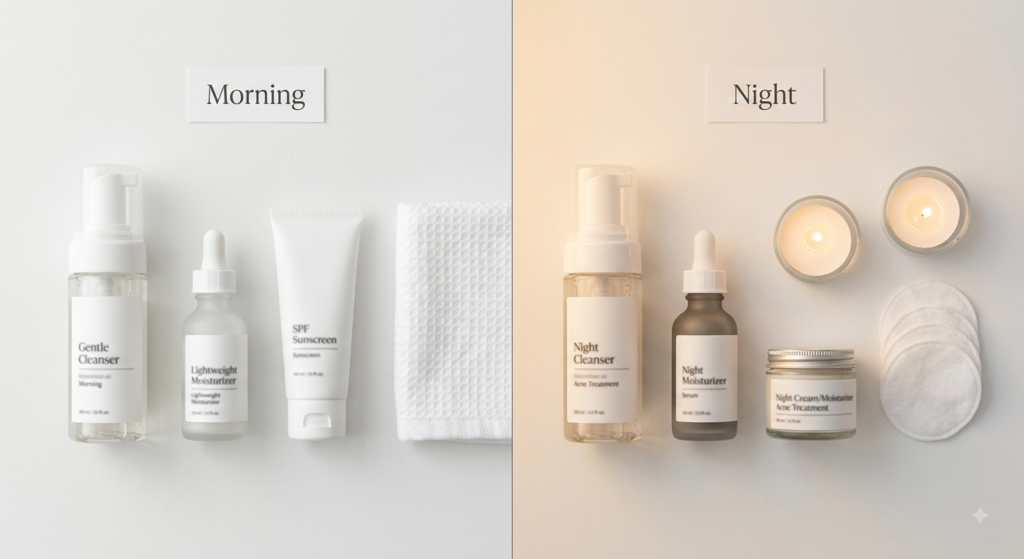
Night
1. Cleanser: Remove sweat, sunscreen, oil, and makeup.
2. Acne treatment: Use one suitable acne-fighting ingredient.
3. Moisturizer: Help maintain your skin barrier and reduce dryness.
This teen acne treatment simple routine is easier to maintain than a complicated 8- or 10-step regimen.
What If Acne Gets Worse After Starting Treatment?
Some acne treatments can initially cause dryness, peeling, or irritation.
That does not mean you should immediately add another product.
Instead:
- Follow the product instructions.
- Reduce frequency if the directions allow it.
- Use moisturizer regularly.
- Avoid harsh scrubs.
- Avoid combining several strong acne treatments without guidance.
If you develop significant swelling, severe burning, or a serious skin reaction, stop the product and seek medical advice.
Frequently Asked Questions
What is the best teen acne treatment?
There is no single best treatment for every teenager. Gentle skincare combined with an appropriate acne-fighting ingredient such as salicylic acid, benzoyl peroxide, or adapalene may help depending on the type of acne.
Can a teenager get rid of pimples naturally?
Healthy skincare habits can support the skin, but natural remedies cannot guarantee that acne will disappear. Persistent acne may need evidence-based treatment.
What is the best acne treatment for teenage girls?
The best option depends on the type and severity of acne. A simple routine with gentle cleansing, moisturizer, sunscreen, and an appropriate acne treatment is a good starting point. Hormonal breakouts around the jawline may benefit from dermatologist guidance.
What is the best acne treatment for teen boys?
Teen boys can use the same evidence-based acne treatments as girls. The choice should depend on skin type and acne severity rather than gender. Pay attention to shaving habits to avoid additional irritation.
What is the best treatment for teenage body acne?
Salicylic acid or benzoyl peroxide body washes may help some teenagers with mild body acne. Persistent or severe body acne should be evaluated by a dermatologist.
How long does teen acne treatment take to work?
Many acne treatments need several weeks of consistent use before noticeable improvement. Stopping too quickly can make it difficult to know whether a treatment is helping.
Does stress cause acne?
Stress may contribute to acne flare-ups for some people by increasing oil production and inflammation. Managing stress through exercise, sleep, and relaxation may help.
Should I pop a pimple?
No. Popping any pimple can increase inflammation, delay healing, and increase the risk of scarring or infection.
Final Thoughts
Teen acne can be frustrating, but it is manageable. The best teen acne treatment is one that matches the type and severity of your breakouts and can be used consistently without unnecessarily irritating your skin.
Start with a gentle routine, choose evidence-based acne ingredients when needed, and avoid picking or experimenting with harsh DIY remedies. If acne becomes painful, severe, persistent, or starts leaving scars, a dermatologist can provide personalized treatment.
Clearer skin usually takes patience rather than a quick fix. With the right routine and professional support when necessary, teenagers can manage acne while keeping their skin healthy and protected. 🌿
Disclaimer:
This article is for general information purposes only and does not constitute medical advice. Always consult a qualified dermatologist or healthcare provider for personalized guidance regarding your skin health, especially if you have persistent, severe, or painful acne.
Laura Bennett is a skincare writer dedicated to sharing practical skincare routines, ingredient knowledge, and healthy skin tips for every day.