
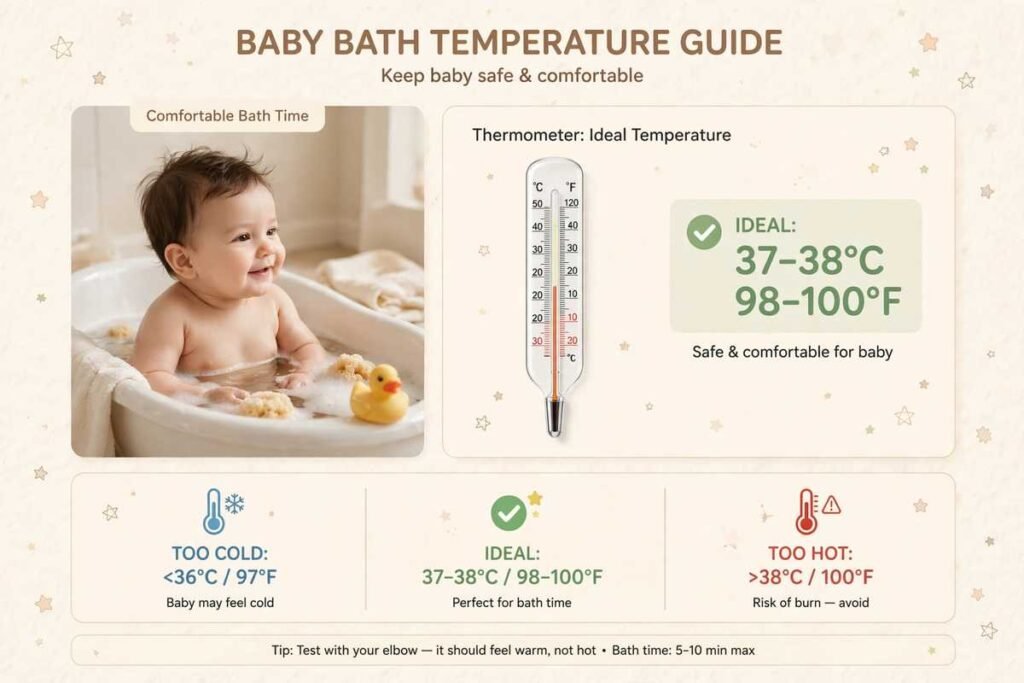
The safe bath temperature for babies is around 37–38°C (98–100°F) — comfortably warm, never hot. It should feel pleasantly warm on the inside of your wrist or elbow, never stinging or uncomfortable. Getting this right matters because babies’ skin burns much more easily than adults’, and most bath scalds happen when water is hotter than parents realize.
Here’s everything you need to know about testing, maintaining, and troubleshooting bath water temperature.
The Ideal Range — and Why It Matters
| Guideline | Detail |
|---|---|
| Ideal bath water | 37–38°C (98–100°F) |
| Feels like | Comfortably warm on your inner wrist |
| Maximum safe | Never above 38°C (100°F) for babies |
| Room temperature | Keep the bathroom warm (around 24°C / 75°F) so baby doesn’t chill |
Babies have thinner skin than adults, so water that feels “just warm” to you can be too hot for them. Pediatric and burn-prevention guidance consistently emphasizes erring on the cooler side — slightly-too-cool water is merely uncomfortable, while slightly-too-hot water can scald.
How to Test Water Temperature (With or Without a Thermometer)
The wrist/elbow test (no thermometer needed):
Swirl the water to eliminate hot spots, then dip the inside of your wrist or elbow in. The water should feel comfortably warm — not hot, not cool. Your inner wrist is more sensitive than your fingertips, which is why this spot gives a truer reading. This is exactly what NHS guidance recommends: check the water with your wrist or elbow, mix it well so there are no hot patches, and run the cold water first before adding hot.
With a bath thermometer:
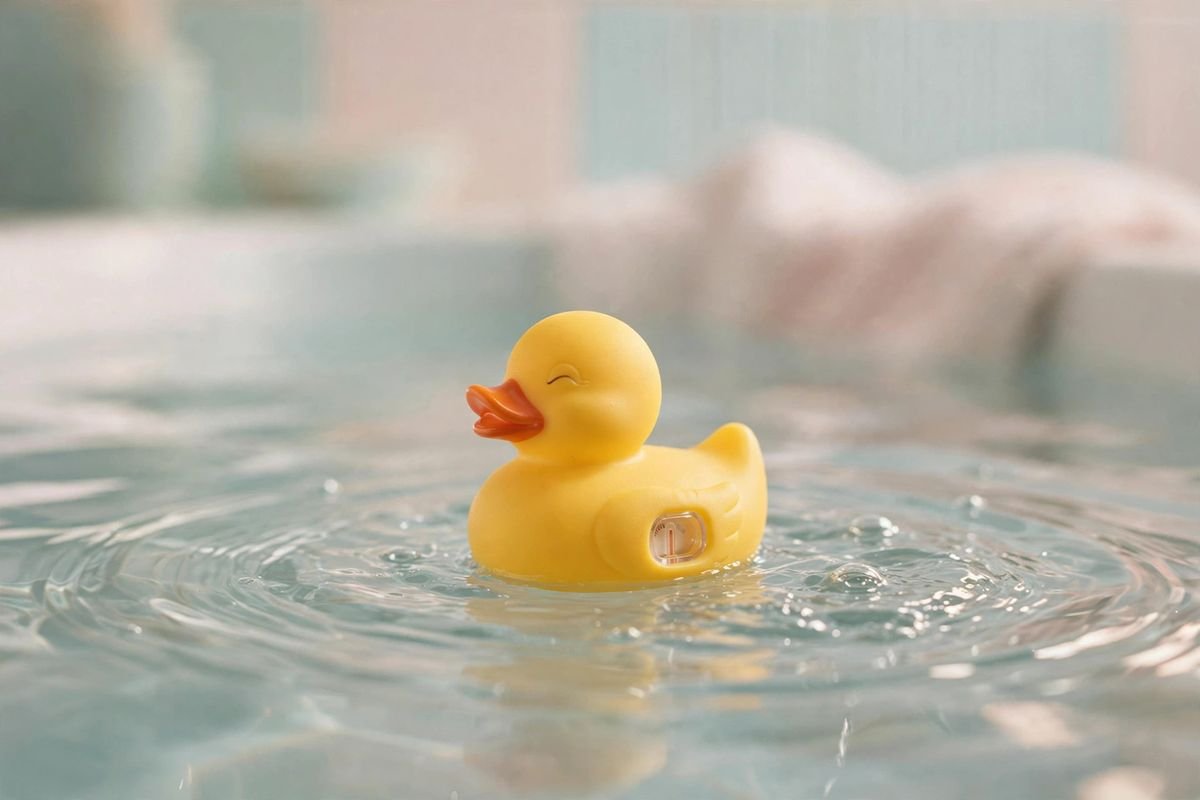
Floating bath thermometers are inexpensive and take the guesswork out. Look for one that clearly marks the safe zone. If you use one, still do a quick wrist check as backup.
Whichever method you use:
- Always swirl the water first — hot water rises and cold sinks, creating deceptive layers.
- Test right before placing your baby in, and re-test if you’ve added any water mid-bath.
Preventing Scalds: The Bigger Picture
Bath water temperature is only part of hot-water safety. These steps protect your baby beyond the tub:
1. Set your water heater to 49°C (120°F) or lower. The AAP recommends the hottest faucet temperature be no more than 120°F (49°C) to help avoid burns — tap water that’s too hot can quickly cause scalds serious enough to need hospital care. This single step is the most effective scald-prevention measure in a home. Many heaters ship set far hotter.
2. Always run cold water first, then add hot — and turn the hot off first when done, so the tap and nearby pipes cool down. NHS burns-prevention guidance gives the same advice: put the cold water in first, top up with hot, and test the temperature using your elbow before your baby goes in.
3. Never put your baby in the tub while water is still running. Temperature can shift suddenly.
4. Face the baby away from taps. Little hands and feet reach for shiny fixtures; a hot tap can burn on contact.
5. Test, then test again. If bath time gets interrupted, re-check the temperature before continuing.
Common Temperature Mistakes Parents Make
- Trusting fingertips. Fingertips are less sensitive to heat — always use the inner wrist or elbow.
- Forgetting to swirl. The top layer can feel fine while the bottom is scalding, or vice versa.
- “Just a quick top-up” of hot water. Adding hot water with the baby in the tub is dangerous — take the baby out first if you must adjust.
- Bathing right after the water heater recovers. After heavy hot-water use, the first refill can come out extremely hot.
- Assuming “lukewarm” means the same to everyone. When in doubt, go a degree cooler.
What If the Water Cools Down Mid-Bath?
Baby baths should be short — 5 to 10 minutes — so significant cooling is unusual. If the water does cool:
- Take your baby out, wrap them in a warm towel, then refresh the bath if you want to continue.
- Never pour hot water into the tub while your baby is in it.
- Keep the bathroom warm and have a dry towel and fresh clothes ready so there’s no chilly wait afterward.
Bath Thermometers: Are They Worth It?
A floating bath thermometer costs very little and takes the guesswork out of the wrist test. They’re especially reassuring for first-time parents or any caregiver (grandparents, babysitters) who doesn’t bathe babies regularly.
If you buy one:
- Choose a digital or clear-dial model with a marked safe zone
- Rinse it after use and store it dry
- Remember it’s a helper, not a replacement — still do a quick wrist check, since thermometers can drift
No thermometer? The inner-wrist test, done carefully after swirling the water, is a perfectly reliable method that pediatric guidance has endorsed for generations.
Teaching Safe Water Habits as Your Baby Grows
Temperature safety evolves with your child:
- Toddlers can learn “we test the water first” as a rule — let them watch you do the wrist check.
- Preschoolers should learn never to turn on hot taps alone.
- Older kids still need the water heater limit — children of all ages are at risk from tap water scalds, which is why the 49°C (120°F) heater setting matters long after the baby-bath years.
One setting on the water heater protects the whole family for years.
Special Situations: Eczema-Prone Skin and Cold Weather
Some babies need a slightly different approach to bath temperature and routine:
- Eczema-prone skin: Pediatric dermatologists often recommend short, lukewarm (not warm) daily baths followed by moisturizer within minutes — the “soak and seal” method. The water should be on the cooler end of comfortable. Follow your own pediatrician’s plan here, since recommendations vary by child.
- Cold weather: Keep the bathroom extra warm and baths a touch shorter. Cold air on wet skin chills babies fast, so have the towel and clothes ready before you start.
- Fever or illness: Skip the bath or use a lukewarm sponge bath for comfort. Never use cold water or alcohol rubs to bring down a fever — ask your pediatrician what’s appropriate.
Quick Reference: Bath Temperature at a Glance
| Question | Answer |
|---|---|
| Ideal water temperature | 37–38°C (98–100°F) |
| How to test without a thermometer | Inner wrist or elbow — should feel comfortably warm, never hot |
| Always do this first | Swirl the water to break up hot and cold layers |
| Water heater setting | 49°C (120°F) maximum |
| How long | 5–10 minutes |
| Red flags | Reddening skin, baby pulling away or crying at water contact |
Print this or stick it inside the bathroom cabinet — every caregiver who bathes your baby should know these numbers.
FAQ
Can bath water be too cold for a baby?
Yes — cold water is uncomfortable and can chill a baby quickly, since babies lose body heat fast. If the water feels cool on your wrist, warm it up (with the baby out of the tub) or end the bath. Shivering or pale, mottled skin means your baby is too cold.
Do I need a special baby bath thermometer?
Not necessarily — the wrist test works well when done carefully. But a thermometer removes guesswork and is especially reassuring for first-time parents. Either way, always swirl the water before testing.
What temperature should the room be during bath time?
Aim for a comfortably warm room, around 24°C (75°F). Close windows and doors to avoid drafts, and have everything (towel, clothes, diaper) ready before you undress your baby.
My baby cries during baths — is the water too hot?
It could be the temperature, but crying is also commonly about the room being cold, being undressed, or just unfamiliarity. Check the water with your wrist first; if it’s comfortably warm, try warming the room, keeping a warm washcloth on your baby’s tummy, and keeping baths short and calm.
Keep Reading
You may also like: Should I Put Lotion on My Baby After Every Bath? How Often Should I Bathe My Baby? Cradle Cap: How to Remove It Safely When Can Babies Wear Sunscreen? Mineral vs Chemical Sunscreen for Kids Is Bubble Bath Safe for Kids? How to Prevent Heat Rash in Babies How Often Should Toddlers Bathe? Kids’ Skincare After Swimming: A Parent’s Guide How Often Should Kids Moisturize? Summer Skincare Tips for Kids Baby Skincare Basics for New Parents Chlorine and Children’s Skin: What Parents Should Know How to Prevent Diaper Rash in Newborns How to Bathe a Newborn Step by Step
This article is for general information only and is not medical advice. Every child’s skin is different — if you’re unsure or notice anything concerning, talk to your pediatrician or a dermatologist.

Rachel writes about gentle, safe skincare for children of all ages. She focuses on answering the real questions parents search for, in plain language backed by trusted sources.
Pingback: When Can I Use Baby Lotion on My Newborn?