
Struggling with breakouts? You don’t need a 10-step routine or a shelf full of expensive products to manage acne-prone skin. In fact, using too many products or harsh ingredients can irritate your skin and make breakouts worse.
The best approach is refreshingly simple: gentle cleansing, targeted treatment, lightweight hydration, and daily sun protection. That’s it.
This guide walks you through exactly how to build a routine that works for your skin type—whether you’re oily, dry, sensitive, or a combination. Plus, we’ll cover affordable options, ingredient choices, and the most common mistakes to avoid.
What Is an Acne-Prone Skin Routine?
An acne-prone skin routine is a consistent skincare plan designed to:
- Keep pores clear
- Support the skin barrier
- Manage breakouts without causing irritation
Acne develops through several factors: excess sebum (oil), clogged hair follicles, inflammation, and the presence of Cutibacterium acnes within blocked follicles. Your skincare routine can’t change your hormones or genetics, but the right products can help manage the factors that contribute to breakouts.
The 4 Essential Steps:
| Step | Purpose |
|---|---|
| 1. Cleanse | Remove excess oil, sweat, and impurities without stripping the skin |
| 2. Treat | Target acne with evidence-based active ingredients |
| 3. Moisturize | Support the skin barrier and prevent dryness |
| 4. Protect | Shield skin from UV damage (especially important with acne treatments) |
Key takeaway: You don’t need seven or ten steps to have healthy skin. Consistency beats complexity.
The Best AM & PM Routine for Acne-Prone Skin
If you’re wondering “What is the best skincare routine for acne-prone skin?”, start with this simple framework:
Morning Routine ☀️
| Step | Product | Why |
|---|---|---|
| 1. Cleanse | Gentle, fragrance-free cleanser | Removes overnight oil and sweat without stripping |
| 2. Treat | Acne treatment (e.g., benzoyl peroxide, salicylic acid, or azelaic acid) | Targets breakouts based on your acne type |
| 3. Moisturize | Lightweight, non-comedogenic moisturizer | Hydrates without clogging pores |
| 4. Protect | Broad-spectrum SPF 30+ sunscreen | Essential—many acne treatments increase sun sensitivity |
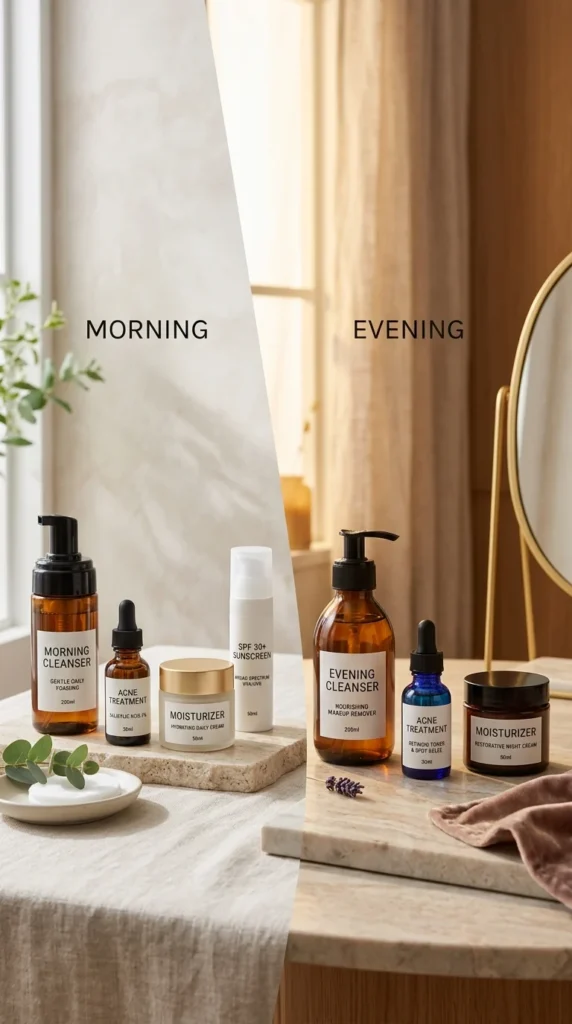
Evening Routine 🌙
| Step | Product | Why |
|---|---|---|
| 1. Cleanse | Gentle cleanser | Removes sunscreen, makeup, and daily grime |
| 2. Treat | Acne treatment (e.g., adapalene for nighttime use) | Works best overnight when skin repairs itself |
| 3. Moisturize | Moisturizer | Locks in hydration and supports barrier repair |
Pro Tip: Introduce one new product at a time and wait 1–2 weeks before adding another. This prevents irritation and helps you identify what’s working.
Customizing Your Routine by Skin Type
Acne-Prone Skin Routine for Oily Skin
Oily skin produces more sebum, leading to shine, enlarged-looking pores, and frequent clogged pores.
Key Tips:
- ✅ Use a gentle or salicylic acid cleanser
- ✅ Choose oil-free, non-comedogenic moisturizers
- ✅ Don’t over-wash—this can cause dryness and irritation
- ❌ Avoid heavy, occlusive products
| Time | Routine |
|---|---|
| AM | Gentle cleanser → lightweight treatment → oil-free moisturizer → SPF 30+ |
| PM | Cleanser → acne treatment → lightweight moisturizer |
Remember: Over-cleansing doesn’t solve the underlying cause of acne—it only damages your skin barrier.
Dry Acne-Prone Skin Routine
Yes, you can have acne and dry skin at the same time. Focus on protecting your skin barrier while still treating breakouts.
Key Tips:
- ✅ Use a gentle, non-stripping cleanser
- ✅ Choose hydrating ingredients: ceramides, glycerin, hyaluronic acid, squalane
- ✅ Apply moisturizer while skin is slightly damp
- ❌ Avoid daily strong exfoliants—they can worsen dryness
| Time | Routine |
|---|---|
| AM | Gentle cleanser → moisturizer → SPF 30+ |
| PM | Gentle cleanser → acne treatment → rich moisturizer |
Warning: If your skin is peeling, burning, or becoming unusually sensitive, your routine is too aggressive. Scale back.
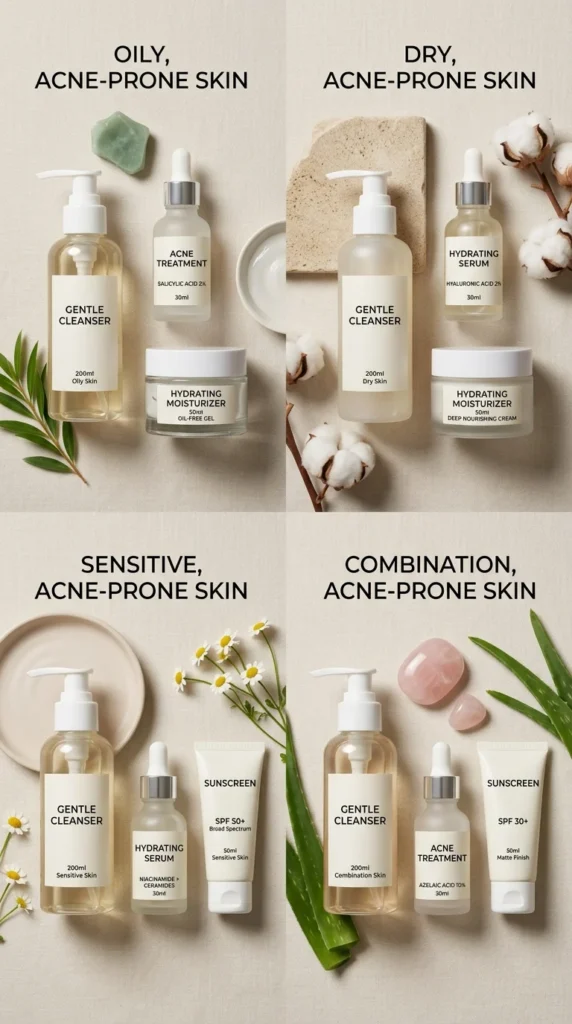
Sensitive Acne-Prone Skin Routine
Sensitive skin requires the most careful approach. Less is more.
Key Tips:
- ✅ Use fragrance-free, hypoallergenic products
- ✅ Introduce one active ingredient at a time
- ✅ Patch-test new products before full application
- ❌ If a product causes burning, swelling, or significant irritation, stop immediately
| Time | Routine |
|---|---|
| AM | Gentle cleanser → moisturizer → SPF 30+ |
| PM | Gentle cleanser → acne treatment (introduced slowly) → moisturizer |
Goal: Choose a small number of effective products that your skin actually tolerates.
Combination Acne-Prone Skin Routine
Combination skin is oily in some areas (forehead, nose, chin) and dry or normal in others (cheeks).
Key Tips:
- ✅ Use a gentle cleanser across the entire face
- ✅ Choose a lightweight, non-comedogenic moisturizer
- ✅ Apply acne treatments strategically to breakout-prone areas
- ✅ Use more hydration on dry areas (e.g., cheeks)
| Area | Approach |
|---|---|
| T-zone (oily) | Salicylic acid cleanser or lightweight treatment |
| Cheeks (dry) | Extra hydration with ceramides or hyaluronic acid |
Specialized Routines
Acne-Prone Skin Routine for Teenage Girls
Teenage skin often becomes oilier during puberty due to hormonal changes. Keep it simple.
| Time | Routine |
|---|---|
| AM | Gentle cleanser → acne treatment (if needed) → lightweight moisturizer → SPF 30+ |
| PM | Gentle cleanser → acne treatment → moisturizer |
For teens: You don’t need expensive serums, multiple exfoliants, or a long seven-step routine. Consistency matters more than complexity.
Acne-Prone Skin Routine for Men
Men can use the same evidence-based acne routine as women.
| Time | Routine |
|---|---|
| AM | Gentle cleanser → acne treatment → moisturizer → SPF 30+ |
| PM | Cleanser → acne treatment → moisturizer |
Shaving Tips:
- ✅ Use a clean, sharp razor
- ✅ Shave in the direction of hair growth
- ❌ Avoid shaving over active, inflamed pimples
- ✅ Use gentle, non-comedogenic shaving products
Note: Facial hair doesn’t require a completely different acne routine.
Affordable Skincare Routine for Acne-Prone Skin
An affordable routine can work perfectly well. Luxury isn’t necessary.
Prioritize:
- Gentle cleanser (drugstore options work well)
- One evidence-based acne treatment
- Basic, fragrance-free moisturizer
- Broad-spectrum sunscreen
| Product Type | Budget-Friendly Examples |
|---|---|
| Cleanser | CeraVe Foaming, Cetaphil Gentle, La Roche-Posay Toleriane |
| Treatment | Benzoyl peroxide 2.5%, adapalene, salicylic acid |
| Moisturizer | CeraVe PM, Cetaphil Daily, Vanicream |
| Sunscreen | Any broad-spectrum SPF 30+ that doesn’t irritate |
Smart shopping: A $15 product that your skin tolerates is better than a $60 product that causes irritation.
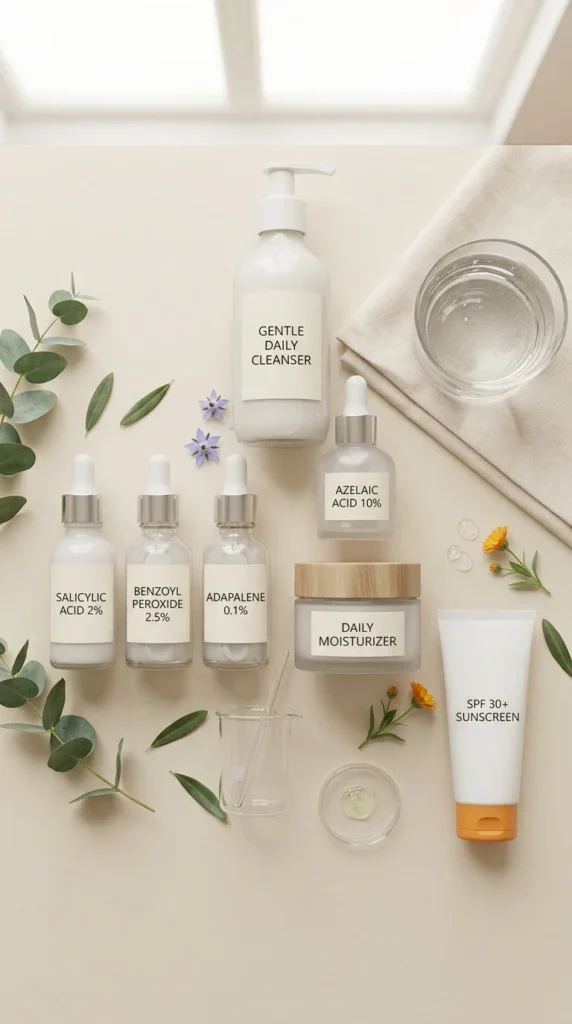
Key Active Ingredients Explained
Instead of choosing products based on brand names, understand what each ingredient does.
| Ingredient | Best For | How It Works |
|---|---|---|
| Salicylic Acid | Blackheads, whiteheads, clogged pores | Exfoliates inside the pore |
| Benzoyl Peroxide | Inflamed pimples (papules, pustules) | Kills bacteria and reduces inflammation |
| Adapalene | Clogged pores and inflammatory acne | Normalizes skin cell turnover and helps prevent new blockages |
| Azelaic Acid | Inflamed acne + dark marks | Anti-inflammatory, antimicrobial, fades discoloration |
| Ceramides | Dryness, barrier repair | Supports and restores the skin barrier |
| Glycerin & Hyaluronic Acid | Hydration | Attract and retain water in the skin |
What About Popular Brands?
CeraVe for Acne-Prone Skin
A simple CeraVe-based routine could look like:
| Time | Routine |
|---|---|
| AM | CeraVe Foaming Facial Cleanser → acne treatment → CeraVe PM Moisturizer → SPF |
| PM | CeraVe cleanser → acne treatment → CeraVe PM or Skin Renewing Night Cream |
Note: The brand isn’t automatically better because it’s popular. Choose individual products according to your skin’s needs.
La Roche-Posay for Acne-Prone Skin
A La Roche-Posay routine follows the same structure:
| Time | Routine |
|---|---|
| AM | La Roche-Posay Toleriane Cleanser → acne treatment → La Roche-Posay Double Repair Moisturizer → SPF |
| PM | Cleanser → acne treatment → moisturizer |
The Ordinary for Acne-Prone Skin
The Ordinary offers affordable active ingredients, but resist the temptation to combine several acids at once.
Simple approach:
- Choose one acne-focused active (e.g., salicylic acid or azelaic acid)
- Pair with a gentle cleanser, basic moisturizer, and sunscreen
Warning: More active ingredients don’t automatically mean faster results. A simple routine your skin tolerates is the better goal.
Hydrating Acne-Prone Skin Routine
Yes, you can and should hydrate acne-prone skin—especially if treatments cause dryness.
Key Ingredients for Hydration:
- ✅ Glycerin
- ✅ Hyaluronic acid
- ✅ Ceramides
- ✅ Squalane
- ✅ Niacinamide (calms inflammation)
| Time | Routine |
|---|---|
| AM | Gentle cleanser → hydrating serum (optional) → moisturizer → SPF |
| PM | Gentle cleanser → acne treatment → hydrating moisturizer |
Remember: Hydration and oiliness are not the same. Oily skin can still be dehydrated, and acne-prone skin still needs moisture.
Common Mistakes to Avoid
Even a good routine can fail if you make these common errors:
| Mistake | Why It’s Harmful |
|---|---|
| Using too many active ingredients | Causes irritation, dryness, and barrier damage |
| Scrubbing acne | Acne isn’t dirt—scrubbing worsens inflammation |
| Skipping moisturizer | Drying out skin makes treatment harder to tolerate |
| Forgetting sunscreen | UV exposure worsens post-acne dark marks |
| Constantly changing products | Treatments need 8–12 weeks to show results |
| Picking pimples | Increases inflammation, scarring, and infection risk |
| Over-washing | Strips the barrier and can increase dryness and irritation |
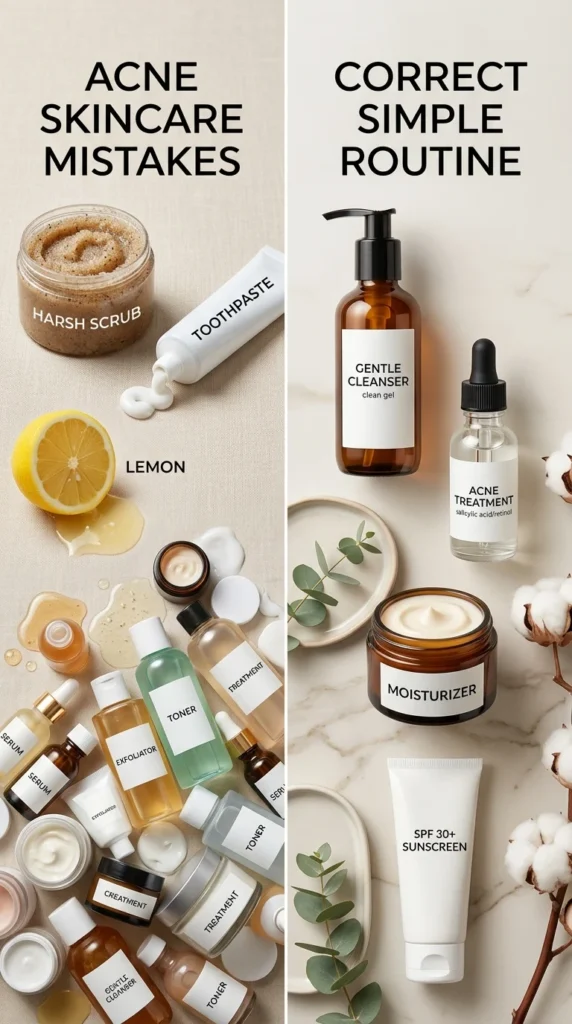
❌ Harmful DIY Remedies to Avoid
| “Remedy” | Why It’s Dangerous |
|---|---|
| Lemon juice | Highly acidic—can burn and irritate skin |
| Baking soda | Disrupts skin’s natural pH barrier |
| Toothpaste | Contains harsh abrasives and drying agents |
| Undiluted essential oils | Can cause severe contact dermatitis |
Bottom line: There is no safe natural remedy that can permanently cure acne. Stick to evidence-based treatments.
What About Diet?
People often ask, “What are 10 foods to avoid for acne?”
The truth: There is no scientifically established list of ten foods that every person with acne must avoid.
What research suggests:
- High-glycemic foods (white bread, sugary snacks) may worsen acne in some people
- Cow’s milk has been associated with acne in certain studies, but effects vary
- There is no universal acne diet
What to do:
- ✅ Eat a balanced diet with vegetables, fruits, whole grains, and lean proteins
- ✅ Stay hydrated
- ❌ Don’t eliminate entire food groups without professional advice
- 🗒️ If you notice a consistent link between a specific food and breakouts, discuss it with a doctor
How Long Does an Acne-Prone Skin Routine Take to Work?
| What to Expect | Timeline |
|---|---|
| Noticeable improvement | 4–8 weeks of consistent treatment |
| Maximum improvement | 8–12 weeks |
Don’t quit too early! Many people give up after a week. Give your routine at least 2–3 months.
Important Safety Warnings
⚠️ Adapalene and Pregnancy
Adapalene is generally not recommended during pregnancy. If you are pregnant, planning to become pregnant, or breastfeeding, consult your healthcare provider before using adapalene or any retinoid product. There are safer alternatives available for managing acne during pregnancy.
When to See a Dermatologist
Professional help is essential if you have:
- 🔴 Deep, painful nodules or cysts
- 🔴 Acne that’s leaving scars or dark marks
- 🔴 Breakouts that don’t improve after 8–12 weeks of consistent OTC treatment
- 🔴 Acne covering large areas (face, chest, back)
- 🔴 Significant emotional distress, anxiety, or low self-esteem
- 🔴 Irregular periods or other hormonal symptoms (e.g., excessive facial/body hair)
- 🔴 Uncertainty about whether the bumps are even acne
What a Dermatologist Can Offer:
| Treatment | When It’s Used |
|---|---|
| Prescription-strength topicals | For moderate acne not responding to OTC |
| Oral antibiotics | For moderate-to-severe inflammatory acne |
| Hormonal therapies | For appropriate patients with hormonal acne patterns, under medical supervision |
| Isotretinoin | For severe, scarring, or treatment-resistant acne |
| Corticosteroid injections | To rapidly shrink large, painful cysts |
Frequently Asked Questions
Q: What’s the best skincare routine for acne-prone skin?
A: A simple routine: gentle cleanser → acne treatment → non-comedogenic moisturizer → SPF. Customize based on your skin type and acne severity.
Q: Can I follow an acne skincare routine at home?
A: Yes. Mild acne can often be managed with an appropriate home routine. If acne is severe, painful, scarring, or persistent, see a dermatologist.
Q: Is CeraVe good for acne-prone skin?
A: Some CeraVe products work well for acne-prone skin—especially gentle cleansers and moisturizers. Choose based on your individual needs, not brand popularity.
Q: Is The Ordinary good for acne-prone skin?
A: Some products (salicylic acid, azelaic acid) can help. Avoid combining multiple strong actives without considering irritation and compatibility.
Q: What’s a good routine for oily and acne-prone skin?
A: Gentle/salicylic acid cleanser → acne treatment → lightweight oil-free moisturizer → SPF. Don’t over-wash to control oil.
Q: What if I have sensitive, oily, and acne-prone skin?
A: Keep it simple. Gentle cleanser → lightweight moisturizer → SPF. Introduce acne treatments gradually. Avoid fragrance and harsh exfoliation.
Q: Can I use adapalene if I’m pregnant?
A: Adapalene is generally not recommended during pregnancy. Consult your healthcare provider for safer alternatives.
Final Thoughts: Your Path to Clearer Skin
A good acne-prone skin routine doesn’t need to be complicated. Whether your skin is oily, dry, sensitive, or combination, the basic strategy remains the same:
Your Action Plan:
- ✅ Simplify—gentle cleanser, one active ingredient, moisturizer, and SPF
- ✅ Match your treatment to your acne type (clogged pores vs. inflamed pimples)
- ✅ Be patient—give treatments 8–12 weeks to work
- ✅ Avoid common mistakes—no scrubbing, no picking, no skipping SPF
- ✅ Avoid harmful DIY remedies—lemon juice, baking soda, and toothpaste are not treatments
- ✅ See a dermatologist if acne is severe, painful, scarring, or persistent
Don’t feel pressured to buy every trending product or follow a seven-step routine. Consistency beats complexity. Your skin—and your wallet—will thank you.

Emma Brooks is a skincare writer who creates simple, research-based skincare guides, ingredient insights, and practical routines for healthy skin.