
Forehead acne is uniquely frustrating. It often appears when the rest of your face is clear, making it feel like an unfair, targeted attack. Located in the heart of the T‑zone, your forehead is densely packed with sebaceous glands, making it a prime location for clogged pores and breakouts. But excess oil is only part of the story. Hair products, sweat, friction, hormonal fluctuations, and even your daily skincare habits can all play a significant role.
The good news? Most forehead acne is highly manageable. With a consistent, science-backed routine and a clear understanding of your personal triggers, you can achieve clearer skin without endless trial and error.
Whether you’re a teenager battling hormonal flare-ups, an adult looking for a fast-acting solution, or someone puzzled by stubborn bumps along the hairline, this guide covers everything you need to know—from root causes and acne types to the most effective treatments and prevention strategies.
What Really Causes Forehead Acne?
Acne begins when hair follicles become clogged with a combination of excess sebum (oil) and dead skin cells. When bacteria (Cutibacterium acnes) multiply within these blocked follicles, the immune system mounts an inflammatory response, turning a simple clogged pore into a red, swollen pimple.
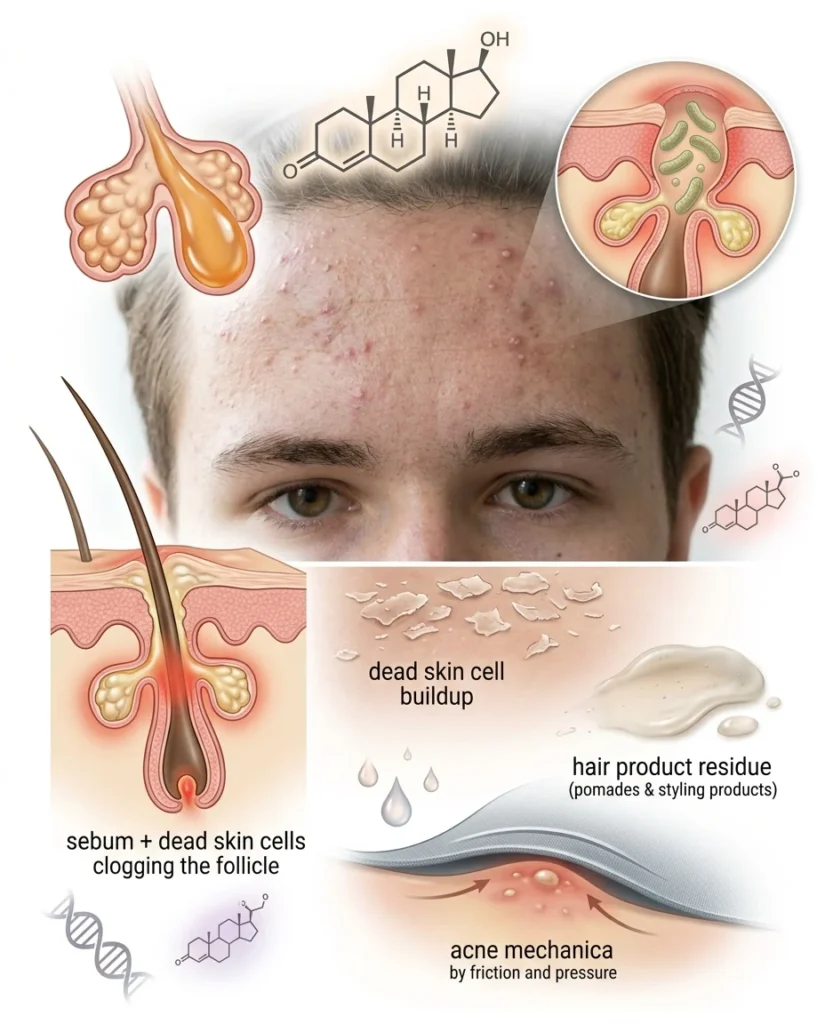
The Most Common Forehead Acne Triggers:
| Trigger | How It Affects You |
|---|---|
| Excess Oil Production | Overactive sebaceous glands, often driven by hormones, create an environment where breakouts thrive. |
| Dead Skin Buildup | Skin cells that don’t shed properly mix with oil, forming the perfect plug. |
| Hormonal Changes | Puberty, menstrual cycles, and stress-induced cortisol spikes can all increase oil production. |
| Hair & Styling Products | Oils, waxes, and silicones transfer to your forehead, clogging pores (a condition called pomade acne). |
| Sweat & Humidity | Sweat itself isn’t the enemy, but trapped sweat combined with friction and heat irritates the skin. |
| Friction (Acne Mechanica) | Hats, helmets, headbands, and even phone screens repeatedly rubbing against the forehead can cause breakouts. |
| Frequent Touching | Hands carry bacteria and oil; touching your forehead transfers both directly into pores. |
| Stress | Triggers the release of cortisol, which can worsen acne by increasing inflammation and oil production. |
Pro Tip for Teens: Puberty supercharges oil glands. That’s why teen forehead acne may benefit from proven acne treatments such as adapalene, salicylic acid, or benzoyl peroxide, depending on the acne type—not harsh scrubbing, which only inflames the skin.
Know Your Enemy—Types of Forehead Acne
Not all bumps are created equal. Identifying the type of acne you have is the most critical step toward choosing the right treatment.
Non-Inflammatory Acne (Clogged Pores)
| Type | Appearance | Key Characteristic |
|---|---|---|
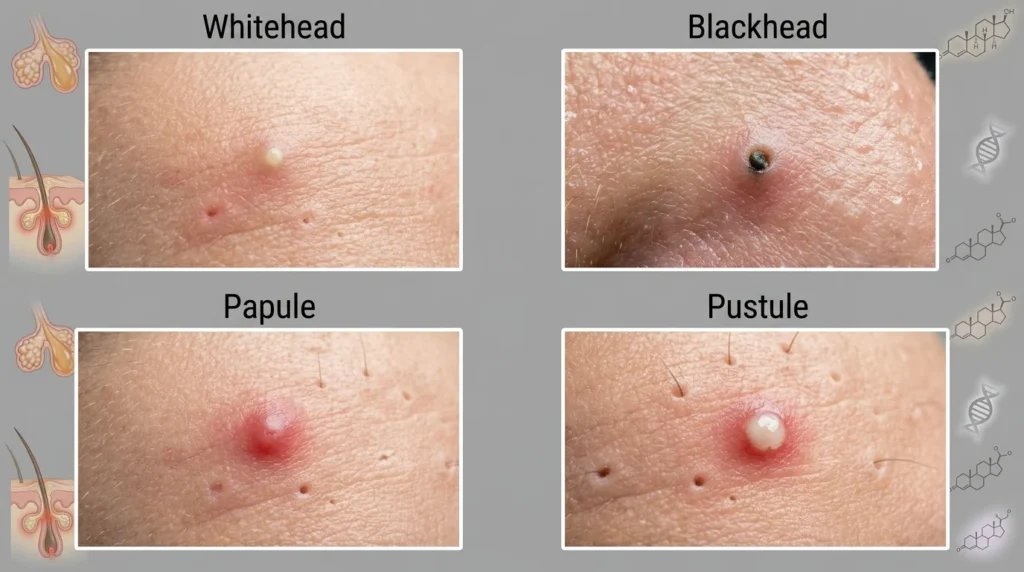
| Whiteheads | Small, flesh‑colored or white bumps | Closed, clogged pores (comedones). Minimal inflammation. |
| Blackheads | Small, dark bumps | Open, clogged pores. The dark color is oxidized oil and dead skin, not dirt. |
Inflammatory Acne
| Type | Appearance | Key Characteristic |
|---|---|---|
| Papules | Small, red, raised bumps | Inflamed but without visible pus. |
| Pustules | Red bumps with a white/yellow center | Inflamed with visible pus. Do not squeeze—this worsens inflammation and risks scarring. |
| Nodules & Cysts | Large, painful, deep lumps | Severe, hard-to-treat acne that forms deep in the skin. Requires a dermatologist. |
Is It Actually Acne? (The “Tiny Bump” Dilemma)
If you have many small, itchy, uniform bumps—especially along your hairline—they may not be acne at all. Common lookalikes include:
- Folliculitis: Inflammation of hair follicles, often triggered by sweat, friction, or bacteria.
- Irritant Contact Dermatitis: A reaction to harsh hair or skincare products.
Critical Advice: If you’re searching for “tiny bumps on forehead not acne,” stop adding stronger acne products. They can worsen irritation. A dermatologist can accurately diagnose the cause.
The 4-Step Treatment Strategy
If you’re asking “How do I get rid of acne on my forehead?”, the answer is simple: build a sustainable, evidence-based routine. Here’s how.
Step 1: Build Your Foundation Routine
| Time | Step | Product Type | Why |
|---|---|---|---|
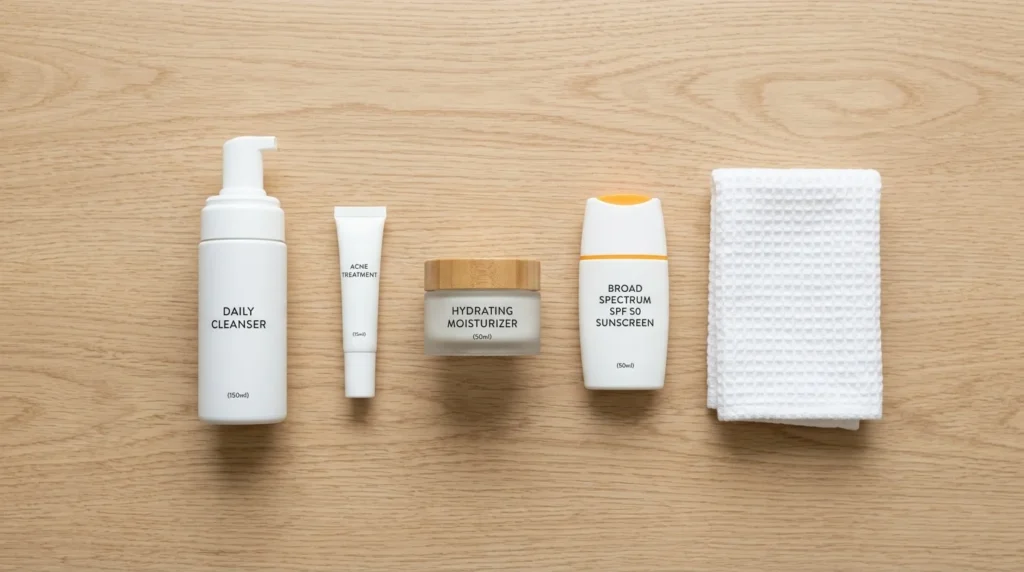
| Morning | 1. Cleanse | Gentle, non-comedogenic cleanser | Removes overnight oil and sweat without stripping the skin. |
| 2. Treat | Acne treatment (see Step 2 below) | Targets the root cause of your specific acne type. | |
| 3. Moisturize | Lightweight, oil‑free, fragrance‑free moisturizer | Protects the skin barrier and prevents dryness from treatments. | |
| 4. Protect | Broad‑spectrum SPF 30+ sunscreen | Essential—many acne treatments increase sun sensitivity. | |
| Evening | 1. Cleanse | Gentle cleanser | Removes sunscreen, makeup, and environmental pollutants. |
| 2. Treat | Retinoid (e.g., adapalene) or other active | Works best overnight when skin repairs itself. | |
| 3. Moisturize | Moisturizer | Locks in hydration and supports barrier repair. |
Golden Rule: Introduce one new product at a time and wait 1–2 weeks before adding another. This prevents irritation and helps you identify what’s working.
Step 2: Choose Your Active Ingredient (Match to Your Acne Type)
There is no single “best” treatment—it depends entirely on your acne type.
| Your Primary Acne Type | Most Effective Ingredient | How It Works |
|---|---|---|
| Blackheads & Whiteheads (Clogged Pores) | Salicylic Acid (BHA) or Adapalene | Salicylic acid exfoliates inside the pore; adapalene prevents new clogs by speeding up cell turnover. |
| Inflamed Pimples (Papules/Pustules) | Benzoyl Peroxide | Kills acne-causing bacteria and reduces inflammation. Use 2.5%–5%—higher concentrations don’t work better, just irritate more. |
| Acne + Dark Marks (Post‑Inflammatory Hyperpigmentation) | Azelaic Acid | Reduces inflammation, unclogs pores, and fades discoloration simultaneously. |
| Severe or Resistant Acne | Prescription Retinoids (e.g., tretinoin) or Combination Therapy | Requires evaluation by a dermatologist for stronger topical or oral medications. |
Step 3: Eliminate Hidden Triggers
Hair and lifestyle products are the most overlooked culprits.
🔴 Hair Products (Pomade Acne)
- Apply conditioner and styling creams away from the scalp.
- Choose products labeled non‑comedogenic.
- Wash your face after rinsing out heavy conditioners or masks.
- Keep bangs and heavy fringe off your forehead.
🔴 Friction & Sweat (Acne Mechanica)
- Wash sweaty headbands and hats after every use.
- Clean helmet padding regularly according to the manufacturer’s instructions.
- Don’t wipe sweat with dirty hands—use a clean towel.
- Change pillowcases at least once a week.
🔴 Lifestyle & Habits
- Stop picking! Squeezing pimples increases inflammation, raises infection risk, and causes permanent scars.
- Manage stress: Sleep, exercise, and mindfulness can lower cortisol, which may reduce flare-ups.
- Consider diet: High‑glycemic foods and dairy can exacerbate acne in some people. There’s no universal acne diet, but being mindful can help.
Step 4: Stay Realistic About Timing
| What to Expect | Timeline |
|---|---|
| A single pimple to heal | 3–7 days |
| Noticeable improvement in your skin | 4–8 weeks of consistent treatment |
| Maximum improvement from a new routine | 8–12 weeks |
There is no safe “overnight cure.” Aggressive scrubbing, squeezing, or harsh DIY remedies (lemon juice, baking soda, toothpaste) will not clear acne faster—they will damage your skin barrier and make things worse.
Specialized Scenarios
Forehead Acne Treatment for Teens
Teenage skin is oilier but more prone to irritation from harsh products.
- Keep it simple: Gentle cleanser + one active treatment + moisturizer + SPF.
- Avoid the “kitchen sink” approach: More products ≠ better skin. Consistency is key.
- When to see a doctor: If acne is painful, scarring, or causing emotional distress.
Forehead Acne Treatment for Men
Men face unique triggers:
- Friction: Sports helmets, hats, and sweat are common.
- Shaving: Shave carefully over acne; use a clean, sharp razor to avoid nicks and spread of bacteria.
- Product choices: Choose lightweight, non-greasy skincare and hair products.
Forehead Acne Treatment at Home (Safe DIY Habits)
- ✅ Change pillowcases weekly.
- ✅ Clean headwear after each sweaty use.
- ✅ Keep hair clean and off your forehead.
- ❌ Avoid: Lemon juice, baking soda, toothpaste, undiluted essential oils—these are irritants, not treatments.
When to See a Dermatologist
A dermatologist is not just for severe cases. Consider an appointment if:
- You have deep, painful nodules or cysts.
- Acne is leaving scars or extensive dark marks.
- Your breakouts persist despite 8–12 weeks of consistent OTC treatment.
- You’re unsure if the bumps are even acne.
- Acne is affecting your confidence, mental health, or daily life.
- You have possible signs of hormonal changes, such as irregular periods or increased facial/body hair.
A dermatologist can offer:
- Prescription-strength topicals (e.g., tretinoin, higher-concentration azelaic acid).
- Oral antibiotics for inflammatory acne.
- Hormonal therapies (e.g., spironolactone or certain oral contraceptives).
- Isotretinoin for severe, treatment-resistant acne.
- In-office procedures (extractions, corticosteroid injections for cysts, chemical peels).
Frequently Asked Questions
Q: Can hair products really cause forehead acne?
A: Absolutely. Heavy oils, waxes, and silicones are major culprits. This is often called “pomade acne” and appears as small bumps along the hairline.
Q: What’s the single best forehead acne treatment?
A: There is no one-size-fits-all. Adapalene, benzoyl peroxide, salicylic acid, and azelaic acid are all effective—but the right one depends on whether you have clogged pores, inflamed pimples, or dark marks.
Q: Can I get rid of forehead acne fast?
A: You can reduce redness and inflammation quickly with benzoyl peroxide or a cold compress, but true clearing takes weeks. Realistic expectations are essential for skin health.
Q: Why do I have tiny bumps that aren’t acne?
A: Folliculitis, heat rash, or contact dermatitis can look similar. If typical acne treatments don’t help, see a dermatologist for an accurate diagnosis.
Q: How long should I try a treatment before giving up?
A: At least 8–12 weeks. Many people quit too early. If you see no improvement by then, or if your skin worsens, consult a professional.
Final Takeaway: Your Path to Clearer Forehead Skin
Effective forehead acne treatment is not about finding a miracle cure—it’s about building a smart, consistent routine, identifying your personal triggers, and giving your skin time to respond.
Your Action Plan:
- Simplify: Use a gentle cleanser, one active ingredient, a moisturizer, and SPF.
- Match your treatment to your acne type (clogged pores vs. inflamed pimples vs. dark marks).
- Eliminate hidden triggers—especially hair products, hats, and sweat.
- Be patient—wait 8–12 weeks before switching treatments.
- See a dermatologist if your acne is severe, scarring, persistent, or emotionally distressing.
Clear skin isn’t about perfection—it’s about progress. Start today, stay consistent, and your forehead will thank you.

Sophie Carter is a skincare writer who shares science-backed skincare routines, ingredient insights, and everyday tips for healthier-looking skin.