Acne is one of the most common skin concerns worldwide, and it can be deeply frustrating—especially when breakouts keep returning despite trying different products. If you prefer a gentler, more natural approach, you’ve likely wondered: Can natural remedies for acne actually help clear my skin?
The honest answer is yes and no. Some natural approaches may support acne-prone skin, but most home remedies have limited scientific evidence behind them. More importantly, natural does not automatically mean safe or effective. In fact, some of the most popular DIY ingredients—including lemon juice, undiluted essential oils, toothpaste, and apple cider vinegar—can irritate, burn, or even permanently damage your skin.
The good news? You don’t need to try every remedy you find online. A simple, consistent routine, combined with a few carefully chosen natural ingredients and healthy lifestyle habits, may help support clearer, healthier-looking skin over time.
In this guide, we’ll explore evidence-based natural remedies for acne, separate fact from fiction, highlight what to avoid, and help you recognize when it’s time to see a dermatologist.
What Are Natural Remedies for Acne?
Natural remedies for acne are home-based approaches that use plant-derived ingredients, dietary changes, or lifestyle habits rather than conventional over-the-counter or prescription acne medications.
Common Examples Include:
| Category | Examples |
|---|---|
| Topical ingredients | Aloe vera, green tea, diluted tea tree oil, raw honey |
| Dietary approaches | Lower-glycemic eating, omega-3-rich foods |
| Lifestyle habits | Stress management, regular exercise, adequate sleep |
However, there’s a crucial distinction between natural remedies that may support acne-prone skin and remedies that are clinically proven to treat acne.
Conventional acne ingredients such as salicylic acid, benzoyl peroxide, and adapalene have significantly stronger evidence for treating acne than most DIY remedies. That said, some people find these ingredients too drying or irritating, which is why a gentle, well-balanced skincare routine—whether natural or conventional—is essential.
1. Aloe Vera for Soothing Acne-Prone Skin
Aloe vera is one of the most beloved natural ingredients for irritated or inflamed skin—and for good reason.
Why It May Help
Aloe contains compounds such as polysaccharides and glycoproteins that have soothing and anti-inflammatory properties. While these properties may help calm redness and irritation associated with acne, research specifically supporting aloe vera as a direct acne treatment is still limited.
How to Use Aloe Vera Safely
If you’d like to try it:
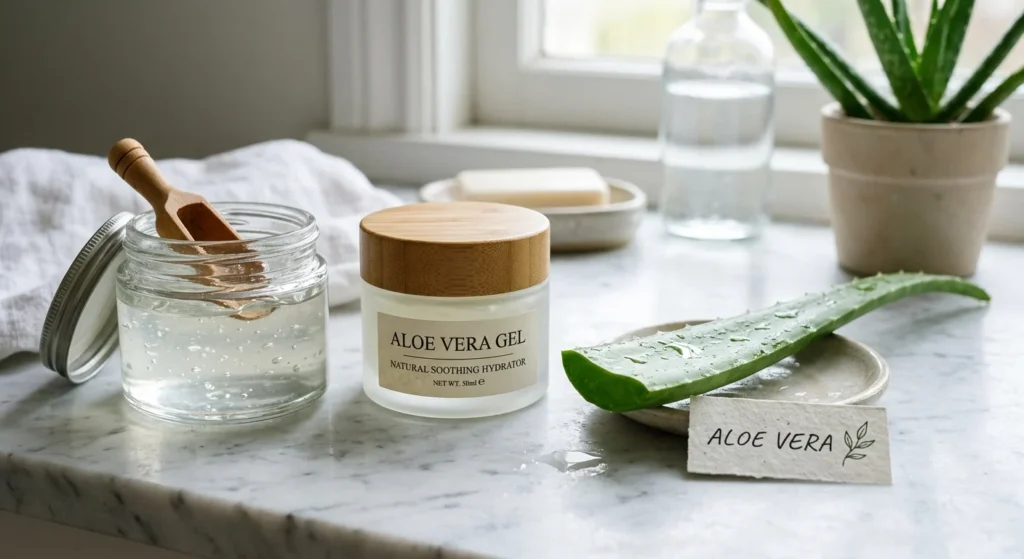
- Choose wisely: Select a simple aloe vera gel with as few additives as possible—ideally 100% pure aloe without fragrances, alcohol, or dyes.
- Patch-test first: Apply a small amount to your inner forearm and wait 24 hours to check for redness or itching.
- Apply correctly: Use a thin layer on clean, dry skin.
- Set realistic expectations: Use it as a soothing layer rather than a standalone acne treatment.
- Stop if irritated: Discontinue use if you experience burning, itching, or worsening redness.
Bottom line: Aloe vera is more useful for calming irritated skin than for directly eliminating acne. It’s a supportive ally, not a cure.
2. Diluted Tea Tree Oil – One of the Few with Some Evidence
Tea tree oil is one of the few natural acne remedies that has some clinical research behind it.
What the Research Says
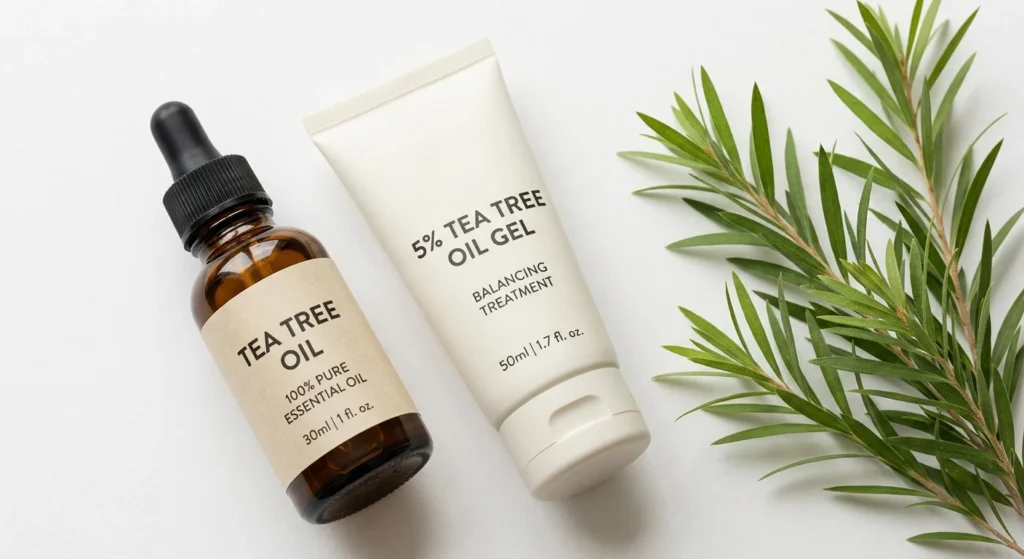
A small study found that a 5% tea tree oil gel helped reduce acne lesions while causing less dryness and irritation than 5% benzoyl peroxide in some participants. However, the evidence is still limited compared with established acne treatments, and tea tree oil is not a first-line treatment.
Critical Safety Warning
Tea tree oil is highly concentrated and can cause severe irritation, chemical burns, or allergic reactions if applied undiluted.
Safe Usage Guidelines:
- Always dilute tea tree oil to no more than 5%.
- A safe DIY dilution: 5 drops of tea tree oil in 1 ounce (about 30 ml) of a carrier oil such as jojoba, squalane, or MCT oil.
- Patch-test before using on your face.
- Never ingest tea tree oil.
- Stop immediately if you experience redness, peeling, or burning.
Bottom line: Tea tree oil may help, but it must be used with extreme caution. A pre-formulated skincare product containing a safe concentration is often more reliable than a DIY mix.
3. Green Tea – Antioxidant Support for the Skin
Green tea is rich in polyphenols and catechins—powerful antioxidants that may have anti-inflammatory and sebum-regulating properties.
What the Research Says
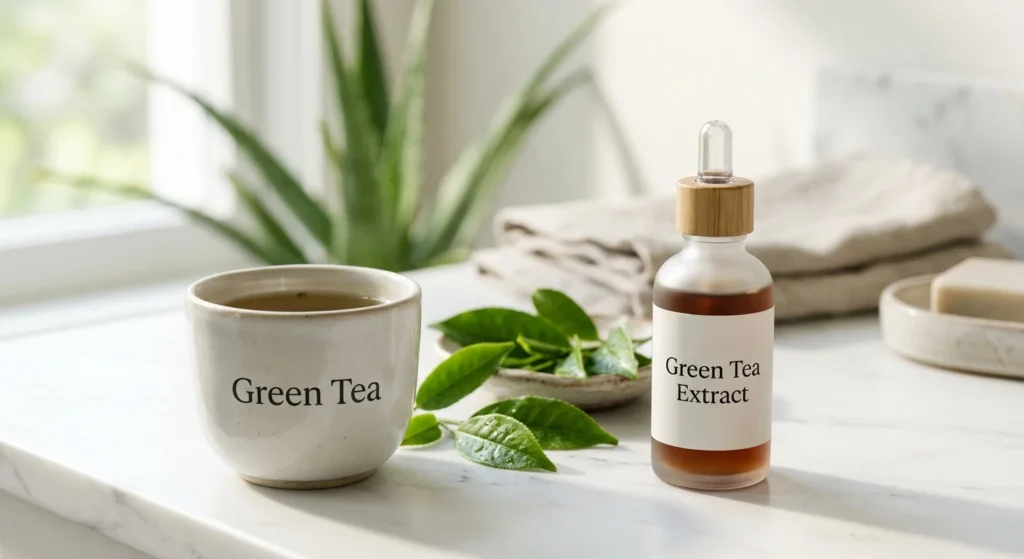
Some research suggests that topical green tea extract may reduce sebum production and the number of pimples, although more large-scale human studies are needed.
How to Use Green Tea
| Method | Recommendation |
|---|---|
| Topically | Look for a skincare product (serum, toner, or moisturizer) that contains standardized green tea extract—this is more consistent than homemade preparations. |
| Orally | Drinking 1–2 cups of green tea daily can be a healthy habit, but it should not be considered an acne cure. |
Bottom line: Green tea is a promising supportive ingredient, especially for its anti-inflammatory and antioxidant effects. It’s worth including, but don’t expect it to clear your skin on its own.
4. Honey – Antibacterial but Not a Cure-All
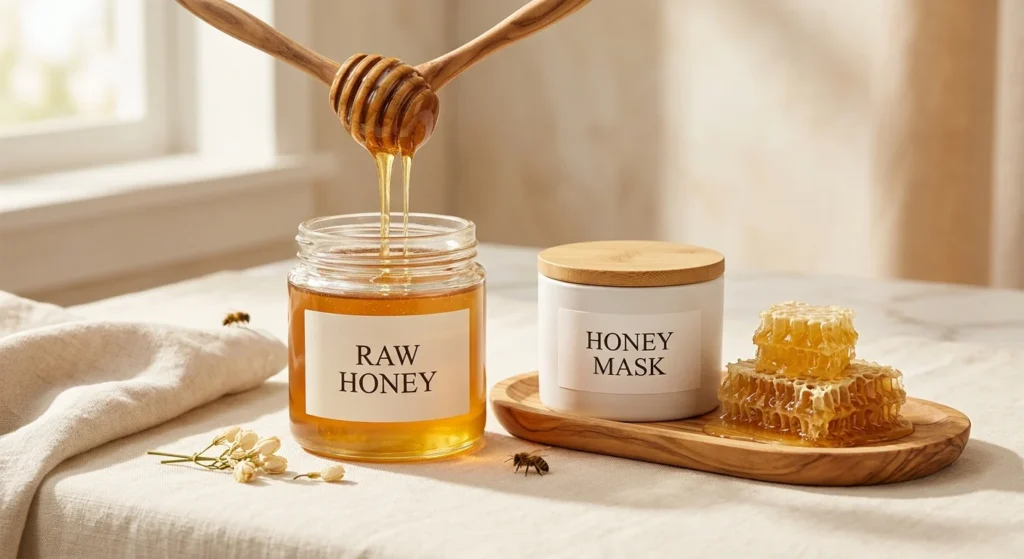
Honey, particularly raw Manuka honey, has natural antibacterial and anti-inflammatory properties, which is why it’s often featured in home remedies for pimples.
What the Research Says
Laboratory studies have shown that honey can inhibit the growth of Cutibacterium acnes (formerly C. acnes)—the bacteria associated with acne. However, laboratory results do not always translate to clinical effectiveness. Applying honey to your face is very different from testing it in a petri dish.
How to Use Honey Safely
- Use raw, unprocessed honey if you choose to try it.
- Apply a thin layer as a short-contact mask (5–10 minutes), then rinse thoroughly.
- Patch-test first, as even natural ingredients can cause reactions.
- Do not use it as a replacement for proven acne treatments.
Bottom line: Honey may offer mild antibacterial support, but its effectiveness for acne is not well-established. It’s best used as an occasional soothing mask, not a primary treatment.
5. Follow a Lower-Glycemic Eating Pattern
What you eat may influence acne for some people—particularly those with insulin sensitivity or hormonal imbalances.
What the Research Says
Research suggests that diets lower in high-glycemic foods may help reduce factors associated with acne development. High-glycemic foods cause rapid spikes in blood sugar and insulin, which can increase sebum production and inflammation.
Practical Food Swaps
Instead of following a restrictive “acne diet,” focus on simple, sustainable swaps:
| Instead of… | Try… |
|---|---|
| White bread | 100% whole-grain or sourdough bread |
| Sugary cereal | Rolled oats with berries |
| White rice | Quinoa, brown rice, or cauliflower rice |
| Sugary drinks / soda | Sparkling water with lemon or herbal tea |
| Pastries / sweet snacks | A handful of walnuts or an apple |
A Balanced Eating Pattern Includes:
- Vegetables (especially leafy greens)
- Fruits (in moderation)
- Legumes (lentils, chickpeas, beans)
- Nuts and seeds
- Whole or minimally processed grains
- Lean protein (fish, poultry, tofu, legumes)
Bottom line: A lower-glycemic eating pattern may support clearer skin for some people, but it’s not a guaranteed cure. Focus on overall nutritional quality, not perfection.
6. Get Enough Omega-3 Fatty Acids
Omega-3 fatty acids are essential fats with natural anti-inflammatory properties.
Top Food Sources
| Animal Sources | Plant Sources |
|---|---|
| Salmon | Walnuts |
| Sardines | Chia seeds |
| Anchovies | Ground flaxseeds |
| Mackerel | Hemp seeds |
What the Research Says
Some research has suggested that omega-3s may help reduce inflammatory factors associated with acne. However, more studies are needed to determine exactly how effective they are for acne specifically.
Practical Tips
- Aim for two servings of fatty fish per week.
- Add ground flaxseeds or chia seeds to smoothies, oatmeal, or yogurt.
- Consider a high-quality fish oil or algae-based omega-3 supplement only if you don’t eat fish regularly—but consult a healthcare professional first.
Bottom line: Omega-3s support overall skin health and may help reduce inflammation. They’re a smart addition to your diet, but they’re not an acne cure.
7. Reduce Stress – It Matters More Than You Think
Stress doesn’t directly cause acne, but it can significantly worsen existing breakouts.
Why Stress Matters
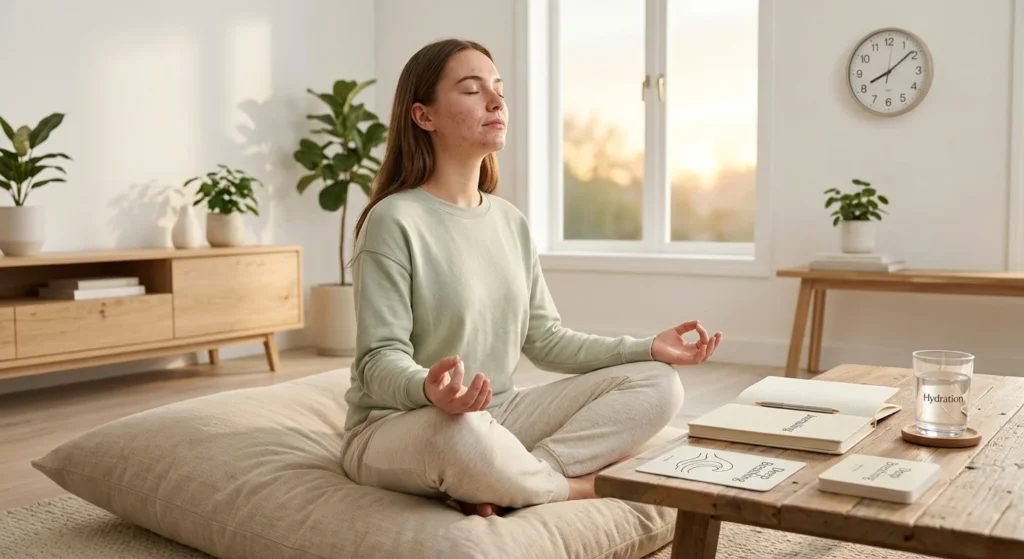
During periods of stress, your body releases hormones like cortisol, which can increase sebum production and inflammation. Stress can also make you more likely to touch, pick, or scrub your skin—all of which make acne worse.
Simple, Science-Backed Stress Management Techniques
| Technique | How to Start |
|---|---|
| Prioritize sleep | Aim for 7–9 hours of quality sleep per night. |
| Move your body | A 20-minute walk, yoga session, or light workout can lower stress hormones. |
| Practice mindfulness | Even 5 minutes of deep breathing or meditation daily can help. |
| Take screen breaks | Step away from your phone and computer regularly. |
| Write it down | Journaling for a few minutes can help process stressful thoughts. |
Bottom line: Stress reduction won’t cure acne, but it’s a powerful supportive practice that benefits both your skin and overall health.
8. Exercise Regularly – Support Your Whole Body
Regular physical activity supports hormonal balance, circulation, and stress reduction—all of which may indirectly benefit your skin.
What the Research Says
Research specifically examining exercise as an acne treatment is limited, but the overall health benefits are well-established.
Post-Exercise Skin Care
- If you sweat heavily, gently cleanse your skin after your workout—don’t leave sweat on your face for long periods.
- Use a gentle, non-comedogenic cleanser, not a harsh scrub.
- Avoid tight, sweaty clothing for prolonged periods, especially if you’re prone to body acne.
Bottom line: Exercise is great for your overall health and may support clearer skin indirectly. Just remember to cleanse gently afterward.
9. Keep Your Skincare Routine Simple
Sometimes the best “natural” approach isn’t adding another DIY remedy—it’s removing unnecessary products that may be irritating your skin.
A Simple, Effective Routine for Acne-Prone Skin
| Time | Routine |
|---|---|
| Morning | Gentle cleanser → Moisturizer → SPF 30+ sunscreen |
| Evening | Gentle cleanser → Acne treatment (if needed) → Moisturizer |
Key Principles
- Choose fragrance-free, non-comedogenic products.
- Introduce one new product at a time and wait 2–4 weeks to assess tolerance.
- You don’t need multiple masks, scrubs, essential oils, and treatments all at once.
Bottom line: Consistency beats complexity. A simple routine you can stick with is far more effective than a 10-step regimen that irritates your skin.
Natural Remedies for Acne Scars and Dark Spots
Acne scars and dark spots are not the same thing, and they require different approaches.
Understanding the Difference
| Condition | Description | Fades Naturally? |
|---|---|---|
| Post-inflammatory hyperpigmentation (PIH) | Flat brown, red, or dark marks that appear after a pimple heals | Usually yes, over months |
| True acne scars | Textural changes—depressions (atrophic) or raised areas (hypertrophic) | No—permanent without treatment |
What Can Help Protect Against Dark Spots
- Wear broad-spectrum SPF 30+ sunscreen every single day. UV exposure darkens PIH and slows healing.
- Never pick or squeeze pimples—this is the #1 cause of dark marks and scarring.
- Keep your routine gentle—irritation worsens hyperpigmentation.
- Avoid harsh scrubs and DIY acids (lemon juice, vinegar).
- Give healing skin time—PIH can take months to fade.
Important: For significant acne scarring (textural changes), professional treatments such as chemical peels, microneedling, or laser therapy are far more effective than any home remedy.
Natural Remedies for Acne on the Face
Facial acne is often the most visible and emotionally distressing, which makes it tempting to treat it aggressively.
Resist that urge.
Safer, Smarter Approach for Facial Acne
- Keep your routine simple and gentle.
- Use soothing ingredients like aloe vera if your skin tolerates it.
- Avoid harsh DIY acids, scrubs, and undiluted essential oils.
- Manage stress and get enough sleep.
- Eat a balanced diet—but don’t obsess.
- Protect your skin with daily sunscreen.
- Do not pick.
Remember: Just because a remedy is “natural” doesn’t mean it won’t clog pores or irritate your skin.
Natural Remedies for Acne on the Back (Body Acne)
Back acne (or “bacne”) shares many of the same causes as facial acne: excess oil, dead skin cells, bacteria, and inflammation. However, the skin on your back is thicker and has more sebaceous glands, which can make it more prone to breakouts.
Helpful Habits for Back Acne
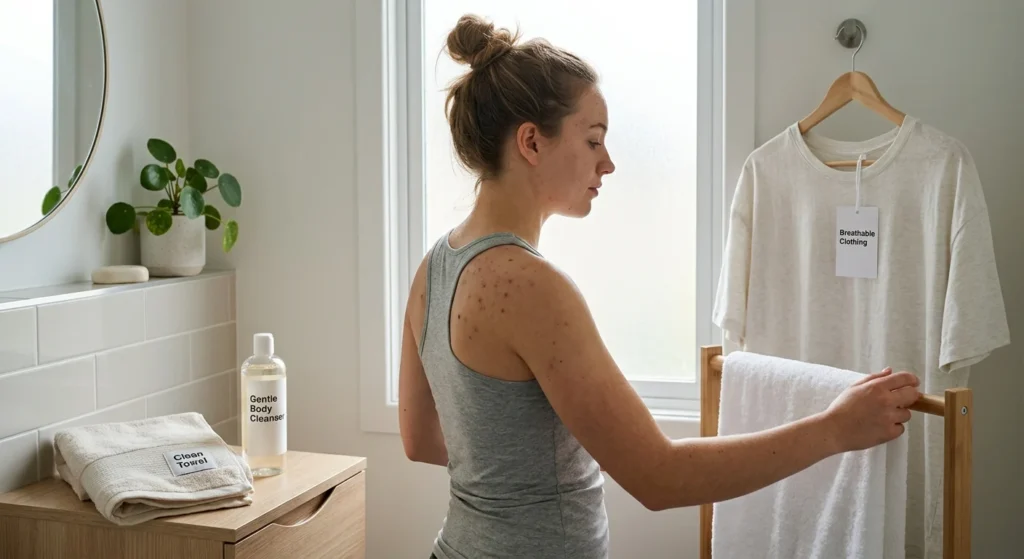
- Shower promptly after heavy exercise or sweating.
- Change out of sweaty clothing as soon as possible.
- Wear breathable fabrics like cotton or moisture-wicking materials.
- Avoid tight clothing that rubs or traps sweat against the skin.
- Use a gentle, non-comedogenic body cleanser.
- Avoid picking or squeezing—this can lead to scarring.
If back acne is severe, painful, or persistent, home remedies may not be enough. A dermatologist can prescribe stronger treatments such as topical retinoids, oral medications, or in-office procedures.
Natural Remedies for Acne-Prone Skin – A Better Approach
People with acne-prone skin often make a common mistake: treating every breakout with a new product.
A Better, More Sustainable Approach
Protect your skin barrier and introduce changes slowly.
Sample Routine for Acne-Prone Skin
Cleanser → One active treatment → Moisturizer → Sunscreen (AM)
- If your skin is sensitive, introduce one new ingredient at a time.
- If you experience persistent burning, swelling, severe redness, or peeling, stop the irritating product and seek professional advice.
Bottom line: Less is often more. A minimal, consistent routine is more effective than a cabinet full of products.
What About Acne on Different Skin Tones?
Acne can affect every skin tone, but post-inflammatory hyperpigmentation (PIH) is often more pronounced and longer-lasting in people with darker skin tones, including African American, South Asian, Hispanic, and Mediterranean skin.
Key Principles for Skin of Color
- Avoid picking at all costs—it dramatically increases the risk of dark marks.
- Protect your skin barrier—irritation worsens PIH.
- Wear sunscreen daily—UV exposure darkens existing marks and slows fading.
- Be extra cautious with harsh DIY remedies (lemon, vinegar, baking soda, essential oils).
There is no single natural remedy that works specifically for one skin tone. Treatment should always be based on your acne type, skin sensitivity, and individual needs. If PIH is a major concern, a dermatologist can recommend prescription-strength lightening or exfoliating agents.
10 Popular Home Remedies for Pimples – And What to Avoid
Many websites recommend a long list of DIY remedies, but more remedies don’t mean better results. Here’s a quick reference guide:
| Home Remedy | What We Know / Recommendation |
|---|---|
| Aloe vera | May soothe skin; acne-specific evidence is limited. Safe if pure. |
| Tea tree oil (diluted) | Some evidence it may help; must be diluted to 5% or less. |
| Green tea | Promising early evidence for topical use; more research needed. |
| Honey | Antibacterial in lab studies; clinical acne evidence is weak. |
| Apple cider vinegar | ❌ Not supported; may cause burns, irritation, or photosensitivity. |
| Lemon juice | ❌ Dangerous—irritates skin, increases sun sensitivity, can cause burns. |
| Toothpaste | ❌ Not formulated for skin; causes irritation and dryness. |
| Baking soda | ❌ Disrupts skin barrier; causes dryness, irritation, and pH imbalance. |
| Undiluted essential oils | ❌ High risk of irritation, chemical burns, and allergic reactions. |
| Harsh physical scrubs | ❌ Aggravates inflamed acne; spreads bacteria; increases scarring risk. |
If you’re searching for the “top 10 home remedies for pimples,” don’t assume every popular DIY remedy is safe. Many of the most viral trends are actually the most harmful.
What About Natural Remedies for Pimples Overnight?
If you’re searching for natural remedies for pimples overnight, it’s important to set realistic expectations.
There is no reliable natural remedy—or any remedy—that can completely cure a pimple overnight.
Why Overnight Cures Don’t Work
A pimple develops over days or weeks through a process involving clogged follicles, excess oil, bacteria, and inflammation. Trying to “dry it out” aggressively overnight usually leads to more redness, peeling, and irritation—not clearer skin.
What to Do Instead
- Don’t squeeze—this spreads bacteria and increases inflammation.
- Keep the area clean with a gentle cleanser.
- Avoid toothpaste, lemon, vinegar, or harsh scrubs.
- Apply a gentle moisturizer to support your skin barrier.
- Continue your normal acne routine consistently.
You may notice a pimple looking less inflamed by morning, but that’s very different from curing it overnight. Patience and consistency win here.
Can You Cure Acne Naturally in 3 Days?
If you’re wondering how to cure acne naturally in 3 days, the honest answer is: there is no proven natural method that can guarantee this.
Why 3-Day Cures Are Unrealistic
Acne is a chronic skin condition for many people, and it usually requires consistent care over weeks or months—not days.
A Better 3-Day Goal
Instead of aiming for a cure, aim to:
- Reduce irritation—stop using harsh products.
- Stop picking—this is the single most important thing you can do.
- Use gentle skincare—cleanse, moisturize, protect.
- Support healthy habits—sleep, hydration, stress management.
- Give your treatment time—most acne treatments take 6–12 weeks to show meaningful results.
If your acne is severe or persistent, a dermatologist can help you identify the most effective treatment—faster than guessing with DIY remedies.
How to Support Your Skin “From the Inside”
The idea of treating acne “from the inside” usually refers to diet, stress, sleep, and overall health.
These factors can influence acne, but they are not guaranteed cures.
Practical, Evidence-Based Ways to Support Your Skin Internally
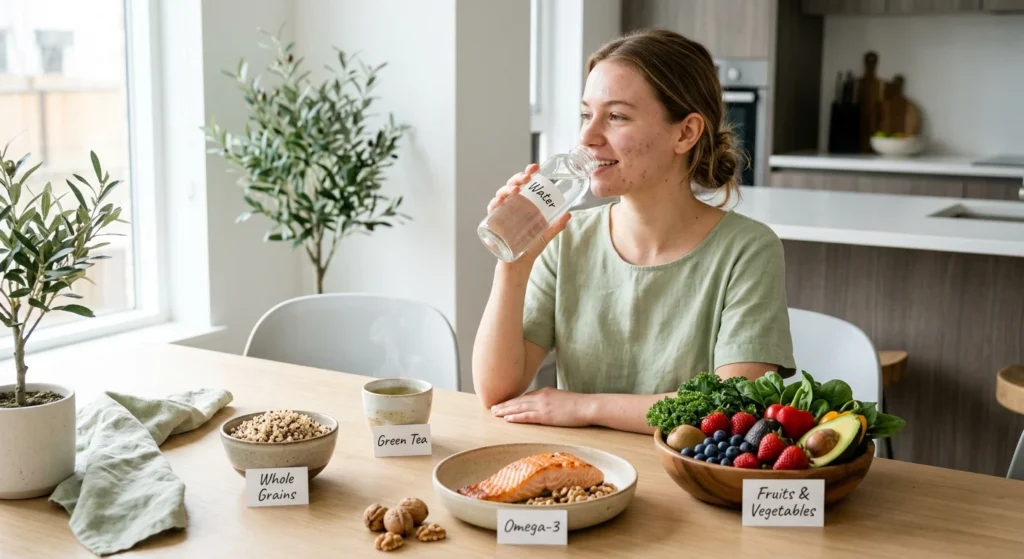
- Eat a balanced diet rich in whole, minimally processed foods.
- Include vegetables, fruits, legumes, nuts, and lean proteins.
- Choose omega-3-rich foods like fish, walnuts, and flaxseeds.
- Stay well-hydrated with water and herbal teas.
- Get adequate sleep—7–9 hours per night.
- Manage stress through movement, mindfulness, and rest.
- Exercise regularly—but cleanse afterward.
Avoid extreme diets, detoxes, or supplements marketed as “internal acne cures.” These are often unproven, expensive, and sometimes dangerous.
How Can I Stop Acne Naturally?
There isn’t one natural ingredient that can stop acne for everyone. Instead, focus on reducing the factors you can control:
1. Keep Your Skin Clean—But Don’t Over-Wash
Wash your face twice daily with a gentle cleanser. Over-washing strips your skin’s natural barrier and can make acne worse.
2. Don’t Pick
Picking increases inflammation, spreads bacteria, and significantly increases the risk of dark marks and scarring.
3. Protect Your Skin
Daily sunscreen is non-negotiable, especially if you develop dark spots after acne.
4. Watch Your Triggers
If you notice that certain foods, stress levels, or skincare products consistently coincide with breakouts, keep a log. Share this pattern with a healthcare professional if breakouts persist.
What Is the Best Natural Cure for Acne?
There is no single best natural cure for acne.
The Most Reasonable Options
If you’re looking for the best natural remedies for acne, the most reasonable options are those that support your skin without causing additional irritation:
- A gentle, consistent skincare routine
- Aloe vera if your skin tolerates it
- Carefully formulated tea tree oil products (at safe concentrations)
- Green tea skincare products
- A balanced, lower-glycemic eating pattern
- Omega-3-rich foods
- Stress management and adequate sleep
- Regular exercise
However, none of these are guaranteed cures. Most natural remedies need far more research before their effectiveness can be established. They are supportive measures, not primary treatments.
What Cures Acne Fast?
Unfortunately, there is no guaranteed remedy—natural or conventional—that cures acne fast.
Evidence-Based Over-the-Counter Options
If you have mild acne, over-the-counter treatments with established active ingredients may work more reliably than DIY remedies:
| Ingredient | What It Does |
|---|---|
| Salicylic acid | Exfoliates and unclogs pores |
| Benzoyl peroxide | Kills acne-causing bacteria, reduces inflammation |
| Adapalene (a retinoid) | Prevents clogged pores and new breakouts |
If you prefer natural options, use them as supportive care—not as a replacement for evidence-based treatments—and don’t expect instant results.
What Is the Best Solution for Acne at Home?
A practical, sustainable at-home approach is simple:
Morning Routine
Gentle cleanser → Moisturizer → SPF 30+ sunscreen
Evening Routine
Gentle cleanser → Appropriate acne treatment → Moisturizer
Support Your Routine With:
- Balanced eating
- Regular exercise
- Adequate sleep
- Stress management
Avoid constantly switching between different remedies. Your skin needs time—typically 6–12 weeks—to respond to any new treatment.
What Natural Remedies Should You ABSOLUTELY NOT Use for Acne?
Some of the most popular internet remedies can do more harm than good. Avoid these at all costs:
| ❌ Remedy | ❗ Why to Avoid |
|---|---|
| Lemon juice | Causes irritation, chemical burns, and severe photosensitivity. |
| Toothpaste | Not formulated for skin; contains harsh detergents and abrasives. |
| Baking soda | Disrupts your skin’s natural pH and protective barrier. |
| Undiluted essential oils | High risk of chemical burns, irritation, and allergic reactions. |
| Apple cider vinegar | No good evidence; can cause burns, irritation, and peeling. |
| Harsh physical scrubs | Aggravates inflammation, spreads bacteria, and increases scarring. |
Natural does NOT always mean gentle. When in doubt, leave it out.
When Should You See a Dermatologist?
Natural remedies may not be enough for moderate or severe acne. Professional help is essential if:
- Your acne is deep, painful, or cystic.
- You have frequent cysts or nodules.
- Acne is leaving scars (textural changes).
- Dark marks are becoming extensive or not fading.
- Breakouts keep returning despite consistent home care.
- Your acne has lasted for years.
- Acne is affecting your confidence or mental health.
- You’ve tried several approaches without improvement.
- You suspect a medication may be contributing to your acne.
What a Dermatologist Can Offer
| Treatment Type | Examples |
|---|---|
| Prescription topicals | Retinoids, antibiotics, combination creams |
| Oral medications | Antibiotics, hormonal therapies, isotretinoin |
| In-office procedures | Chemical peels, laser therapy, extractions, corticosteroid injections |
There is no shame in needing professional help. Acne is a medical condition, and treating it often requires medical expertise.
Frequently Asked Questions
What are some natural remedies for acne?
Options that may support acne-prone skin include aloe vera, carefully diluted tea tree oil, green tea, a balanced diet, stress management, and regular exercise. However, most natural remedies have limited evidence and should not be considered guaranteed cures.
Can natural remedies get rid of pimples overnight?
No. No reliable natural remedy has been proven to cure a pimple overnight. Avoid aggressive DIY treatments—they usually cause more irritation, not faster healing.
What is the best natural remedy for acne?
There is no single best remedy. The safest, most effective approach is usually a gentle skincare routine combined with healthy lifestyle habits and, when needed, evidence-based acne treatments.
Can I cure acne naturally in 3 days?
No. There is no scientifically established natural treatment that can guarantee clear skin in three days. Acne requires consistent treatment and patience—usually 6–12 weeks for noticeable improvement.
Are natural remedies good for acne scars?
Natural remedies are not proven to remove true acne scars (textural changes). Protecting your skin from the sun and avoiding picking can help prevent dark marks from worsening. Significant scarring requires professional treatment.
Can natural remedies help acne-prone skin?
Some may offer supportive benefits, but results vary widely. A gentle routine and avoiding irritating DIY treatments are far more important than using many natural ingredients.
What are the best home remedies for pimples?
Aloe vera, green tea, and carefully diluted tea tree oil have some evidence or potential benefits—but none are guaranteed cures. Avoid lemon juice, toothpaste, vinegar, and undiluted essential oils entirely.
The Bottom Line
Natural remedies can be appealing, especially when you’re trying to manage acne at home without harsh chemicals. But natural does not automatically mean effective or safe.
Some approaches—such as aloe vera, green tea, properly diluted tea tree oil, a balanced diet, stress management, and regular exercise—may provide supportive benefits. However, research on most natural acne remedies remains limited, and they should never replace proven treatments for moderate or severe acne.
If you want clearer skin, don’t feel pressured to make complicated DIY masks or try every remedy on social media.
Your Action Plan for Healthier Skin
| # | Action Step |
|---|---|
| 1 | Keep your skincare routine gentle and consistent. |
| 2 | Never pick or squeeze pimples—this is the #1 cause of scarring. |
| 3 | Protect your skin daily with SPF 30+ sunscreen. |
| 4 | Eat a balanced diet—focus on whole foods, not extreme restrictions. |
| 5 | Manage stress and prioritize 7–9 hours of quality sleep. |
| 6 | Avoid irritating DIY ingredients like lemon, toothpaste, vinegar, and undiluted essential oils. |
| 7 | Use evidence-based acne treatments (salicylic acid, benzoyl peroxide, adapalene) when appropriate. |
| 8 | See a dermatologist if your acne is painful, persistent, severe, or scarring. |
The goal isn’t to find a miracle cure overnight. It’s to build a sustainable routine your skin can tolerate—and to follow it consistently. 🌿
Final thought: Clear skin is a journey, not a race. Be patient with your skin, be kind to yourself, and seek professional help when you need it. You deserve effective, safe care.
Medical Disclaimer: This article is for educational purposes only and does not constitute medical advice. Natural remedies are not a substitute for professional acne treatment. Results vary widely, and what works for one person may not work for another. If you have severe, painful, persistent, or scarring acne, or if you are pregnant, nursing, or have a known skin condition, please consult a dermatologist or healthcare professional before trying any new remedy.
Laura Bennett is a skincare writer dedicated to sharing practical skincare routines, ingredient knowledge, and healthy skin tips for every day.