Puberty is tough enough without adding acne to the mix. If you’re a teenager—or parenting one—dealing with persistent breakouts, you’re not alone. Acne affects most teenagers at some point during puberty, and hormonal changes are a major contributor. The good news is that it’s manageable with the right approach.
This guide explains why hormonal acne happens, what treatments actually work, and how to build a simple, effective routine that fits into a busy teenage life. No 10-step routines. No harsh DIY disasters. Just real, science-backed advice.
What Is Hormonal Acne in Teens?
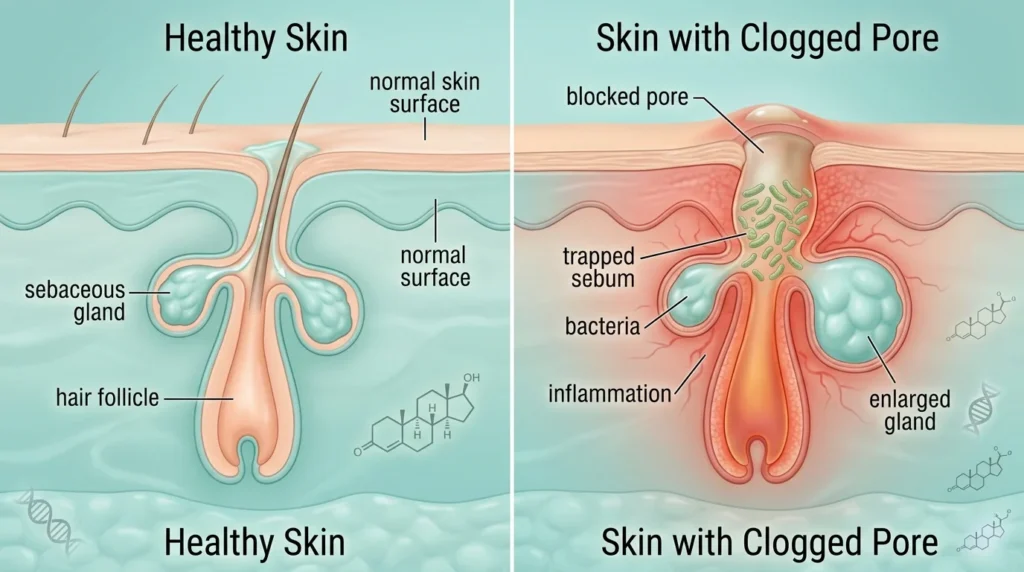
Hormonal acne refers to breakouts that are strongly influenced by the hormonal changes of puberty. As the body produces more androgens (male-type hormones present in both sexes), the skin’s sebaceous (oil) glands become overstimulated. This leads to:
- Increased sebum production
- Clogged hair follicles
- Inflammation involving Cutibacterium acnes within clogged follicles
The result? Blackheads, whiteheads, red pimples, and sometimes painful, deep cysts.
Key takeaway: Hormonal acne is not caused by poor hygiene. It’s a biological process—and it’s completely normal.
Why Does Puberty Cause Acne?
Puberty is a major reason acne becomes so common during the teenage years. Here’s the simplified chain reaction:
| Step | What Happens |
|---|---|
| 1 | Androgen levels rise during puberty. |
| 2 | Sebaceous glands produce more oil (sebum). |
| 3 | Excess oil mixes with dead skin cells. |
| 4 | Pores become clogged (blackheads/whiteheads). |
| 5 | Inflammation involving C. acnes develops within clogged follicles. |
| 6 | Deep lesions (nodules/cysts) may form in severe cases. |
What Does Puberty Acne Look Like?
| Type | Appearance | Key Feature |
|---|---|---|
| Whiteheads | Small, white or flesh-colored bumps | Closed clogged pores |
| Blackheads | Small, dark bumps | Open clogged pores (oxidation, not dirt) |
| Papules | Small, red, raised bumps | Inflamed, no pus |
| Pustules | Red with white/yellow center | Inflamed with visible pus |
| Nodules/Cysts | Large, painful, deep lumps | High risk of scarring—see a dermatologist |
What Causes Teenage Acne in Girls?
While the core mechanism is the same for all teens, girls may face additional triggers:
🔄 Hormonal Fluctuations
- Acne often worsens before or during menstrual periods due to shifts in estrogen and progesterone.
- Conditions like PCOS (polycystic ovary syndrome) can also cause hormonal acne alongside irregular periods—worth checking with a doctor.
🧬 Genetics
- If your parents had acne, you’re more likely to have it too. Genetics influence oil production, inflammation, and skin cell turnover.
🧴 Skincare & Hair Products
- Heavy creams, oils, and styling products can clog pores—especially around the hairline and forehead.
- Always choose non-comedogenic (won’t clog pores) products when possible.
⚽ Friction & Pressure
- Helmets, headbands, hats, and even phone screens can cause acne mechanica—breakouts triggered by rubbing and sweat.
😰 Stress
- Stress releases cortisol, which can ramp up oil production and inflammation, making existing acne worse.
💊 Medications
- Some drugs (e.g., corticosteroids, lithium) can trigger or worsen acne. Never stop prescribed medication without consulting a doctor.
Where Does Hormonal Acne Appear?
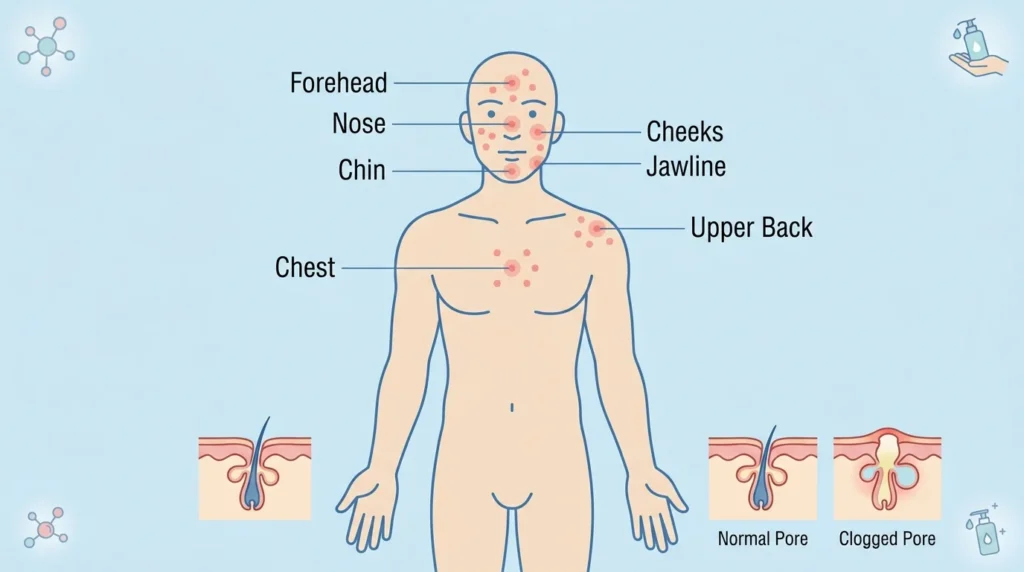
Teenage acne can show up anywhere with oil glands, but these are the most common spots:
| Area | Why It’s Affected |
|---|---|
| Forehead | Part of the T-zone; also exposed to hair products and sweat |
| Nose | High concentration of sebaceous glands |
| Cheeks | Can be affected by acne, irritation, cosmetics, and friction |
| Chin & Jaw | Hormonal breakouts (especially in girls) |
| Chest & Back | Sweat and friction from clothing/sports gear |
| Shoulders | Similar to back—sweat and friction |
Pro Tip: If you’re trying to get rid of teenage pimples on your forehead, don’t forget to check your hair products and clean your hats and headbands regularly.
The 4-Step Treatment Routine for Teen Hormonal Acne
Forget complicated 10-step routines. Consistency beats complexity.
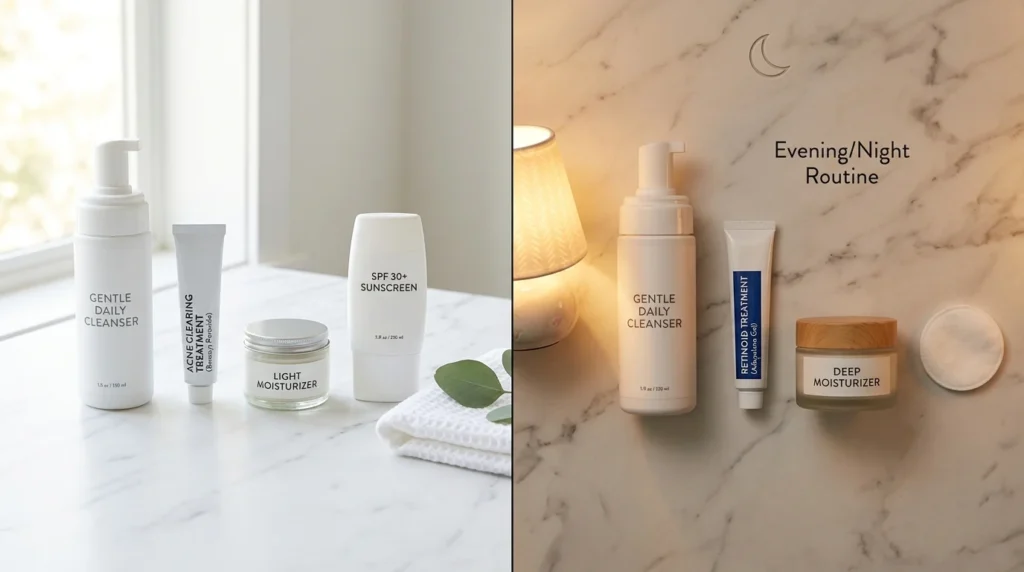
Morning Routine
| Step | Product | Why |
|---|---|---|
| 1 | Gentle cleanser | Removes overnight oil without stripping the skin |
| 2 | Acne treatment (e.g., benzoyl peroxide or salicylic acid) | Targets bacteria and unclogs pores |
| 3 | Lightweight, non-comedogenic moisturizer | Protects the skin barrier |
| 4 | Broad-spectrum SPF 30+ sunscreen | Essential—many acne treatments increase sun sensitivity |
Evening Routine
| Step | Product | Why |
|---|---|---|
| 1 | Gentle cleanser | Removes sunscreen, makeup, and daily grime |
| 2 | Acne treatment (e.g., adapalene) | Works best overnight when skin repairs itself |
| 3 | Moisturizer | Locks in hydration and prevents dryness |
Golden Rule: Introduce one new product at a time and wait 1–2 weeks before adding another. This prevents irritation and helps you figure out what’s actually working.
Choosing the Right Active Ingredient
Not all acne is the same. Match your treatment to your acne type.
| Your Acne Type | Best Ingredient | How It Works |
|---|---|---|
| Blackheads & Whiteheads | Salicylic Acid or Adapalene | Unclogs pores; adapalene prevents new blockages |
| Inflamed Pimples (Papules/Pustules) | Benzoyl Peroxide | Kills bacteria and reduces redness |
| Inflamed Acne + Dark Marks | Azelaic Acid | Reduces inflammation and fades hyperpigmentation |
| Severe/Cystic Acne | Prescription retinoids, oral antibiotics, or isotretinoin | Requires dermatologist evaluation |
Quick Safety Tips:
- ✅ Benzoyl peroxide bleaches fabrics—use white towels and pillowcases.
- ✅ Start adapalene slowly (every other night) to minimize peeling and dryness.
- ⚠️ If you’re new to acne treatment, introduce active ingredients gradually. Using several strong actives together can increase dryness and irritation.
Natural & Home Habits That Help (and What to Avoid)
Many teens search for “how to get rid of teenage pimples naturally at home.” Here’s what actually works—and what doesn’t.
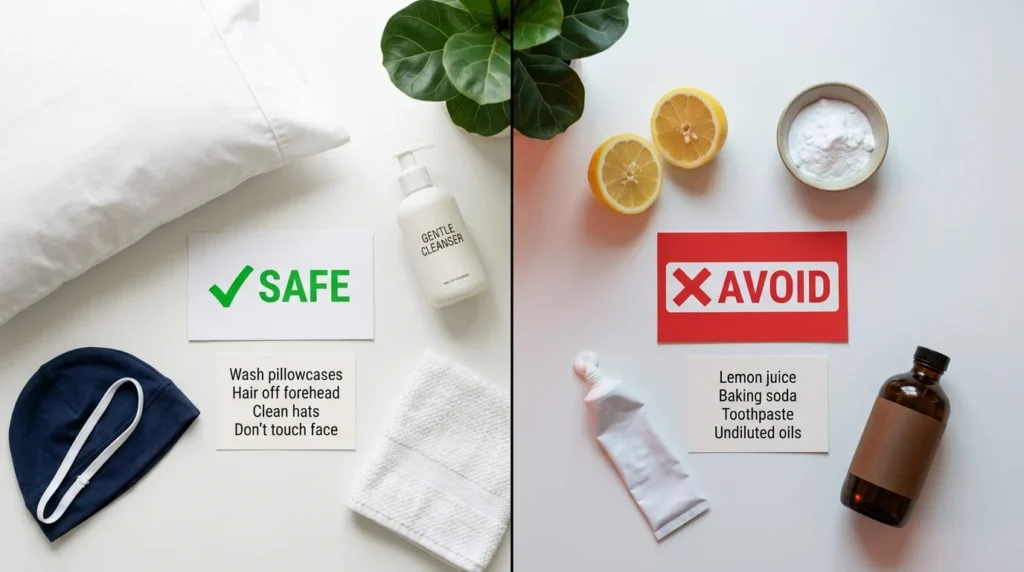
✅ Safe & Helpful Habits
| Habit | Why It Helps |
|---|---|
| Gently cleanse after heavy sweating | Helps remove sweat, oil, and residue that may irritate acne-prone skin |
| Change pillowcases regularly | Reduces buildup of oil, sweat, and product residue (hygiene habit) |
| Keep hair off your forehead | Prevents hair products from clogging pores |
| Clean hats, headbands, and helmets | Reduces friction and bacterial transfer |
| Stop touching/picking your face | Picking increases inflammation and scarring risk |
❌ Harmful DIY Remedies to Avoid
| “Remedy” | Why It’s Dangerous |
|---|---|
| Lemon juice | Highly acidic—can burn and irritate skin |
| Baking soda | Disrupts skin’s natural pH barrier |
| Toothpaste | Contains harsh abrasives and drying agents |
| Undiluted essential oils | Can cause severe contact dermatitis |
Bottom line: There is no safe natural remedy that can permanently cure hormonal acne. Stick to evidence-based treatments.
Teenage Acne Diet—Can Food Help?
The link between diet and acne is real but often overstated.
What Research Suggests:
- High-glycemic foods (white bread, sugary snacks, processed carbs) may worsen acne in some people.
- Cow’s milk has been associated with acne in certain studies, but the effect varies widely.
- There is no universal acne diet—what triggers one person may not affect another.
What to Do:
- ✅ Eat a balanced diet with vegetables, fruits, whole grains, and lean proteins.
- ✅ Stay hydrated—good for overall health.
- ❌ Don’t eliminate entire food groups without professional advice.
- 🗒️ If you notice a consistent link between a specific food and breakouts, discuss it with a doctor or dietitian.
When Does Hormonal Acne Peak—and How Long Does It Last?
| Question | Answer |
|---|---|
| At what age is acne worst? | There is no single age when acne is worst. It varies between individuals and may become more noticeable at different stages of adolescence. |
| How long does it last? | Individual pimples heal in days/weeks. Acne as a condition can last months or years. |
| When will I see treatment results? | Most treatments need 8–12 weeks of consistent use before you can judge their effectiveness. |
Don’t quit too early! Many teens give up after a week. Give your routine at least 2–3 months.
When to See a Dermatologist
Professional help is essential if your teen has:
- 🔴 Deep, painful nodules or cysts
- 🔴 Acne that’s leaving scars or dark marks
- 🔴 Breakouts that don’t improve after 8–12 weeks of consistent OTC treatment
- 🔴 Acne covering large areas (face, chest, back)
- 🔴 Significant emotional distress, anxiety, or low self-esteem
- 🔴 Irregular periods or other hormonal symptoms (e.g., excessive facial/body hair)
- 🔴 Uncertainty about whether the bumps are even acne
What a Dermatologist Can Offer:
| Treatment | When It’s Used |
|---|---|
| Prescription-strength topicals | For moderate acne not responding to OTC |
| Oral antibiotics | For moderate-to-severe inflammatory acne |
| Hormonal therapies (e.g., certain oral contraceptives) | For appropriate patients with hormonal acne patterns, under medical supervision |
| Isotretinoin | For severe, scarring, or treatment-resistant acne |
| Corticosteroid injections | To rapidly shrink large, painful cysts |
Frequently Asked Questions
Q: Is hormonal acne in teens permanent?
A: No. While it can persist for years, it often improves after puberty. With proper treatment, it can be managed effectively.
Q: Can I pop my pimples to make them heal faster?
A: No. Squeezing worsens inflammation, increases infection risk, and causes permanent scars. Leave them alone.
Q: Does stress cause acne?
A: Stress doesn’t cause acne, but it can make existing breakouts worse by increasing cortisol and inflammation.
Q: What’s the best over-the-counter treatment for teen acne?
A: It depends on your acne type. Benzoyl peroxide for inflamed pimples, salicylic acid for clogged pores, and adapalene for both.
Q: Can I wear makeup if I have acne?
A: Yes. Choose non-comedogenic, oil-free, fragrance-free products. Always remove makeup before bed.
Q: Should I wash my face more often if it’s oily?
A: No. Over-washing strips the skin barrier and can actually increase oil production. Twice a day is enough.
Final Thoughts: Your Path to Clearer Skin
Hormonal acne in teens is normal, frustrating, and absolutely manageable.
Your Action Plan:
- ✅ Simplify—gentle cleanser, one active ingredient, moisturizer, and SPF.
- ✅ Match your treatment to your acne type (clogged pores vs. inflamed pimples vs. cystic).
- ✅ Eliminate hidden triggers—hair products, hats, sweat, and picking.
- ✅ Be patient—give treatments 8–12 weeks to work.
- ✅ See a dermatologist if acne is severe, painful, scarring, or affecting your mental health.
You are not alone. Acne does not define you. With the right approach, clearer skin is absolutely achievable.
Sophie Carter is a skincare writer who shares science-backed skincare routines, ingredient insights, and everyday tips for healthier-looking skin.