
Acne can leave more than just memories of a breakout. Once a pimple disappears, you may be left with red marks, brown spots, or actual indentations in the skin. The good news is that some post-acne marks can gradually become less noticeable with consistent at-home care.
However, not every type of acne scar responds to home remedies. Dark spots and some red discoloration may improve with sunscreen and suitable skincare ingredients, while pitted, rolling, boxcar, and ice-pick scars usually cannot be completely removed at home.
If you’re looking for the best acne scars treatment at home, the key is to identify what you’re actually treating, use gentle products consistently, and avoid remedies that can irritate or burn your skin.
What Are Acne Scars?
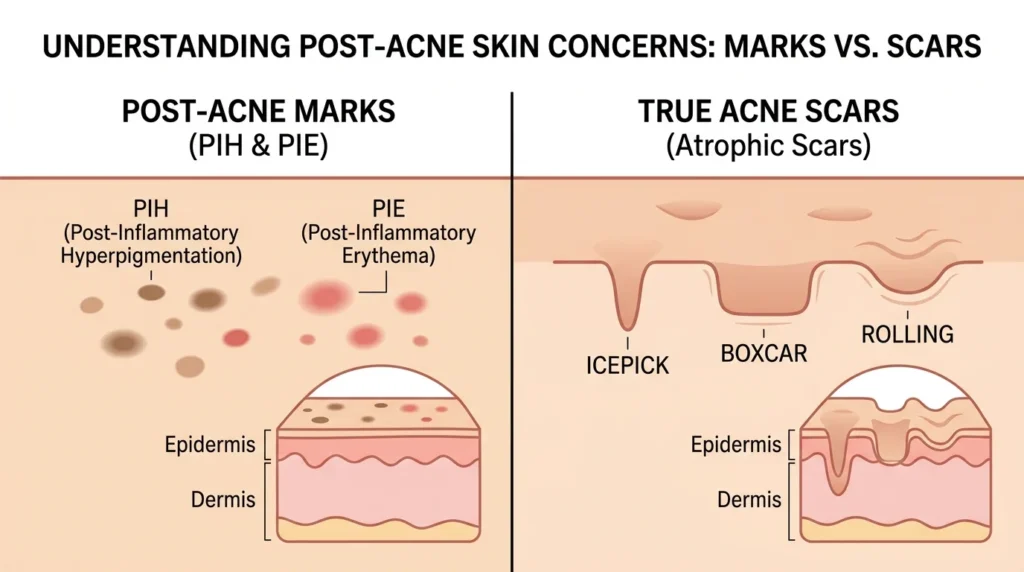
People often use the term “acne scars” for any mark left after a pimple. But there is an important difference between post-acne marks and true scars.
Dark or Red Acne Marks
These are flat areas of discoloration left after inflammation:
- PIH (post-inflammatory hyperpigmentation): brown, gray, or dark marks
- PIE (post-inflammatory erythema): red or pink marks
These marks can gradually fade with time and appropriate skincare.
True Acne Scars
True scars involve a change in the skin’s texture. They include:
- Ice-pick scars – narrow, deep pits
- Boxcar scars – wider depressions with defined edges
- Rolling scars – shallow depressions with softer, uneven edges
- Hypertrophic scars – raised scars caused by excess scar tissue
- Keloid scars – raised scars that can grow beyond the original area
This distinction matters because home skincare is much more likely to improve discoloration than deep or raised scars. True scars involve structural changes in the skin that home remedies generally cannot fully correct.
Acne Scars Treatment at Home: What Can Actually Help?
1. Wear Sunscreen Every Day
Sunscreen is one of the most important steps when treating post-acne discoloration at home.
UV exposure can make dark marks more noticeable and may slow their fading. Choose a broad-spectrum sunscreen with SPF 30 or higher and use it consistently when your skin is exposed to daylight.
If you have oily or acne-prone skin, look for a lightweight, non-comedogenic formula.
Best for: Dark acne marks and preventing discoloration from becoming more noticeable.
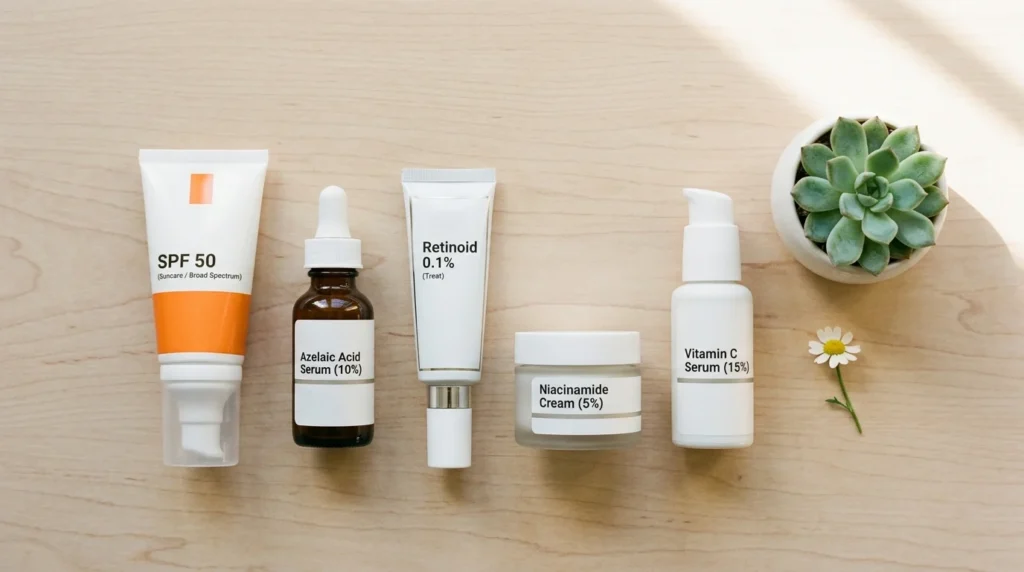
2. Try Azelaic Acid
Azelaic acid can be a useful ingredient for people dealing with acne and the discoloration that follows it. It may help improve post-inflammatory hyperpigmentation and uneven skin tone while also supporting acne management.
For beginners, a lower-strength product may be easier to tolerate. Introduce it gradually rather than applying several strong ingredients at the same time.
Best for: Acne, dark marks, and uneven skin tone.
3. Consider a Retinoid
Topical retinoids are commonly used to treat acne and may also help improve some post-acne changes.
Retinoids encourage normal skin-cell turnover and can help prevent clogged pores and new acne. Some clinical studies have also found improvement in the appearance of superficial acne scars and hyperpigmentation with topical retinoids.
An OTC retinoid such as adapalene 0.1% may be available in some countries.
Important: Retinoids are not a magic treatment for deep ice-pick or boxcar scars. They may be more useful for acne control, discoloration, and supporting overall skin texture.
If you’re pregnant or trying to become pregnant, ask a healthcare professional before using a retinoid.
Best for: Active acne, clogged pores, and some post-acne discoloration.
4. Use Gentle AHAs Carefully
Alpha hydroxy acids (AHAs), such as lactic acid and glycolic acid, can help remove dead skin cells from the surface and improve uneven skin tone.
They may be useful for some people with post-acne discoloration.
If you use an AHA:
- Start with a lower-strength product
- Use it infrequently at first, such as once weekly
- Don’t combine several exfoliating products
- Stop if your skin becomes significantly irritated
- Wear sunscreen during the day
Best for: Superficial discoloration and uneven skin texture.
5. Consider Niacinamide
Niacinamide, also known as vitamin B3, supports the skin barrier and may help improve the appearance of uneven skin tone and redness.
It is generally well tolerated by many skin types and can be used alongside a simple skincare routine.
Apply a suitable niacinamide product after cleansing and before moisturizer, following the product’s directions.
Best for: Skin barrier support, redness, and uneven-looking skin tone.
6. Topical Vitamin C for Brightening
Vitamin C is an antioxidant that may help improve uneven pigmentation and support overall skin appearance.
Vitamin C products vary widely in formulation and strength. If you’re new to vitamin C, start with a product designed for sensitive or acne-prone skin and follow the product instructions.
Best for: Uneven pigmentation and overall skin brightness.
Natural Remedies for Acne Scars and Dark Spots
Natural ingredients may sound appealing, but they should not be confused with proven scar-removal treatments.
Aloe Vera
Aloe vera can feel soothing on irritated skin and may support the skin barrier. However, it should not be presented as a way to erase deep acne scars.
If you use aloe, choose a simple product without added fragrance or irritating ingredients.
Best viewed as: A soothing skincare ingredient rather than a scar-removing treatment.
Rosehip Oil
Rosehip oil is sometimes used in skincare because it contains fatty acids and other compounds that support moisturization.
Some people use it on areas of discoloration, but evidence that it can remove true acne scars is limited.
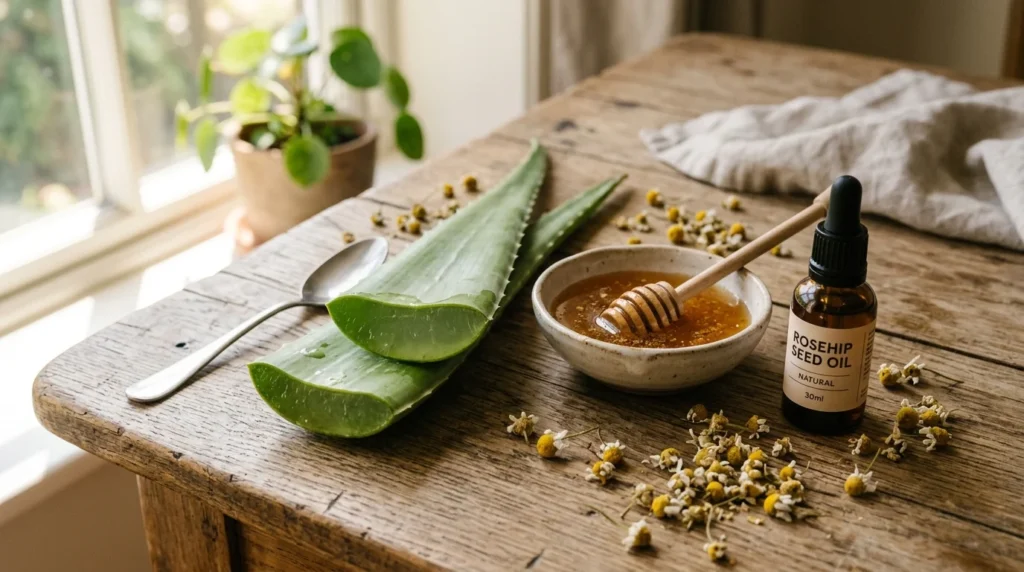
Honey
Honey has moisturizing properties and has been studied in wound care. However, there isn’t strong evidence that applying kitchen honey to an established acne scar will remove it.
Bottom line: Natural remedies may moisturize or soothe your skin, but they should not be expected to remove deep acne scars.
What About Apple Cider Vinegar?
I don’t recommend applying it to acne scars.
Apple cider vinegar is acidic and can cause irritation or even chemical burns, particularly when used undiluted or left on the skin for too long. Irritation can make post-inflammatory discoloration worse.
Avoid Putting These on Acne Scars:
- ❌ Lemon juice
- ❌ Undiluted apple cider vinegar
- ❌ Baking soda
- ❌ Toothpaste
- ❌ Undiluted essential oils
- ❌ Rough physical scrubs
A remedy being “natural” doesn’t automatically make it safe for facial skin.
How Can I Remove Acne Scars at Home?
The answer depends on what you mean by “remove.”
If You Have Dark Marks
You may be able to gradually improve their appearance at home with:
- Daily sunscreen
- Gentle cleansing
- Azelaic acid
- A suitable retinoid
- Carefully selected AHAs
- Consistent moisturizing
- Avoiding picking and squeezing
Improvement usually takes weeks to months, not a few days.
If You Have Pitted Scars
Home skincare generally cannot physically fill deep indentations.
This includes:
- Ice-pick scars
- Boxcar scars
- Rolling scars
- Other atrophic scars
Skincare may improve the overall condition and appearance of the skin, but significant textural scars often require professional evaluation and treatment.
Deep Acne Scars Treatment at Home
If your scars are deep, it’s understandable to search for a home solution. Unfortunately, there isn’t a cream or natural remedy that can reliably rebuild enough collagen to completely fill a deep indentation.
For deep acne scars treatment at home, focus on:
- Preventing new acne
- Wearing sunscreen
- Using gentle skincare
- Treating active acne
- Avoiding picking
- Improving surrounding discoloration
If the indentation itself is your main concern, a dermatologist can assess whether treatments such as microneedling, subcision, laser treatment, or other scar procedures are appropriate.
Acne Scars Treatment at Home for Oily Skin
If you have oily skin, you don’t need to dry your face out to treat acne scars. Over-drying can irritate your skin and make your routine harder to tolerate.
A Simple Routine
Morning ☀️
- Gentle cleanser
- Azelaic acid, if suitable
- Lightweight moisturizer
- SPF 30+ sunscreen
Evening 🌙
- Gentle cleanser
- Retinoid, if appropriate
- Moisturizer
Don’t introduce every active ingredient at the same time. Start with one new product and give your skin time to adjust.
Acne and Acne Scars Treatment at Home
If you’re still getting acne, treating the scars while ignoring new breakouts can become frustrating. New acne can create new marks and scars.
Your routine should address both active acne and the marks left behind.
Depending on your skin and acne severity, ingredients such as:
- Benzoyl peroxide
- Adapalene
- Salicylic acid
- Azelaic acid
may be useful.
For severe, painful, nodular, or cystic acne, professional treatment is important because early acne treatment can reduce the risk of permanent scarring.
Can Acne Scars Be 100% Removed?
Usually, no treatment can guarantee that every acne scar will be 100% removed.
The outcome depends on:
- Scar type
- Scar depth
- Skin tone
- How long you’ve had the scar
- Your response to treatment
- Whether new acne continues to occur
Professional treatment can significantly improve some scars, but the goal is often substantial improvement rather than perfect removal.
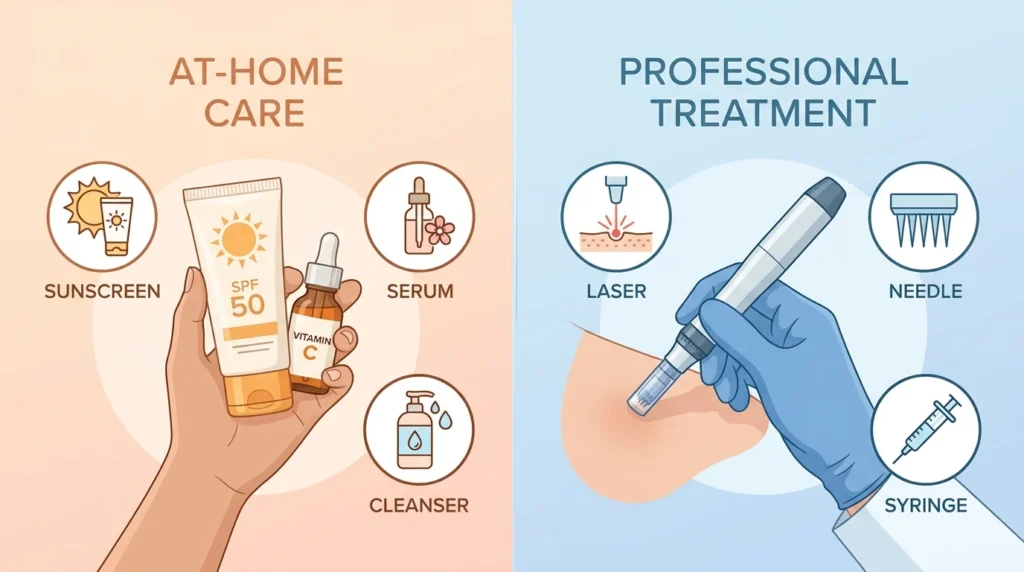
Acne Scars Treatment at Home vs. Professional Treatment
| At-Home Care | Professional Treatment |
|---|---|
| Sunscreen | Chemical peels |
| Gentle skincare | Microneedling |
| Azelaic acid | Laser treatments |
| Retinoids | Subcision |
| AHAs | Fillers |
| Niacinamide | Corticosteroid injections for raised scars |
| Vitamin C | Other dermatologist-selected procedures |
At-home treatment is generally more suitable for discoloration and overall skin health.
Professional treatment becomes more important when you have:
- Deep pitted scars
- Raised scars
- Keloid-like scars
- Widespread scarring
- Scars that significantly affect your confidence
Some combination treatments, such as fractional laser with PRP or subcision, may provide greater improvement for certain atrophic scars. The appropriate procedure depends on the scar type, skin characteristics, and individual needs.
When Should You See a Dermatologist?
Consider professional advice if:
- Your scars are deep or widespread
- You have ice-pick, boxcar, or rolling scars
- You have raised or keloid-like scars
- Your acne is still severe
- You keep developing new scars
- Home treatment hasn’t helped after consistent use
- Your skin becomes irritated from treatment
- Scarring is affecting your confidence or emotional wellbeing
A dermatologist can determine whether you’re dealing with pigmentation, true scarring, active acne, or another skin condition.
How to Prevent More Acne Scars
Prevention is much easier than trying to correct established scars.
Don’t Pick or Squeeze
Picking damages the skin and can increase inflammation and scarring risk.
Treat Acne Early
Controlling active acne reduces the number of new lesions that can potentially leave marks or scars.
Protect Your Skin From the Sun
Sun exposure can make post-acne discoloration more noticeable. Daily sunscreen can help protect your skin while marks fade.
Keep Your Routine Simple
Using too many harsh products can irritate your skin and potentially make discoloration more difficult to manage.
Be Consistent
Constantly changing treatments makes it difficult to know what is helping and can lead to unnecessary irritation.
Frequently Asked Questions
How can I remove acne scars at home?
You may be able to improve dark or red acne marks at home with sunscreen, gentle skincare, and appropriate ingredients such as azelaic acid or retinoids.
True pitted or raised scars usually cannot be completely removed with home remedies.
What is the best acne scars treatment at home?
There isn’t one best treatment for every person.
For discoloration, consistent sunscreen combined with an appropriate ingredient such as azelaic acid or a retinoid may help.
Deep textural scars usually require professional evaluation.
Can acne scars be permanent?
Yes. Some acne scars, particularly deep atrophic scars and raised scars, can persist for years or indefinitely without treatment.
They may become less noticeable over time, but they don’t always disappear completely.
Can I treat pitted acne scars at home?
You can improve your overall skin health and discoloration at home, but deep pitted scars usually cannot be completely removed with creams or natural remedies.
Professional treatments such as microneedling, laser treatment, subcision, or combination therapies may provide better results for certain types of pitted scars.
How long does acne scar treatment take?
Dark marks may gradually improve over several weeks or months.
True scars generally take longer and may require professional procedures. Results vary depending on scar type, skin characteristics, and treatment.
Final Thoughts
The best acne scars treatment at home isn’t a harsh DIY remedy or a miracle ingredient. It’s a consistent routine that protects your skin, treats active acne, and gradually addresses discoloration.
Remember the Difference:
- Dark or red marks → often possible to improve at home with sunscreen, azelaic acid, retinoids, or carefully selected AHAs
- Pitted, ice-pick, rolling, or boxcar scars → usually need more than home remedies for significant improvement
- Raised or keloid scars → should be evaluated by a dermatologist
Don’t let the promise of an overnight cure tempt you into using lemon juice, vinegar, baking soda, or other irritating DIY treatments.
Your skin needs patience, protection, and appropriate care. 🌿
If your acne is still active or your scars are deep, getting professional advice early can save you months of frustration and help prevent additional scarring.
Important Notice
This article is for educational purposes and does not replace professional medical advice. If your scars are deep, raised, painful, or getting worse, a dermatologist can recommend appropriate treatment.

Hannah Collins is a skincare writer focused on simple routines, trusted ingredient research, and practical advice for healthy, glowing skin.