Teenage acne can make something as simple as washing your face feel confusing. During puberty, hormonal changes can increase oil production and make pores more likely to become clogged, leading to blackheads, whiteheads, and pimples.
The good news is that you don’t need a complicated skincare routine to care for acne-prone teenage skin. The best face wash for acne teens depends on your skin type, the kind of acne you have, and how sensitive your skin is. Some teens may benefit from an acne-fighting ingredient such as salicylic acid or benzoyl peroxide, while others may do better with a gentle cleanser.
This guide explains how to choose a face wash, which ingredients to look for, how often to wash your face, and when acne needs more than a cleanser.
What Is the Best Face Wash for Teenage Acne?
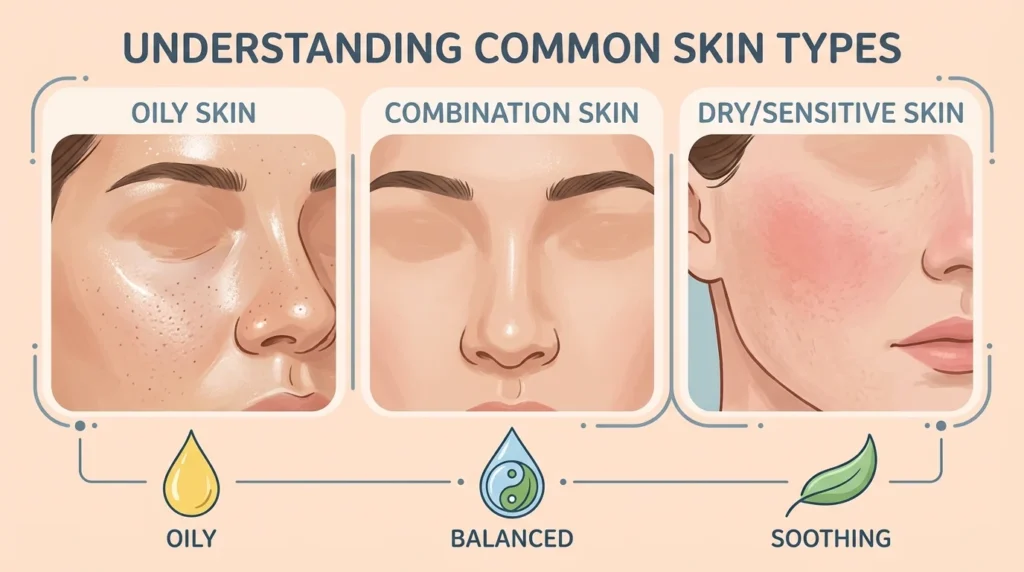
There is no single cleanser that works best for every teenager. The right face wash should match your skin type and acne concerns.
For example, a teenager with oily skin and blackheads may benefit from a salicylic acid cleanser, while someone with dry or sensitive skin may need a gentle, hydrating cleanser instead.
Here is a simple starting point:
| Skin concern | Face wash to consider |
|---|---|
| Oily skin | Salicylic acid cleanser |
| Blackheads and clogged pores | Salicylic acid cleanser |
| Red, inflamed pimples | Benzoyl peroxide cleanser |
| Dry acne-prone skin | Gentle hydrating cleanser |
| Sensitive skin | Gentle, fragrance-free cleanser |
| Mild acne | Gentle cleanser or suitable acne cleanser |
A cleanser can help keep the skin clean and support acne management, but it may not be enough for moderate or severe acne.
How to Choose the Best Face Wash for Acne Teens
When choosing a cleanser, don’t automatically pick the strongest product. Acne-prone teenage skin can become irritated when exposed to too many active ingredients.
Instead, look for a product that:
- Matches your skin type
- Is non-comedogenic when possible
- Doesn’t leave your skin extremely tight or burning
- Contains an appropriate acne-fighting ingredient if needed
- Is gentle enough for regular use
- Fits easily into a simple skincare routine
If a cleanser repeatedly causes burning, significant redness, swelling, or painful dryness, stop using it and consider speaking with a healthcare professional.
Best Face Wash Ingredients for Teenage Acne
Salicylic Acid
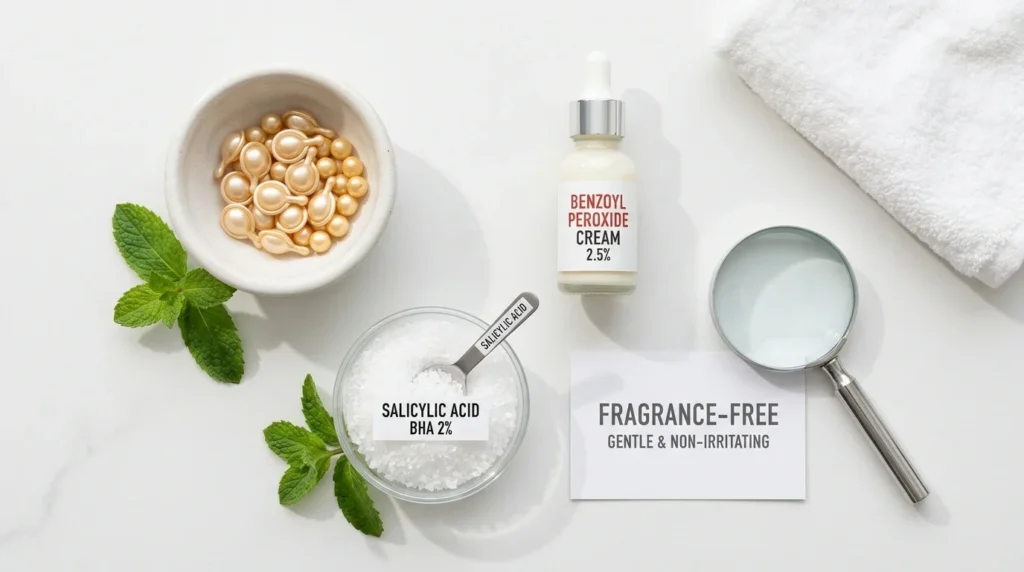
Salicylic acid is commonly used in acne cleansers because it helps exfoliate dead skin cells and can help unclog pores.
It may be particularly useful for teenagers who have:
- Blackheads
- Whiteheads
- Oily skin
- Clogged pores
However, salicylic acid can cause dryness or irritation in some people. Follow the product instructions rather than using it more often than recommended.
Benzoyl Peroxide
Benzoyl peroxide is another commonly used acne ingredient. It can reduce acne-causing bacteria and inflammation and may be useful for inflammatory pimples.
Because it can be drying or irritating, introduce it carefully and follow the directions on the product.
It can also bleach fabrics, so be careful with towels, pillowcases, and clothing.
Gentle Cleansing Ingredients
Not every teenager needs a medicated face wash.
If you have mild acne, dry skin, or sensitivity, a gentle cleanser may be a better starting point. A good cleanser should remove sweat, oil, sunscreen, and everyday buildup without excessively stripping the skin.
7 Face Wash Options for Acne-Prone Teens
Rather than choosing one product as the universal winner, consider these options according to different skin needs.
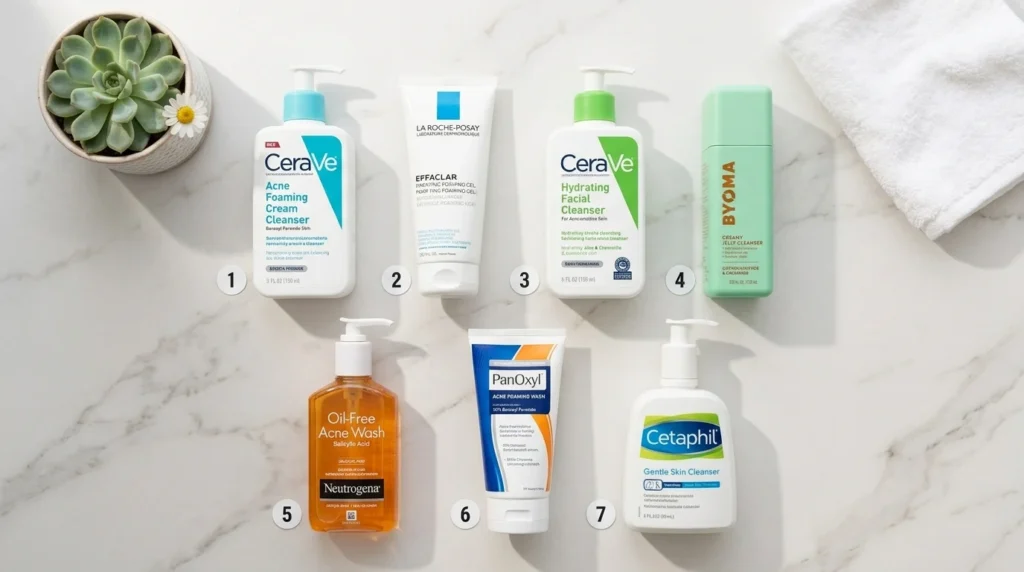
1. CeraVe Acne Foaming Cream Cleanser
This cleanser contains benzoyl peroxide and is designed for acne-prone skin. Benzoyl peroxide can be useful for inflammatory acne, although it may cause dryness or irritation in some users.
Best suited for: Teens with inflamed pimples.
2. La Roche-Posay Effaclar Medicated Gel Cleanser
This cleanser contains salicylic acid and is designed for acne-prone skin. Salicylic acid may help remove excess oil and unclog pores.
Best suited for: Oily skin, blackheads, and clogged pores.
3. CeraVe Hydrating Facial Cleanser
A medicated cleanser isn’t always necessary. A gentle hydrating cleanser can be useful for teens whose skin is dry, sensitive, or irritated by acne treatments.
Best suited for: Dry or sensitive acne-prone skin.
4. BYOMA Creamy Jelly Cleanser
A gentle cleanser can be a good option for younger teens or anyone who doesn’t need a medicated acne cleanser.
Best suited for: Normal, dry, or sensitive teenage skin.
5. A Gentle Fragrance-Free Cleanser
You don’t need an expensive cleanser to build a good skincare routine. A simple fragrance-free, non-comedogenic cleanser can be a sensible choice for teenagers with mild acne or sensitive skin.
Best suited for: Mild acne and sensitive skin.
6. Salicylic Acid Cleanser
If your main concerns are blackheads, whiteheads, and clogged pores, a salicylic acid cleanser may be worth considering.
Remember that using more product or washing more frequently won’t necessarily make acne disappear faster.
Best suited for: Blackheads, whiteheads, and clogged pores.
7. Benzoyl Peroxide Cleanser
A benzoyl peroxide cleanser may be helpful for teenagers with inflamed acne. Start according to the product directions and pay attention to signs of irritation.
Best suited for: Red, inflamed pimples.
Best Face Wash for Teenage Skin
The best face wash for teenage skin isn’t necessarily an acne treatment. Teenagers with clear or only mildly blemished skin may simply need a gentle cleanser.
A basic cleanser can remove:
- Sweat
- Excess oil
- Sunscreen
- Dirt and daily buildup
If acne develops, an appropriate acne ingredient can be added depending on the type of breakouts.
This approach can be better than starting with several strong products at once.
Best Face Wash for Teen Boys With Blackheads
Blackheads are common during puberty because increased oil production can contribute to clogged pores.
The best face wash for teen boys with blackheads may be one containing salicylic acid. It can help exfoliate inside the pores and reduce buildup.
However, blackheads shouldn’t be aggressively scrubbed or squeezed. Doing so can irritate the skin and potentially worsen inflammation.
If blackheads continue despite consistent skincare, a dermatologist can recommend additional treatment.
Best Acne Face Wash for Teen Boys
The best acne face wash for teen boys depends on the type of acne rather than gender.
For example:
- Blackheads → consider salicylic acid
- Oily skin → consider a suitable acne cleanser
- Inflamed pimples → benzoyl peroxide may help
- Dry or sensitive skin → choose a gentle cleanser
Teen boys don’t need a separate “men’s” skincare routine. The same basic principles apply to anyone with acne-prone skin.
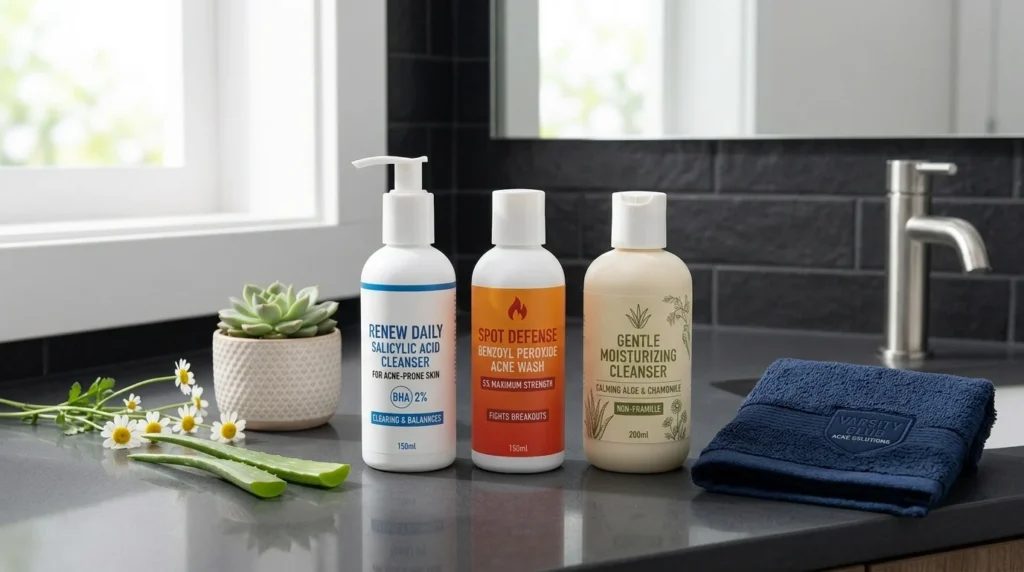
Best Acne Products for Teenage Girls With Sensitive Skin
If you’re searching for the best acne products for teenage girls with sensitive skin, keeping the routine simple is important.
Sensitive skin may react badly to multiple acids, scrubs, fragrances, and strong acne treatments used together.
A simple routine can include:
Morning
- Gentle cleanser
- Lightweight moisturizer
- Broad-spectrum SPF 30+ sunscreen
Evening
- Gentle cleanser
- Acne treatment if recommended
- Moisturizer
If acne continues or becomes painful, a dermatologist can help choose an appropriate treatment.
Best Face Wash for Acne Teens in Pakistan
If you’re looking for the best face wash for acne teens in Pakistan, don’t choose a product simply because it is popular on TikTok, Instagram, or YouTube.
Before buying, consider:
Check the Ingredients
Look for ingredients appropriate for your acne and skin type, such as salicylic acid or benzoyl peroxide.
Buy From a Reliable Seller
When purchasing branded skincare products, use reputable retailers or pharmacies when possible to reduce the risk of counterfeit or improperly stored products.
Consider the Weather and Your Skin
Hot or humid weather may make oily skin feel uncomfortable, but that doesn’t mean you should repeatedly wash your face or use harsh products.
Don’t Choose Based Only on Price
An expensive cleanser isn’t automatically better. A simple product that your skin tolerates and that you can use consistently may be a better choice.
Best Face Wash for Teenage Girl in Pakistan
The best face wash for teenage girl in Pakistan depends on whether the skin is oily, dry, sensitive, or acne-prone.
For oily skin with clogged pores, a salicylic acid cleanser may be useful. For sensitive or dry skin, a gentle cleanser may be more comfortable.
Teenage girls should also avoid choosing skincare solely because it is marketed as a “glow,” “brightening,” or “poreless” product. If acne is the concern, focus on ingredients and skin tolerance instead.
How to Clear Acne as a 14-Year-Old
If you’re wondering how to clear acne as a 14-year-old, start simple.
Morning
1. Cleanse gently
Use a suitable cleanser with lukewarm water.
2. Moisturize
Choose a non-comedogenic moisturizer if your skin feels dry.
3. Apply sunscreen
Use broad-spectrum SPF 30 or higher when appropriate, especially when spending time outdoors.
Evening
1. Wash your face
Remove sunscreen, sweat, oil, and daily buildup.
2. Use an acne treatment if appropriate
This could be an acne cleanser or another treatment recommended by a healthcare professional.
3. Moisturize
This can help support the skin barrier and reduce dryness.
And don’t forget one of the most important rules: don’t pick or squeeze your pimples.
Can a 12-Year-Old Use Acne Face Wash?
Some 12-year-olds can use acne cleansers, but the right product depends on the child’s skin and the severity of the acne.
A gentle cleanser can be a reasonable starting point. Products containing acne-fighting ingredients such as salicylic acid or benzoyl peroxide may also be appropriate for some young teens when used according to their directions.
However, parents or guardians should consider getting professional advice if a child has:
- Painful acne
- Deep pimples
- Widespread breakouts
- Acne that is leaving scars
- Acne that isn’t improving
- Significant distress about their skin
Young teens don’t need to experiment with several strong products at once.
How Often Should Teens Wash Their Face?
For most teenagers, washing the face twice a day—morning and evening—is enough.
Washing after heavy sweating or exercise can also be helpful.
Avoid repeatedly washing your face throughout the day because excessive cleansing can cause dryness and irritation.
When washing:
- Wet your face with lukewarm water.
- Apply a small amount of cleanser.
- Gently massage it with your fingertips.
- Rinse thoroughly.
- Pat your skin dry with a clean towel.
There’s no need to scrub aggressively.
Face Wash Mistakes Teens Should Avoid
Even a good cleanser can cause problems when used incorrectly.
Washing Too Often
More washing doesn’t necessarily mean clearer skin.
Scrubbing Acne
Acne isn’t dirt that can simply be scrubbed away. Rough scrubbing can irritate the skin.
Using Too Many Active Ingredients
Combining several acids, acne cleansers, scrubs, and treatments can overwhelm sensitive teenage skin.
Skipping Moisturizer
Acne-prone skin can still become dry. A suitable non-comedogenic moisturizer can help support the skin barrier.
Picking Pimples
Picking and squeezing can increase inflammation and contribute to post-acne marks and scarring.
Changing Products Too Quickly
Give a new routine time to work unless the product is causing significant irritation. Constantly switching products can make it difficult to know what is helping or causing problems.
Best Face Wash for Different Types of Teen Acne
For Oily Skin
A salicylic acid cleanser may help with excess oil and clogged pores.
For Blackheads
Salicylic acid is commonly used for blackheads because it can help unclog pores.
For Red, Inflamed Pimples
A benzoyl peroxide cleanser may be useful for inflammatory acne.
For Dry Skin
Choose a gentle, hydrating cleanser rather than aggressively removing every trace of oil.
For Sensitive Skin
Start with a gentle, fragrance-free cleanser and introduce acne treatments cautiously.
When Is Face Wash Not Enough?
A cleanser can be helpful, but it isn’t a complete acne treatment for everyone.
Talk with a dermatologist if:
- Acne is deep or painful
- Breakouts are widespread
- Acne is leaving scars
- Dark marks are becoming a major concern
- OTC products aren’t helping
- Acne is affecting confidence or emotional wellbeing
A dermatologist can determine whether additional treatment is needed.
For severe acne, don’t spend months trying increasingly strong cleansers on your own. Getting appropriate treatment earlier can help reduce the chance of lasting skin damage.
Frequently Asked Questions
Which face wash is best for teenage acne?
There isn’t one best cleanser for everyone. Salicylic acid may be useful for clogged pores and blackheads, while benzoyl peroxide may help inflammatory acne. Teens with dry or sensitive skin may do better with a gentle cleanser.
What face wash is good for teenage acne?
A cleanser containing salicylic acid or benzoyl peroxide may be suitable depending on the type of acne. A gentle, non-comedogenic cleanser can be a better option for sensitive or dry skin.
How can I clear acne as a 14-year-old?
Start with a simple routine: cleanse gently twice daily, use an appropriate acne treatment if needed, moisturize, wear sunscreen, and avoid picking your skin. See a dermatologist if acne is severe, painful, persistent, or scarring.
Can a 12-year-old use acne face wash?
Some acne cleansers can be suitable for young teenagers, but the choice depends on the product and the child’s skin. A gentle cleanser is a reasonable starting point, while persistent or severe acne should be discussed with a healthcare professional.
What is the best face wash for teen boys with blackheads?
A salicylic acid cleanser may be useful for blackheads and clogged pores. Avoid harsh scrubbing or squeezing, as these can irritate the skin.
What are the best acne products for teenage girls with sensitive skin?
Start with simple products such as a gentle cleanser, non-comedogenic moisturizer, and sunscreen. Introduce acne treatments carefully because sensitive skin can become irritated easily.
Can face wash completely cure teenage acne?
No. A face wash can help manage acne, but it cannot guarantee that acne will disappear. Some teenagers need additional topical or prescription treatment.
Final Thoughts
Choosing the best face wash for acne teens doesn’t mean choosing the strongest cleanser you can find. The right option depends on the teenager’s skin type, acne severity, and sensitivity.
Salicylic acid can be useful for blackheads and clogged pores, while benzoyl peroxide may help with inflammatory pimples. If the skin is dry or sensitive, a gentle cleanser may be the better choice.
Most importantly, don’t scrub, squeeze, or overload your skin with multiple acne products. A simple, consistent routine is usually a better starting point than an aggressive one. 🌿
And if acne is painful, deep, persistent, or leaving scars, remember that face wash alone may not be enough. A dermatologist can help find a treatment plan that’s appropriate for your skin.
Medical disclaimer: This article is for educational purposes only and does not replace professional medical advice. If acne is severe, painful, widespread, or causing scars, speak with a dermatologist or other qualified healthcare professional.

Emma Brooks is a skincare writer who creates simple, research-based skincare guides, ingredient insights, and practical routines for healthy skin.