
Pimples can be frustrating enough on their own. But sometimes, even after the breakout finally heals, a dark or red mark remains behind. These post-acne marks can take much longer to fade than the original pimple—especially if you pick or squeeze your skin.
The good news? Many flat dark marks and red spots gradually become less noticeable with consistent, gentle skincare. However, not every mark responds to the same treatment. Understanding what you’re dealing with is the first and most important step.
Types of Post-Acne Marks
| Type | Appearance | Can Topicals Help? |
|---|---|---|
| Dark spots (PIH) | Flat, brown, black, or grey patches | ✅ Yes, with consistent use |
| Red marks (PIE) | Flat, pink, red, or purple patches | ⚠️ Slowly; may need professional help |
| Pitted scars | Indentations or depressions in the skin | ❌ No—professional treatment needed |
| Raised scars | Thick, raised, or lumpy tissue | ❌ No—professional treatment needed |
💡 Key distinction: A cream that fades a dark spot will not fix a pitted or raised scar. Knowing the difference saves you time, money, and frustration.
What Causes Pimple Marks?
The Picking Problem
One of the biggest contributors to post-acne marks is picking or popping pimples. Manipulating an inflamed blemish damages the skin and significantly increases the likelihood of lingering marks.
Other Contributing Factors
| Factor | How It Affects Marks |
|---|---|
| Inflammation | More inflammation = higher risk of marks |
| Skin type | Darker skin tones are more prone to PIH |
| UV exposure | Sunlight darkens pigmentation and slows fading |
| Active acne | New breakouts create new marks |
| Genetics | Some people are simply more prone to marking |
The Most Important Prevention Strategy
If you have active acne, treating the breakouts is essential—because new pimples create new marks while you’re trying to fade the old ones.
Dark Spots (PIH) vs Red Marks (PIE): Know the Difference
This is one of the most important distinctions to understand. Many people treat dark spots and red marks the same way—but they’re fundamentally different.
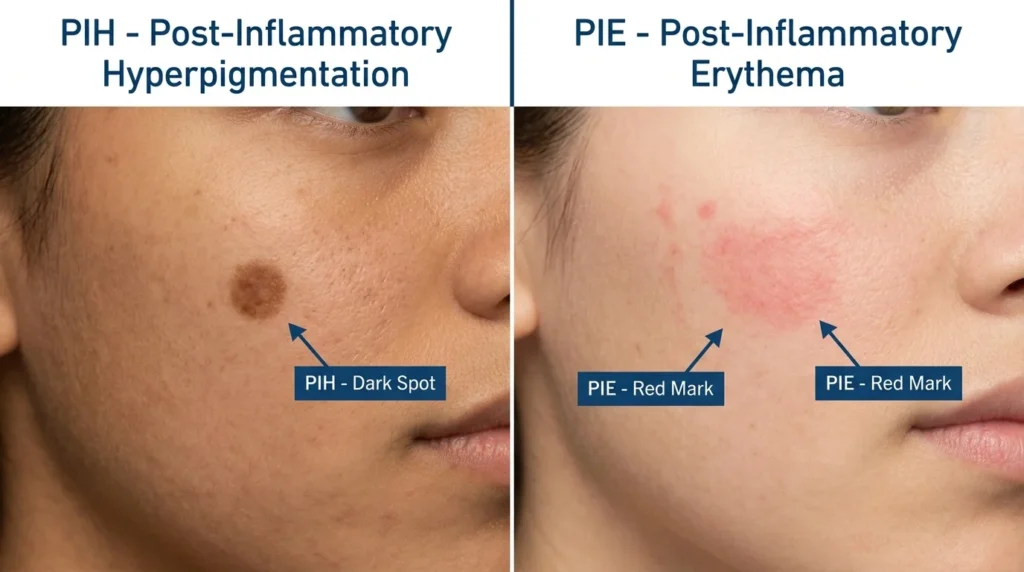
| Feature | Dark Marks (PIH) | Red Marks (PIE) |
|---|---|---|
| Color | Brown, black, or grey | Pink, red, or purple |
| Underlying cause | Excess melanin production | Damaged or dilated blood vessels |
| Fades with | Sunscreen, vitamin C, retinoids, azelaic acid | Time, sunscreen, niacinamide, gentle care |
| Does it respond to brightening topicals? | ✅ Yes, with consistent use | ⚠️ Slowly; topicals have limited effect |
| Professional treatment | Chemical peels, laser, prescription creams | Vascular laser, IPL, time |
💡 If you’re unsure what type of mark you have, see a dermatologist. They can accurately diagnose your skin and recommend the right treatment.
How to Fade Pimple Marks: A Realistic Approach
If you’re wondering how to fade pimple marks, the most realistic answer is: consistent skincare + patience + sun protection. There’s no quick fix for most marks.
The Basic Routine
| Time | Steps |
|---|---|
| Morning ☀️ | Gentle cleanser → Treatment product → Moisturizer → Sunscreen |
| Evening 🌙 | Gentle cleanser → Treatment product → Moisturizer |
⚠️ Important: Constantly switching products can irritate your skin and make it harder to determine what works. Stick with a routine for at least 8-12 weeks before evaluating results.
At-Home Care: What Helps and What Hurts
1. Use a Gentle Cleanser
When you’re trying to fade marks, avoid aggressive scrubbing. Harsh cleansers irritate the skin and can make your routine harder to tolerate.
- Choose a gentle, non-comedogenic cleanser suitable for your skin type
- If you still have active acne, a cleanser with salicylic acid may help
- Avoid physical scrubs, cleansing brushes, and harsh exfoliating beads
2. Keep Your Skin Moisturized
Moisturizer isn’t just for dry skin. Even oily or acne-prone skin benefits from hydration.
| Skin Type | What to Look For |
|---|---|
| Oily skin | Lightweight textures, gel or gel-cream formulas, non-comedogenic |
| Sensitive skin | Gentle formulas, minimal irritating ingredients, fragrance-free |
| Dry skin | Richer creams, ceramides, hyaluronic acid |
💡 Why moisturizing matters: A healthy skin barrier helps active ingredients work better and reduces irritation—which means better fading results.
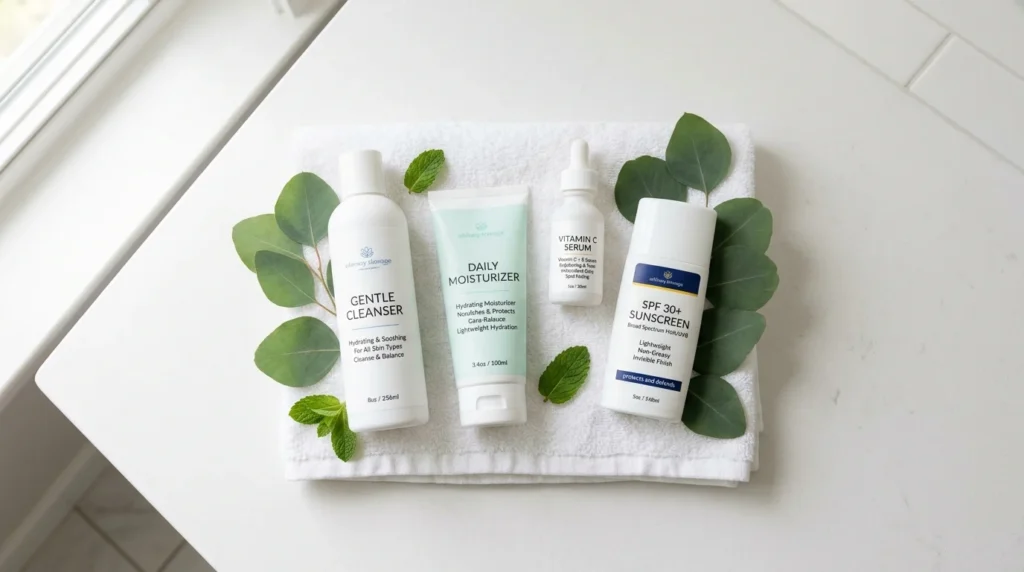
3. Never Skip Sunscreen
This is the most important step for fading dark marks.
UV exposure:
- Darkens existing pigmentation
- Makes marks more noticeable
- Slows down fading
- Can undo weeks of progress
| Sunscreen Rule | Why |
|---|---|
| SPF 30+ minimum | Blocks 97% of UVB rays |
| Broad-spectrum | Protects against UVA and UVB |
| Reapply regularly | Maintains protection—especially when outdoors, sweating, or swimming |
| Use daily | Especially when exposed to daylight |
☀️ Bottom line: Sunscreen isn’t optional—it’s essential. No other step matters as much if you’re skipping SPF.
Ingredients That Help Fade Dark Marks
When choosing products, focus on active ingredients—not marketing claims.
| Ingredient | How It Works | Best For |
|---|---|---|
| Vitamin C (L-ascorbic acid) | Antioxidant; inhibits melanin production | Dark spots, brightening, antioxidant protection |
| Niacinamide (Vitamin B3) | Reduces melanin transfer; soothes skin | Dark spots, redness, barrier support |
| Azelaic Acid | Reduces pigmentation and inflammation | Dark spots + active acne |
| Retinoids (retinol, adapalene, tretinoin) | Increases cell turnover; fades pigmentation | Dark spots, texture, acne prevention |
| Alpha Hydroxy Acids (AHAs) | Exfoliate surface skin | Texture, superficial marks |
| Beta Hydroxy Acids (BHAs) | Exfoliate inside pores | Texture, active acne |
| Tranexamic Acid | Inhibits melanin production | Stubborn dark spots |
| Kojic Acid | Natural skin brightener | Dark spots |
| Hydroquinone (prescription only) | Strong melanin inhibitor | Stubborn PIH (use with dermatologist supervision) |
How to Choose the Right Ingredient
| Your Goal | Best Ingredients |
|---|---|
| Fade dark spots | Vitamin C, niacinamide, azelaic acid, retinoids |
| Reduce red marks | Niacinamide, azelaic acid, gentle care |
| Improve texture | Retinoids, AHAs, BHAs |
| Prevent new marks | Sunscreen + treat active acne |
⚠️ Warning: More active ingredients aren’t better. Combining too many irritating products can damage your skin barrier and make marks worse. Start with one product at a time.
Retinoids: A Closer Look
Topical retinoids are among the most effective ingredients for fading dark spots and improving skin texture.
What They Do
- Increase skin cell turnover
- Reduce melanin production
- Improve collagen production
- Prevent new acne and clogged pores
Choosing the Right Retinoid
| Type | Availability | Best For |
|---|---|---|
| Retinol | Over-the-counter | Beginners, mild marks |
| Adapalene | OTC (0.1%) and prescription (0.3%) | Acne + marks |
| Tretinoin | Prescription only | Moderate-severe marks, anti-aging |
| Tazarotene | Prescription only | Stubborn marks, acne |
How to Use Retinoids Safely
| Rule | Why |
|---|---|
| Start slow (2-3x/week) | Minimizes irritation |
| Apply to dry skin | Reduces irritation |
| Use at night | Sun sensitivity |
| Use a pea-sized amount | More isn’t better |
| Moisturize well | Supports skin barrier |
| Wear sunscreen daily | Essential with retinoids |
| Be patient | Results take 8-12+ weeks |
What to Expect When Starting a Retinoid
| Week | What You May Experience |
|---|---|
| 1-2 | Mild dryness, flaking, possible purging |
| 3-4 | Peeling may increase, skin may feel sensitive |
| 4-8 | Skin starts to adjust; peeling decreases |
| 8-12+ | Results become noticeable |
💡 Purging vs Breaking Out: Some people experience temporary worsening in the first 4-6 weeks (often called “purging”) as deeper comedones come to the surface. This is not guaranteed and varies by individual. If you’re unsure, consult your dermatologist.
Professional Treatment Options
If you have deep pitted scars, raised scars, or marks that won’t fade with topical products, professional treatment may be needed.
Options for Dark Spots (PIH)
| Treatment | How It Works | Best For | Notes |
|---|---|---|---|
| Chemical peels | Removes surface layers of pigmented skin | Superficial to moderate PIH | Dermatologist-selected strength matters |
| Prescription hydroquinone | Strong melanin inhibitor | Stubborn PIH | Short-term use only; dermatologist supervision required |
| Laser treatments | Targets melanin | Stubborn PIH | Must be selected carefully for skin type |
| Prescription retinoids | Increases cell turnover | Moderate PIH | Stronger than OTC options |
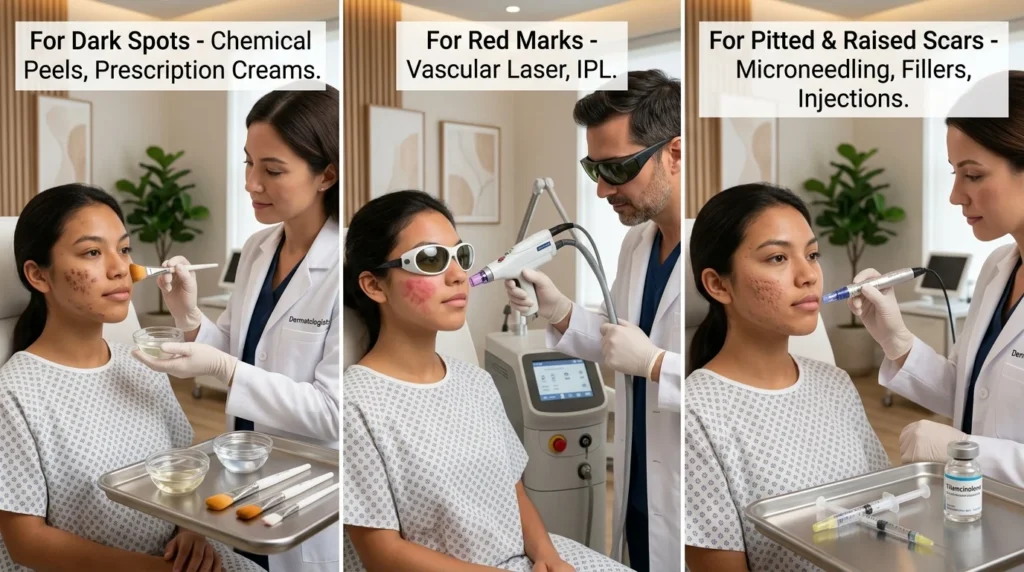
⚠️ Important for darker skin tones: Some procedures—including lasers, chemical peels, and certain types of microneedling—carry a risk of causing post-inflammatory hyperpigmentation if not performed correctly. Always choose an experienced dermatologist who understands how to treat your skin type safely.
Options for Red Marks (PIE)
| Treatment | How It Works | Best For |
|---|---|---|
| Vascular lasers | Targets and collapses damaged blood vessels | Persistent red marks |
| IPL (Intense Pulsed Light) | Reduces redness | Diffuse redness |
| Time | Blood vessels gradually normalize | Mild PIE |
Options for Pitted Scars
| Treatment | How It Works | Best For |
|---|---|---|
| Microneedling | Stimulates collagen production | Rolling and shallow boxcar scars |
| Laser resurfacing | Removes damaged skin, stimulates collagen | Deeper scars |
| Subcision | Releases scar tissue pulling skin down | Rolling scars |
| Fillers | Plumps depressed scars | Deeper boxcar scars |
| TCA Cross | Stimulates collagen in ice-pick scars | Ice-pick scars |
| Surgical excision | Removes individual deep scars | Large, deep scars |
Options for Raised Scars
| Treatment | How It Works | Best For |
|---|---|---|
| Corticosteroid injections | Flattens raised scars | Hypertrophic scars, keloids |
| Silicone sheets/gels | Flattens and softens raised scars | Hypertrophic scars |
| Laser therapy | Flattens and reduces redness | Hypertrophic scars |
| Surgical removal | Removes raised tissue | Keloids |
👩⚕️ A dermatologist can recommend the best approach for your specific scar type. Don’t try to treat deep scars with topical products—they won’t work.
Natural and DIY Remedies: What to Avoid
“Natural” doesn’t always mean safe or effective. Be especially cautious with DIY treatments.
Common DIY Remedies to Avoid
| “Remedy” | Why It’s Harmful |
|---|---|
| Lemon juice | Can cause chemical burns; increases UV sensitivity |
| Baking soda | Too alkaline; damages skin barrier |
| Toothpaste | Contains irritating ingredients; doesn’t fade marks |
| Apple cider vinegar | Can cause burns and irritation; pH too acidic |
| Hydrogen peroxide | Can bleach skin and cause scarring |
| Essential oils directly on skin | Many cause contact dermatitis |
| Sugar/salt scrubs | Physical abrasion damages healing skin |
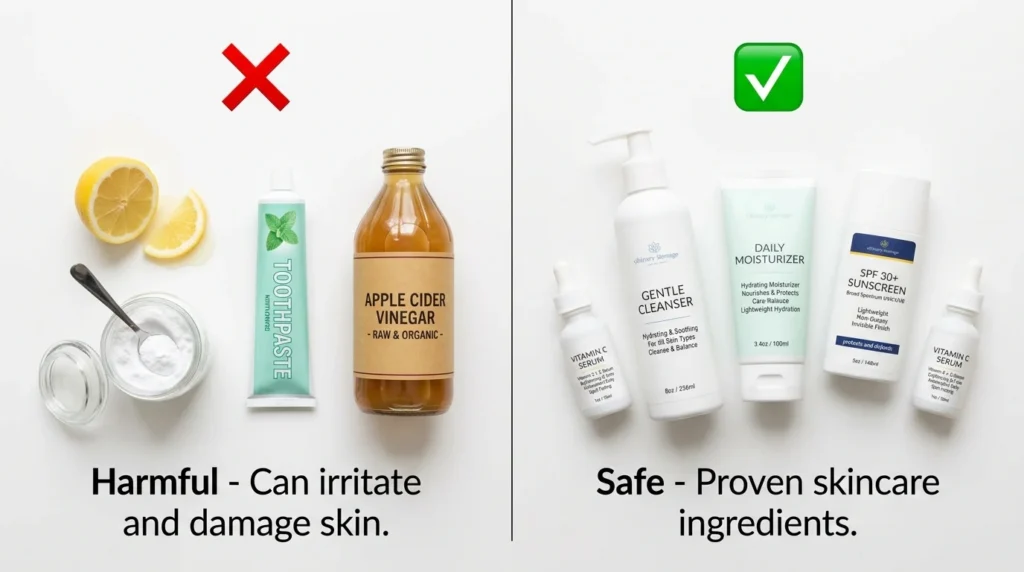
Safer Home Approach
| What to Do | Why |
|---|---|
| Gentle cleanser | Removes impurities without stripping |
| Moisturizer | Supports skin barrier |
| Sunscreen | Prevents darkening |
| Appropriate active ingredients | Fades marks gradually |
| Patience | Marks take months to fade |
💡 Bottom line: Stick with proven skincare ingredients, not kitchen experiments.
Timeline: What to Expect
Patience is essential. Marks don’t fade overnight.
Estimated Timeline for Flat Marks
| Timeframe | What to Expect |
|---|---|
| 1-2 weeks | Minimal visible change; skin is adjusting to routine |
| 1-2 months | Some improvement may become noticeable |
| 3-6 months | Significant fading possible with consistent care |
| 6-12+ months | Continued fading; some marks may persist |
Factors That Affect Fading Time
| Factor | Faster Fading | Slower Fading |
|---|---|---|
| Mark type | Superficial dark spots | Deep red marks, old marks |
| Sun protection | Consistent SPF use | Skipping sunscreen |
| Skincare consistency | Daily routine | Inconsistent use |
| Picking | Never picking | Frequent picking |
💡 For deep pitted or raised scars: Topical skincare won’t fix these. Professional treatment is needed, and results take months to years.
How to Prevent New Pimple Marks
Prevention is easier than correction.
| Strategy | Why It Works |
|---|---|
| Don’t pick or squeeze | Prevents tissue damage and excessive inflammation |
| Treat active acne | Fewer breakouts = fewer opportunities for marks |
| Wear sunscreen daily | Prevents marks from darkening |
| Follow a consistent routine | Reduces breakouts and supports healing |
| Moisturize | Supports healthy skin barrier |
| Manage stress | Can help reduce breakouts |
Frequently Asked Questions
How do you fade pimple marks?
For flat dark marks, consistent skincare with sunscreen, gentle cleansing, moisturizer, and appropriate active ingredients (vitamin C, niacinamide, azelaic acid, or retinoids) can help fade them over months. For deep scars, see a dermatologist.
Do dark pimple marks go away?
Many flat dark marks fade significantly with consistent skincare and sun protection. However, the process can take months. Some marks may persist or require professional treatment.
Can acne scars be 100% removed?
Not always. Deep pitted or raised scars generally cannot be completely removed with topical skincare. Professional treatments can significantly improve their appearance, but complete removal isn’t always possible.
Can I remove pimples in 3 days?
Some small pimples may improve within several days, but there is no guaranteed way to completely remove every pimple in three days. Deep cysts and nodules can take much longer. Trying multiple harsh products can irritate skin and cause more marks.
What is the best cream for pimple marks?
There isn’t one best cream for everyone. Look for suitable ingredients (vitamin C, niacinamide, azelaic acid, retinoids) based on your skin type and the type of mark you have. The right product depends on your individual needs.
Can I remove acne scars naturally overnight?
No. Deep acne scars cannot reliably be removed overnight with natural remedies. Be especially cautious with DIY treatments that can irritate or damage your skin.
Is pimple mark fading possible at home?
Flat dark marks can often be faded at home with a consistent skincare routine. Deeper pitted or raised scars typically need professional treatment.
What’s the best pimple mark treatment for oily skin?
For oily skin, choose lightweight, non-comedogenic products. The active ingredient matters more than whether the product is marketed for oily skin. Gel or gel-cream moisturizers work well.
Can men use the same products as women?
Yes. Skincare ingredients work the same regardless of gender. However, if you shave, be extra gentle around shaved areas—shaving can irritate skin and make marks more noticeable. Consider shaving after cleansing and applying a gentle moisturizer afterward.
What’s the difference between a dark mark and a red mark?
Dark marks (PIH) are brown/black and caused by excess melanin. They respond well to brightening ingredients. Red marks (PIE) are pink/red and caused by damaged blood vessels. They respond slowly to topicals and may need vascular laser treatment if persistent. See the comparison table above for more details.
Final Thoughts: Patience and Perspective
Pimple mark fading isn’t an overnight process. If you’re dealing with flat dark spots or red marks left after acne, a gentle and consistent skincare routine can help improve their appearance over time.
Key Takeaways
| Principle | Why It Matters |
|---|---|
| Don’t pick | Prevents tissue damage and excessive inflammation |
| Wear sunscreen daily | Prevents marks from darkening—especially when exposed to daylight |
| Choose ingredients wisely | Different marks need different treatments |
| Moisturize | Supports skin barrier and healing |
| Be patient | Results take months, not days |
| See a dermatologist | For deep, raised, or persistent scars |
Know the Difference
The most important thing you can do is learn to distinguish a flat pimple mark from a true acne scar. That one distinction can save you from wasting money on products that aren’t designed to treat the type of mark you actually have.
You’re Not Alone
💙 Post-acne marks are one of the most common skin concerns in the world. Having them doesn’t mean you’ve done something wrong—it means your skin has a natural healing response. With the right care, patience, and professional guidance when needed, you can significantly reduce their appearance and feel more confident in your skin.

Sophie Carter is a skincare writer who shares science-backed skincare routines, ingredient insights, and everyday tips for healthier-looking skin.