Acne has a terrible habit of appearing at the worst possible moments—right before a big event, a photo, or an important day. When a painful red pimple emerges, it’s natural to want it gone immediately.
The honest truth is that acne cannot disappear completely in a few hours. However, you can take safe, effective steps to reduce redness, swelling, and irritation, helping your skin heal faster. The key is to avoid aggressive DIY methods that often make breakouts worse.
This guide covers safe at-home treatments, natural remedies to approach with caution, and clear guidelines on when to see a dermatologist.
Why Does Acne Appear?
Acne forms when hair follicles become clogged with a combination of excess oil (sebum) and dead skin cells. Hormonal changes, particularly during the teenage years, can increase oil production. Bacteria and inflammation then contribute to the development of different types of pimples.
Common types of acne include:
- Blackheads and whiteheads (non-inflammatory)
- Red, inflamed pimples
- Pus-filled pustules
- Deep, painful cysts or nodules (inflammatory)
Because acne develops beneath the skin’s surface, simply washing or scrubbing your face will not make it disappear instantly.
How to Safely Reduce a Pimple Fast
If you have a new pimple, focus on calming it rather than forcing it out. Here are the safest and most effective strategies:
1. Keep Your Skin Clean—Gently
- Wash your face morning and evening with a mild, fragrance-free cleanser.
- Wash again after sweating heavily.
- Avoid scrubbing with rough towels, brushes, or exfoliating scrubs. Friction increases irritation and makes inflammation worse.
2. Hands Off! Don’t Pop or Pick
Squeezing a pimple is incredibly tempting, but it is the fastest way to make it worse. Popping can:
- Push bacteria deeper into the skin.
- Increase inflammation and swelling.
- Lead to dark marks (post-inflammatory hyperpigmentation) or permanent scars.
Instead: Leave the area alone and use a targeted treatment.
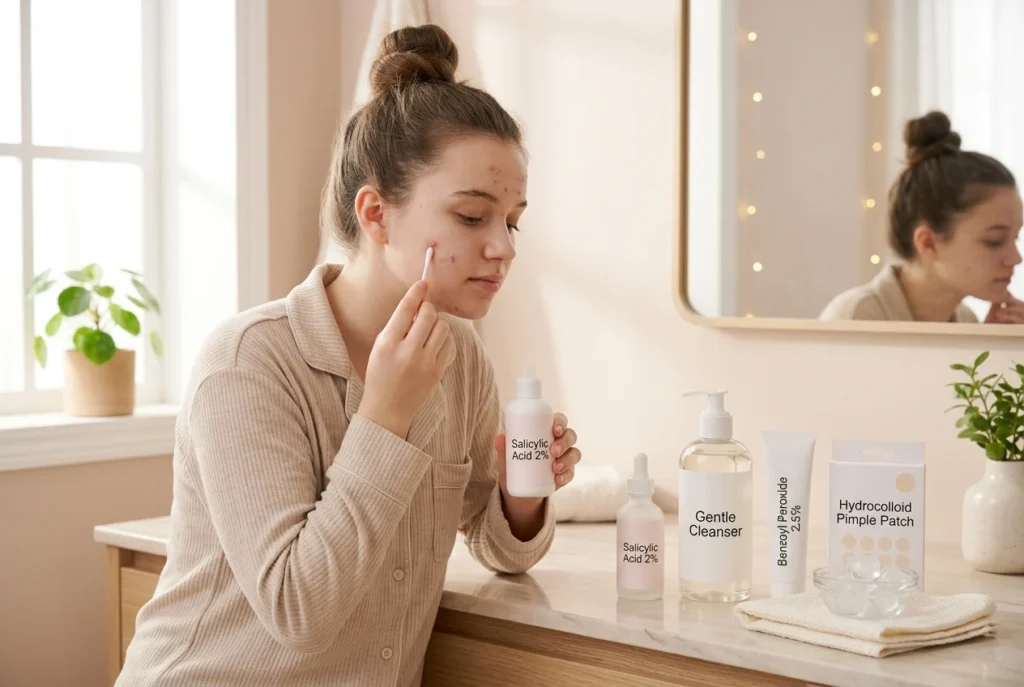
3. Use a Commonly Used Over-the-Counter (OTC) Acne Treatment
For occasional breakouts, these two ingredients are among the most common and effective OTC options:
| Ingredient | What It Does | Best For |
|---|---|---|
| Salicylic Acid | Unclogs pores by dissolving dead skin cells and oil. | Blackheads and whiteheads. |
| Benzoyl Peroxide | Kills acne-causing bacteria and reduces inflammation. | Inflamed red pimples and pustules. |
How to use: Apply a thin layer as a spot treatment or use a cleanser containing the ingredient. Start with one product at a time to avoid irritating your skin. If your skin becomes very dry or itchy, reduce usage or stop.
4. Apply a Hydrocolloid Pimple Patch
These small adhesive patches are useful for individual pimples, especially those that have come to a head.
- What they do: They create a protective barrier, absorb excess fluid, and prevent you from touching or picking the spot.
- Realistic expectation: They won’t make a pimple vanish overnight, but they may help reduce its appearance and protect it from picking, which can aid the healing process.
5. Use a Cold Compress for Swelling
If a pimple is swollen or painful, a cold compress can temporarily reduce inflammation.
- How to: Wrap an ice cube or a cold pack in a clean, soft cloth.
- Apply: Gently press it against the pimple for 1–2 minutes at a time.
- Important: Never place ice directly on your skin, as it can cause ice burns.
How to Get Rid of Acne at Home: A Simple Routine
You don’t need a complicated 10-step routine to manage acne. Consistency is far more important than using many products at once.
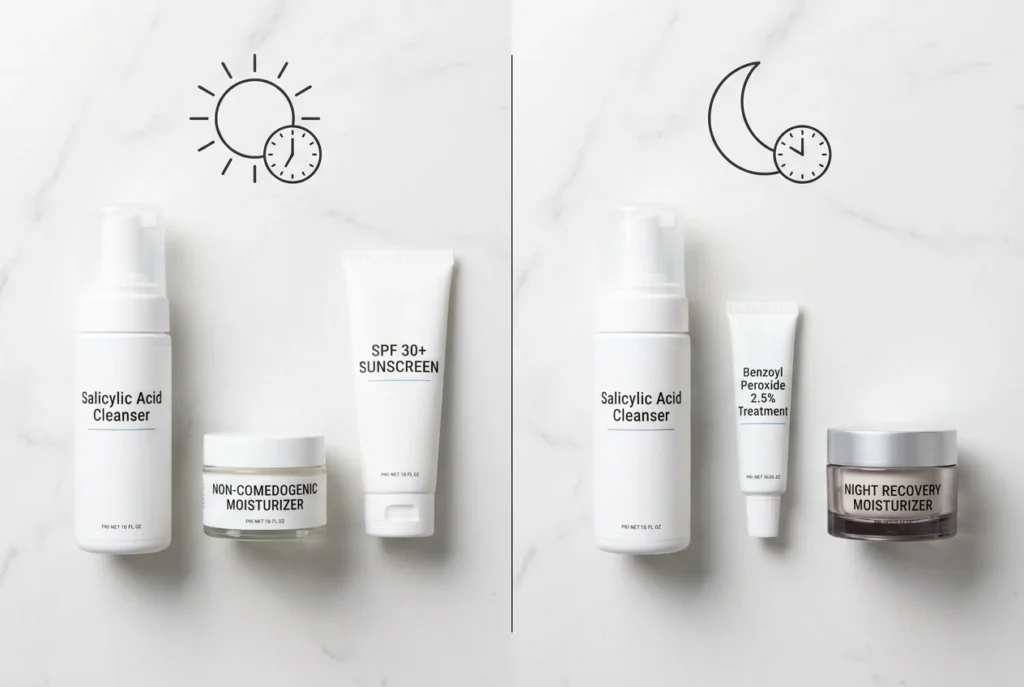
| Time | Step | Product Type |
|---|---|---|
| Morning | 1. Cleanse | Mild, fragrance-free cleanser. |
| 2. Moisturize | Lightweight, non-comedogenic (won’t clog pores) moisturizer. | |
| 3. Protect | Broad-spectrum sunscreen SPF 30 or higher. | |
| Evening | 1. Cleanse | Gently remove sweat, dirt, sunscreen, and makeup. |
| 2. Treat | Apply one acne treatment (salicylic acid or benzoyl peroxide) if needed. | |
| 3. Moisturize | Replenish hydration to support your skin’s natural barrier. |
Natural Remedies: What Helps and What Hurts
Many people search for natural ways to get rid of acne fast. However, “natural” does not equal “safe.” Some kitchen ingredients can cause severe irritation, chemical burns, and even worsen acne.
✅ Use With Caution: Aloe Vera
- What it does: Pure aloe vera gel can feel soothing on irritated skin and provide lightweight hydration. It is not an acne treatment or a quick cure, but it may help calm redness while other products do the work.
- How to use: Choose a fragrance-free, pure aloe product. Apply a small amount and stop if it causes burning or redness.
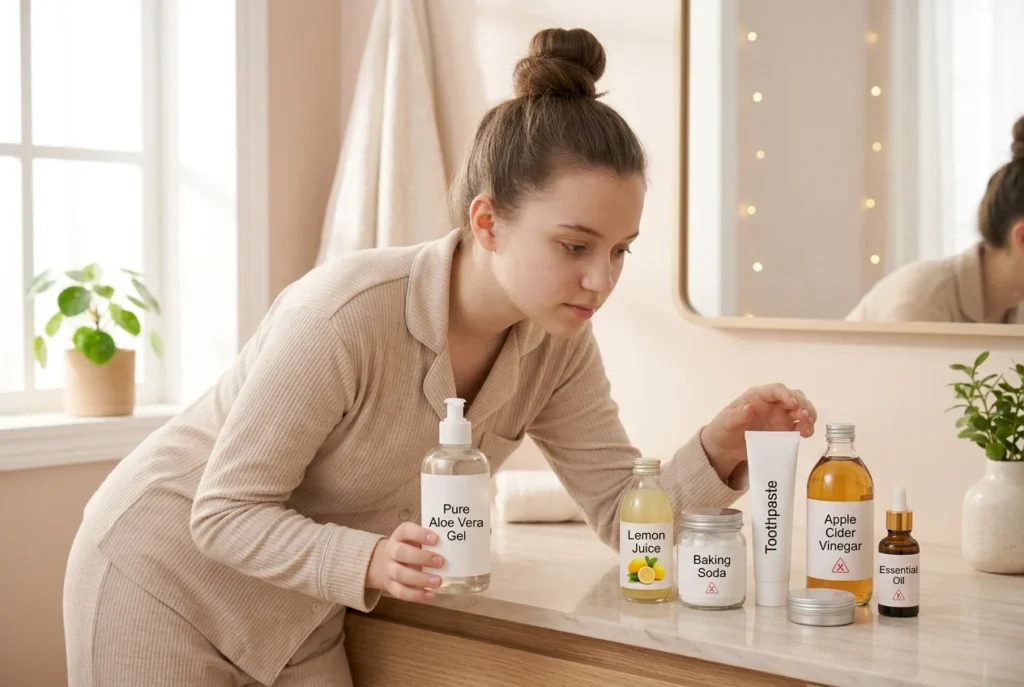
❌ Avoid These Harmful DIY Remedies
| Ingredient | Why It’s Harmful |
|---|---|
| Lemon/Lime Juice | Highly acidic; can cause chemical burns and severe irritation. |
| Baking Soda | Too alkaline (high pH); disrupts the skin’s protective barrier, leading to dryness and irritation. |
| Toothpaste | Contains harsh detergents, fluoride, and abrasive ingredients that burn the skin. |
| Undiluted Apple Cider Vinegar | Strong acid that can cause chemical burns. |
| Pure Essential Oils | Can be highly sensitizing and cause allergic reactions. |
| Salt or Sugar Scrubs | Physically abrasive; tear the skin and worsen inflammation. |
Acne in Specific Areas (Forehead & Nose)
While the principles are the same, these areas can benefit from a few extra tips:
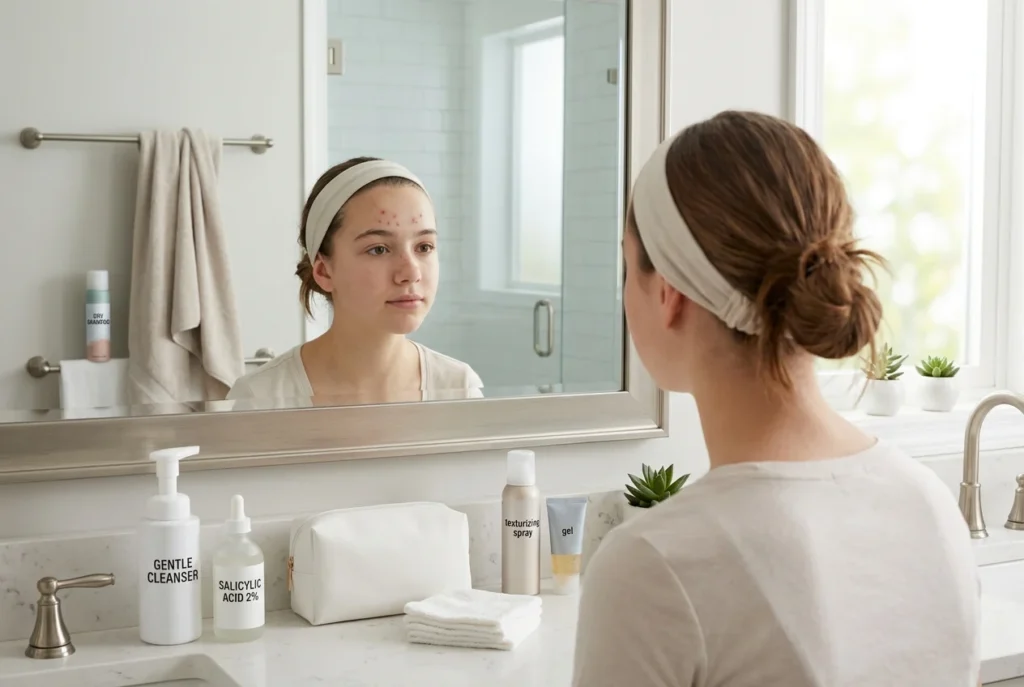
Forehead Acne
- Often linked to excess oil, sweat, or hair products.
- Keep oily hair and styling products away from your forehead.
- Wash hats, headbands, and pillowcases regularly.
Nose Pimples
- The nose has many oil glands, making pimples here common and noticeable.
- Do not squeeze—it’s incredibly painful and risky.
- Gently cleanse the area and use a salicylic acid product if tolerated. Keep heavy, pore-clogging products away from the nose.
When to See a Dermatologist
Home care is effective for mild acne, but professional treatment is essential when:
- Acne is deep, painful, or cystic.
- Breakouts are widespread or not improving.
- You’re developing scars or dark marks.
- OTC treatments haven’t shown improvement after 8–12 weeks of consistent use.
- Acne is significantly affecting your confidence or daily life.
A dermatologist can prescribe stronger, faster-acting treatments like topical retinoids, oral antibiotics, or hormonal therapies that are simply not available over the counter.
Quick Answers to Common Questions
| Question | The Reality |
|---|---|
| Can acne go away in 2 days? | A small pimple may look less noticeable, but complete healing takes longer. No method guarantees full clearance in 2 days. |
| What’s the fastest way to heal a pimple? | For small spots: a gentle routine + an OTC treatment + a pimple patch. For large cysts: see a dermatologist. |
| Can I get rid of acne without products? | Yes, focus on gentle cleansing, not touching your face, clean pillowcases, and managing stress. These won’t erase an existing pimple, but they help your skin recover. |
Final Thoughts
If you’re wondering how to get rid of acne fast, resist the temptation to look for a miracle cure. The safest and most effective approach is to calm the breakout, avoid irritation, and use proven treatments consistently.
A pimple may become less red and swollen within a day or two, but complete healing takes time. Whether you choose natural remedies, at-home care, or professional dermatological treatment, the ultimate goal should always be healthy, resilient skin—not a risky, instant fix.
And if a pimple doesn’t disappear overnight, don’t panic. 💛 Give your skin time, keep your routine gentle, and avoid picking. That’s often the fastest path to clearer-looking skin in the long run.

Sophie Carter is a skincare writer who shares science-backed skincare routines, ingredient insights, and everyday tips for healthier-looking skin.