Large pores are a common skin concern, especially when excess oil, blackheads, acne, sun exposure, or loss of skin elasticity makes them more noticeable. Although you cannot permanently close or erase pores, the right skincare routine can make them look smaller and less visible.
The most useful approach depends on why your pores look enlarged. Oily skin may benefit from ingredients that control excess sebum, while clogged pores may need gentle exfoliation. Sun protection is important for everyone because UV damage can reduce skin elasticity and make pores appear more noticeable over time.
This guide explains what causes large pores, how to treat them at home, which skincare ingredients can help, what dermatologists can offer, and what you should know before trying a “pore-shrinking” treatment.
What Are Large Pores?
Pores are tiny openings in the skin connected to structures such as hair follicles and oil glands. They allow sebum and sweat to reach the skin’s surface.
When people talk about large or open pores, they usually mean pores that are more visible than the surrounding skin.
Pore visibility can vary from person to person. Genetics, oil production, age, skin elasticity, acne, blackheads, and sun exposure can all affect how noticeable pores appear.
Can pores really become larger?
Pores do not work like doors that simply open and close. Their visible size can change in appearance depending on how much oil and debris are present and how much support the surrounding skin has.
For example, a pore may look more noticeable when it contains excess sebum or a blackhead. As skin loses elasticity with age or sun damage, the opening can also appear more prominent.
What Causes Large Pores?
Several factors can contribute to the appearance of enlarged pores.
1. Excess oil production
Oily skin is one of the most common reasons pores look more noticeable.
When sebaceous glands produce more sebum, oil can collect around the opening of a hair follicle. This may make the pore appear larger, particularly around the nose, forehead, and cheeks.
If your skin becomes shiny only a few hours after washing your face, excess oil may be contributing to your pore concerns.
2. Blackheads and clogged pores
Blackheads are open comedones that form when a pore becomes clogged with oil and dead skin cells.
A clogged pore can look darker and larger than the surrounding skin. Treating the underlying congestion may therefore make pores appear less noticeable.
However, repeatedly squeezing blackheads can irritate the skin and potentially worsen inflammation.
3. Genetics and follicle size
Some people naturally have more visible pores than others.
The size of hair follicles and sebaceous glands can influence how noticeable pores appear, and genetics plays a role in these characteristics. This is one reason two people can follow similar skincare routines while having very different-looking pores.
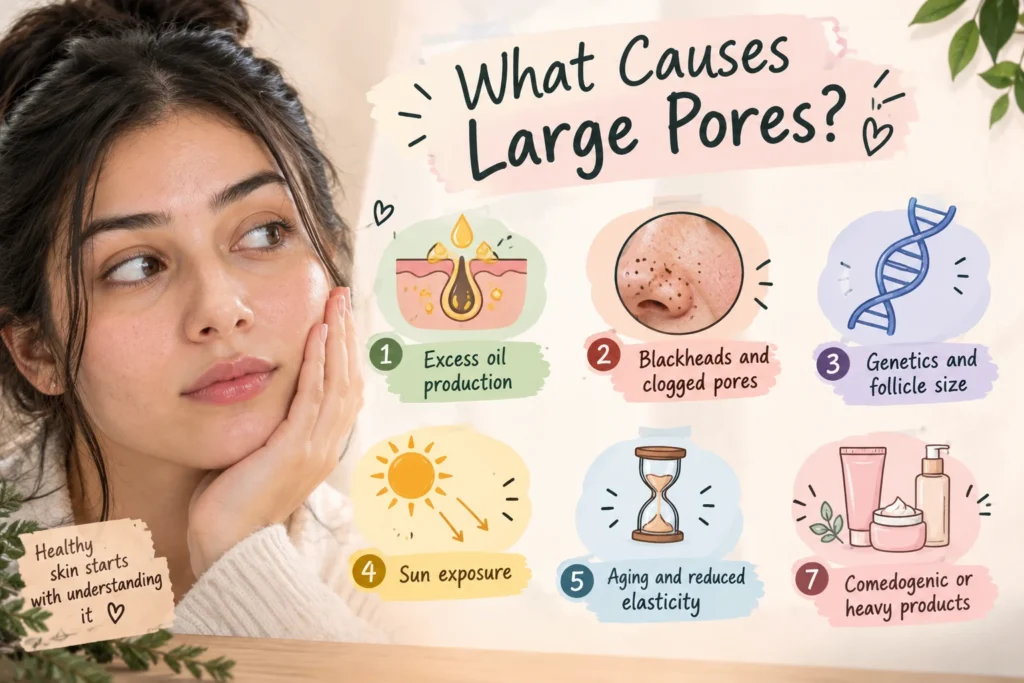
4. Sun exposure
Long-term UV exposure can damage collagen and contribute to reduced skin elasticity.
When the skin around a pore loses some of its firmness, the pore may appear more stretched or noticeable.
This is one reason daily sunscreen is an important part of a long-term large pores treatment routine.
5. Aging and reduced elasticity
Pores may become more noticeable with age.
As the skin changes and gradually loses collagen and elasticity, the surrounding tissue may provide less structural support. The result can be pores that look wider or more prominent.
6. Acne and inflammation
Acne can be associated with more visible pores, particularly when there is repeated congestion, inflammation, or damage around the follicle.
If you have both acne scars and large pores, treating only the surface oil may not be enough. A dermatologist can help determine whether your main concern is active acne, enlarged pores, textural scarring, or a combination of these.
7. Comedogenic or heavy products
Some rich or pore-clogging products may contribute to congestion in people who are prone to clogged pores.
This does not mean every moisturizer or oil will cause breakouts. Skin responds differently to different formulas.
If your pores and blackheads became more noticeable after introducing a new product, consider whether the product is contributing to congestion.
Can You Permanently Close Large Pores?
No skincare product can permanently close your pores.
Pores are normal structures of the skin, so the goal is not to eliminate them. Instead, treatment focuses on making them less visible by addressing factors such as excess oil, clogged pores, sun damage, and reduced skin elasticity.
Be cautious of products or treatments promising to “close pores permanently at home.” A product may temporarily make pores appear tighter or smoother, but that is different from permanently changing their structure.
How Can I Treat Large Pores on My Face?
The best large pores treatment depends on the cause, but a simple routine can make a significant difference in appearance.
Morning routine
1. Use a gentle cleanser
Wash your face with a gentle cleanser rather than repeatedly scrubbing it.
If your skin is oily, a cleanser designed for oily or combination skin may help remove excess sebum without leaving the skin excessively dry.
2. Use a suitable treatment ingredient
Depending on your skin concerns, ingredients such as niacinamide may help improve the appearance of oily skin and visible pores.
You do not need several active ingredients at once.
3. Apply moisturizer
Even oily skin needs hydration. Choose a lightweight, non-comedogenic moisturizer if heavier products tend to feel greasy or contribute to congestion.
4. Finish with sunscreen
Use broad-spectrum sunscreen every morning.
Sun protection is especially important because UV exposure contributes to collagen damage and premature skin aging, both of which can make pores appear more prominent.
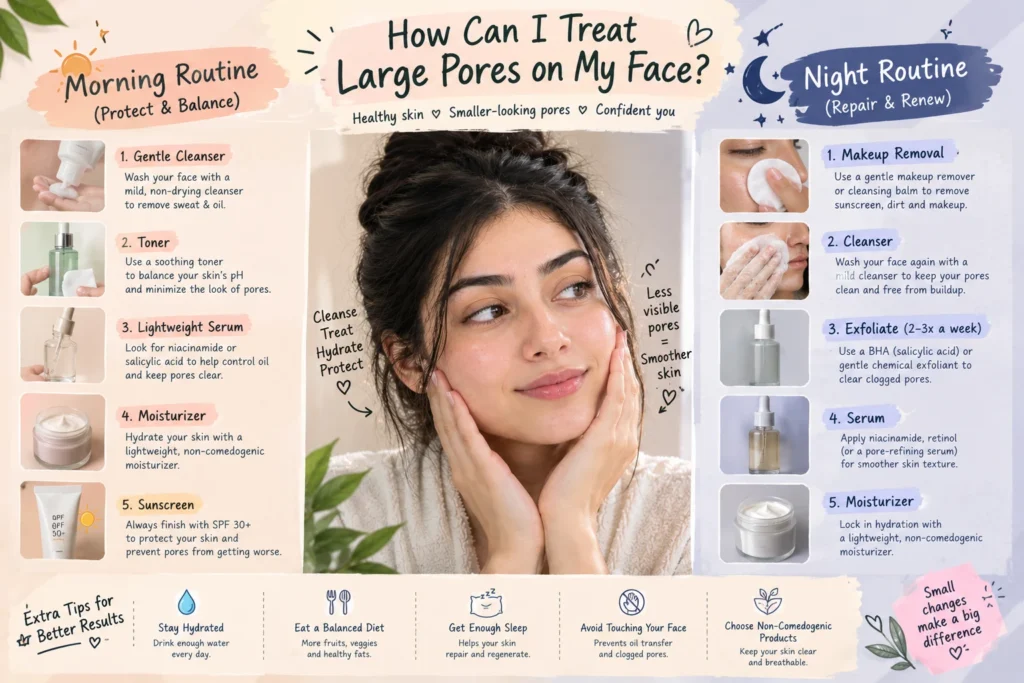
Night routine
At night:
- Cleanse your face gently.
- Use one targeted treatment if needed.
- Apply moisturizer.
- Avoid picking, squeezing, or aggressively scrubbing your pores.
Consistency matters more than using a large number of products.
Large Pores Treatment at Home
If you want to treat large pores at home, start with basic skin care rather than aggressive DIY remedies.
Keep your skin clean
Cleansing helps remove excess oil, sunscreen, makeup, and environmental debris.
However, washing your face repeatedly throughout the day can irritate the skin and does not permanently reduce pore size.
Try niacinamide
Niacinamide is a form of vitamin B3 commonly used in skincare.
It may help support the skin barrier and can be useful for people concerned about excess oil and the appearance of pores.
Start with a simple formula rather than combining multiple strong actives.
Consider salicylic acid for clogged pores
Salicylic acid is a beta hydroxy acid that can help exfoliate inside oily, congested pores.
It may be particularly useful when your large pores are accompanied by blackheads or frequent congestion.
Start slowly, especially if you have sensitive skin. Overuse can cause dryness and irritation.
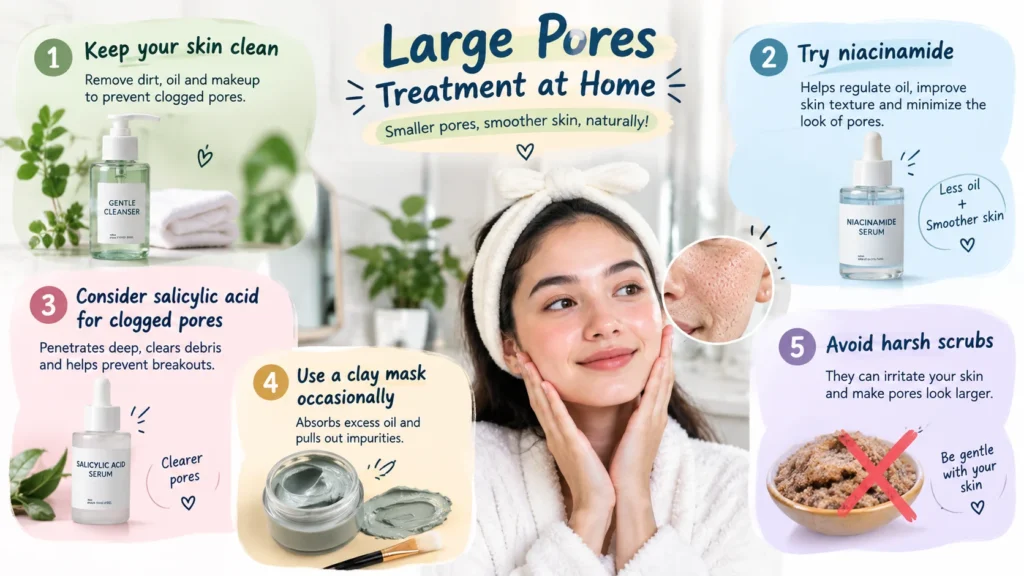
Use a clay mask occasionally
Clay masks can temporarily absorb excess oil from the skin.
They may make oily skin look less shiny and pores appear cleaner for a short period, but they do not permanently shrink pores.
If your skin feels tight or uncomfortable after a clay mask, use it less often or discontinue it.
Avoid harsh scrubs
Scrubbing your pores aggressively does not remove their underlying structure.
Physical scrubs can also irritate acne-prone skin, particularly when they contain rough particles or are used too frequently.
What Is the Best Treatment for Very Large Pores?
There is no single treatment that is best for everyone with very large pores.
For mild pore visibility caused by oil and congestion, a consistent skincare routine may be enough. If pores are very prominent, persistent, or associated with acne scars and significant skin texture, professional treatment may provide additional options.
A dermatologist can examine your skin and determine whether treatments such as prescription retinoids, chemical peels, laser procedures, or radiofrequency microneedling are appropriate.
The right option depends on your skin type, the cause of the pore visibility, your medical history, and whether you have other concerns such as acne or scarring.
Oily Skin and Large Pores Treatment
If you have oily skin and large pores, controlling excess sebum can make pores appear less noticeable.
A simple routine may include:
- Gentle cleanser
- Lightweight moisturizer
- Niacinamide
- Salicylic acid when appropriate
- Non-comedogenic products
- Daily sunscreen
Avoid trying to remove every trace of oil from your skin. Over-cleansing can cause irritation and make your routine harder to maintain.
The goal is balanced skin, not completely oil-free skin.
Dry Skin and Large Pores Treatment
Large pores are not limited to oily skin.
If you have dry skin, dehydration and rough texture may make existing pores more noticeable. Using strong acne products or excessive exfoliation can make this worse.
For dry skin:
- Use a gentle cleanser.
- Choose a barrier-supporting moisturizer.
- Avoid frequent harsh exfoliation.
- Wear sunscreen every day.
- Introduce active ingredients slowly.
If your skin is dry but you also have blackheads or congestion, you may need to balance pore care with barrier support rather than simply using stronger exfoliants.
Blackheads and Large Pores Treatment
Blackheads and visible pores often occur together because both involve the hair follicle.
A useful routine may include gentle cleansing and an ingredient such as salicylic acid to help with congestion.
Avoid squeezing blackheads with your fingers or using aggressive extraction tools at home. Temporary removal does not mean the pore has disappeared, and repeated irritation can leave the skin inflamed.
If blackheads are persistent, a dermatologist or qualified skincare professional can advise you about safer treatment options.
Acne Scars and Large Pores Treatment
Acne scars and enlarged pores are not exactly the same thing.
Some acne scars create depressions or uneven texture that can look similar to enlarged pores. If you have significant acne scarring, simply using an oil-control product may not change the appearance of those depressions.
Professional treatments such as chemical peels, laser procedures, or microneedling-based treatments may sometimes be considered for textural concerns.
A dermatologist can determine whether the problem is primarily enlarged pores, acne scarring, or both.
What Skincare Products Help With Large Pores?
When choosing large pores treatment products, look for products designed around the cause of your concern rather than marketing claims about “closing” pores.
Useful ingredients may include:
| Ingredient | Why it may help |
|---|---|
| Niacinamide | May help with excess oil and the appearance of pores |
| Salicylic acid | Helps exfoliate and manage clogged pores |
| Retinoids | Can improve cell turnover and may help with acne and skin texture |
| Sunscreen | Helps protect collagen and prevent UV-related skin damage |
| Clay | Can temporarily absorb excess surface oil |
| Moisturizers | Help maintain the skin barrier and prevent excessive dryness |
You do not need all of these ingredients.
Using several strong actives at once can cause irritation, which may make your skin look rougher and your pores more noticeable.
What Do Koreans Do for Large Pores?
Korean skincare is often associated with gentle cleansing, hydration, sunscreen, and consistent skin care rather than one special ingredient that permanently shrinks pores.
If you are interested in a Korean-style routine for large pores, focus on the same basic principles:
- Cleanse without over-stripping the skin.
- Keep the skin hydrated.
- Address excess oil and congestion with suitable ingredients.
- Protect the skin from UV exposure.
- Introduce active ingredients gradually.
- Stay consistent rather than constantly changing products.
There is no special Korean method that can permanently close pores. The effectiveness of a routine depends more on the ingredients, formulation, consistency, and your individual skin than on where a product comes from.
Can Ice Remove Large Pores?
Ice cannot permanently remove or close pores.
Cold temperatures may temporarily make the skin feel tighter and can reduce the appearance of puffiness, which may make pores look less noticeable for a short time.
However, this effect is temporary.
If you enjoy using something cool on your skin, avoid pressing extremely cold objects directly against the skin for long periods because this can cause irritation or cold injury.
Open Pores Treatment at Home Naturally
If you are looking for an open pores treatment at home naturally, keep your expectations realistic.
Simple habits such as gentle cleansing, adequate moisturization, sun protection, and avoiding pore-clogging products can support healthier-looking skin.
Be careful with DIY recipes containing lemon juice, baking soda, toothpaste, undiluted vinegar, or abrasive scrubs. “Natural” does not automatically mean safe for facial skin.
These ingredients can irritate the skin and potentially make redness and texture more noticeable.
A simple skincare routine is generally a better approach than trying harsh kitchen remedies.
Can You Close Pores Permanently at Home?
No.
There is no proven home remedy that can permanently close pores.
You may temporarily improve how pores look by removing excess oil, reducing congestion, hydrating the skin, and protecting it from sun damage.
If your pores remain very prominent despite a consistent routine, professional evaluation may be more useful than continually buying new pore-minimizing products.
Large Pores Treatment by a Dermatologist
If home skincare is not giving you the results you want, a dermatologist can assess your skin and discuss professional options.
Depending on the cause and severity, treatments may include:
Prescription retinoids
Topical retinoids can increase skin cell turnover and are commonly used for acne and clogged pores. They may also improve overall skin texture over time.
Because prescription retinoids can cause irritation and are not appropriate for everyone, they should be used according to professional guidance.
Chemical peels
Certain chemical peels can exfoliate the skin and may improve congestion, texture, and the appearance of pores.
The appropriate peel depends on your skin type and concerns.
Laser treatments
Some laser treatments are used to improve skin texture and stimulate collagen remodeling.
The type of laser and expected results vary considerably, so consultation with a qualified dermatologist is important.
Radiofrequency microneedling
Radiofrequency microneedling combines controlled microneedling with radiofrequency energy and may be used to address skin texture and collagen remodeling.
It is a professional procedure and should not be treated as a DIY pore treatment.
Other professional options
A dermatologist may recommend another treatment depending on whether your main problem is oiliness, acne, scarring, pigmentation, or loss of elasticity.
There is no universal procedure that works equally well for every person.
What About La Roche-Posay Large Pores Treatment?
If you are searching for La Roche-Posay large pores treatment, focus on the individual product’s ingredients and intended use rather than assuming a brand alone will reduce pore size.
For example, a product designed for oily or acne-prone skin may be useful when excess oil and congestion are contributing to visible pores.
Check the full ingredient list, introduce new products gradually, and pay attention to how your own skin responds.
The same principle applies to any skincare brand: a product should be selected based on your skin’s needs rather than the promise on the label.
When Should You See a Dermatologist?
Consider seeing a dermatologist if:
- Your pores remain very noticeable despite consistent skincare.
- You have persistent blackheads or clogged pores.
- You have moderate or severe acne.
- You have acne scars or significant uneven texture.
- Your skin becomes irritated whenever you try pore treatments.
- You are considering laser, microneedling, chemical peels, or prescription treatment.
- You are unsure whether you are dealing with enlarged pores or acne scarring.
A dermatologist can identify the underlying problem and help you avoid wasting money on treatments that are unlikely to address it.
How to Prevent Pores From Looking More Noticeable
You cannot prevent your natural pore size from existing, but you can reduce factors that make pores look more prominent.
Wear sunscreen daily
UV exposure can contribute to collagen damage and loss of elasticity.
Keep your routine gentle
Over-scrubbing and excessive exfoliation can irritate the skin.
Manage excess oil
If you have oily skin, use products designed to control oil without aggressively stripping your skin.
Avoid picking
Squeezing blackheads and acne can cause inflammation and potentially worsen skin texture.
Choose suitable products
Look for products that are appropriate for your skin type and avoid formulas that repeatedly cause congestion or irritation.
Be consistent
Pore appearance usually does not change overnight. Give a suitable routine enough time before deciding whether it is working.
Frequently Asked Questions
What causes large pores?
Large pores can be influenced by genetics, excess sebum, hair follicle size, clogged pores, acne, sun exposure, and reduced skin elasticity with age.
How can I treat large pores on my face?
Start with gentle cleansing, appropriate oil and congestion control, moisturizer, and daily sunscreen. Ingredients such as niacinamide and salicylic acid may help depending on your skin concerns.
What is the best treatment for very large pores?
There is no single best treatment for everyone. Mild cases may respond to consistent skincare, while more prominent pores or associated scarring may require professional assessment and treatments such as retinoids, chemical peels, laser procedures, or radiofrequency microneedling.
Can I close pores permanently?
No. Pores are normal skin structures and cannot be permanently closed with skincare or home remedies. Treatment can make them appear less noticeable.
Can ice shrink pores?
Ice may temporarily make the skin feel tighter and reduce puffiness, but it does not permanently shrink or close pores.
Are large pores caused by oily skin?
Excess oil can make pores more noticeable, but oily skin is not the only cause. Genetics, acne, sun exposure, aging, and skin elasticity can also influence pore appearance.
Do blackheads make pores look bigger?
Yes. A blackhead can make a pore appear darker and more prominent. Managing congestion may make the area look smoother.
Is there a natural remedy for open pores?
There is no proven natural remedy that permanently closes pores. Gentle cleansing, moisturizer, sunscreen, and avoiding irritating DIY ingredients are safer approaches.
What do Koreans do for large pores?
A Korean-style skincare routine may emphasize gentle cleansing, hydration, targeted ingredients, and daily sunscreen. However, there is no special Korean technique that permanently closes pores.
Can large pores be treated by a dermatologist?
Yes. Depending on the cause, a dermatologist may consider prescription retinoids, chemical peels, laser treatments, radiofrequency microneedling, or other approaches.
Final Thoughts
Large pores are a normal part of skin, and completely eliminating them is not a realistic skincare goal. What you can do is reduce the factors that make them look more noticeable.
If excess oil or blackheads are the problem, focus on gentle cleansing and appropriate pore-clearing ingredients. If sun damage, aging, acne scars, or significant texture are involved, professional treatment may offer additional options.
Most importantly, do not judge your skin against filtered photos or unrealistic “poreless” images online. Healthy skin can have visible pores.
The goal is not perfectly poreless skin — it is comfortable, healthy-looking skin with a routine you can maintain.
Note: Skincare advice is general information and is not a substitute for diagnosis or personalized medical advice. If you have persistent acne, significant scarring, severe irritation, or are considering a professional procedure, consult a qualified dermatologist.
Sophie Carter is a skincare writer who shares science-backed skincare routines, ingredient insights, and everyday tips for healthier-looking skin.