
Finding a sunscreen that works with oily skin can be surprisingly difficult. One formula may leave your face looking shiny, another may feel heavy, and some may not sit well with makeup or acne-prone skin. That can make you wonder whether sunscreen is even worth adding to an already complicated skincare routine.
It absolutely is. Oily skin still needs protection from ultraviolet (UV) radiation, and skipping sunscreen because your face gets greasy can leave your skin without important daily protection. The key is finding a formula that feels comfortable enough to wear consistently.
The good news is that you have plenty of options. From SPF 50 and oil-free formulas to matte, mineral, tinted, and Korean sunscreens, you can choose based on your skin type, preferred finish, budget, and lifestyle. Here’s exactly what to look for when choosing sunscreen for oily skin.
Why Does Oily Skin Need Sunscreen?
Having oily skin does not protect you from sun exposure.
UV radiation can contribute to sunburn, premature skin aging, and changes in pigmentation. If you already have dark spots or acne marks, protecting your skin from UV exposure can also be an important part of managing the appearance of uneven pigmentation.
The problem is usually not whether oily skin needs sunscreen. It is whether you can find a formula that you actually enjoy wearing.
Some facial sunscreens have richer textures that can leave an oily-looking film. Others are designed with lightweight, gel, fluid, or matte textures that may feel much more comfortable on skin that becomes shiny during the day.
What Is the Best Sunscreen for Oily Skin?
The best sunscreen for oily skin is not necessarily the most expensive or most popular product.
Instead, look for a sunscreen that provides broad-spectrum protection and has a texture that suits your skin and lifestyle.
Useful features to consider include:
- SPF 30 or higher
- Broad-spectrum protection
- Lightweight texture
- Gel, fluid, or lightweight lotion formulas
- Matte or natural finish if you dislike shine
- Oil-free options if you prefer them
- Non-comedogenic labeling if you are prone to clogged pores
- Water resistance for swimming or heavy sweating
No single label guarantees that a sunscreen will work for everyone. Your skin’s response to the complete formula matters too.
What SPF Is Best for Oily Skin?
SPF is not related to how oily your skin is. You can have oily skin and still choose SPF 30, SPF 50, or another appropriate level based on your needs.
For everyday use, SPF 30 or higher is a practical choice. If you spend a lot of time outdoors, you may prefer SPF 50.
Sunscreen for Oily Skin SPF 50
A sunscreen for oily skin SPF 50 can be a useful choice when you want a higher labeled SPF.
However, SPF 50 is not automatically better for oily skin simply because it has a higher number. The texture and overall formulation still determine whether the sunscreen feels comfortable on your face.
A lightweight SPF 50 gel, fluid, or lotion can be much easier to wear than a thick cream if your skin becomes greasy quickly.
Most importantly, apply enough sunscreen to achieve the protection stated on the label.
What Texture Is Best for Oily Skin?
If your skin becomes shiny within a few hours, sunscreen texture can make a noticeable difference.
Gel Sunscreen
Gel textures often feel lightweight and can be a good option if you dislike rich creams.
Fluid Sunscreen
Fluid formulas are usually thin and spread easily. They can be appealing if you want sunscreen that feels less noticeable on your face.
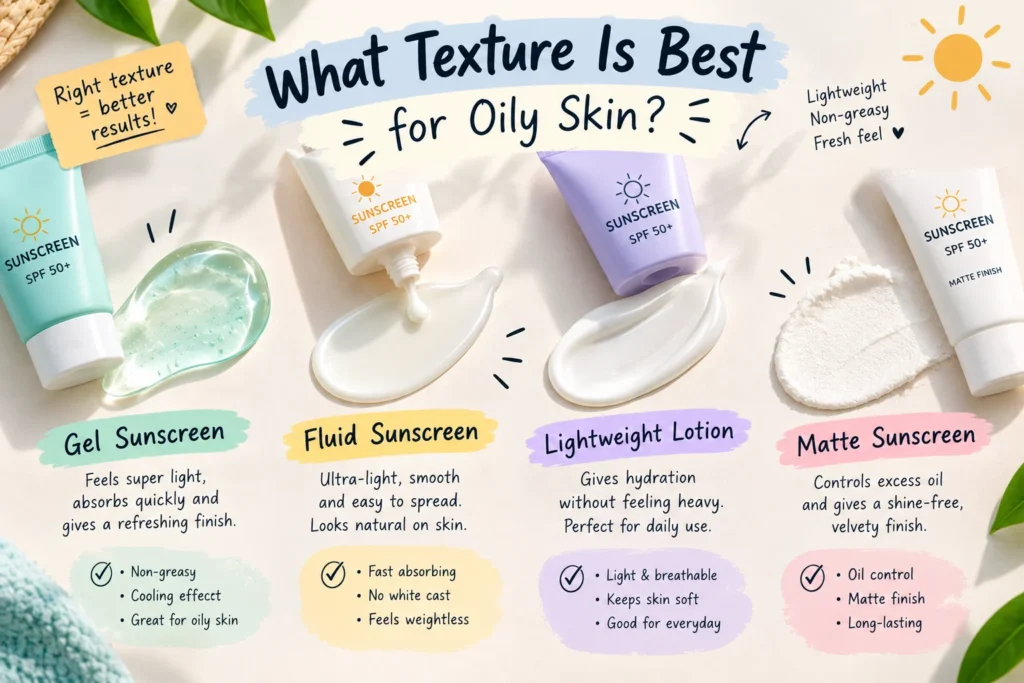
Lightweight Lotion
A lightweight lotion may be a better choice if your oily skin also feels tight or dehydrated after cleansing.
Matte Sunscreen
A matte sunscreen for oily skin is designed to leave less visible shine than a dewy formula.
This can be especially useful if you prefer a more polished appearance or regularly wear makeup.
However, matte does not have to mean extremely dry. If a sunscreen makes your skin feel uncomfortable, flaky, or irritated, it may not be the right choice for you.
Is an Oil-Free Sunscreen Better for Oily Skin?
An oil free sunscreen for oily skin may be appealing if you prefer a lighter texture or dislike the feeling of richer formulas.
But oil-free does not automatically mean acne-safe or perfect for oily skin.
Instead of relying on one label, consider the entire product:
- Is the texture comfortable?
- Does it leave excessive shine?
- Does it layer well with your moisturizer?
- Does it irritate your skin?
- Does it consistently seem to trigger clogged pores or breakouts?
Two people with oily skin can react very differently to the same sunscreen.
Mineral vs. Chemical Sunscreen for Oily Skin
Another common question is whether mineral sunscreen for oily skin is better than chemical sunscreen.
There is no universal answer.
Mineral sunscreens generally use zinc oxide and/or titanium dioxide as UV filters. Chemical sunscreens use organic UV filters. Both types can provide effective sun protection when appropriately formulated and used as directed.
Mineral Sunscreen for Oily Skin
Mineral formulas may be a good option for people who prefer zinc oxide or titanium dioxide, particularly if they find certain other sunscreen formulas irritating.
However, some mineral sunscreens can feel thicker or leave a visible white or gray cast depending on the formulation and skin tone.
Chemical Sunscreen
Chemical sunscreens can be formulated into lightweight, fluid, and clear textures, which some people with oily skin prefer.
However, individual sensitivity varies, so a formula that feels comfortable for one person may irritate another.
So Which One Should You Choose?
Choose the sunscreen that gives you appropriate protection and is comfortable enough for regular use.
The original source also emphasizes that neither mineral nor chemical sunscreen is automatically the universal choice for oily skin and that formulation and individual preference matter.
Sunscreen for Oily and Acne-Prone Skin
If your oily skin is also acne-prone, you may need to pay more attention to texture and how your skin reacts to a product.
Sunscreen does not automatically cause acne. However, a particular formula may contribute to congestion or breakouts in some people.
The complete formula matters—not simply whether the sunscreen uses mineral or chemical UV filters. Other ingredients, along with sweat and your skin’s natural oil, can affect how a product behaves on your face.
If you are prone to breakouts, consider a sunscreen that is:
- Lightweight
- Comfortable for daily use
- Non-comedogenic when that information is available
- Easy to apply evenly
- Suitable for your individual skin sensitivity
If one sunscreen repeatedly causes problems, switching formulas makes more sense than abandoning sun protection altogether.
Can Sunscreen Cause Pimples?
It can happen with a particular product, but that does not mean sunscreen itself is bad for acne-prone skin.
A rich formula may not suit your skin, or several layers of skincare underneath it may make your routine feel too heavy. Sweat and sebum can also affect how products sit on the skin.
If you notice new breakouts after starting a sunscreen, introduce only one new product at a time so you can better identify what your skin is reacting to.
You may also want to try a different texture, such as a lightweight fluid or gel.
Best Face Sunscreen for Oily Skin
When searching for the best face sunscreen for oily skin, focus on products designed to feel comfortable on facial skin.
A facial sunscreen may offer features such as:
- Lightweight texture
- Matte or natural finish
- Clear or low-residue application
- Tinted options
- Makeup-friendly formulation
The facial sunscreen for oily skin that works best for you is ultimately the one that provides suitable UV protection without making you want to skip your morning application.
Korean Sunscreen for Oily Skin
Korean skincare is well known for lightweight sunscreen textures, so it is understandable that many people search for the best Korean sunscreen for oily skin.
Some Korean sunscreens are formulated with thin, fluid, gel, or serum-like textures that can feel comfortable on oily skin.
However, not every Korean sunscreen has a matte finish. Some are designed to leave a hydrated or dewy appearance.
If you have very oily skin, pay attention to the product’s stated finish and texture rather than assuming that every Korean sunscreen will control shine.
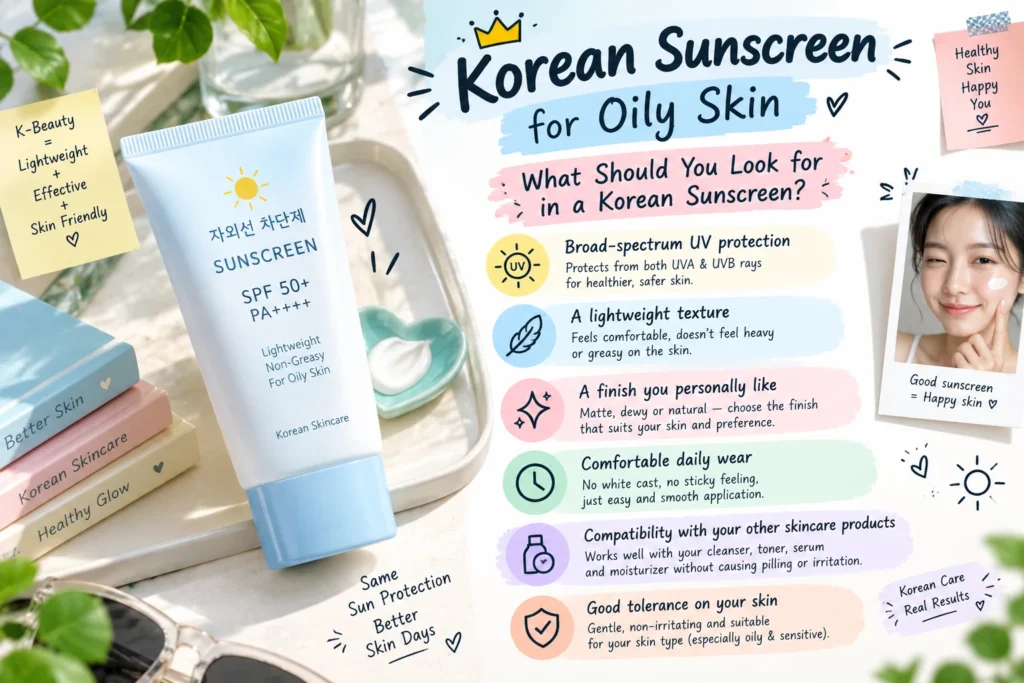
What Should You Look for in a Korean Sunscreen?
Look for:
- Broad-spectrum UV protection
- A lightweight texture
- A finish you personally like
- Comfortable daily wear
- Compatibility with your other skincare products
- Good tolerance on your skin
The country where a sunscreen is made is less important than whether the specific formula works for you.
Best Tinted Sunscreen for Oily Skin
A tinted sunscreen for oily skin can be useful if you want sun protection along with light complexion coverage.
Tinted formulas can help even out the appearance of your skin and may reduce the need for a separate base product.
If you dislike shine, consider a tinted sunscreen with a matte, satin, or natural finish.
Tinted Sunscreen and Different Skin Tones
One potential problem with tinted or mineral sunscreens is that the finish may not look the same on every skin tone.
If you have a deeper complexion, look for a tint that blends naturally without leaving a noticeable white, gray, or ashy appearance.
When possible, test the shade on your face or jawline rather than relying only on the color shown online.
Sunscreen for Oily Skin in Pakistan
If you’re looking for sunscreen for oily skin in Pakistan, your local weather and lifestyle can influence which texture feels comfortable.
Hot weather and humidity can make a rich sunscreen feel even heavier, particularly when layered over moisturizer.
A lightweight gel, fluid, or lotion may therefore be more comfortable for some people.
But don’t choose a sunscreen only because it is marketed specifically for oily skin in Pakistan. Check its SPF, broad-spectrum protection, texture, and how your skin responds to it.
Buying from a reputable seller is also important when purchasing sunscreen, especially for products that are frequently sold through multiple online marketplaces.
Sunscreen for Oily Skin in Pakistan With Price
People searching for sunscreen for oily skin in Pakistan with price are often trying to find something that fits both their skin type and their budget.
The problem is that sunscreen prices can change depending on the brand, seller, product size, availability, promotions, and exchange rates.
For that reason, a product that falls within a particular price range today may not remain there permanently.
Instead of choosing based only on price, compare:
- SPF
- Broad-spectrum protection
- Product size
- Formula and texture
- Your skin’s tolerance
- Seller authenticity
Affordable Sunscreen for Oily Skin in Pakistan
You do not need an expensive skincare routine to protect oily skin from the sun.
An affordable sunscreen for oily skin in Pakistan can be a practical choice if it provides appropriate protection and feels comfortable enough to use consistently.
In fact, a reasonably priced sunscreen that you enjoy applying every morning may be more useful than an expensive formula that feels too greasy to wear.
Sunscreen for Oily Skin Under 500 or 1000 Rupees
Searches such as best sunscreen for oily skin in Pakistan under 500 and best sunscreen for oily skin in Pakistan under 1000 show that budget is an important consideration for many shoppers.
But exact prices change frequently, so it is better not to treat a specific price point as permanent.
When shopping within a budget, compare the product’s:
- SPF and broad-spectrum protection
- Size
- Formula
- Expiration information
- Seller reliability
- Suitability for oily skin
The cheapest sunscreen is not necessarily the best value if you cannot comfortably wear it.
Sunscreen for Oily Skin in India
If you are searching for sunscreen for oily skin India, the same basic principles apply.
Warm weather, humidity, sweating, and outdoor activity can make lightweight textures especially appealing.
Consider gel, fluid, or lightweight lotion formulas if thick creams feel uncomfortable.
You can also compare products based on price and availability, but avoid choosing a sunscreen simply because it is trending or heavily advertised.
Affordable Sunscreen for Oily Skin in India
When searching for an affordable sunscreen for oily skin India, prioritize adequate UV protection and a formula you can apply consistently.
You do not need to spend a large amount of money on sunscreen to build a sensible skincare routine.
The better choice is usually the affordable product that fits your skin, budget, and everyday lifestyle.
Best Sunscreen for Oily Skin Dermatologist Recommended
The phrase best sunscreen for oily skin dermatologist recommended can make it sound as though there is one universally approved sunscreen.
There isn’t.
Dermatologists may recommend different sunscreen formulas depending on a person’s:
- Skin type
- Acne
- Sensitivity
- Pigmentation concerns
- Skin tone
- Outdoor exposure
- Existing skincare treatments
A dermatologist may also recommend a specific product when someone has a particular skin condition or treatment-related concern.
For most people, the more useful approach is to look for an appropriate broad-spectrum sunscreen and then choose a formulation that your skin tolerates well.
What About La Roche-Posay and CeraVe Sunscreens for Oily Skin?
You may also come across searches such as La Roche-Posay sunscreen for oily skin, La Roche Posay sunscreen for oily skin, and CeraVe sunscreen for oily skin.
These are popular brand-specific searches, but the brand name alone does not tell you whether a particular sunscreen will suit your face.
Brands can have several sunscreen formulas with different textures, finishes, and ingredients.
If you’re comparing one of these products, look at the specific sunscreen, not simply the brand.
Consider its SPF, finish, texture, ingredients, and whether it works comfortably with your oily skin.
How Much Sunscreen Should You Apply?
Applying sunscreen too sparingly can reduce the protection you receive compared with the protection indicated on the label.
For facial sunscreen, follow the product’s application directions and apply a generous, even layer to exposed skin.
Don’t reduce the amount simply because your face is oily.
If the correct amount feels too heavy, the better solution is usually to find a more lightweight sunscreen rather than applying an inadequate amount of a heavier one.
When Should You Apply Sunscreen?
Sunscreen generally goes on as the final step of your morning skincare routine.
A simple order can be:
Cleanser → treatment/serum if used → moisturizer if needed → sunscreen → makeup
Allowing earlier skincare layers to settle can also make it easier to apply sunscreen evenly.
If you’re wearing makeup, sunscreen should generally be applied before your makeup rather than mixed into foundation.
How to Wear Sunscreen Without Looking Greasy
If sunscreen makes your oily skin look shinier than you’d like, try simplifying the layers underneath it.
Use a Lightweight Moisturizer
If you need moisturizer, choose a lightweight formula instead of applying a rich cream underneath sunscreen.
Consider a Matte Finish
A matte sunscreen may help if visible shine bothers you.
Don’t Apply Too Many Layers
Several serums, creams, oils, and sunscreen can create a heavier finish than necessary.
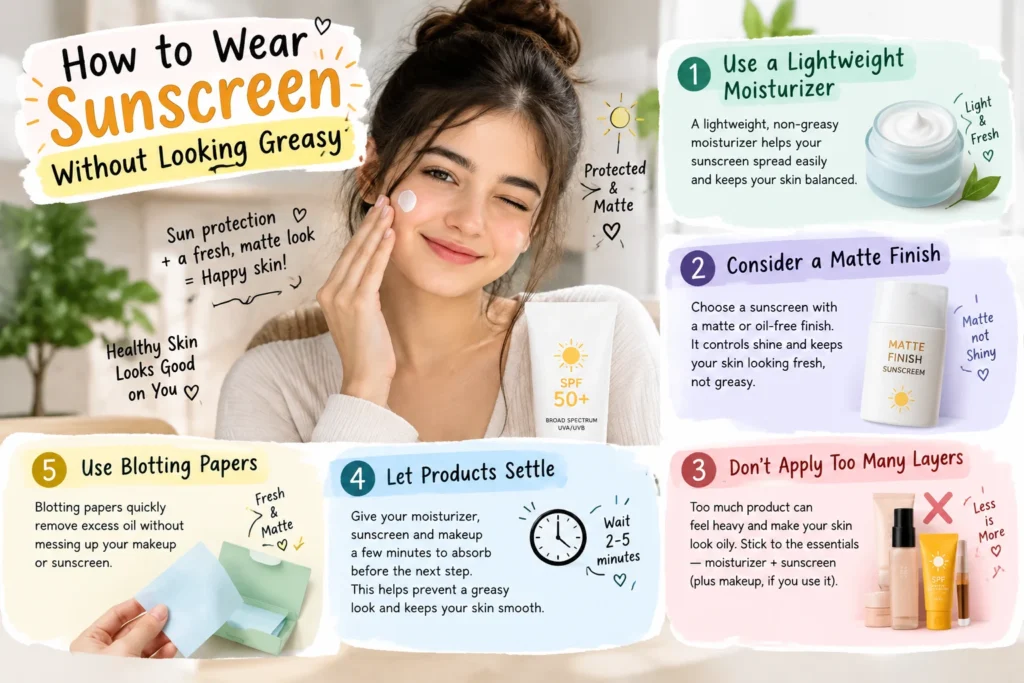
Let Products Settle
Give your skincare products some time to settle before applying makeup.
Use Blotting Papers
If oil appears later in the day, blotting papers can help reduce surface shine without repeatedly washing your face.
Can You Wear Sunscreen Under Makeup?
Yes.
A lightweight sunscreen can work well underneath makeup, especially if it spreads evenly and does not feel overly greasy.
For makeup users, look for a sunscreen that:
- Has a comfortable texture
- Does not pill easily
- Spreads evenly
- Matches your preferred finish
- Works with your foundation or concealer
A matte or satin sunscreen may be particularly useful if your makeup tends to become shiny throughout the day.
How Often Should You Reapply Sunscreen?
One morning application does not provide unlimited protection throughout the day.
Reapplication is particularly important when you are spending extended time outdoors, sweating heavily, swimming, or wiping your face.
For outdoor activities, follow the directions on your sunscreen and reapply as recommended, including after swimming or heavy sweating when required.
If you spend most of your day indoors and away from direct sunlight, your situation may be different from someone who spends hours outside.
Are Sunscreen Sticks or Powders Good for Oily Skin?
Sunscreen sticks and powders can be convenient for touch-ups.
Powder sunscreen may also help reduce the appearance of surface oil, making it appealing for people who dislike shine.
However, they should not automatically replace your main sunscreen application. For your primary application, use your sunscreen according to its directions and apply enough to provide the labeled protection.
A stick or powder can then be useful for convenient reapplication when appropriate.
Common Sunscreen Mistakes for Oily Skin
Skipping sunscreen because your skin is oily
Oily skin still needs UV protection.
Choosing only by the word “matte”
A matte finish can be useful, but SPF, broad-spectrum protection, and overall formulation matter too.
Applying too little
Using a very small amount because you dislike the texture can reduce the protection you receive.
Choosing only by price
A cheap sunscreen is not automatically good, and an expensive sunscreen is not automatically better.
Assuming mineral sunscreen is always better
Mineral and chemical sunscreens can both be suitable. Individual tolerance and formulation matter.
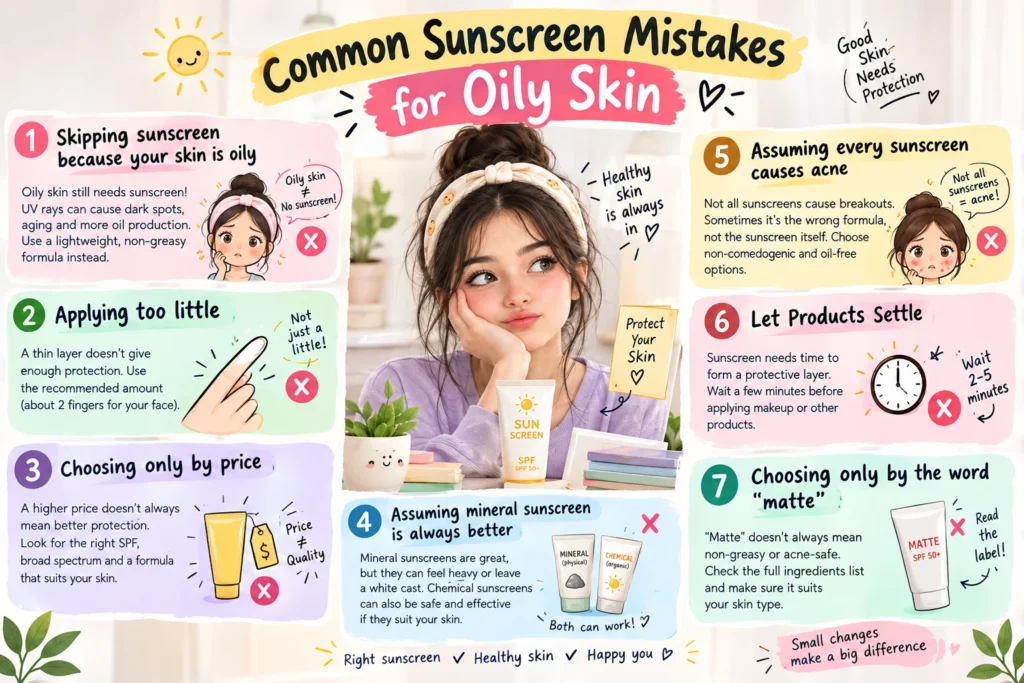
Assuming every sunscreen causes acne
One sunscreen may not suit your skin without all sunscreens being problematic.
Forgetting exposed areas
If your neck, ears, or other areas are exposed to the sun, remember to protect them too.
Simple Morning Routine for Oily Skin
You don’t need a complicated routine to care for oily skin.
A simple morning routine can be:
Step 1: Gentle cleanser
Step 2: Optional serum or acne treatment
Step 3: Lightweight moisturizer if needed
Step 4: Broad-spectrum sunscreen SPF 30 or higher
If your sunscreen provides enough moisture for your skin, you may not need a separate morning moisturizer.
The goal is to create a routine that is simple enough to follow consistently.
Quick Guide: Choosing Sunscreen for Oily Skin
| What you want | What to consider |
|---|---|
| Less shine | Matte or natural finish |
| Lightweight feel | Gel, fluid, or lightweight lotion |
| Higher SPF | SPF 50 |
| Acne-prone skin | Lightweight, non-comedogenic options when available |
| Sensitive skin | Choose a formula your skin tolerates |
| Makeup-friendly sunscreen | Matte or satin finish |
| Added complexion coverage | Tinted sunscreen |
| Budget option | Compare SPF, size, formula, and seller |
| Hot/humid weather | Lightweight textures |
| Outdoor activities | Water-resistant sunscreen when appropriate |
FAQs About Sunscreen for Oily Skin
Which sunscreen is best for oily skin?
The best sunscreen is one that provides broad-spectrum protection, has an appropriate SPF, feels comfortable on your oily skin, and does not consistently cause irritation or breakouts.
Is SPF 50 good for oily skin?
Yes. SPF 50 can be suitable for oily skin. However, SPF level does not determine whether the texture will work for you, so also consider the sunscreen’s formulation and finish.
Is mineral sunscreen good for oily skin?
It can be. Mineral sunscreens containing zinc oxide or titanium dioxide may work well for some people, while others prefer lightweight chemical formulas.
Is Korean sunscreen good for oily skin?
Some Korean sunscreens have lightweight textures that work well for oily skin, but not all are matte. Check the specific product’s finish and formulation.
What is the best tinted sunscreen for oily skin?
Look for a tinted sunscreen that provides appropriate UV protection and has a finish you like. Matte or satin options may be preferable if you dislike extra shine.
Can oily skin use sunscreen every day?
Yes. Oily skin still needs sun protection. Choosing a comfortable sunscreen makes consistent daily use easier.
Can sunscreen make your face oily?
Some sunscreen formulas can leave a shiny or greasy film, particularly if they are richer in texture. A lightweight or matte formula may feel more comfortable.
Should oily acne-prone skin use sunscreen?
Yes. Acne-prone skin still needs sun protection. Choose a lightweight formula that your skin tolerates and consider non-comedogenic options when available.
Can I skip moisturizer if my sunscreen is moisturizing?
You may not need a separate moisturizer if your sunscreen provides enough hydration for your skin. If your skin feels dry or tight, a lightweight moisturizer underneath may be helpful.
What is the best sunscreen for oily skin under makeup?
Look for a lightweight sunscreen with a finish that works with your makeup. Matte or satin formulas may be useful if your skin becomes shiny during the day.
Final Thoughts
Choosing the right sunscreen for oily skin does not have to mean finding one magical product.
Start with broad-spectrum SPF 30 or higher, then choose a texture and finish that you can comfortably wear every day. Gel, fluid, lightweight lotion, matte, mineral, chemical, Korean, and tinted formulas can all have a place depending on your preferences and skin’s needs.
If you’re searching for the best sunscreen for oily skin, best face sunscreen for oily skin, best Korean sunscreen for oily skin, or an affordable option in Pakistan or India, don’t judge a product by popularity or price alone.
The best sunscreen is ultimately one that gives you appropriate sun protection, works with your oily skin, and feels comfortable enough that you will actually use it consistently.
Protect your skin first. Then choose the finish you love. ☀️

Emma Brooks is a skincare writer who creates simple, research-based skincare guides, ingredient insights, and practical routines for healthy skin.