
If your face becomes shiny only a few hours after washing, you may be dealing with excess oil rather than dirty skin. Oily skin home remedies can help manage visible shine and make your skin feel more comfortable, but the goal should not be to remove every trace of oil. Your skin naturally produces sebum, which helps protect and moisturize it.
Oily skin happens when the sebaceous glands produce more sebum than your skin needs. Excess oil can mix with dead skin cells and contribute to clogged pores, blackheads, whiteheads, and pimples. Genetics, hormones, stress, and skincare habits can all influence how oily your skin becomes.
The good news is that you do not need a complicated routine. Gentle cleansing, lightweight hydration, careful use of ingredients such as aloe vera or clay, and avoiding irritating DIY treatments can be more helpful than constantly trying to dry out your skin.
What Causes Oily Skin?
Sebaceous glands beneath your skin produce an oily substance called sebum. A normal amount of sebum is useful because it helps keep your skin protected and comfortable.
When these glands produce excess sebum, your face may become noticeably shiny, particularly around the forehead, nose, and chin. Some people naturally produce more oil because of genetics, while hormonal changes can also affect sebum production.
Stress may influence your skin as well. At the same time, repeatedly washing your face, using harsh products, scrubbing aggressively, or skipping moisturizer can leave your skin irritated and uncomfortable.
That is why the goal of an oily face solution should be balanced skin rather than completely oil-free skin.
Which Home Remedy Is Best for Oily Skin?
There is no single home remedy that works best for everyone. Among simple options, aloe vera and carefully used clay masks may be reasonable choices for people who want a soothing or oil-absorbing step.
However, your everyday skincare routine is generally more important than any DIY mask.
If your skin is oily or acne-prone, start with these basics:
- Wash your face gently twice a day.
- Use a lightweight moisturizer.
- Avoid aggressive scrubbing.
- Apply sunscreen during the day.
- Use blotting papers when needed.
- Introduce only one new product or remedy at a time.
A home remedy should leave your skin comfortable. If it causes burning, itching, redness, or excessive tightness, stop using it.
1. Wash Your Face Gently
One of the simplest things you can do for oily skin is cleanse it properly.
Wash your face in the morning and before bed using a gentle cleanser. If you sweat heavily, cleansing afterward may also be helpful.
It can be tempting to wash your face several times a day to get rid of oily skin, but excessive cleansing can irritate your skin and leave it feeling tight. Harsh soap is not automatically better at controlling oil.
Instead, use a gentle facial cleanser and lukewarm water. Avoid scrubbing your face with a rough towel or washcloth.
What if your face gets oily during the day?
You do not need to wash your face every time you notice shine. Blotting papers can remove some surface oil without repeatedly cleansing your skin.
This can be particularly useful if you are looking for how to stop oily face during the day without constantly washing it.
2. Try Aloe Vera for a Soothing Step
Aloe vera is widely used in skincare because it can have a soothing and cooling feel. A simple aloe-based product or facial gel that is suitable for your skin may be a lightweight option for oily skin.
Apply a thin layer rather than using a thick coating.
If you have never used aloe vera before, test a small amount on an inconspicuous area first. Stop using it if you develop redness, itching, burning, or swelling.
Aloe vera is not a permanent cure for oily skin, but it may be a comfortable addition to a simple routine for some people.
3. Use a Clay Mask Occasionally
Clay can absorb some excess oil from the skin’s surface, making a cosmetic clay mask an option when your face feels particularly greasy.
If you want a face mask for oily skin home remedies, a simple cosmetic clay mask is a better choice than harsh physical scrubs.

Mix the clay according to the product directions and apply a thin layer. Do not leave it on longer than recommended or wait until your skin feels painfully tight.
You also do not need a clay mask every day. Using it too frequently may leave your skin dry or irritated.
4. Oatmeal Can Be a Gentle Option
Finely ground plain oatmeal is another traditional skincare ingredient. It may help soothe irritated skin and can provide gentle cleansing when used carefully.
For a simple oatmeal treatment, mix finely ground plain oats with enough water to make a soft paste. Apply it gently without vigorous rubbing, leave it on briefly, and rinse with lukewarm water.
If you want to make a face pack for oily skin home remedies, keep the recipe simple. There is no need to add lemon juice, baking soda, or abrasive ingredients.
The less irritating the recipe, the better.
5. Honey Can Be Used as a Simple Skin Treatment
Honey is a natural humectant, meaning it can help attract and retain moisture. It also has properties that have made it popular in traditional skincare.
If you want to try honey, use a small amount on clean skin and rinse it thoroughly afterward. Avoid it if you have a known allergy to honey or bee-related products.
Honey should not be considered a guaranteed treatment for acne or excess oil. If you have persistent pimples, a properly formulated acne treatment may be more appropriate than relying on kitchen ingredients.
6. Use Blotting Papers for Quick Oil Control
Blotting papers do not reduce the amount of sebum your glands produce, but they can remove some oil from the surface of your face.
They are particularly useful when you need a quick solution during the day.
Press the paper gently against oily areas instead of rubbing your skin. This can help reduce visible shine without repeatedly washing your face.
It is one of the simplest answers to how to get rid of oily face fast when your main concern is temporary shine.
Can Ice Remove Oily Skin?
Ice may temporarily make your skin feel cool, but it does not permanently reduce sebum production or change your skin type.
So, if you are wondering, “Can ice remove oily skin?” the answer is no. Ice is not a long-term treatment for excess oil.
If you enjoy a cooling sensation, avoid pressing ice directly against your skin for a prolonged period. A consistent skincare routine is much more useful for managing oily skin.
How Can We Reduce Oily Skin?
You cannot always permanently change how much oil your skin naturally produces, especially when genetics and hormones are involved.
However, you can manage excess shine by building consistent habits.
Try these steps:
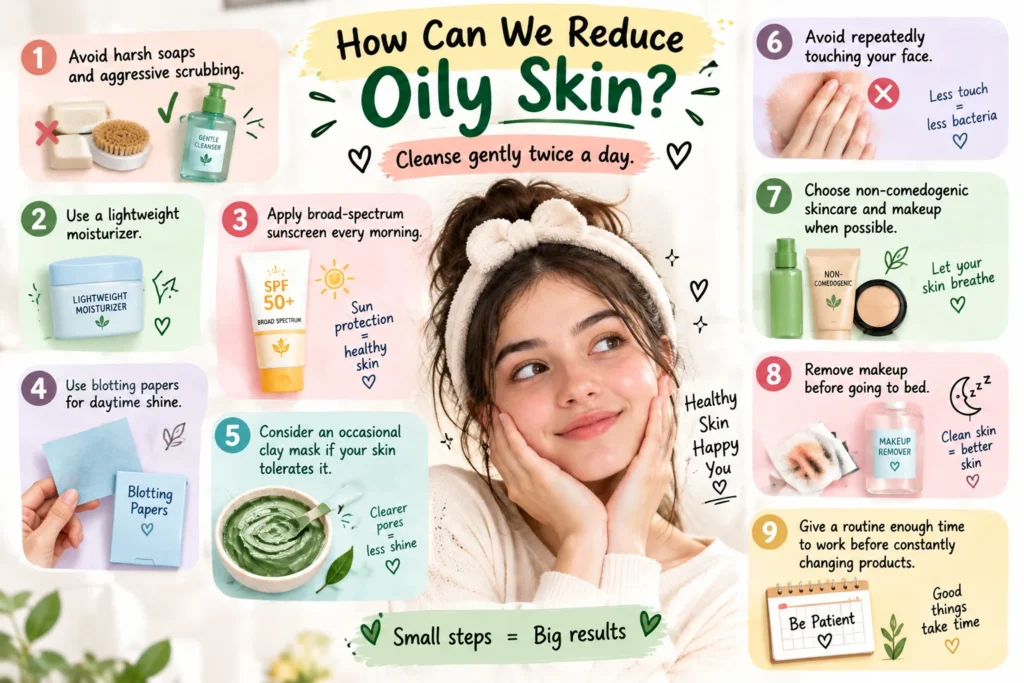
- Cleanse gently twice a day.
- Avoid harsh soaps and aggressive scrubbing.
- Use a lightweight moisturizer.
- Apply broad-spectrum sunscreen every morning.
- Use blotting papers for daytime shine.
- Consider an occasional clay mask if your skin tolerates it.
- Avoid repeatedly touching your face.
- Choose non-comedogenic skincare and makeup when possible.
- Remove makeup before going to bed.
- Give a routine enough time to work before constantly changing products.
These habits are more sustainable than trying to completely dry out your skin.
Can You Permanently Get Rid of Oily Skin?
There is no reliable home remedy that can permanently stop your skin from producing sebum.
Your sebaceous glands have a natural function, and oil production can change with hormones, age, genetics, stress, and other factors.
Instead of searching for how to remove oily skin permanently, focus on controlling excess shine while protecting your skin barrier.
If your skin remains extremely oily despite consistent care—or if you also have frequent acne—a dermatologist can help identify appropriate treatment options.
Oily Skin and Pimples: What Can You Do at Home?
Excess oil can contribute to clogged pores, which may make pimples more likely. However, oily skin is only one factor involved in acne.
If you have pimples on oily skin, avoid trying to scrub them away. Scrubbing, squeezing, and repeatedly drying the skin can increase irritation.
For pimples oily skin home remedies, safer supportive habits include gentle cleansing, avoiding pore-clogging products, keeping your hands away from your face, and choosing skincare specifically designed for acne-prone skin.
If acne is painful, deep, widespread, or leaving dark marks or scars, home remedies may not be enough.
Home Remedies for Oily Skin and Dark Spots
Dark spots left after pimples are common, particularly when acne is picked or squeezed.
Unfortunately, harsh DIY ingredients are not the answer. Lemon juice and other acidic kitchen ingredients can irritate your skin and may make discoloration more difficult to manage.
For home remedies for oily skin and dark spots, concentrate on preventing new breakouts and protecting your skin from the sun.
Daily sunscreen is important because UV exposure can make some types of pigmentation more noticeable or persistent.
If dark spots continue to bother you, consider discussing proven treatment options with a dermatologist rather than experimenting with strong homemade ingredients.
Oily Skin Treatment at Home: What Should Your Routine Look Like?
A simple routine can be more useful than having a cabinet full of DIY treatments.
Morning Routine
1. Gentle cleanser
Wash away overnight oil and sweat without aggressively scrubbing.
2. Lightweight moisturizer
Oily skin still needs hydration. Choose a lightweight, non-comedogenic formula if it works well for you.
3. Sunscreen
Finish your morning routine with a broad-spectrum sunscreen. Choose a texture that feels comfortable enough to use consistently.

Night Routine
1. Cleanser
Remove sunscreen, makeup, dirt, and excess oil.
2. Treatment if needed
If you are treating acne or clogged pores, use an appropriate formulated skincare product rather than relying entirely on DIY remedies.
3. Moisturizer
Use a lightweight moisturizer to support your skin barrier.
This simple skin care routine for oily skin home remedies approach keeps DIY ingredients optional rather than making them the foundation of your skincare.
What About a Night Cream for Oily Skin?
Having oily skin does not mean you should skip nighttime hydration.
Instead of searching specifically for a heavy night cream for oily skin home remedies, choose a lightweight moisturizer that does not leave your face feeling excessively greasy or uncomfortable.
A gel or lightweight lotion may feel more comfortable than a thick cream, particularly if your skin becomes shiny quickly.
What matters most is how your skin responds—not whether a product is marketed specifically as a “night cream.”
Facial for Oily Skin: Are Homemade Facials Helpful?
A homemade facial can feel relaxing, but more steps do not necessarily mean better skincare.
If you want a facial for oily skin home remedies, keep it simple:
- Gentle cleansing
- A short, gentle clay or oatmeal treatment if your skin tolerates it
- Thorough rinsing
- Lightweight moisturizer
- Sunscreen if it is daytime
Avoid combining several masks, scrubs, acids, and kitchen ingredients in one session.
Your face does not need to be scrubbed until it feels “squeaky clean.” That sensation can indicate that your skin has been over-cleansed.
DIY Ingredients to Avoid on Oily or Acne-Prone Skin
Natural does not automatically mean safe for facial skin.
Some popular DIY ingredients can cause irritation, especially when used undiluted or rubbed into the skin.
Be cautious with:
Lemon juice: It can irritate the skin and increase photosensitivity.
Sugar scrubs: Rough particles can create unnecessary physical friction.
Rough almond scrubs: Mechanical exfoliation can be irritating, especially around active acne.
Baking soda: Its high alkalinity can disrupt the skin’s normal environment.
Undiluted essential oils: These can trigger irritation or allergic reactions.
When searching for how to reduce oily skin home remedies, remember that the gentlest option is often the better option.
How Can I Clear My Skin in 7 Days for Oily Skin?
You may notice less shine or fewer irritations within a week if you simplify your routine, but completely clear skin in seven days is not a realistic promise.
If someone claims that a homemade mask can clear oily skin and acne in exactly seven days, be skeptical.
A better seven-day goal is to:
- Stop harsh scrubbing.
- Wash gently morning and night.
- Avoid picking pimples.
- Use clean pillowcases and towels.
- Choose non-comedogenic products when possible.
- Keep your routine consistent.
- Wear sunscreen during the day.
- Avoid introducing several new products at once.
Visible improvement in acne and oiliness can take longer than a few days.
Can Diet Get Rid of Oily Skin?
Food does not affect everyone’s skin in the same way, and avoiding one particular food is not a guaranteed cure for oily skin.
Instead of following extreme food restrictions, focus on a balanced diet and adequate hydration.
If you notice that a particular eating pattern consistently seems to worsen your acne, keeping a simple food and skin diary may help you identify a personal pattern.
However, diet should not replace appropriate skincare or professional acne treatment.
When Should You See a Dermatologist?
Home care may be enough for mild oiliness, but some skin concerns need professional treatment.
Consider seeing a dermatologist if:
- Your acne is painful or deep.
- You frequently develop cyst-like pimples.
- Acne is leaving scars.
- Dark spots continue to increase.
- Your skin is constantly irritated.
- Excess oil remains difficult to manage despite a consistent routine.
- You have tried several approaches without improvement.
A dermatologist can recommend an oily skin treatment based on your skin and symptoms rather than simply trying to dry the skin out.
Common Mistakes People Make With Oily Skin
Trying to control oil can sometimes make the problem feel worse.
Washing too often
Repeated cleansing may irritate your skin and leave it feeling tight.
Skipping moisturizer
Oily skin still needs hydration and barrier support.
Using harsh scrubs
Scrubbing harder does not mean cleaner pores.
Trying every viral DIY
Your skin does not need several different masks in one week.
Picking pimples
Squeezing acne can increase inflammation and contribute to post-acne marks.

Skipping sunscreen
Oily skin still needs protection from UV exposure.
Frequently Asked Questions
What is the best home remedy for oily skin?
There is no single remedy that works for everyone. Gentle cleansing, lightweight hydration, and occasional use of a suitable clay mask are reasonable starting points. Aloe vera may also feel soothing for some people.
How can I reduce oily skin naturally?
You can manage excess oil with gentle cleansing, avoiding irritating products, using blotting papers, choosing lightweight skincare, and keeping your routine consistent. Natural remedies may support your routine but cannot permanently change your skin type.
How do I stop my face from getting oily during the day?
Use a gentle morning cleanser, lightweight moisturizer, and suitable sunscreen. When shine appears, blotting papers can remove some surface oil without repeatedly washing your face.
Can ice remove oily skin?
No. Ice may provide a temporary cooling effect, but it does not permanently reduce sebum production or change oily skin.
Can aloe vera reduce oily skin?
Aloe vera can feel soothing and lightweight, but it should not be considered a permanent treatment for excess oil. Stop using it if it causes irritation.
Are home remedies good for pimples?
Some gentle home-care habits can support acne-prone skin, but DIY remedies are not a replacement for proven acne treatments. Avoid harsh ingredients such as lemon juice and abrasive scrubs.
Can oily skin become dry?
Yes. Oily skin can still become dehydrated or irritated. Over-cleansing, harsh products, weather, and other factors can make oily skin feel dry or tight.
How do I get rid of oily skin fast?
You can temporarily reduce visible shine with blotting papers or a gentle cleanse, but there is no safe home remedy that permanently removes oily skin quickly.
What should I do for oily skin and dark spots?
Focus on preventing new breakouts, avoid picking pimples, use sunscreen daily, and keep your skincare gentle. Persistent pigmentation may need dermatologist-guided treatment.
Is a homemade face pack good for oily skin?
A simple oatmeal or cosmetic clay mask may be suitable for some people when used gently. Avoid harsh combinations and do not use masks so frequently that your skin becomes dry or irritated.
What is the best skincare routine for oily skin at home?
Keep it simple: gentle cleanser, lightweight moisturizer, and sunscreen in the morning; cleanser, an appropriate treatment if needed, and moisturizer at night. Occasional clay or oatmeal treatments can be optional.
Final Thoughts
The goal of managing oily skin is not to eliminate every trace of sebum. Your skin needs some natural oil to remain comfortable and protected.
If you are looking for oily skin home remedies, start with simple and gentle options such as proper cleansing, blotting papers, aloe vera, oatmeal, or an occasional clay mask. Avoid harsh DIY ingredients that can irritate your skin, especially if you already have pimples or dark spots.
Most importantly, give your routine time to work. Oily skin can be influenced by genetics and hormones, so no homemade treatment can guarantee permanent results. If excess oil is accompanied by persistent, painful, or severe acne, a dermatologist can help you find a more appropriate treatment plan.
This article is for general skincare information and is not a substitute for professional medical advice.

Laura Bennett is a skincare writer dedicated to sharing practical skincare routines, ingredient knowledge, and healthy skin tips for every day.