
If your skin becomes shiny within a few hours of washing and you also deal with pimples, blackheads, or clogged pores, you may have oily, acne-prone skin. The good news is that you do not need a complicated 10-step routine to care for it.
The right oily acne prone skincare routine focuses on three essentials: managing excess oil, keeping pores clear, and supporting your skin barrier. A gentle cleanser, a suitable acne treatment, a lightweight moisturizer, and daytime sun protection can provide a much better foundation than constantly switching between products.
Consistency matters more than complexity. Using too many strong products at once can irritate your skin and make it difficult to tell what is actually helping. Start with a few well-suited products and give your routine time to work.
Can Oily Skin Be Acne-Prone?
Yes. Oily skin can be acne-prone because excess sebum can contribute to clogged pores. When oil and dead skin cells build up inside a pore, blackheads, whiteheads, and other types of acne can develop.
However, having oily skin does not automatically mean you will have acne. Acne can also be influenced by hormones, genetics, certain medications, skincare products, and other individual factors.
This is why an oily acne-prone routine should not try to remove every trace of oil. The goal is to manage excess oil while keeping your skin comfortable and supporting its protective barrier.
What Is the Best Skincare Routine for Oily Skin With Acne?
The best routine is one that is simple enough to follow consistently.
Morning
- Gentle cleanser
- Optional acne treatment
- Lightweight, non-comedogenic moisturizer
- Broad-spectrum sunscreen
Night
- Gentle cleanser
- Acne treatment, if appropriate
- Lightweight moisturizer
You do not need every serum, toner, scrub, mask, or eye cream available. Start with the basics and add another product only when there is a clear reason to do so.
Step 1: Cleanse Without Stripping Your Skin
Cleansing is the foundation of an effective oily acne prone skincare routine.
Choose a cleanser that removes excess oil, sweat, sunscreen, and daily buildup without leaving your face painfully tight, burning, or extremely dry.
A gel or foaming cleanser can work well for many people with oily skin, but the texture matters less than how your skin responds to it.
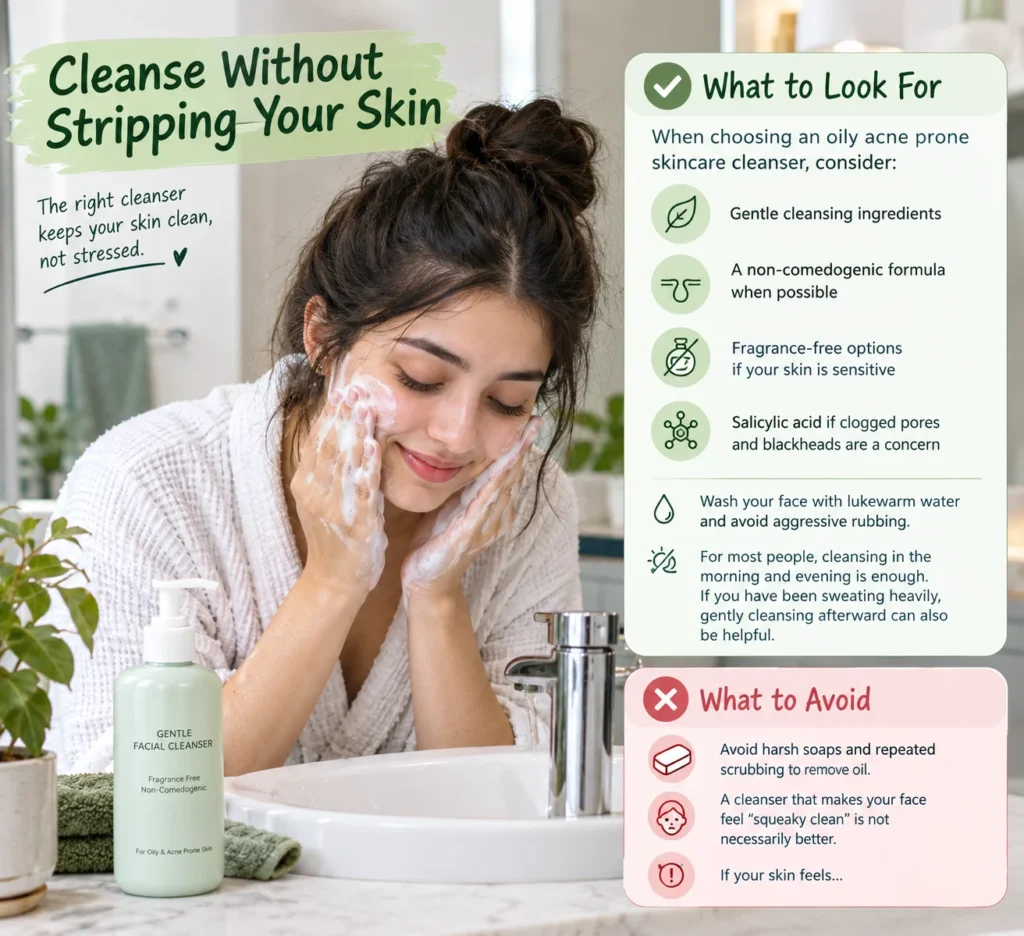
What to Look For
When choosing an oily acne prone skincare cleanser, consider:
- Gentle cleansing ingredients
- A non-comedogenic formula when possible
- Fragrance-free options if your skin is sensitive
- Salicylic acid if clogged pores and blackheads are a concern
Wash your face with lukewarm water and avoid aggressive rubbing.
For most people, cleansing in the morning and evening is enough. If you have been sweating heavily, gently cleansing afterward can also be helpful.
What to Avoid
Avoid harsh soaps and repeated scrubbing to remove oil. A cleanser that makes your face feel “squeaky clean” is not necessarily better.
If your skin feels tight, flaky, burning, or uncomfortable after cleansing, consider switching to a gentler formula.
Step 2: Use an Acne-Focused Ingredient
If acne is your main concern, cleansing alone may not be enough. A targeted acne treatment can help address specific types of breakouts.
Two commonly used ingredients are salicylic acid and benzoyl peroxide, but they work in different ways.
Salicylic Acid
Salicylic acid can help exfoliate the skin and unclog pores, making it particularly useful for oily or congested skin.
It may be helpful if you frequently experience:
- Blackheads
- Whiteheads
- Clogged pores
- Small bumps
- Excess oil
If you are new to salicylic acid, start according to the product directions and pay attention to how your skin responds. Using it too frequently can cause dryness or irritation.
Benzoyl Peroxide
Benzoyl peroxide is commonly used for inflammatory acne, including red pimples.
It works differently from salicylic acid and may be useful when inflamed breakouts are your main concern.
Because benzoyl peroxide can cause dryness or irritation, introduce it carefully and follow the instructions on the product.
Do Not Start Everything Together
One of the biggest mistakes in oily acne prone skincare is using too many active ingredients at once.
For example, adding salicylic acid, benzoyl peroxide, retinoids, exfoliating acids, scrubs, and multiple acne masks together can increase irritation.
More active ingredients do not necessarily mean faster results.
Start with one targeted acne treatment, unless a healthcare professional has recommended a different combination, and see how your skin responds.
Step 3: Moisturize Oily Acne-Prone Skin
If your face is oily, you may wonder whether you really need moisturizer.
Yes, you do.
Oily skin still needs hydration and barrier support. A suitable moisturizer can help keep your skin comfortable, especially when acne treatments cause dryness.
When choosing a moisturizer for oily or acne-prone skin, look for one that is:
- Lightweight
- Non-comedogenic
- Comfortable under sunscreen
- Suitable for your skin type
- Fragrance-free if you are sensitive
Ingredients such as ceramides, glycerin, hyaluronic acid, and niacinamide can be useful depending on the formulation and your individual skin needs.
You do not have to use a heavy cream if your skin dislikes rich textures. A lightweight lotion or gel-cream may feel more comfortable.
Step 4: Protect Your Skin From UV Rays
Sunscreen is an important part of an oily acne prone skincare routine, particularly if you are concerned about post-acne marks or are using treatments that can make your skin more sensitive.
Choose a broad-spectrum sunscreen that feels comfortable and does not leave your skin excessively greasy.
For oily skin, you may prefer formulas described as:

- Oil-free
- Non-comedogenic
- Lightweight
- Gel or fluid
- Matte or natural finish
Apply sunscreen as the final step of your morning routine and reapply according to the product directions and your level of sun exposure.
Sunscreen does not treat acne itself, but protecting your skin from UV exposure helps reduce sun-related skin damage and can be especially useful when dark marks remain after breakouts.
What Oily Acne-Prone Skincare Products Do You Actually Need?
You do not need a bathroom shelf full of products.
A basic routine can contain four essentials:
| Product | Main purpose |
|---|---|
| Gentle cleanser | Removes oil, sweat, sunscreen, and buildup |
| Acne treatment | Targets specific acne concerns |
| Lightweight moisturizer | Supports hydration and the skin barrier |
| Sunscreen | Protects skin from UV exposure |
Depending on your concerns, you may later add a serum or another treatment.
When choosing oily acne prone skincare products, focus on the product’s purpose and formulation rather than buying something simply because it is marketed for oily skin.
Best Ingredients for Oily Acne-Prone Skin
Different ingredients can help address different concerns.
Salicylic Acid
Useful for clogged pores, blackheads, whiteheads, and oily or congested skin.
Benzoyl Peroxide
Commonly used for inflammatory acne and red pimples.

Niacinamide
Niacinamide can support the skin barrier and may help improve the appearance of excess oil and redness for some people.
Ceramides
Ceramides are naturally occurring components of the skin barrier. Skincare products containing ceramides can help support and maintain that barrier.
Hyaluronic Acid
Hyaluronic acid is a hydrating ingredient that helps the skin retain water. It can be included in lightweight products that do not feel greasy.
Retinoids
Retinoids can be useful for several types of acne and may also improve skin texture over time. However, they can cause irritation, particularly when introduced too quickly. Follow product directions and consider professional guidance if you are unsure which retinoid is appropriate for you.
How to Stop Oily Skin From Causing Acne
You cannot completely stop your skin from producing oil, and oily skin itself is not something that needs to be “cured.”
Instead, focus on managing excess oil and reducing factors that can contribute to clogged pores and irritation.
Helpful habits include:
- Cleanse gently twice a day
- Choose non-comedogenic skincare when possible
- Avoid repeatedly touching your face
- Remove makeup before going to bed
- Clean items that regularly touch your face
- Avoid picking or squeezing pimples
- Use an appropriate acne treatment
- Moisturize regularly
- Protect your skin from the sun
Remember that acne is not simply caused by having a dirty face. Washing aggressively or scrubbing harder is not the solution.
Night Skincare Routine for Oily Acne-Prone Skin
Your night skin care routine for oily acne prone skin can be simple.
1. Remove Makeup or Sunscreen
If you wear makeup or water-resistant sunscreen, remove it thoroughly before cleansing.
2. Cleanse
Use your gentle cleanser and rinse thoroughly.
3. Apply Your Acne Treatment
Use your selected acne treatment according to its instructions.
If you use a retinoid, introduce it gradually if appropriate for you, and avoid adding several potentially irritating active ingredients at the same time.
4. Moisturize
Finish with a lightweight moisturizer.
That’s it. You do not need multiple serums simply because it is nighttime.
What About Oily Skin Care Routine Home Remedies?
Searches for an oily skin care routine home remedies are common, but natural does not automatically mean safe for acne-prone skin.
Some ingredients commonly promoted online, such as concentrated lemon juice, baking soda, harsh scrubs, or undiluted essential oils, can irritate the skin.
They are not necessary for an effective acne routine.
If you want a simple routine at home, stick with gentle cleansing, an appropriate acne treatment, moisturizer, and sunscreen rather than experimenting with potentially irritating kitchen ingredients.
Can You Take Inspiration From Korean Skincare?
Korean skincare is often associated with lightweight layers, hydrating products, and attention to the skin barrier. You can take inspiration from this approach without copying a complicated 10-step routine.
For oily acne-prone skin, a simplified Korean-inspired routine could include:
Morning:
Gentle cleanser → lightweight hydrating product → moisturizer → sunscreen
Night:
Cleanser → acne treatment → lightweight moisturizer
The important part is not whether a product is Korean. What matters is whether the formulation suits your skin and whether the routine is simple enough for you to use consistently.
How to Choose Skincare Products for Daily Use
When looking for oily skin products for daily use, think about your actual skin concerns rather than choosing products based only on marketing claims.
If your main concern is shine, lightweight products may feel more comfortable.
If you have blackheads and clogged pores, a salicylic acid product may be useful.
If you have frequent red pimples, benzoyl peroxide may be an option.
If acne treatments leave your skin dry or irritated, prioritize gentle cleansing and a suitable moisturizer.
If your skin is both oily and sensitive, introduce new products one at a time so you can identify what works for you.
Common Oily Acne-Prone Skincare Mistakes
Even a good routine can become less effective when you make these common mistakes.
Washing Too Aggressively
Scrubbing harder does not mean cleaner skin. Excessive rubbing can irritate your skin.
Skipping Moisturizer
Oily skin still needs hydration and barrier support.
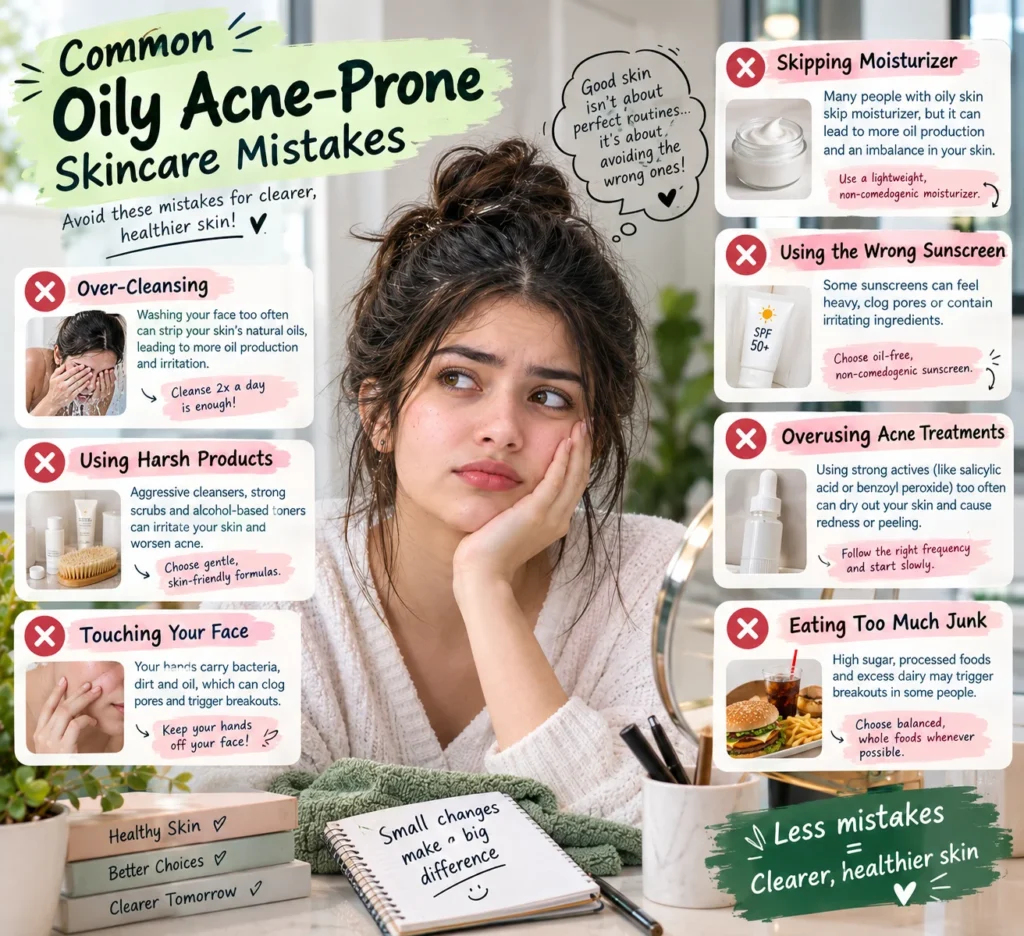
Using Too Many Active Ingredients
Combining several strong treatments can increase dryness and irritation without necessarily producing faster results.
Picking Pimples
Squeezing or picking breakouts can increase inflammation and raise the risk of lingering marks and scarring.
Changing Products Too Quickly
Constantly switching products makes it difficult to know what is helping or irritating your skin. Give a routine reasonable time to work unless you develop significant irritation.
Following Every DIY Trend
Lemon juice, baking soda, rough scrubs, and undiluted essential oils are not necessary for good acne care and may irritate your skin.
When Should You See a Dermatologist?
A simple skincare routine can help manage mild acne, but some breakouts need professional treatment.
Consider seeing a dermatologist if you have:
- Deep or painful pimples
- Severe or persistent acne
- Breakouts that are leaving scars
- Acne that continues to worsen despite consistent care
- Significant dark marks after breakouts
- Acne that is affecting your confidence or daily life
A dermatologist can identify the type and severity of your acne and recommend treatment based on your skin and medical history.
If you are unsure whether an acne treatment is suitable for you, professional advice can also help you choose an appropriate option.
Frequently Asked Questions
What is the best skincare routine for oily skin with acne?
A simple routine usually includes a gentle cleanser, an appropriate acne treatment, a lightweight non-comedogenic moisturizer, and broad-spectrum sunscreen during the day. The best combination depends on your skin type, acne severity, and individual needs.
How to clear oily acne skin?
You cannot clear oily acne skin overnight. Consistent gentle cleansing, an appropriate acne treatment, moisturizer, and sun protection can help manage breakouts over time. Avoid picking pimples and using harsh DIY treatments.
Can oily skin be acne-prone?
Yes. Oily skin can be more prone to clogged pores and certain types of acne, but having oily skin does not guarantee that you will develop acne.
How to stop oily skin from causing acne?
Focus on managing excess oil and reducing clogged pores rather than trying to remove all oil from your skin. Use suitable skincare products, avoid unnecessary irritation, and choose an acne treatment appropriate for your concerns.
Is salicylic acid good for oily acne-prone skin?
Salicylic acid can be useful for oily, congested skin because it helps exfoliate the skin and unclog pores. It may be particularly helpful for blackheads and whiteheads. Start according to the product directions if you are new to it.
Should oily acne-prone skin use moisturizer?
Yes. Choose a lightweight, non-comedogenic moisturizer that feels comfortable on your skin. Moisturizing helps support the skin barrier, particularly when acne treatments cause dryness.
How often should I wash oily acne-prone skin?
For most people, gentle cleansing twice a day is enough. You may also want to cleanse after heavy sweating. More frequent aggressive washing is not necessarily better.
Can I use both salicylic acid and benzoyl peroxide?
They can sometimes be included in the same overall treatment plan, but using multiple acne treatments can increase dryness and irritation. If you are new to either ingredient, consider starting with one and follow the product directions or advice from a healthcare professional.
Should I exfoliate if I have acne?
You do not necessarily need a separate exfoliating product if you are already using an acne treatment that exfoliates the skin. Physical scrubs can be irritating, so avoid aggressive scrubbing. If you want to add a chemical exfoliant, introduce it cautiously and avoid overloading your routine with active ingredients.
What if my skin becomes very dry after cleansing?
Your cleanser may be too drying for your skin. Try a gentler formula, avoid excessive washing, and use a suitable moisturizer. If irritation continues, stop products that appear to be causing the problem and consider professional advice.
A Simple Oily Acne-Prone Skincare Routine
If you are overwhelmed by all the products available, start here.
☀️ Morning
Gentle cleanser: Remove overnight oil and buildup without aggressive scrubbing.
Optional acne treatment: Use an appropriate acne-supporting product if needed.
Lightweight moisturizer: Choose a non-comedogenic formula that feels comfortable.
Sunscreen: Finish with broad-spectrum sun protection.
🌙 Night
Remove makeup and sunscreen: Especially if you have been wearing makeup or water-resistant sunscreen.
Gentle cleanser: Cleanse without rubbing aggressively.
Acne treatment: Use one suitable active according to the product directions.
Moisturizer: Finish by supporting your skin’s hydration and barrier.
Keep the routine consistent and adjust it if your skin becomes irritated.
Final Thoughts
Good oily acne-prone skincare is not about making your face completely oil-free. Your skin naturally produces sebum, and trying to eliminate every trace of oil can lead to unnecessary dryness and irritation.
Instead, build your routine around four basics: gentle cleansing, targeted acne care, lightweight hydration, and sun protection.
Start with the essentials and introduce new treatments gradually. Avoid harsh scrubbing, excessive active ingredients, and questionable home remedies. Most importantly, pay attention to how your skin responds rather than following a routine simply because it is trending online.
If your acne is painful, persistent, severe, or leaving scars, skincare products alone may not be enough. A dermatologist can help you find a treatment plan appropriate for your skin.
The goal is not perfect skin overnight. The goal is healthier, calmer, more manageable skin through a routine you can actually stick with.

Sophie Carter is a skincare writer who shares science-backed skincare routines, ingredient insights, and everyday tips for healthier-looking skin.