
Waking up with a shiny face, noticing greasy skin by lunchtime, or dealing with frequent pimples can be frustrating. If your face becomes oily only a few hours after washing it, you may wonder how to reduce oily face problems without drying out or irritating your skin.
The good news is that you don’t need a complicated routine or dozens of skincare products. Oily skin can often be managed with gentle cleansing, lightweight hydration, sun protection, and a few consistent habits.
Your skin naturally produces sebum, an oil that helps protect the skin barrier. The goal isn’t to remove every trace of oil. Instead, the aim is to control excess oil, keep pores clear, and maintain healthy, comfortable skin.
In this guide, you’ll learn what causes an oily face, how to manage oily skin at home, how to reduce shine during the day, which ingredients may help, which DIY remedies to avoid, and when professional treatment may be worthwhile.
What Causes an Oily Face?
Your skin contains sebaceous glands that produce sebum, a natural oil made from lipids. Sebum helps protect the skin and prevents excessive dryness.
Some people naturally produce more sebum than others. Several factors can influence oil production, including:
| Factor | How It May Affect Skin |
|---|---|
| Genetics | Your natural skin type can run in families |
| Hormones | Puberty and hormonal fluctuations can increase oil production |
| Stress | Stress can influence hormones and may worsen acne in some people |
| Hot or humid weather | Heat and humidity can make skin feel oilier |
| Certain medications | Some medicines can affect oil production or acne |
| Irritating skincare | Harsh products can damage the skin barrier and cause dryness or irritation |
During puberty, hormonal changes can make the sebaceous glands more active. That’s one reason oily skin and acne are particularly common among teenagers.
When excess sebum mixes with dead skin cells, pores may become clogged. This can contribute to blackheads, whiteheads, and pimples.
The key idea: oily skin isn’t dirty, and you don’t need to strip away all the oil. Balanced skincare is more useful than trying to keep your face completely matte all day.
How Can I Get Rid of Oily Skin at Home?
You can’t permanently change your genetically determined skin type, but you can manage excess oil and reduce visible shine.
A simple routine is a good place to start.
Basic Routine
| Time | Routine |
|---|---|
| Morning ☀️ | Gentle cleanser → Lightweight moisturizer → SPF 30+ sunscreen |
| Evening 🌙 | Gentle cleanser → Acne treatment if needed → Lightweight moisturizer |
Daily habits that can help
- Wash your face gently twice a day.
- Cleanse after heavy sweating when practical.
- Choose lightweight, non-comedogenic skincare products.
- Use sunscreen every morning.
- Try blotting papers when your skin becomes shiny during the day.
- Avoid harsh scrubs and aggressive cleansing.
- Keep makeup brushes and other items that touch your face clean.
- Give a new routine time to work instead of constantly switching products.
Consistency is more important than having a large collection of skincare products.
Step-by-Step Oily Skin Treatment at Home
1. Wash Your Face Gently
Cleansing removes excess oil, sweat, sunscreen, makeup, and daily buildup from the skin.
Wash your face twice a day, usually in the morning and before bed. If you’ve been sweating heavily, cleansing afterward can also be helpful.
How to wash oily skin correctly
- Use lukewarm water rather than very hot water.
- Apply a small amount of gentle cleanser.
- Massage it over your face with your fingertips.
- Don’t scrub aggressively.
- Rinse thoroughly.
- Pat your skin dry with a clean towel.
Washing repeatedly every time you notice shine isn’t necessary. Over-cleansing can cause dryness and irritation without addressing the underlying reason your skin produces oil.
2. Consider Salicylic Acid for Oily, Acne-Prone Skin
If oily skin is accompanied by blackheads, clogged pores, or mild acne, salicylic acid may be a useful ingredient.
Salicylic acid is a beta hydroxy acid (BHA) that helps exfoliate inside pores and can be particularly useful for acne-prone skin.
It may help with:
- Blackheads
- Whiteheads
- Clogged pores
- Excess surface oil
- Mild acne
How to use salicylic acid carefully
- Start with a lower frequency if you’re new to it.
- Follow the directions on the product.
- Don’t use more than recommended.
- Introduce one active ingredient at a time.
- Stop or reduce use if you develop significant burning, redness, or irritation.
More active ingredients don’t automatically mean faster results.
3. Don’t Skip Moisturizer
One of the most common mistakes people make with oily skin is assuming that moisturizer isn’t necessary.
Oily skin still needs hydration.
A moisturizer helps support the skin barrier and may make acne treatments easier to tolerate.
Look for products that are:
- Lightweight
- Non-comedogenic
- Comfortable on your skin
- Fragrance-free if your skin is sensitive
- Gel or lotion-based if you prefer a lighter texture
Ingredients such as glycerin and ceramides can also be useful in moisturizers because they support skin hydration and the skin barrier.
You don’t have to use a thick cream if a lightweight lotion or gel works comfortably for your skin.
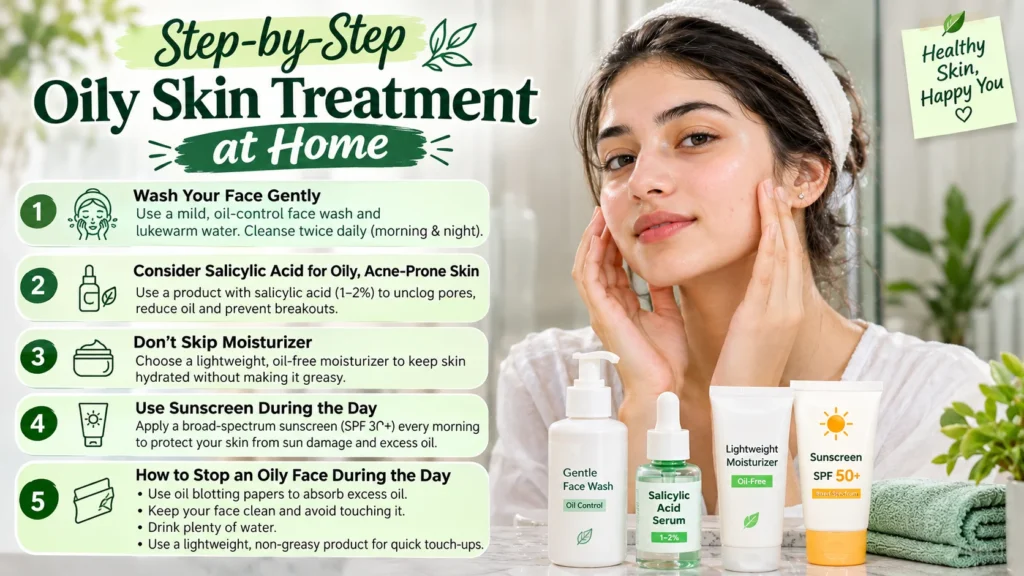
4. Use Sunscreen During the Day
Sun protection is important even when your main concern is oily skin.
Daily sunscreen helps protect against UV damage and can be especially useful if you’re dealing with post-acne dark marks.
When choosing sunscreen for oily or acne-prone skin, consider:
| Feature | Why It May Help |
|---|---|
| SPF 30 or higher | Provides meaningful UV protection |
| Broad-spectrum | Protects against UVA and UVB radiation |
| Non-comedogenic | Less likely to contribute to clogged pores |
| Lightweight texture | More comfortable for oily skin |
| Oil-free or matte finish | May reduce the greasy feeling |
Apply sunscreen in the morning and reapply according to the product’s directions, especially during prolonged outdoor exposure, sweating, or swimming.
5. How to Stop an Oily Face During the Day
If your face looks shiny a few hours after washing, you don’t need to repeatedly cleanse it.
Instead, try these simple daytime strategies:
| Strategy | What to Do |
|---|---|
| Blotting papers | Gently press them against oily areas without rubbing |
| Avoid touching your face | Keep unnecessary hand-to-face contact to a minimum |
| Use lightweight products | Avoid layering several heavy products |
| Keep makeup tools clean | Clean brushes and sponges regularly |
| Remove makeup before bed | Don’t sleep with makeup on |
Blotting papers can temporarily reduce visible shine without requiring you to remove your entire skincare routine.
Some daytime shine is completely normal. Your sebaceous glands continue producing sebum throughout the day.
6. What Decreases Oily Skin?
There isn’t one ingredient or home remedy that permanently switches off sebum production.
However, some skincare approaches may help manage excess oil and acne.
Ingredients commonly used for oily skin
| Ingredient | What It May Help With |
|---|---|
| Salicylic acid | Clogged pores and mild acne |
| Niacinamide | Oil appearance and skin-barrier support |
| Benzoyl peroxide | Inflammatory acne |
| Azelaic acid | Acne and post-acne dark marks |
| Lightweight moisturizer | Hydration without a heavy feel |
The right ingredient depends on your particular skin concerns. You don’t need to use all of them.
The goal is oil control, not complete oil removal.
7. Key Ingredients for Oily, Acne-Prone Skin
If you’re building a routine, understanding what different ingredients do can help you avoid unnecessary products.
| Ingredient | Main Role | Often Used For |
|---|---|---|
| Salicylic acid | Helps exfoliate inside pores | Blackheads and clogged pores |
| Niacinamide | Supports the skin barrier and may reduce the appearance of oiliness | Oily or acne-prone skin |
| Benzoyl peroxide | Helps reduce acne-causing bacteria and inflammation | Inflammatory acne |
| Azelaic acid | Helps with acne and uneven pigmentation | Acne with dark marks |
| Hyaluronic acid | Helps attract and retain moisture | Skin that feels dehydrated |
Introduce new active ingredients gradually. Using several strong products at once can increase the risk of irritation.
8. Products and Habits to Avoid
Trying to remove oil aggressively can sometimes make your skincare routine harder on your skin.
Be cautious with:
| Product or Habit | Why to Avoid It |
|---|---|
| Harsh physical scrubs | Can irritate acne-prone skin |
| Very frequent cleansing | May cause dryness and irritation |
| Products that sting or burn | Can compromise skin comfort and barrier function |
| Rough pore strips | Can irritate sensitive skin |
| Heavy products that clog your pores | May contribute to breakouts in some people |
| DIY lemon or baking soda treatments | Can cause irritation or chemical burns |
A product doesn’t have to make your skin feel extremely tight to be effective.
Home Remedies for Oily Skin and Pimples: What Actually Helps?
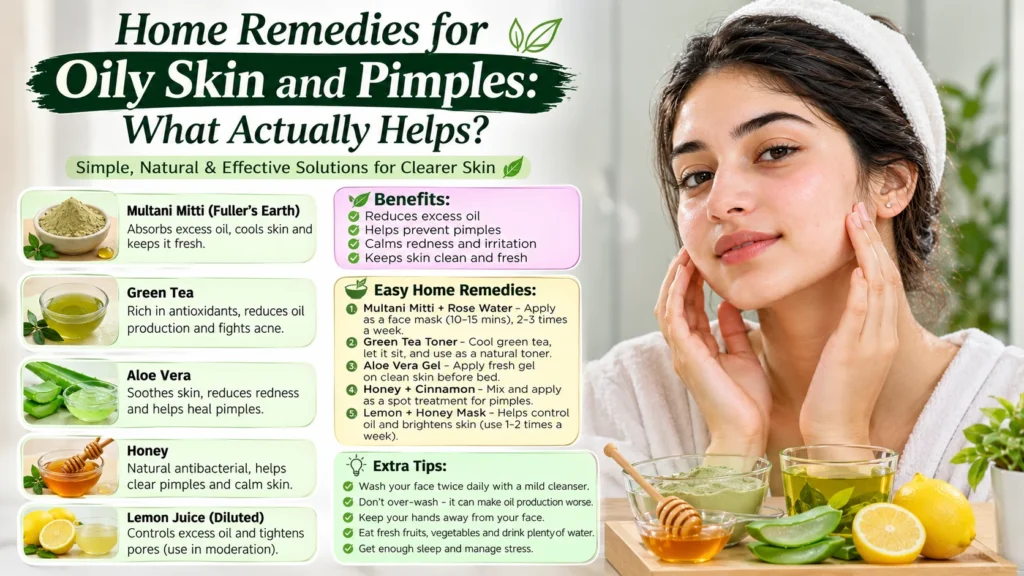
Searches for home remedies for oily skin and pimples often lead to homemade masks and kitchen ingredients.
But natural doesn’t automatically mean safe for facial skin.
Avoid these DIY ingredients
Lemon juice:
It can irritate the skin and increase sensitivity to sunlight.
Baking soda:
Its high alkalinity can disrupt the skin barrier and cause irritation.
Undiluted vinegar:
It can be irritating and may cause chemical burns.
Toothpaste:
Toothpaste isn’t formulated as an acne treatment and can irritate facial skin.
Rough sugar, nut, or almond scrubs:
Physical abrasion can aggravate irritated or acne-prone skin.
Undiluted essential oils:
Some can trigger irritation or allergic reactions.
Better home habits
Instead of experimenting with harsh DIY recipes, try simple habits such as:
- Washing gently with lukewarm water
- Using clean towels
- Changing pillowcases regularly
- Keeping hair and heavy hair products away from your face
- Cleaning makeup tools
- Removing makeup before bed
- Using blotting papers for excess daytime shine
These habits aren’t miracle cures, but they’re practical ways to support healthier skin.
What About Aloe Vera?
Aloe vera can feel soothing on some irritated skin, but it shouldn’t be considered a replacement for proven acne treatment.
If you use an aloe product, choose one formulated for skin and stop using it if it causes irritation.
What About Honey?
Honey is sometimes used in DIY skincare because of its moisturizing and antimicrobial properties. However, a homemade honey mask isn’t a proven treatment for oily skin or acne.
For persistent breakouts, an evidence-based acne routine is generally more dependable than repeatedly trying homemade masks.
Can Ice Remove Oily Skin?
No. Ice cannot permanently remove oily skin or stop your sebaceous glands from producing sebum.
Cold temperatures may temporarily make the skin feel refreshed and can reduce puffiness, but they don’t provide a permanent solution for oily skin.
What ice may do
- Temporarily cool the skin
- Make the face feel refreshed
- Temporarily reduce puffiness
What ice cannot do
- Permanently stop oil production
- Cure oily skin
- Cure acne
- Permanently shrink pores
If you choose to use something cold on your skin, don’t place ice directly against your skin for prolonged periods. A cloth barrier is safer.
For long-term oil management, focus on gentle cleansing, appropriate skincare ingredients, moisturizer, and sun protection.
How to Manage Oily Skin and Dark Spots
Pimples can leave behind dark marks after they heal. Picking or squeezing acne can increase inflammation and raise the risk of lingering marks and scars.
If you have oily skin and post-acne dark spots, keep your routine simple.
Morning
Gentle cleanser → Lightweight moisturizer → Sunscreen
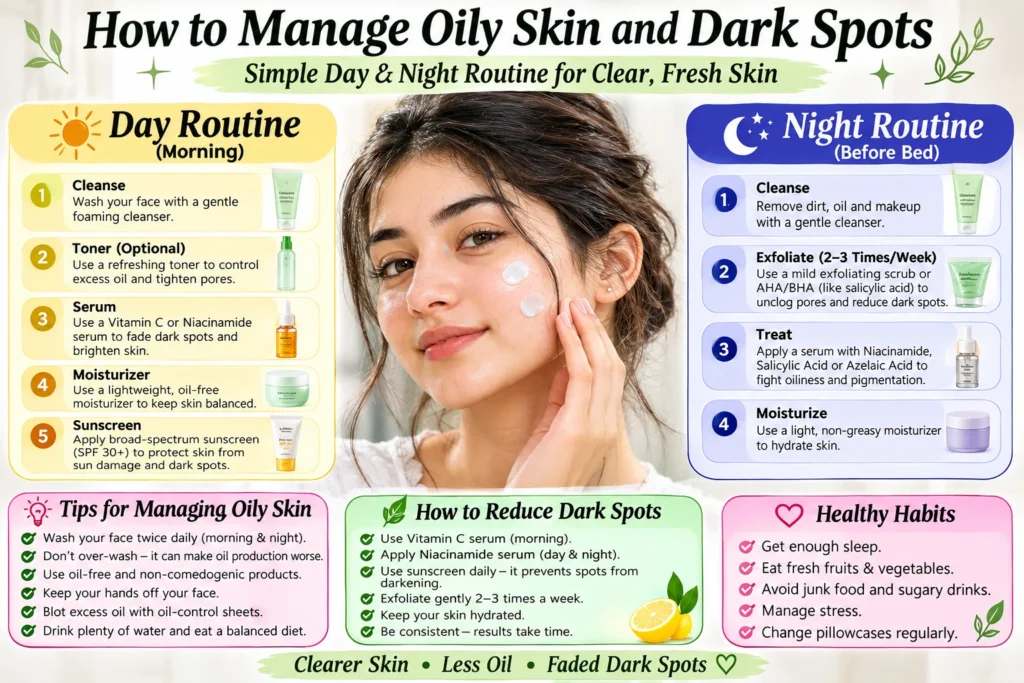
Night
Gentle cleanser → Appropriate acne treatment → Moisturizer
Ingredients such as niacinamide and azelaic acid may be useful for some people dealing with acne and uneven pigmentation.
Most importantly, don’t pick at active pimples and protect your skin from the sun.
How to Get Rid of an Oily Face Fast
If you’re looking for how to get rid of oily face fast, it’s important to separate temporary shine control from long-term treatment.
Quick ways to reduce visible shine
- Gently press blotting paper onto oily areas.
- Avoid rubbing your face.
- Don’t layer additional heavy products.
- Use a lightweight moisturizer.
- If you’re wearing makeup, choose products designed for oily or acne-prone skin.
These steps can make your skin look less greasy quickly, but they won’t permanently change your skin type.
Long-term improvements in clogged pores and acne usually require consistent skincare over time.
Can You Improve Oily Skin in 7 Days?
You may notice that your skin feels cleaner or less irritated after simplifying your routine for a week, but there is no guaranteed seven-day cure for oily skin.
A simple seven-day reset can help you establish better habits:
| Morning | Evening |
|---|---|
| Gentle cleanser | Gentle cleanser |
| Lightweight moisturizer | One suitable acne treatment, if needed |
| SPF 30+ sunscreen | Lightweight moisturizer |
During the week:
- Don’t pick your pimples.
- Avoid harsh scrubs.
- Don’t introduce several new products.
- Keep your hands away from your face.
- Stay consistent.
If your skin becomes irritated, simplify your routine instead of adding more products.
Oily Face Remedy: Simple Options to Try
If you’re searching for an oily face remedy, start with the simplest solution for your specific concern.
| Concern | Simple Approach |
|---|---|
| Excess shine | Blotting papers |
| Clogged pores | Consider salicylic acid if appropriate |
| Irritation | Gentle cleanser and fragrance-free moisturizer |
| Pimples | Appropriate acne treatment and no squeezing |
| Dark marks | Sunscreen and avoiding acne picking |
You don’t need a complicated homemade mask for every skin problem.
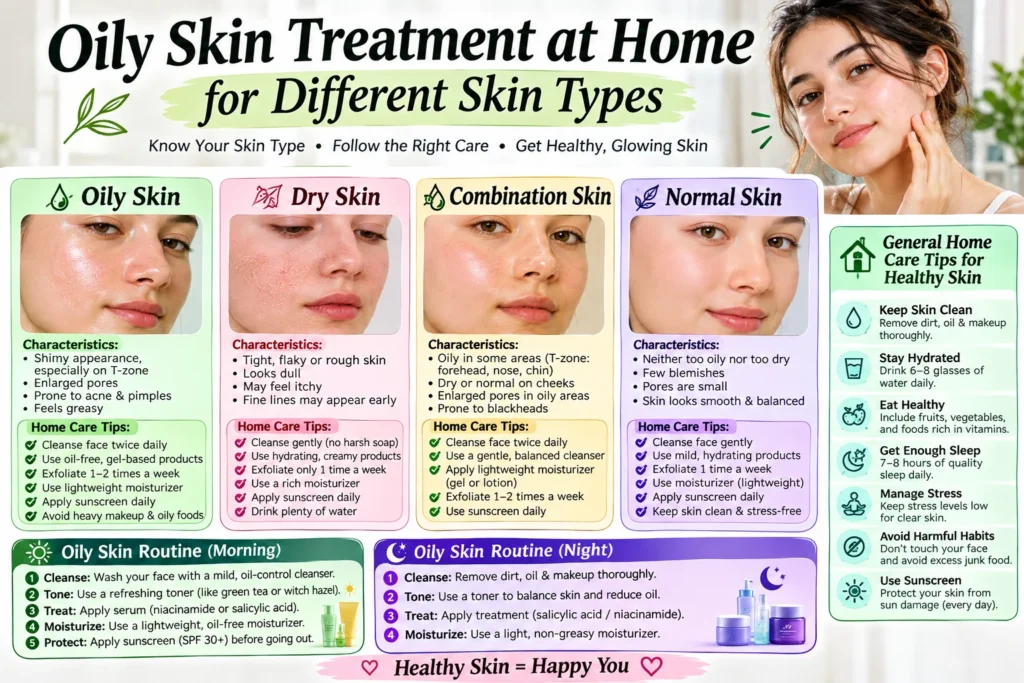
Oily Skin Treatment at Home for Different Skin Types
Oily skin doesn’t look or behave exactly the same for everyone.
Oily and Acne-Prone Skin
A simple routine may include:
- Gentle cleanser
- Salicylic acid or another suitable acne treatment
- Lightweight, non-comedogenic moisturizer
- Broad-spectrum SPF 30+ sunscreen
If acne is persistent, painful, or scarring, professional advice is recommended.
Oily and Sensitive Skin
Sensitive oily skin may need a simpler approach:
- Gentle, fragrance-free cleanser
- Minimal active ingredients
- Lightweight moisturizer
- Sunscreen that feels comfortable on your skin
Introduce one new product at a time.
Combination Skin
If your forehead, nose, and chin are oily while your cheeks are dry or normal, you don’t necessarily need to treat your entire face the same way.
You can:
- Use oil-control products mainly where needed.
- Apply more moisturizer to dry areas.
- Avoid strong oil-control treatments over areas that are already dry.
Your routine should match how different areas of your face actually behave.
How to Reduce Oily Face for Men
The basic principles of how to reduce oily face for men are the same as for women.
Men may notice extra oil after exercise, outdoor activities, or shaving. A gentle cleanser, lightweight moisturizer, sunscreen, and suitable acne treatment can help manage these concerns.
If you shave regularly:
- Use a clean razor.
- Avoid aggressive scrubbing.
- Use a gentle shaving product.
- Don’t apply irritating products immediately after shaving.
So, how to reduce oily face men doesn’t require a completely different routine. The most important thing is choosing products that suit your skin and keeping the routine consistent.
How to Reduce Oily Face and Scalp
Some people have an oily face and an oily scalp at the same time. Hair products and natural scalp oils can sometimes transfer onto the forehead and other areas of the face.
For your face:
- Cleanse gently.
- Keep heavy hair products away from acne-prone areas.
- Wash after heavy sweating.
For your scalp:
- Wash according to your scalp and hair needs.
- Rinse shampoo and conditioner thoroughly.
- Avoid allowing heavy styling products to sit on your forehead.
If your scalp is persistently itchy, flaky, inflamed, or unusually oily, a dermatologist can help determine whether another scalp condition is involved.
Things That Can Make Oily Skin Worse
Sometimes the products intended to control oil are actually making your routine too harsh.
| Common Mistake | Better Approach |
|---|---|
| Overwashing | Cleanse gently twice daily |
| Harsh scrubbing | Use gentle cleansing and appropriate chemical exfoliation if needed |
| Picking pimples | Leave them alone |
| Using too many active ingredients | Introduce one active at a time |
| Changing products constantly | Give your routine time to work |
| Sleeping with makeup | Remove makeup before bed |
| Using products that irritate your skin | Stop or reduce the irritating product |
If your skin is burning, peeling heavily, or becoming unusually red, your routine may be too aggressive.
When Should You See a Dermatologist?
At-home skincare can help manage mild oily skin and some mild acne, but it isn’t the right solution for every situation.
Consider seeing a dermatologist if you have:
- Deep or painful pimples
- Frequent or persistent breakouts
- Acne that is leaving scars
- Persistent dark marks
- Significant skin irritation
- Acne that doesn’t improve with appropriate over-the-counter care
- A sudden or unusual change in your skin
A dermatologist can assess your skin and recommend treatment based on the severity and type of acne or other skin concern.
Possible treatments may include topical retinoids, benzoyl peroxide, salicylic acid, azelaic acid, or prescription treatments depending on the individual.
Don’t use someone else’s prescription medication or strong acne treatment without professional guidance.
A Simple Daily Routine for Oily Skin
You don’t need ten products to care for oily skin.
Morning ☀️
1. Gentle cleanser
Removes overnight oil and sweat.
2. Lightweight moisturizer
Provides hydration without an overly heavy feel.
3. SPF 30+ broad-spectrum sunscreen
Protects your skin from UV exposure.
Evening 🌙
1. Gentle cleanser
Removes sunscreen, makeup, oil, sweat, and buildup.
2. Acne treatment, if needed
Choose an appropriate treatment for your specific concern.
3. Lightweight moisturizer
Supports your skin barrier overnight.
A simple routine that you actually follow is usually more useful than a complicated routine you constantly change.
Lifestyle Habits That Support Healthier Skin
Skincare isn’t the only part of caring for your skin.
Helpful everyday habits include:
- Getting adequate sleep
- Managing stress
- Changing pillowcases regularly
- Cleaning your phone regularly
- Avoiding unnecessary face touching
- Removing makeup before sleeping
- Eating a balanced diet
- Drinking enough fluids
These habits don’t guarantee clear skin, but they can support overall health and make a consistent skincare routine easier to maintain.
Diet may influence acne for some people, but oily skin isn’t caused by one specific food. Don’t rely on dietary changes alone as a treatment for persistent acne.
Frequently Asked Questions
How can I get rid of oily skin at home?
You can’t permanently eliminate your natural tendency toward oily skin, but you can manage excess oil. Start with gentle cleansing twice daily, a lightweight moisturizer, sunscreen, and suitable acne-friendly ingredients if needed.
How can I remove oil from my face naturally?
For temporary oil control, gently cleanse your face and use blotting papers during the day. Avoid harsh DIY ingredients such as lemon juice, baking soda, and undiluted vinegar because they can irritate your skin.
What decreases oily skin?
Oil production is influenced by genetics and hormones, so it cannot always be completely controlled. A consistent skincare routine and ingredients such as salicylic acid or niacinamide may help manage excess oil and related concerns.
Can ice remove oily skin?
No. Ice may temporarily cool the skin or reduce puffiness, but it doesn’t stop sebum production or permanently treat oily skin.
How can I get rid of an oily face fast?
For temporary shine control, gently press blotting papers against oily areas and avoid applying heavy products. Long-term management requires a consistent skincare routine.
How can I glow in 7 days if I have oily skin?
You may notice your skin feels cleaner or more comfortable after improving your routine for a week, but there is no guaranteed seven-day cure for oily skin. Focus on gentle cleansing, moisturizer, sunscreen, and avoiding irritating DIY treatments.
Are home remedies good for oily skin and pimples?
Some homemade ingredients may feel soothing, but many popular DIY remedies have limited evidence for treating acne and can irritate the skin. A simple, evidence-based skincare routine is generally a better option.
Should I see a dermatologist for oily skin?
Oily skin alone doesn’t necessarily require medical treatment. However, if you have severe, painful, persistent, or scarring acne, a dermatologist can recommend appropriate treatment.
How long does it take to see results from a skincare routine?
Results vary depending on the product and skin concern. Acne treatments often require consistent use over several weeks. Don’t keep changing products after only a few days unless a product is causing significant irritation.
Does diet affect oily skin?
Diet isn’t usually the sole cause of oily skin. Some research suggests that certain dietary patterns may influence acne in some people, but dietary changes alone shouldn’t be considered a cure for oily skin or acne.
Final Thoughts
Oily skin doesn’t mean your skin is unhealthy. Sebum is a normal part of your skin’s protective barrier, so the goal should be to manage excess oil rather than remove every trace of it.
The best place to start is simple: cleanse gently, moisturize, apply sunscreen, avoid harsh DIY treatments, and use suitable acne-friendly ingredients when needed.
You may be tempted to search for a way to remove oily skin permanently or find an overnight oily face remedy, but lasting improvement usually comes from consistent habits rather than quick fixes.
If your oily skin comes with painful acne, persistent breakouts, or scarring, don’t rely only on home remedies. A dermatologist can help you choose a treatment suited to your skin.
Healthy skin isn’t about having zero oil. It’s about finding the right balance. 🌿✨
Medical disclaimer: This article provides general educational information and isn’t a substitute for professional medical advice. If you have severe, painful, persistent, or scarring acne, speak with a dermatologist or qualified healthcare professional.

Hannah Collins is a skincare writer focused on simple routines, trusted ingredient research, and practical advice for healthy, glowing skin.