
Oily skin during the teenage years can feel frustrating. Your forehead may look shiny by lunchtime, your pores may seem more noticeable, and blackheads or pimples may appear more often than you’d like. If you’re wondering what routine works best for oily skin, the answer usually isn’t a complicated shelf full of products.
During pubrty, hormonal changes increase sebum production—your skin’s natural oil—making it oilier than it was during childhood. But here’s the thing: your skin actually needs some of that oil. The goal isn’t to eliminate every trace of shine. Instead, a good oily skin routine for teenagers should control excess oil while keeping your skin barrier comfortable, protected, and healthy.
The good news? Teenagers usually don’t need an elaborate routine. A gentle cleanser, lightweight moisturizer, sunscreen, and an acne treatment when needed can provide a simple foundation for healthier-looking skin.
Why Does Teenage Skin Become Oily?
During puberty, hormonal changes stimulate the sebaceous glands. These glands produce sebum—an oily substance that helps protect and lubricate your skin.
When your body produces more sebum, your face may become shiny or greasy more quickly. Excess oil can also mix with dead skin cells and contribute to clogged pores, blackheads, whiteheads, and acne.
Several factors can influence how oily your skin feels:
| Factor | How It Affects Your Skin |
|---|---|
| Puberty & hormones | Increases sebum production |
| Genetics | Your skin type is often inherited |
| Hot or humid weather | Stimulates more oil production |
| Stress | Triggers hormonal changes that increase oil |
| Certain medications | Some can affect oil production |
| Skincare or hair products | Heavy products can clog pores |
| Overly aggressive cleansing | Strips skin, causing rebound oil production |
Important: Having oily skin does not mean your face is dirty. Washing or scrubbing excessively isn’t the solution and may actually leave your skin irritated—and paradoxically, even oilier.
What Is a Good Skincare Routine for a Teenager With Oily Skin?
A good routine should be simple enough to follow every day. Here’s the basic framework:
| Time | Steps |
|---|---|
| Morning ☀️ | Gentle cleanser → Lightweight moisturizer → SPF 30+ sunscreen |
| Evening 🌙 | Gentle cleanser → Acne treatment (if needed) → Lightweight moisturizer |
Two golden rules:
- Don’t overcomplicate it. You don’t need every trending skincare ingredient. Adding too many products at once makes it hard to know what’s helping and may increase irritation.
- Be consistent. Give your routine at least 4-6 weeks to show results before making changes. Patience matters more than perfection.
Morning Oily Skin Routine for Teenagers ☀️
Your morning routine helps remove overnight oil buildup while protecting your skin for the day ahead.
Step 1: Cleanse Gently
Start the day with a gentle facial cleanser. It should remove excess oil and sweat without leaving your skin painfully tight or dry.
What to look for:
- If you have blackheads or clogged pores, a cleanser containing salicylic acid may be helpful
- If your skin is sensitive, start with a mild, fragrance-free cleanser instead
- Avoid “degreasing” or “deep cleansing” cleansers that leave your skin squeaky clean—they’re usually too harsh
How to wash properly:
- Use lukewarm water (not hot)
- Massage the cleanser gently with your fingertips
- Don’t scrub aggressively
- Rinse thoroughly
- Pat your skin dry with a clean towel—don’t rub
A quick tip: Washing your face repeatedly throughout the day isn’t necessary just because it becomes shiny. Twice daily is enough.
Step 2: Apply a Lightweight Moisturizer
Oily skin still needs moisture. Skipping moisturizer is one of the biggest mistakes teens make.
Choose a non-comedogenic moisturizer, meaning it’s formulated to reduce the likelihood of clogging pores. Gel or lightweight lotion textures feel more comfortable than heavy creams on oily skin.
Look for hydrating ingredients like:
- Glycerin – draws moisture into the skin
- Hyaluronic acid – hydrates without heaviness
- Niacinamide – may help reduce excess oil appearance and soothe skin
Why moisturizing matters: When you skip moisturizer, your skin can become dehydrated. In response, it may actually produce more oil to compensate. Moisturizer helps maintain balance and supports your skin barrier—especially if you’re using acne treatments that can cause dryness.
Step 3: Apply Sunscreen (Non-Negotiable!)
Finish your morning routine with a broad-spectrum sunscreen with SPF 30 or higher.
Why it’s essential:
- UV exposure contributes to skin damage and premature aging
- Sun exposure can make dark marks (post-acne hyperpigmentation) more noticeable and longer-lasting
- Many acne treatments increase sun sensitivity
For oily skin, look for:
- Lightweight, non-comedogenic formulas
- Oil-free or matte-finish options
- Gel or fluid textures
- Mineral sunscreens (zinc oxide or titanium dioxide) can be a good option for sensitive skin
Most important: Choose a sunscreen you’ll actually use consistently. The best sunscreen is the one you apply every day.
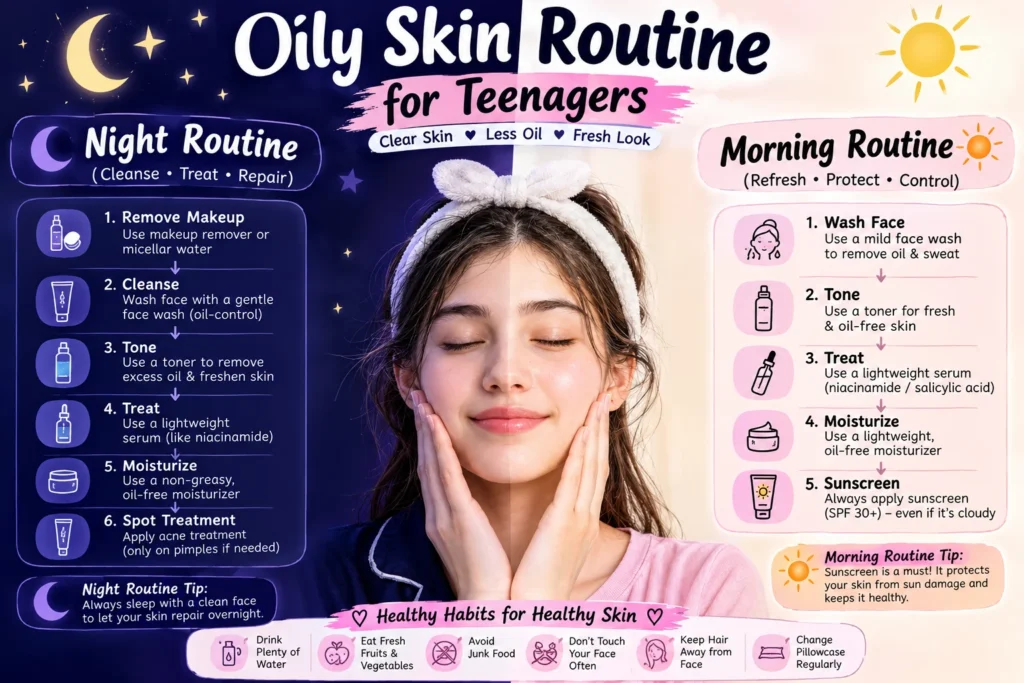
Nighttime Routine for Oily Teenage Skin 🌙
Your evening routine cleans off the day’s buildup and allows acne treatments to work while you sleep.
Step 1: Cleanse Your Face
Wash away sunscreen, makeup, sweat, and daily buildup with a gentle cleanser.
Evening cleansing tips:
- Use lukewarm water
- If you wear makeup, remove it properly before cleansing (use a separate makeup remover or cleansing oil)
- Don’t scrub your skin to remove every last trace of oil
- Pat dry gently
Never skip this step: Sleeping with makeup, sunscreen, or dirt on your face can clog pores and lead to breakouts.
Step 2: Add an Acne Treatment if You Need One
If oily skin is accompanied by acne, an appropriate acne treatment can make a real difference. Here’s a breakdown of common options:
| Ingredient | Best For | How It Works | Tips |
|---|---|---|---|
| Salicylic acid | Clogged pores, blackheads, whiteheads | Exfoliates inside pores to keep them clear | Good for mild acne |
| Benzoyl peroxide | Inflammatory acne, red, swollen pimples | Kills acne-causing bacteria, reduces inflammation | Start with 2.5% concentration |
| Adapalene | Preventing new acne lesions | Unclogs pores, regulates skin cell turnover | May cause dryness at first—start slow |
Important rules for acne treatments:
- Start with ONE active ingredient—don’t combine several at once
- Introduce slowly—use every other night initially to allow your skin to adjust
- Use a pea-sized amount for your whole face (more isn’t better)
- Follow product directions carefully
Note about adapalene: It’s available over-the-counter in some countries (like the US) and by prescription in others. Check with your local pharmacist or dermatologist.
If you’re unsure which treatment is right for you, ask a pharmacist, doctor, or dermatologist.
Step 3: Moisturize Again
Apply your lightweight moisturizer after cleansing and acne treatment.
Why this matters:
Acne treatments can cause dryness, flaking, or irritation. Moisturizer helps:
- Keep your skin comfortable
- Support your skin barrier
- Reduce the risk of redness and peeling
- Prevent your skin from overproducing oil in response to dryness
Tip: Wait a few minutes after applying your acne treatment before applying moisturizer to allow it to absorb properly.
Oily Skin Routine for Teenagers at Home
You don’t need expensive salon treatments to establish a basic routine at home. Consistency matters more than cost.
The Core Routine:
- Morning: Gentle cleanser → Lightweight moisturizer → SPF 30+ sunscreen
- Evening: Gentle cleanser → Acne treatment (if needed) → Moisturizer
Simple Habits That Support Your Routine:
| Habit | Why It Helps |
|---|---|
| Keep hands away from your face | Reduces transfer of bacteria and oil |
| Clean makeup brushes regularly | Prevents bacteria buildup that can cause breakouts |
| Remove makeup before sleeping | Prevents clogged pores overnight |
| Keep hair products away from facial skin | Hair products can clog pores |
| Avoid picking pimples | Prevents scarring and worsening inflammation |
| Change pillowcases regularly | Reduces oil and bacteria buildup |
| Shower after heavy sweating | Removes sweat and oil that can clog pores |
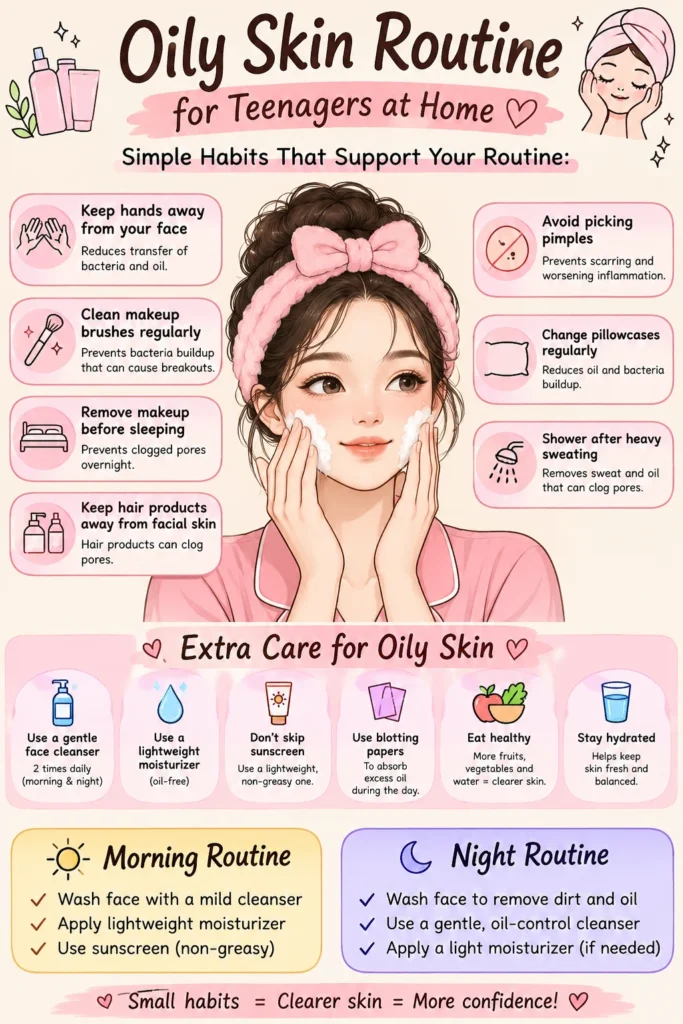
During the day: Blotting papers can be a lifesaver for excess shine. Gently press them against oily areas—don’t rub. They absorb oil without disturbing your skincare or makeup.
These habits won’t magically cure acne, but they help maintain a cleaner, more comfortable routine.
Teenage Oily Skin Care Products: What Should You Choose?
When shopping for teenage oily skin care products, don’t choose something simply because it’s popular on social media or claims to be “powerful.” Focus on what your skin actually needs.
Product Guide:
| Product | What to Look For | What to Avoid |
|---|---|---|
| Cleanser | Gentle, fragrance-free, salicylic acid (if needed) | “Degreasing” cleansers, harsh sulfates |
| Moisturizer | Lightweight, non-comedogenic, gel or lotion texture | Heavy creams, thick ointments |
| Sunscreen | SPF 30+, broad-spectrum, non-comedogenic, lightweight | Greasy, heavy formulas |
| Acne Treatment | One active ingredient appropriate for your acne type | Multiple actives combined |
Products to Avoid for Oily Teen Skin:
| Product Type | Why to Avoid |
|---|---|
| Heavy creams or ointments | Can clog pores and worsen breakouts |
| Physical scrubs with large particles | Can irritate inflamed skin and cause micro-tears |
| Products with high alcohol content | Strip the skin, cause irritation, trigger rebound oil |
| Acetone-based makeup removers | Excessively drying and irritating |
| Pore strips | Can damage the skin barrier and enlarge pores |
| DIY remedies (lemon, baking soda, toothpaste) | Can cause chemical burns and irritation |
Skincare Routine for Oily Skin for Teenage Girls
A skincare routine for oily skin for a teenage girl is exactly as simple as one for a teenage boy. Skin doesn’t care about gender—it cares about consistency and gentle care.
Basic Routine:
- Morning: Gentle cleanser → Lightweight moisturizer → SPF 30+ sunscreen
- Evening: Gentle cleanser → Acne treatment (if needed) → Moisturizer
Additional Tips for Teenage Girls:
Hormonal Acne:
Hormonal changes around the menstrual cycle can influence breakouts. If you notice acne appearing around your period:
- Keep a simple diary tracking your cycle and breakouts
- Continue your routine consistently—don’t wait until breakouts appear
- Share this pattern with a healthcare professional—they may recommend additional treatment options
Makeup Tips:
- Choose non-comedogenic, oil-free formulas
- Remove makeup completely before your evening cleanse
- Consider using a separate makeup remover or cleansing oil before your regular cleanser
- Allow sunscreen to absorb fully (1-2 minutes) before applying foundation
Important: Every teenage girl has different skin needs. Don’t assume a product is suitable simply because it’s marketed specifically toward girls.
Oily Skin Routine for Teenagers in Winter
Oily skin doesn’t disappear when temperatures drop. Cold weather, indoor heating, and dry air can make your skin feel dehydrated or irritated—even when it continues producing oil.
Adjustments for Winter:
| Adjustment | Why |
|---|---|
| Use a gentler cleanser | Winter air can be drying—opt for a milder formula |
| Continue moisturizing | You may need a slightly richer lotion |
| Avoid very hot water | Hot water strips natural oils and irritates skin |
| Don’t increase exfoliation | To remove flaky skin, use a gentle chemical exfoliant, not physical scrubs |
| Continue wearing sunscreen | UV rays are present year-round, even on cloudy days |
| Reduce acne treatments if needed | If your skin becomes excessively dry, scale back |
The takeaway: Don’t stop moisturizing just because your skin is oily. Winter demands extra hydration care.
Natural Skincare and Home Remedies: What Actually Helps?
Searches for natural skincare and home remedies for oily skin are common. But “natural” doesn’t automatically mean “safe.”
❌ Avoid These DIY Ingredients:
| Ingredient | Why It’s Harmful |
|---|---|
| Lemon juice | Can cause chemical burns and photosensitivity (sun sensitivity) |
| Baking soda | Too alkaline—damages your skin barrier |
| Undiluted apple cider vinegar | Too acidic—can burn and irritate |
| Toothpaste | Contains ingredients not meant for facial skin |
| Undiluted essential oils | Can cause allergic reactions or burns |
| Harsh homemade scrubs | Can cause micro-tears and irritation |
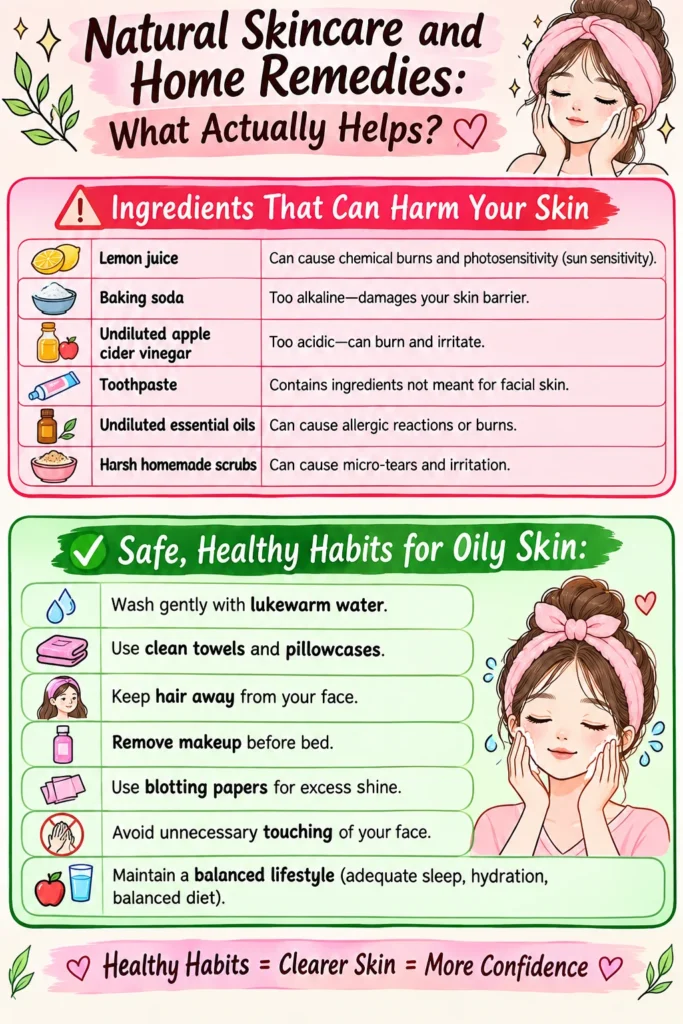
✅ Safe, Healthy Habits for Oily Skin:
- Wash gently with lukewarm water
- Use clean towels and pillowcases
- Keep hair away from your face
- Remove makeup before bed
- Use blotting papers for excess shine
- Avoid unnecessary touching of your face
- Maintain a balanced lifestyle (adequate sleep, hydration, balanced diet)
Remember: A balanced diet and adequate sleep support overall health and may help your skin, but they shouldn’t replace proven acne treatments.
Should You Exfoliate Oily Teenage Skin?
Oily skin doesn’t need aggressive exfoliation. In fact, over-exfoliating can damage your skin barrier and worsen acne.
Gentle Exfoliation Tips:
- If you use an exfoliant, choose a gentle chemical exfoliant (like salicylic acid) rather than a physical scrub
- Follow product instructions carefully
- Don’t overdo it—2-3 times a week is plenty
- Avoid exfoliating if your skin is already irritated, red, or inflamed
Important: If you’re already using an acne treatment like adapalene or benzoyl peroxide, avoid adding additional exfoliating products—they can increase irritation.
When in doubt, keep your routine simple. Gentle cleansing and consistent acne treatment are more effective than aggressive exfoliation.
Common Mistakes to Avoid
| Mistake | Why It’s a Problem | What to Do Instead |
|---|---|---|
| Washing too often | Strips skin, increases irritation and rebound oil | Wash twice daily—morning and night |
| Skipping moisturizer | Damages skin barrier, may increase oil production | Use a lightweight, non-comedogenic moisturizer |
| Using harsh scrubs | Irritates acne-prone skin, causes micro-tears | Use gentle chemical exfoliants if needed |
| Picking pimples | Increases inflammation, causes scars and dark marks | Use acne treatments, consider hydrocolloid patches |
| Too many products | Hard to know what works, increases irritation | Introduce one product at a time |
| Following social media trends | Products may not suit your skin | Choose based on your skin’s needs |
| Using adult anti-aging products | Unnecessary for teens, may irritate | Focus on basics—cleanse, moisturize, protect, treat |
| Using hot water | Strips natural oils | Use lukewarm water |
What Should a 14-Year-Old’s Skincare Routine Be?
If you’re wondering what should a 14-year-old’s skincare routine be, start with the basics—nothing complicated.
Simple Routine for a 14-Year-Old:
| Time | Steps |
|---|---|
| Morning | Gentle cleanser → Lightweight moisturizer → SPF 30+ sunscreen |
| Night | Gentle cleanser → Moisturizer → Acne treatment (if needed) |
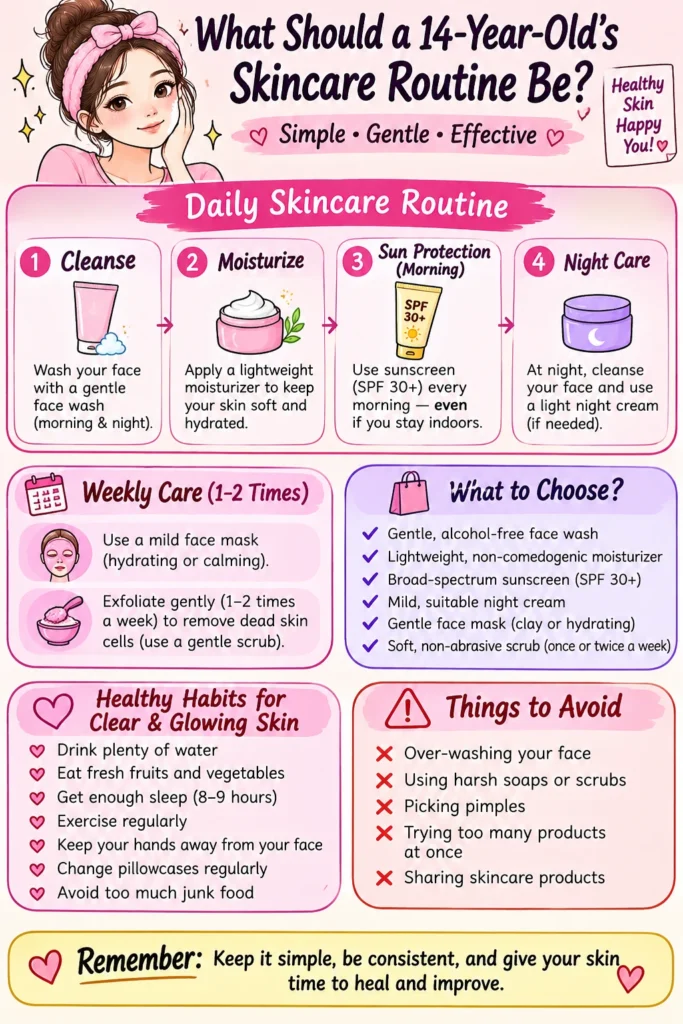
How to Support Clearer Skin at 14:
- Cleanse gently twice daily
- Use non-comedogenic skincare products
- Wear sunscreen every day—rain or shine
- Treat acne appropriately with OTC options
- Never pick or squeeze pimples
- Get adequate sleep (8-10 hours for teenagers)
- Keep your routine consistent
- Avoid harsh DIY remedies
Reality Check:
- A 14-year-old doesn’t need anti-aging products, serums, or complicated routines
- Clear skin doesn’t mean never getting a pimple—occasional breakouts are completely normal during puberty
- Don’t expect overnight results—acne treatments often take 4-6 weeks to show improvement
If pimples are deep, painful, widespread, or leaving scars, involve a parent or guardian and speak with a dermatologist.
Dermatologist Recommended Skin Care Routine for Oily Skin
A dermatologist-recommended skincare routine for oily skin focuses on the same fundamentals: gentle cleansing, appropriate treatment, moisturizing, and sun protection.
What a Dermatologist Considers:
| Factor | How It Affects Your Routine |
|---|---|
| Acne severity | Mild, moderate, or severe |
| Skin sensitivity | How your skin reacts to products |
| Type of acne | Blackheads, whiteheads, inflammatory, or cystic |
| Existing scars or dark marks | May require additional treatments |
| Previous treatments | What has or hasn’t worked |
When a Dermatologist Might Prescribe Stronger Treatments:
- Prescription retinoids (like tretinoin, adapalene)
- Topical antibiotics (like clindamycin)
- Prescription-strength benzoyl peroxide
- Oral medications (for severe acne)
- Professional procedures (extractions, chemical peels, light therapy)
The takeaway: If standard over-the-counter care isn’t controlling your acne, professional treatment can make a significant difference.
When Should Teenagers See a Dermatologist?
Oily skin by itself usually doesn’t require medical treatment. But acne associated with oily skin may need professional care.
Consider Seeing a Dermatologist If:
- Acne is deep, painful, or nodular
- Pimples are leaving scars or dark marks
- Breakouts are widespread (more than a few pimples)
- Acne continues despite consistent treatment for 6-8 weeks
- Over-the-counter products haven’t helped or caused irritation
- Your skin is becoming severely irritated
- Acne is affecting your confidence or emotional wellbeing
- You’re unsure whether the bumps are actually acne
Why Early Treatment Matters:
Getting appropriate treatment early can help control acne and reduce the risk of lasting scars. Don’t wait until acne becomes severe—seek help when you first notice persistent problems.
FAQs
What is a good skincare routine for a teenager with oily skin?
A simple routine works best: gentle cleanser, lightweight non-comedogenic moisturizer, and SPF 30+ sunscreen during the day. If you have acne, add an appropriate treatment (salicylic acid for blackheads, benzoyl peroxide for inflammatory pimples) based on your skin type.
What should a 14-year-old’s skincare routine be?
A 14-year-old can start with a gentle cleanser, lightweight moisturizer, and SPF 30+ sunscreen. If acne is present, add an appropriate OTC acne treatment. Severe, painful, or scarring acne should be evaluated by a dermatologist.
How can a 14-year-old get clear skin?
Focus on consistent, gentle skincare rather than overnight miracles. Cleanse regularly, moisturize, wear sunscreen, avoid picking pimples, and use an appropriate acne treatment if necessary. Remember—occasional breakouts are normal during puberty.
What routine is best for oily skin?
For most teenagers, the best routine is simple: gentle cleanser, lightweight moisturizer, and sunscreen. Add an acne treatment if needed. The ideal routine controls excess oil without drying or irritating your skin.
Can oily skin become less oily after puberty?
Yes! Oil production can change as hormone levels shift with age. Many people find their skin becomes less oily as they move through their late teens and twenties. Everyone’s skin is different, but puberty-related oiliness often improves with time.
Is oily skin bad for teenagers?
No. Oily skin is common during puberty and isn’t inherently unhealthy. The concern is usually excess oil combined with clogged pores or acne. A gentle routine can help manage shine and breakouts effectively.
Should teenagers with oily skin use moisturizer?
Absolutely yes. Oily skin still needs hydration. Choose a lightweight, non-comedogenic moisturizer that feels comfortable and doesn’t leave your skin excessively greasy. Skipping moisturizer can actually make your skin produce more oil.
Can stress make oily skin worse?
Yes. Stress triggers hormonal changes that can increase oil production and worsen acne. Managing stress through exercise, adequate sleep, and relaxation techniques may help your skin.
How long does it take to see results from a skincare routine?
Most skincare products take at least 4-6 weeks of consistent use to show noticeable results. Don’t give up after a week or two. If a product causes significant irritation, stop using it. Otherwise, be patient and consistent—good things take time.
Should I use toner for oily skin?
It depends. Many toners contain alcohol or astringents that can be drying and irritating. If you want to use a toner, choose an alcohol-free, gentle formula with hydrating ingredients. Avoid toners that leave your skin feeling tight or stripped.
Final Thoughts
An effective oily skin routine for teenagers doesn’t have to be complicated or expensive.
The Essentials:
| Priority | Action |
|---|---|
| 1 | Cleanse gently twice daily |
| 2 | Moisturize with a lightweight, non-comedogenic product |
| 3 | Apply SPF 30+ sunscreen every morning |
| 4 | Add an appropriate acne treatment if needed |
Choose the Right Treatment:
- Blackheads and clogged pores → Salicylic acid
- Red, inflamed pimples → Benzoyl peroxide
- Persistent acne → Adapalene (or see a dermatologist)
Remember:
- Your skin needs some natural oil to maintain its protective barrier
- The goal is balanced, comfortable, healthy-looking skin—not perfectly matte all day
- Occasional breakouts are normal—they don’t mean you’re doing something wrong
- Be patient with your skin and kind to yourself
Most importantly: Oily skin doesn’t define you. It’s a normal part of being a teenager. With a simple routine and consistent habits, you can manage oily skin without overwhelming it with unnecessary products.
🌿
Medical disclaimer: This article is for general educational purposes and does not replace professional medical advice. If acne is severe, painful, persistent, or leaving scars, speak with a dermatologist or another qualified healthcare professional.

Sophie Carter is a skincare writer who shares science-backed skincare routines, ingredient insights, and everyday tips for healthier-looking skin.