
Oily skin during the teenage years can be frustrating. Your face may look shiny only a few hours after washing, your pores may seem more noticeable, and pimples or blackheads can appear frequently. If you’re dealing with oily skin as a teenager, you may wonder whether you should wash your face more often or use stronger products.
The truth is that oily teen skin usually doesn’t need an aggressive routine. A simple combination of gentle cleansing, lightweight hydration, sun protection, and appropriate acne care can help keep excess oil under control without unnecessarily irritating your skin.
This guide explains how to build a practical skincare routine for oily skin for a teenage girl or boy, how to choose products, and when it may be time to see a dermatologist.
Medical disclaimer: This article is for educational purposes only and does not replace professional medical advice. If your acne is severe, painful, persistent, or leaving scars, consider speaking with a dermatologist.
Why Do Teenagers Have Oily Skin?
During puberty, hormonal changes stimulate the sebaceous glands to produce more sebum—the natural oil that helps protect and lubricate your skin.
When too much sebum mixes with dead skin cells, pores can become clogged. This may lead to blackheads, whiteheads, and pimples.
Other factors that can affect how oily your skin feels include:
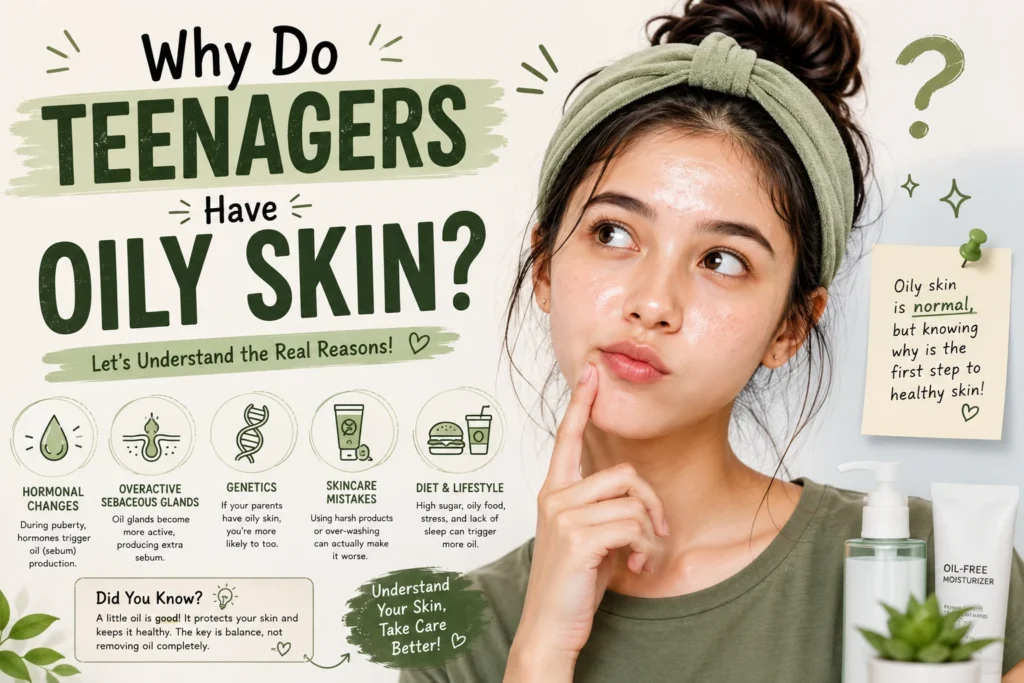
- Hormonal fluctuations during menstrual cycles
- Genetics and family history
- Humidity and hot weather
- Stress and lack of sleep
- Certain skincare or hair products
- Overly harsh or aggressive skincare
- Some medications
Important: Having oily skin doesn’t mean your face is dirty. In fact, repeatedly scrubbing or washing your skin can cause irritation and actually increase oil production without solving the underlying problem.
What Is the Best Skincare Routine for Oily Skin?
The best routine doesn’t have to contain lots of products. For most teenagers, the basics are:
- Gentle cleanser
- Lightweight, non-comedogenic moisturizer
- Broad-spectrum sunscreen during the day
- An acne treatment when needed
If you have acne-prone oily skin, you may also benefit from ingredients such as salicylic acid or benzoyl peroxide, depending on your type of acne.
The key is consistency. Constantly changing products can make it difficult to know what works and can increase irritation. Give your routine at least 4-6 weeks to show results before making changes.
Morning Skincare Routine for Oily Skin Teens
A simple morning routine helps remove excess oil while protecting your skin barrier for the day ahead.
Step 1: Use a Gentle Cleanser
Start with a mild facial cleanser that removes excess oil, sweat, and overnight buildup without leaving your skin feeling painfully tight or stripped.
What to look for:
- If your main concerns are blackheads and clogged pores, a cleanser containing salicylic acid may be useful
- If your skin is sensitive or easily irritated, a gentle, fragrance-free cleanser is a better starting point
- Avoid “deep cleansing” or “degreasing” cleansers that leave your skin feeling squeaky clean—this usually means they’re too harsh
How to wash:
- Use lukewarm water (not hot)
- Wash gently with your fingertips—no scrubbing
- Pat dry with a clean, soft towel (don’t rub)
Step 2: Apply a Lightweight Moisturizer
Oily skin still needs hydration—skipping moisturizer is a common mistake.
Choose a moisturizer that is:
- Lightweight (gel or lotion textures work well)
- Non-comedogenic (won’t clog pores)
- Fragrance-free if your skin is sensitive
- Comfortable on oily skin without feeling heavy or greasy
Why moisturizing matters:
When you skip moisturizer, your skin can become dehydrated. In response, it may actually produce more oil to compensate. A lightweight moisturizer helps maintain balance.
Step 3: Wear Sunscreen
Finish your morning routine with a broad-spectrum sunscreen of at least SPF 30.
Tips for oily skin:
- Look for lightweight, non-comedogenic formulas
- Gel or fluid sunscreens often feel less greasy
- Mineral sunscreens (zinc oxide or titanium dioxide) can be a good option for sensitive skin
Why it’s essential:
Sunscreen is especially important if you’re using acne treatments that can make your skin more sensitive to sunlight. Sun damage can also worsen dark spots left behind by healed pimples.
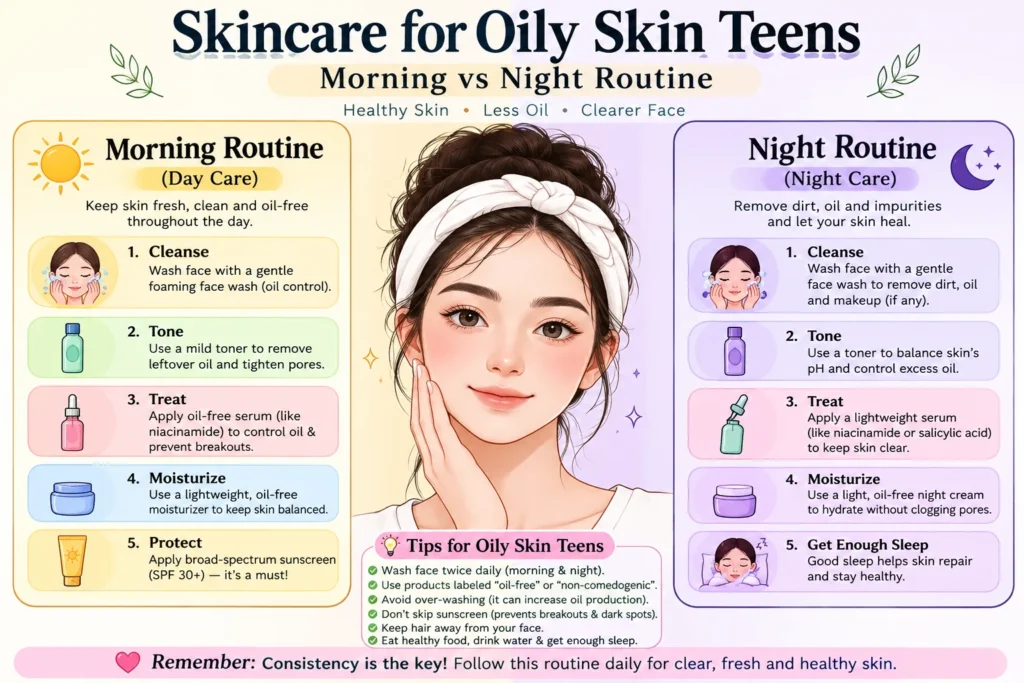
Nighttime Skincare Routine for Oily Skin
Your evening routine can be just as simple as your morning routine.
Step 1: Cleanse Your Face
Wash away sunscreen, makeup, sweat, and daily buildup using a gentle cleanser.
Evening cleansing tips:
- Use lukewarm water rather than very hot water
- Wash with your fingertips rather than scrubbing aggressively
- If you wear makeup or heavy sunscreen, consider double cleansing: first with an oil-based cleanser, then with your regular gentle cleanser
- Don’t skip cleansing just because you’re tired—sleeping with makeup or sunscreen on can clog pores
Step 2: Use an Acne Treatment if Needed
If you’re dealing with acne as well as oily skin, an appropriate acne treatment can be added at night.
Common options:
| Ingredient | Best For | How It Works |
|---|---|---|
| Salicylic acid | Clogged pores, blackheads, whiteheads | Exfoliates inside pores to keep them clear |
| Benzoyl peroxide | Inflammatory acne, red pimples | Kills acne-causing bacteria and reduces inflammation |
| Adapalene | Preventing new acne lesions | Helps unclog pores and regulates skin cell turnover |
Important rules:
- Don’t introduce several active ingredients at the same time—start with one
- Follow product directions carefully
- Start slowly (e.g., every other night) to allow your skin to adjust
- A small amount goes a long way—use a pea-sized amount for your whole face
Note: Adapalene is available over-the-counter in some countries and by prescription in others. Check with your local pharmacist or dermatologist.
Step 3: Moisturize
Apply a lightweight moisturizer after your acne treatment.
Why it’s important:
Acne treatments can cause dryness or irritation. Moisturizer helps:
- Keep your skin comfortable
- Support your skin barrier
- Reduce the risk of flaking and redness
- Prevent your skin from overproducing oil in response to dryness
Wait a few minutes after applying your acne treatment before applying moisturizer to allow it to absorb properly.
Skincare Routine for Teenage Girl With Acne
A skincare routine for a teenage girl with acne doesn’t need to be complicated.
Morning ☀️
- Gentle cleanser
- Lightweight moisturizer
- SPF 30+ sunscreen
Evening 🌙
- Gentle cleanser
- Appropriate acne treatment (if needed)
- Moisturizer
If acne is mild, this simple approach may be enough to start with. If pimples are deep, painful, widespread, or leaving scars, professional treatment may be necessary.
For hormonal acne: If you notice breakouts around your menstrual cycle, track your pattern and share this information with a dermatologist. They may recommend additional treatment options.
Best Skincare for Oily Skin Teens: What to Look For
When choosing the best skincare for oily skin teens, focus on how the product is formulated rather than buying the most expensive option or following TikTok trends.
Cleanser
- Look for a gentle cleanser that removes excess oil without excessive dryness
- Salicylic acid may be useful when clogged pores and blackheads are a major concern
- Avoid “degreasing” or “deep cleansing” claims that often mean harsh sulfates
Moisturizer
- Choose a lightweight, non-comedogenic moisturizer
- Gel or lotion textures may feel more comfortable if you dislike heavy creams
- Look for ingredients like hyaluronic acid, glycerin, or niacinamide
Sunscreen
- Choose a broad-spectrum SPF 30 or higher
- If your skin becomes shiny easily, look for a lightweight formula designed for oily or acne-prone skin
- Consider oil-free or matte-finish sunscreens
Acne Treatment
- Depending on the acne type, products containing salicylic acid, benzoyl peroxide, or adapalene may be useful
- If you’re unsure which ingredient is appropriate, ask a healthcare professional or pharmacist
- Start with over-the-counter options before considering prescription treatments
What Ingredients Are Helpful for Oily Skin?
Different ingredients address different concerns—understand what each one does.
Salicylic Acid
- A beta hydroxy acid (BHA) that exfoliates inside pores
- Oil-soluble, so it can penetrate through sebum
- Particularly useful for blackheads, whiteheads, and clogged pores
- Often found in cleansers, toners, and leave-on treatments
Benzoyl Peroxide
- Commonly used for inflammatory acne
- Helps reduce acne-causing bacteria (Cutibacterium acnes)
- Reduces inflammation and helps unclog pores
- Can be drying—start with a lower concentration (2.5% to 5%)
Adapalene
- A topical retinoid that helps prevent clogged pores
- Works by regulating skin cell turnover
- Effective for both inflammatory and non-inflammatory acne
- May cause dryness or irritation when you first start—introduce slowly
Niacinamide (Vitamin B3)
- Supports the skin barrier
- May help reduce the appearance of excess oil for some people
- Has soothing properties that can help with redness
- Generally well-tolerated and gentle
Important reminder: More is not always better. Using several strong active ingredients together can damage your skin barrier and make acne worse.
Oily Skin Products for Daily Use
You don’t need a shelf full of products to care for oily skin.
A well-chosen routine includes:
| Product | What It Does |
|---|---|
| Gentle cleanser | Removes oil, sweat, and buildup without stripping |
| Lightweight moisturizer | Hydrates without feeling overly heavy or greasy |
| Sunscreen SPF 30+ | Protects skin from UV exposure and dark spots |
| Acne treatment | Targets specific acne concerns (when needed) |
Optional products (only if there’s a clear reason to use them):
- Blotting papers for midday shine
- Clay mask (occasional use)
- Gentle exfoliant (once or twice a week)
What to avoid adding unnecessarily:
- Multiple exfoliants
- Several acne treatments at once
- Toners with high alcohol content
- Heavy face masks daily
What Should a 14-Year-Old Use for Skincare?
If you’re wondering what should a 14-year-old use for skincare, start simple and age-appropriate.
Basic routine:
- Morning: Gentle cleanser → Lightweight moisturizer → SPF 30+ sunscreen
- Night: Gentle cleanser → Moisturizer (add acne treatment if needed)
Important considerations:
- A 14-year-old doesn’t need anti-aging products
- No need for multiple strong exfoliating products
- Don’t use prescription-strength products without medical guidance
- If acne is present, involve a parent or guardian
- Stick with over-the-counter options first
When to see a doctor:
- If acne is severe or painful
- If over-the-counter products haven’t helped after 6-8 weeks
- If acne is leaving scars or dark marks
Dermatologist Recommended Skin Care Routine for Oily Skin
A dermatologist-recommended skin care routine for oily skin generally focuses on:
- Gentle cleansing
- Appropriate acne treatment (when necessary)
- Non-comedogenic moisturizing
- Daily sun protection
How a dermatologist can help:
- Identify your specific acne type
- Recommend the right over-the-counter products
- Prescribe stronger treatments if needed (e.g., topical retinoids, antibiotics, or other prescription medications)
- Offer professional procedures (e.g., extractions, chemical peels, or light therapy)
- Help prevent and treat acne scars
For oily, acne-prone skin specifically:
- The goal isn’t to remove every trace of oil
- Focus on controlling acne while protecting the skin barrier
- Prescription treatments may be considered for moderate or severe acne
- Don’t assume that a stronger product is automatically better—irritated skin can become uncomfortable and harder to treat
Natural Skincare Routine for Teenage Girl
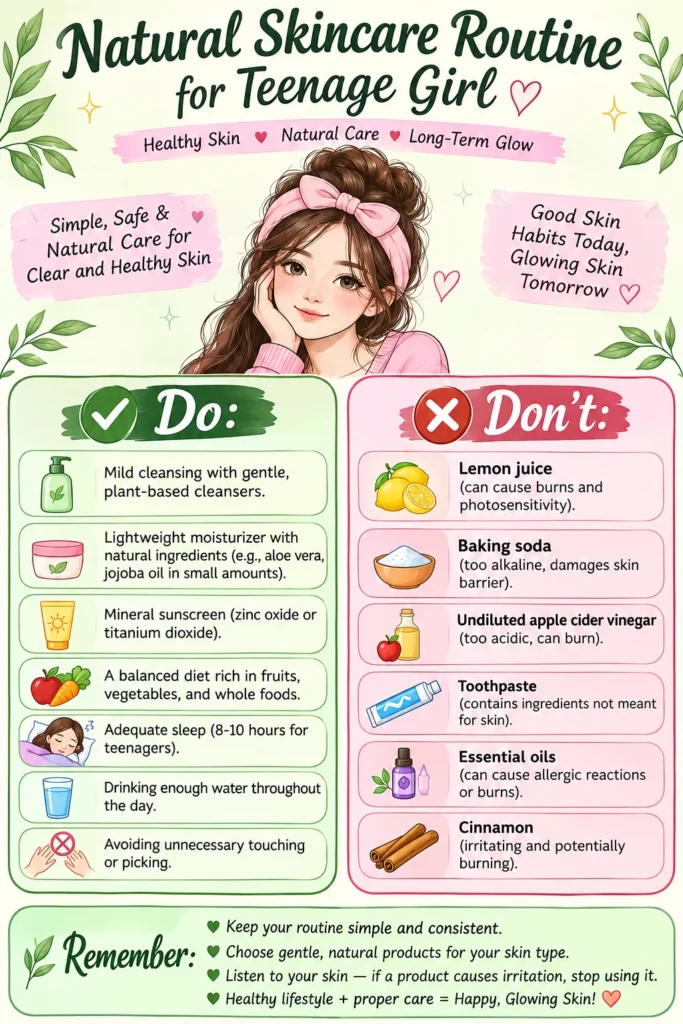
If you prefer a natural skin care routine for a teenage girl, keep it simple and safe.
Healthy habits:
- Mild cleansing with gentle, plant-based cleansers
- Lightweight moisturizer with natural ingredients (e.g., aloe vera, jojoba oil in small amounts)
- Mineral sunscreen (zinc oxide or titanium dioxide)
- A balanced diet rich in fruits, vegetables, and whole foods
- Adequate sleep (8-10 hours for teenagers)
- Drinking enough water throughout the day
- Avoiding unnecessary touching or picking
Important warning:
“Natural” doesn’t automatically mean safer for your skin. Do NOT use:
- Lemon juice (can cause burns and photosensitivity)
- Baking soda (too alkaline, damages skin barrier)
- Undiluted apple cider vinegar (too acidic, can burn)
- Toothpaste (contains ingredients not meant for skin)
- Essential oils (can cause allergic reactions or burns)
- Cinnamon (irritating and potentially burning)
These DIY remedies can cause chemical burns, irritation, and worsen hyperpigmentation. Stick to well-formulated, gentle products.
Can You Get Rid of Oily Skin as a Teenager?
If you’re wondering how to get rid of oily skin as a teenager, it’s important to understand that you usually cannot permanently change your natural skin type.
Hormones, genetics, and age all influence oil production. Instead of trying to eliminate oil completely, aim to manage excess shine while keeping your skin comfortable.
Helpful habits include:
- Cleanse gently, not aggressively
- Avoid excessive washing (more than twice daily)
- Use lightweight, non-comedogenic products
- Don’t scrub aggressively with physical exfoliants
- Use blotting papers or mattifying powders if needed
- Keep your routine consistent
- Avoid heavy, greasy products
- Manage stress through exercise, hobbies, or relaxation techniques
A realistic perspective:
As puberty progresses, oil production may change naturally. Many people find their skin becomes less oily as they enter their twenties. In the meantime, focus on management rather than elimination.
Common Skincare Mistakes for Oily Teen Skin
Washing Your Face Too Often
More washing doesn’t mean less oil. Excessive cleansing can strip your skin, leading to irritation and potentially more oil production.
Fix: Wash twice daily—morning and night. After heavy sweating, a quick rinse with water is sufficient.
Using Harsh Scrubs
Physical scrubs with beads, shells, or seeds can cause micro-tears in inflamed skin and spread bacteria.
Fix: Skip physical scrubs entirely. If you need exfoliation, use a gentle chemical exfoliant like salicylic acid.
Skipping Moisturizer
Oily skin still needs hydration. Skipping moisturizer can lead to a damaged skin barrier and increased oil production.
Fix: Choose a lightweight, non-comedogenic moisturizer. Gel or lotion textures work well.
Sleeping With Makeup On
Leaving makeup on overnight can clog pores and cause irritation.
Fix: Always remove makeup before bed. Use a gentle makeup remover or cleansing oil, followed by your regular cleanser.
Constantly Changing Products
Frequent product changes make it impossible to know what works and can increase irritation.
Fix: Give a new routine at least 4-6 weeks to show results unless a product causes significant irritation.
Picking Pimples
Picking can increase inflammation, slow healing, and raise the risk of post-acne marks and scars.
Fix: Leave pimples alone. Use appropriate acne treatments and consider hydrocolloid patches to reduce the urge to pick.
Overusing Active Ingredients
Using salicylic acid, benzoyl peroxide, and retinol all at once can damage your skin barrier.
Fix: Start with one active ingredient. Introduce others slowly and only if needed.
Using Hot Water
Hot water strips natural oils and irritates the skin.
Fix: Always use lukewarm water to wash your face.
Do Oily Skin Teens Need Face Masks?
Face masks aren’t essential for a good skincare routine—they’re optional extras.
Clay masks:
- May temporarily absorb excess surface oil
- Can help reduce the appearance of pores temporarily
- Not a cure for acne
- Don’t need to be used every day (once a week is enough)
Sheet masks:
- Can provide hydration
- Not specifically helpful for oily skin
- Some may contain irritating fragrances
Important tips:
- If you use a mask, follow product instructions
- Stop if your skin becomes dry, burning, or irritated
- Don’t rely on masks instead of a consistent daily routine
- A simple daily routine is generally more important than occasional masks
How to Keep Oily Skin Under Control During the School Day
Teenagers may notice more shine during school, especially in warm weather or after physical activities.
Practical tips:
- Use blotting papers to absorb excess oil without disturbing makeup or skincare
- Avoid unnecessary touching of your face throughout the day
- Keep hair away from your face if it becomes oily
- Choose lightweight sunscreen and moisturizer that won’t feel greasy
- Wash your face normally at the appropriate times (morning and night)
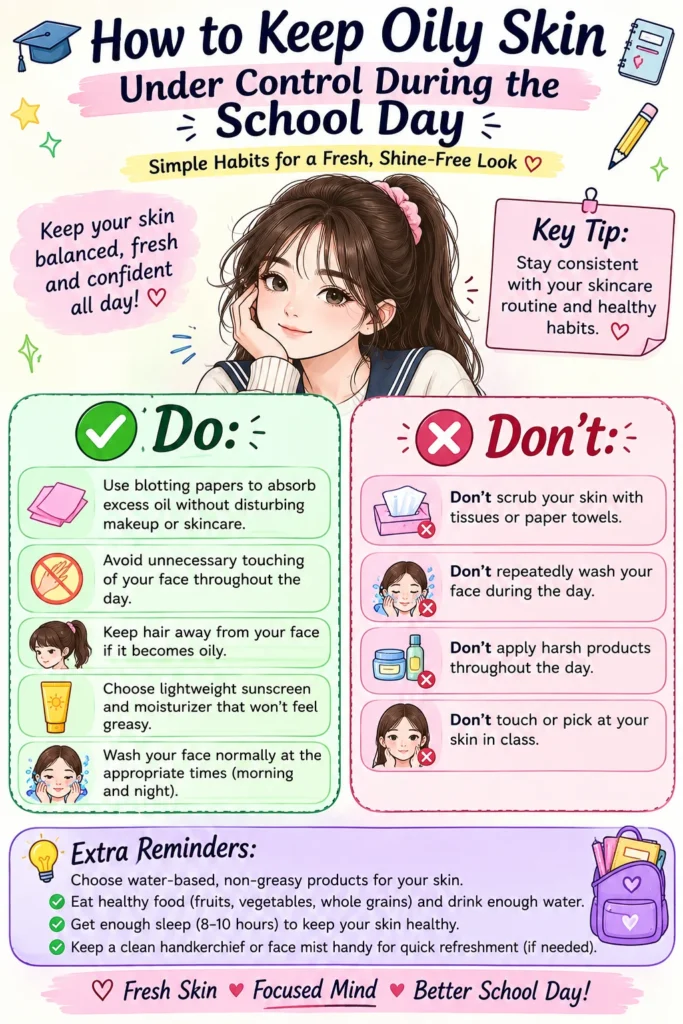
What NOT to do:
- Don’t scrub your skin with tissues or paper towels
- Don’t repeatedly wash your face during the day
- Don’t apply harsh products throughout the day
- Don’t touch or pick at your skin in class
If you’re wearing makeup:
- Choose oil-free or non-comedogenic options
- Consider powder or matte finish products
- Carry blotting papers instead of adding more powder throughout the day
When Should a Teen With Oily Skin See a Dermatologist?
Oily skin itself isn’t usually a medical problem, but acne associated with it may require professional care.
Consider seeing a dermatologist if:
- Acne is deep, painful, or nodular
- Breakouts are widespread (more than a few pimples at a time)
- Pimples keep returning despite consistent OTC treatment for 6-8 weeks
- Acne is leaving scars or dark marks
- Dark marks are becoming extensive and not fading
- Over-the-counter products haven’t helped or have caused irritation
- Your skin is becoming severely irritated from products
- Acne is affecting your confidence, school life, or emotional wellbeing
- You’re not sure whether the bumps are actually acne (could be another condition)
Why early treatment matters:
Getting appropriate treatment early can help control acne and reduce the risk of lasting scars. Don’t wait until acne becomes severe.
Frequently Asked Questions
What are the best skincare products for oily skin in teenagers?
The best products depend on the teenager’s individual skin and concerns. A basic routine usually includes a gentle cleanser, lightweight non-comedogenic moisturizer, and broad-spectrum SPF 30+ sunscreen. For acne, salicylic acid, benzoyl peroxide, or adapalene may be useful. The “best” product is one that works for your skin without causing irritation.
What is the best skincare routine for oily skin?
A simple routine is usually a good starting point: cleanse gently, moisturize with a lightweight non-comedogenic product, and use sunscreen during the day. Add an appropriate acne treatment if needed rather than using several active ingredients at once. Consistency matters more than complexity.
How can I get rid of oily skin as a teenager?
You generally cannot permanently change your natural skin type, but you can effectively manage excess oil. Use a gentle cleanser, lightweight moisturizer, and sunscreen. Avoid repeatedly washing or scrubbing your face. Use blotting papers for midday shine. As you get older, your skin may naturally become less oily.
What should a 14-year-old use for skincare?
A 14-year-old can start with a gentle cleanser, lightweight moisturizer, and SPF 30+ sunscreen. If acne is present, an appropriate over-the-counter acne treatment may be added based on the severity and the skin’s tolerance. No anti-aging products are needed at this age.
What is the best skincare routine for oily acne-prone skin?
Start with gentle cleansing, an appropriate acne treatment (salicylic acid for blackheads, benzoyl peroxide for inflamed pimples), lightweight moisturizer, and daily sunscreen. Introduce products one at a time. If acne is severe, painful, or scarring, a dermatologist can recommend a more individualized routine.
Is natural skincare better for oily teen skin?
Not necessarily. “Natural” ingredients can still irritate the skin—lemon juice, baking soda, and undiluted vinegar are not safe for facial use. A simple routine using gentle, well-formulated products is generally more reliable and safer than DIY treatments.
Should teenagers moisturize oily skin?
Yes. Oily skin can still become dehydrated or irritated. A lightweight, non-comedogenic moisturizer helps keep the skin comfortable and balanced without adding unnecessary heaviness. Skipping moisturizer can actually make your skin produce more oil.
How long does it take to see results from a skincare routine?
Most skincare products take at least 4-6 weeks of consistent use to show noticeable results. Don’t give up after a week or two. If a product causes significant irritation, stop using it. Otherwise, be patient and consistent.
Can stress cause oily skin?
Yes. Stress can trigger hormonal changes that increase oil production. Managing stress through exercise, adequate sleep, and relaxation techniques may help your skin.
Should I use toner for oily skin?
It depends. Many toners contain alcohol or astringents that can be drying and irritating. If you want to use a toner, choose an alcohol-free, gentle formula with hydrating ingredients. Avoid toners that leave your skin feeling tight or stripped.
Final Thoughts
Good skincare for oily skin teens doesn’t have to be complicated or expensive.
Start with the basics:
- Cleanse gently with a mild cleanser
- Use a lightweight, non-comedogenic moisturizer
- Protect your skin with SPF 30+ sunscreen every day
- Add an appropriate acne treatment if you need one
Choosing the right treatment:
- If you have oily skin with blackheads and clogged pores, salicylic acid may be useful
- If you have inflammatory pimples, benzoyl peroxide may be an option
- For persistent or more severe acne, professional guidance can make a significant difference
The most important message:
Don’t try to remove every bit of oil from your face. Your skin needs some natural oil to maintain its protective barrier. The goal is balanced, comfortable, healthy-looking skin—not perfectly matte skin all day.
Remember that occasional breakouts are normal for teenagers. Having oily skin or acne doesn’t mean you’re doing something wrong. Be patient with your skin, consistent with your routine, and kind to yourself.
With a simple routine and consistent habits, you can learn to manage oily skin without overwhelming it with unnecessary products.

Hannah Collins is a skincare writer focused on simple routines, trusted ingredient research, and practical advice for healthy, glowing skin.